Connect with us

China

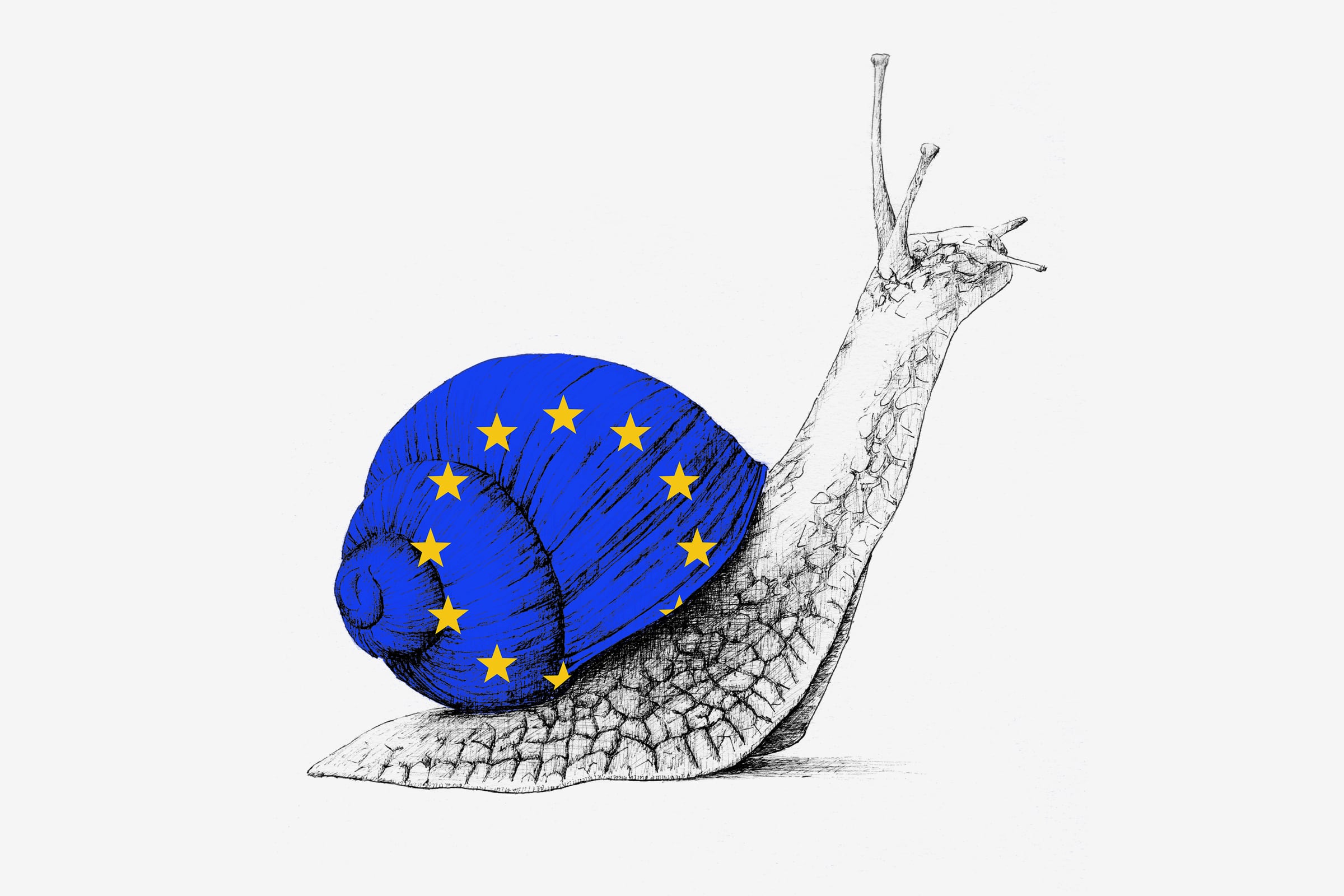
The European ‘catenaccio’

Published

on

the-european-‘catenaccio’

The footballing catenaccio was a strategy, originally developed in Switzerland and popularized in Italy, that prioritized airtight defense and strict man-marking. The idea was that there was no need to have the ball and build the play; it was enough to protect your own goal, counterattack, and hope to catch the opponent by surprise. It is a passive strategy, now largely obsolete, used only by teams that see themselves as inferior. Teams that see themselves as superior want to be aggressive and keep possession so they can dictate the pace of the game. Catenaccio is a strategy for not losing, not a strategy for winning.

European economic policy is a version of catenaccio, revealing either a sense of inferiority — or, even worse, a political preference for being inferior — relative to the United States and China. Playing constantly on the defensive makes progress very difficult.

China’s economic strategy, which the United States has largely begun to emulate in recent years, has been clear over the past decade: invest whatever public and private resources are necessary to become a global leader in strategic sectors. Of course, this has been accompanied by a strategy of protecting the domestic industry — but without massive investment, protection alone would have achieved nothing. This investment has benefited from a huge internal market, where companies can grow and develop until they reach the scale required to become world leaders, as well as fierce competition that encourages innovation. All of this has been supported by subsidies and public infrastructure aimed at strategic industries.

The Made in China 2025 plan, designed in 2015, established the guidelines, which have since been updated and expanded through successive five-year plans. The result has been a total public-sector deficit estimated, depending on how the public sector is defined, at between 8% and 15% of GDP, and public debt around 100% of GDP.

The outcome is well-known: China has become a leader in cutting-edge industries and increasingly dominates high-value-added sectors, where it competes directly with European exports.

About a decade ago, the United States realized that China would become a formidable competitor and tried to counter this strategy through containment measures, including import restrictions, sanctions, and more recently tariffs. But it did not work. Chinese imports, measured in value-added terms and including indirect imports, fell by only about 2%, while the containment measures actually encouraged even more Chinese investment.

For example, after restrictions were imposed on the technology sector in 2018, China designated technology as a national-security sector, and today it competes head-to-head with Silicon Valley in artificial intelligence and semiconductors. The more restrictions that were imposed, the more determined China became to achieve self-sufficiency in strategic sectors.

When the United States launched a tariff war with China in 2025, it took only a few weeks to discover China’s superiority in negotiation. China threatened to cut off supplies of rare earths, the 17 chemical elements essential to modern technology and the energy transition. The United States quickly realized that within weeks it could be left without essential components for computers, batteries, and medical and military equipment.

At that point, the United States changed strategy, deciding to imitate China and invest whatever resources were necessary to become independent in the supply of strategic materials. The Project Vault for rare-earth investment, subsidies to the production of semiconductors, public investment in technology firms, and the Defense Department’s private-equity group are all manifestations of the U.S. desire to strengthen its economy through investment so as to become less dependent on China.

The United States concluded that catenaccio did not work and that it had to strengthen itself before engaging in another trade war with China. Since then, the tone of relations has changed. Negotiations are underway to facilitate mutual investment, and Trump and Xi are scheduled to meet three times this year.

Europe, however, remained complacent in the face of China’s rise — particularly Germany’s automobile industry — and European countries remain more concerned with monitoring their neighbors’ fiscal policies than with investing to close the technological gap with the United States and China.

In 2024, the Draghi Report recommended increasing European investment by 5% of GDP annually for a decade, financed in part through eurobonds, in order to close the productivity gap with the United States. Two years have passed; only about 20% of the recommendations have been implemented, and the increase in investment has been minimal.

The same has happened with the recommendations of the Letta Report on removing barriers within the single market. Barely 10% have been implemented, and Europe still has a nationally fragmented internal market that severely limits business growth and productivity.

Even worse, negotiations over the next European budget are moving in the opposite direction. The debate is not about how much to increase the budget to provide Europe with the public goods needed to advance in cutting-edge technologies, but rather about how much to reduce it. The European budget is a clear political statement that Europe does not want to compete with China or the United States.

Most European countries, especially the so-called “frugal” ones, still prefer to be small countries in a world dominated by large powers. Politically, that is more comfortable and avoids the need for ambitious decisions. But it condemns European citizens to remain behind the United States in productivity, behind China in industrial capacity, and behind both in military and technological capabilities.

Of course, Europe must defend itself when the United States or China adopt commercial measures that harm it. But if we do not invest in strengthening ourselves, and if we do not have a genuine European single market to offer as leverage, our negotiating power is limited. A trade war with China could deprive us overnight of essential materials. A trade war with the United States could cut us off from defense supplies or access to advanced artificial-intelligence models by executive decree.

Let’s not forget: trade wars are never won, consumers ultimately pay the tariffs.

European policy remains anchored in the past and still believes that savings, trade surpluses, and adherence to fiscal rules are sufficient. Complaints that the Chinese currency is undervalued are merely a way of avoiding the reforms and investments that are actually needed.

The reality is that four years have passed since Russia’s invasion of Ukraine and there is still no European defense project. We have made no meaningful progress on banking union, capital-markets integration, eurobonds, or the European public goods required to deal with this new geoeconomic reality. It is certainly not for lack of ideas or recommendations.

The political rhetoric speaks of strategic autonomy in response to the breakdown of the international order, but the reality is that European leaders do not seem to believe that the current situation requires greater effort or policies different from those of the past.

It is the catenaccio of a small team whose ambition is simply not to lose.

Sign up for our weekly newsletter to get more English-language news coverage from EL PAÍS USA Edition

Animales

From Darwin To Prairie Voles: The Paradox Of Attraction Between Cousins

Published

on

from-darwin-to-prairie-voles:-the-paradox-of-attraction-between-cousins

Julie and Mark are siblings. They are traveling together across France during their college summer holiday. One night they are alone in a cabin near the beach. They decide it would be interesting and fun to make love — a new experience. Julie is on birth control pills and Mark also uses a condom, for safety. Both enjoy making love, but they decide not to do it again. They keep that night as a special secret, which makes them feel even closer to each other. How does that make you feel? Was it right for them to make love?

Psychologist Jonathan Haidt posed this scenario as part of an experiment to show that moral judgment is not always rational. Although the story had no negative consequences such as disease or emotional harm, most survey respondents judged the action to be wrong. When asked for their reasons, many could not offer logical arguments and simply expressed disgust.

Sex between siblings provokes near-universal rejection, but would it be different if Julie and Mark were cousins? Suddenly the issue becomes much less clear. Cousin relationships have been interpreted very differently across cultures and eras. In some places — such as China, South Korea or the United States — marriage between cousins is banned or even criminalized. However, in regions like the Middle East, Central Asia and North Africa, these unions are common and represent between 20% and 68% of marriages, depending on the country.

Throughout European history, such marriages were very common, especially among the elite, because they strengthened family and patrimonial alliances. It was not until the second half of the 19th century that opposition to cousin unions began to solidify, when debates emerged within the scientific and medical communities about their possible genetic risks.

Charles Darwin, for example, was one of the first to raise the issue, because it touched him personally. He married his first cousin, Emma Wedgwood, and they had 10 children, of whom only seven survived past the age of 10. In particular, the death of his daughter Annie at age 10 from tuberculosis was a devastating blow that intensified his concerns about the negative impact of reproduction between close relatives.

In an effort to better understand the phenomenon, Darwin conducted experiments with plants in his greenhouse at Down, England. He found that cross-fertilization was more beneficial for the health and abundance of plant species than self-fertilization. From these experiments he developed the concept of inbreeding depression, which explains how consanguineous unions increase the likelihood of transmitting hereditary diseases to offspring.

Today we know that the risk that children of first cousins will have serious genetic disorders is relatively low — between 4% and 6%, compared with 2% or 3% for unrelated couples. This risk is comparable to that faced by children of mothers over 34 years old. However, dangers rise significantly when consanguineous unions are repeated over several generations, as occurred in the Darwin and Wedgwood families.

It is curious that, if cousin pairings carry certain risks, they were nonetheless so widely practiced. Something similar happens in nature. Animals rarely mate with siblings, but they do not show the same aversion to cousins. A 2021 meta-analysis published in Nature Ecology & Evolution revealed that many animal species do not systematically avoid inbreeding.

A curious example is the prairie vole (Microtus ochrogaster), which shows a clear preference for pairing with close kin. In one experiment, females were given the option to interact with males of varying degrees of relatedness: fathers, brothers, cousins and unrelated males. Results showed that females spent more time with their first cousins and chose them more often for mating. Moreover, copulations between cousins were more intense, as if there were greater chemistry between them.

In many species, mate choice is influenced by the environment in which individuals are raised, since most animals avoid reproducing with those with whom they shared childhood. In the vole experiment, all females were separated from males at birth, so their choices were based solely on genetic similarities.

Rodents and other animals produce pheromones derived from genes known as the major histocompatibility complex (MHC). This highly variable group of genes produces proteins unique to each individual, creating an ‘olfactory signature’ that allows them to distinguish one another. The closer the relative, the more similar their MHC — and therefore their scent. This helps animals identify kinship degree and, in the case of the voles, to prefer their cousins.

This behavior may seem contradictory. Shouldn’t animals always avoid inbreeding? The answer is not so simple, because extreme outbreeding can also be harmful. A classic example is the Tatra chamois in Central Europe. Decades ago, to try to save a local population well adapted to the cold, specimens of a subspecies from the Sinai, in the warm Middle East, were introduced. The groups mated successfully, but the result was an ecological disaster: the hybrids inherited the reproductive clock of their southern relatives. Instead of giving birth in spring, females began birthing in February. The young, unable to withstand Europe’s harsh winter freezes, froze to death, ultimately causing the extinction of the entire population.

Genes evolve in a specific environment, enabling individuals to survive and reproduce effectively in their habitats. When populations from different environments interbreed, offspring can lose these genetic advantages, becoming less fit for either original environment. That is why nature often favors a middle ground.

This also applies to humans. A study in Iceland that analyzed data from more than 160,000 couples born between 1800 and 1965 found that third- and fourth-cousin pairs had more children than unrelated couples. Theoretical models suggest that this level of kinship offers an optimal balance between the risks of inbreeding and the benefits of genetic proximity.

Nonetheless, this article does not aim to advocate for or against cousin relationships, or any other romantic choice. In humans, partner choice cannot be reduced to the genetic viability of offspring. It is simply interesting to observe how human culture and morals often have non-arbitrary foundations. It is estimated that, over history, roughly 80% of human unions occurred between people with some degree of consanguinity. We now understand that this pattern is not exclusive to our species, but is shared with many others in the animal kingdom.

Sign up for our weekly newsletter to get more English-language news coverage from EL PAÍS USA Edition
Continue Reading

App Store

How TikTok’s Algorithm Is Affecting You, From The Content You See To What You Can Do To Regain Control

Published

on

how-tiktok’s-algorithm-is-affecting-you,-from-the-content-you-see-to-what-you-can-do-to-regain-control

You open TikTok to see a quick video. But then 25 minutes have passed, and you’re still swiping. A cooking video gives way to one about travel, then an interview, a tech product review… it seems as though the social network knows precisely what will interest you.

That’s no coincidence, because TikTok’s algorithm is actually one of the most sophisticated recommendation systems on the internet, a technology designed to select and order videos that appear in the “For You” tab. Its influence is so immense that it can pick and choose which videos go viral, which subjects gain in relevance, and to a large extent, how millions of people consume information every day.

The secret: your interests

In contrast to other social media networks that take into account the pages we follow, showing us related content, TikTok is largely based on an “interest graph,” attempting to determine what we like by observing our behavior, not just social connections.

The company itself explained in 2020 that its “For You” page is created using several indicators. Among them are the videos we watch all the way through, what we replay, our “likes,” comments, content we share, the accounts we follow and even the videos we decide to hide or mark with “I’m not interested.” It also takes into account information about the videos that we upload, as well as the hashtags, descriptions and sounds we use. In other words, every second we spend looking at a video adds information to its system.

One of the unique aspects of its algorithm is that it assigns special attention to implicit signals, to actions we carry out without being completely aware. For example, watching a video all the way through to the end is often interpreted as a display of stronger interest than simply giving it a “like.” Playing it several times, or staying a few seconds longer than normal can also indicate that we find the content attractive. And, according to TikTok, these signs help to predict which videos may interest us in the future. That’s why many people have the feeling that the application “reads their mind.” In reality, the system is analyzing extremely detailed patterns of behavior.

How it molds what we consume

The recommendation algorithm doesn’t just show content: it also influences the way we discover information. When a person interacts repeatedly with videos about a specific topic — sports, politics, nutrition, technology, investing — the system tends to offer more related content. This can be useful, because it allows us to quickly discover publications that pertain to our interests. However, it can also reduce the diversity of the content we see.

TikTok itself recognizes that risk, and says that it deliberately introduces videos about subjects outside a user’s typical interests to keep the experience from becoming too homogeneous. It also says that it tries not to show two consecutive videos from the same creator or on the same subject.

Still, recent studies have observed that TikTok’s recommendation systems can reinforce specific interests quickly. In fact, a study published in 2025 by researchers from Cornell University found that the amplification of content aligned with a user’s preferences can take place during the first few hundred videos they consume and that through this personalization, our exposure to new subjects is reduced.

How to take back control

The efficacy of the algorithm has also raised concerns among regulators and experts. The European Commission is studying TikTok’s different design characteristics, including its infinite content scroll and high level of personalization of recommendations. Policymakers think such elements could lead to compulsive patterns of use, especially among minors and vulnerable users. TikTok rejects these accusations, and says it makes use of protective tools for digital well-being.

Although it turns out to be impossible to completely dismantle the algorithmic logic of the app, there are ways of reducing its influence. For example, being conscious that every interaction counts: staying longer on a video sends a signal to the system, as does sharing and commenting.

It’s also useful to search for new topics, follow different kinds of profiles and avoid constant interaction with the same kind of content. And it’s recommended that users utilize the management tools that the platform itself offers, like marking videos that don’t interest them or periodically reviewing its preference configurations.

Lastly, it’s worth a reminder that the algorithm is optimized to maximize relevancy and the time we spend on the platform, not necessarily offering us a balanced view of the world. Understanding that difference is probably the first step towards using TikTok more consciously.

Sign up for our weekly newsletter to get more English-language news coverage from EL PAÍS USA Edition

Continue Reading

Aleksandar Vucic

Vucic Dejará La Presidencia De Serbia Tras Un Año Y Medio De Protestas, Pero Se Postulará A Primer Ministro

Published

on

vucic-dejara-la-presidencia-de-serbia-tras-un-ano-y-medio-de-protestas,-pero-se-postulara-a-primer-ministro

El presidente de Serbia, el nacionalista Aleksandar Vucic, ha anunciado este sábado que presentará su dimisión dentro de unas semanas su dimisión y concurrirá como candidato a primer ministro en unas elecciones anticipadas, cuya fecha no precisó y en las que prometió su victoria pese a las protestas ciudadanas que afronta desde 2024. El mandatario ha hecho pública su decisión en un mitin ante unas 200.000 personas, según datos del Gobierno, celebrado frente al Parlamento en la capital, Belgrado. “Voy a ser presidente solo por un par de semanas y después voy a renunciar”, dijo ante sus seguidores.

Seguir leyendo

Continue Reading

Trending

Copyright © 2017 Spanish Property & News