
Donald Trump
Inside The White House: How Trump Wields Unchecked Power To Leave His Mark On History

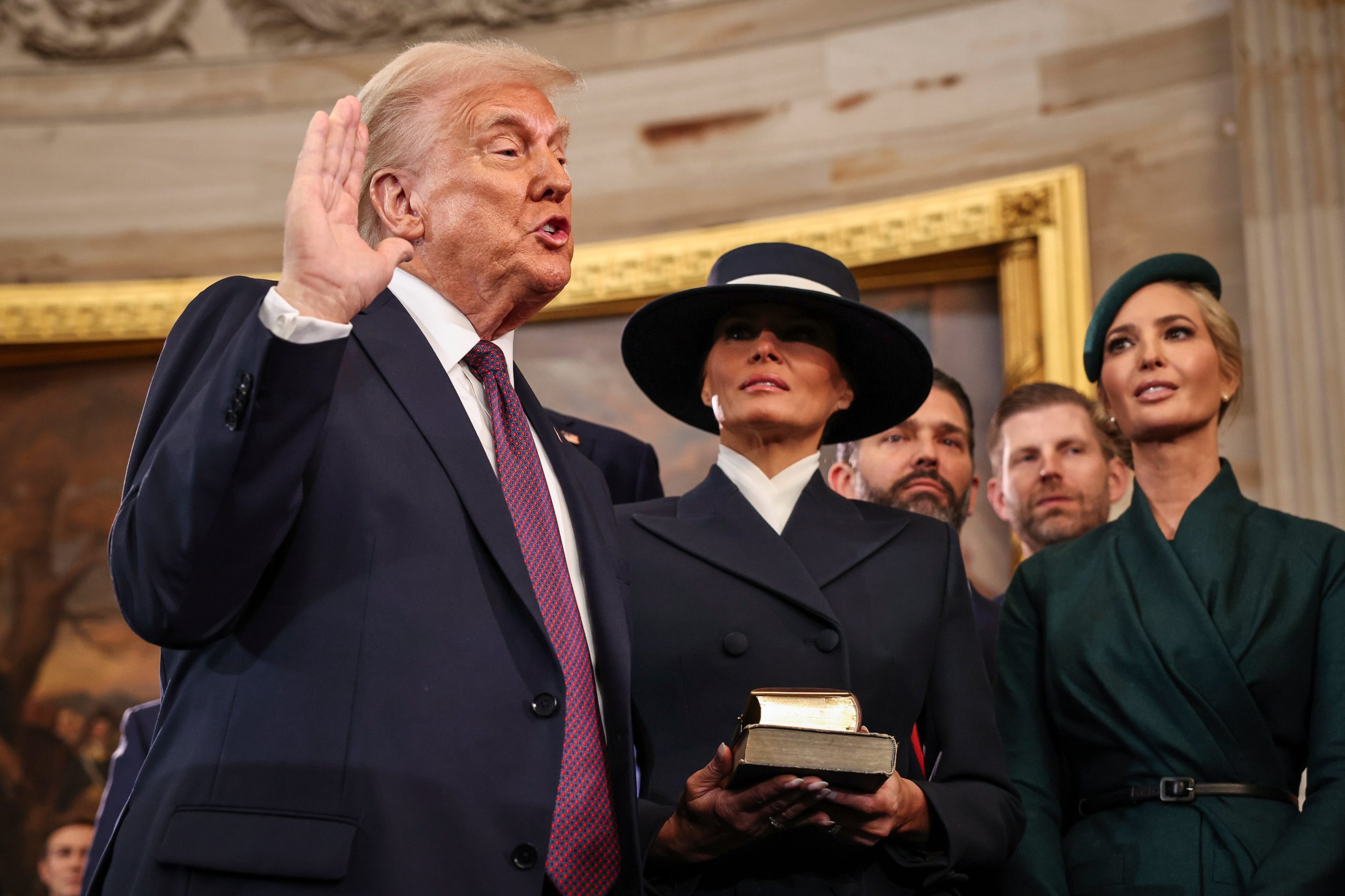
If there is a turning point in Donald Trump’s legacy as President of the United States, it is to be found on January 20, 2025 — the first day of his return to the Oval Office after his abrupt departure in 2021, when he was defeated by Joe Biden and turned into a political pariah for inciting an enraged crowd to storm the Capitol.
On that day, four years after losing power, Trump sat down once again at the Resolute Desk and issued a series of orders intended to reshape the country’s essence. One of the most controversial was the pardon of hundreds of his supporters who had taken part in the January 6, 2021 riots at the Capitol, one of the darkest episodes in U.S. history. Steve Bannon, the strategist and ideological architect of Trump’s MAGA movement, saw the move as quintessential Trump.
The book Regime Change: Inside the Imperial Presidency of Donald Trump chronicles the inside workings of the first 14 months of Trump’s second presidency. It has become a phenomenon in the United States. Its authors, Maggie Haberman and Jonathan Swan of The New York Times — who base their account on information provided by more than a thousand official and anonymous White House sources, as well as a face-to-face interview with Trump — have become sought-after guests on television programs across the country, invited to recount anecdotes and scenes from life inside the walls of the White House.
“We were covering the most consequential year of a U.S. presidency in our lifetimes and watching presidential power used in ways we had never seen,” Haberman said during a book presentation in Washington. The journalists describe episodes that seem as though they were lifted from an installment of Game of Thrones — complete with palace intrigue, betrayals, and accusations of corruption — were it not for the fact that these are real events taking place in the world’s leading superpower.
The carefree billionaire who arrived at the White House almost by surprise in 2017 is very different from the unapologetic, vengeful Republican politician who returned in 2025. This time he came prepared. He had become more isolated, more distrustful, and more driven by a desire for retribution after the legal efforts to disqualify and prosecute him over the excesses of his first term. He also reduced his circle of advisers to a bare minimum, demanding a near-divine level of loyalty.
As a test of that loyalty, he requires his advisers to maintain that the 2020 election — which he lost to Joe Biden — was fraudulent and that he was the true winner. During these months, the U.S. president has pushed the boundaries of executive power in foreign affairs to an extent few of his predecessors attempted, all in pursuit of a lasting place in the history books. He is determined to make the imprint of his legacy indelible and to prevent it from being erased, as happened after his first term.
‘You’re the only thing that matters to me’
Natalie Harp is one of the key characters in this story. She is responsible for posting some of Trump’s messages on the social media platform Truth Social and for preparing AI-generated images to feed the president’s account, including the xenophobic image depicting the Obamas as apes. Harp is Trump’s sole executive assistant. She often accompanies him late into the night as they craft provocative social-media posts, and her presence has reportedly aroused suspicion among members of the White House staff.
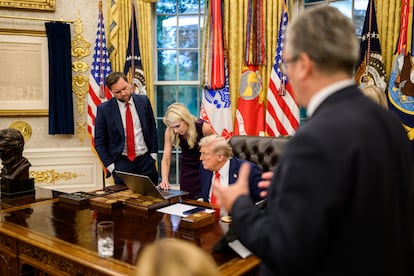
She is 34, blonde, and known among White House employees by the nickname “the human printer.” Before the New York real-estate developer returned to the Oval Office, she used to accompany him on the golf course, carrying a small printer and a laptop so she could read aloud snippets of flattering news coverage.
Harp is one of Trump’s most loyal advisers. She follows him everywhere. She leaves notes for him “in his private spaces.” On one occasion, the book recounts, she left a note that read: “You’re the only thing that matters to me.”
A former television presenter for the far-right network One America News Network, Harp joined Trump’s team in 2022, when the New Yorker decided to return to the political arena after being publicly vilified and subjected to legal proceedings over the excesses of his first term.
She says the president saved her life by signing legislation that allowed access to experimental treatments, enabling her to live with the cancer from which she suffers. “Without you, I’d have died waiting for them to be approved,” she told him. Now she serves Trump with unwavering devotion.
According to Haberman and Swan, Harp is just one figure in the decadent court that the White House has become under Trump’s leadership. They portray an almost Caesar-like administration, headed by a president driven by a desire for revenge and deeply addicted to flattery.
The vendettas
Stephen Miller is another of those theatrical advisers who often seem eager to go further than the president himself. If, during Trump’s first term, he had officials who set limits on him, this time he has surrounded himself with advisers who do the opposite: they encourage him to go one step further.
Miller, a far‑right extremist, is known as “the guardian of grievances.” He has gained great power within the administration, removing legal obstacles to Trump’s policies. He is credited in the book with pushing the cruel immigration policies of Trump’s second term. He reportedly sought to suspend habeas corpus for immigrants — a remedy that prevents arbitrary detention and requires detainees to be presented before a judge. Miller is also the instrument Trump is using to exact revenge on his critics.
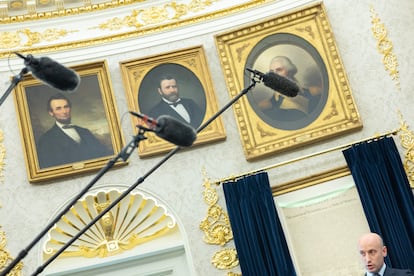
One passage of the book describes how, shortly after shaking up world trade with his tariff war, Trump called a meeting to issue several executive orders aimed at launching legal investigations into some senior officials from Joe Biden’s presidency who had investigated or accused him of misconduct.
According to Haberman and Swan, a meeting in the Oval Office that had originally focused on trade policy eventually turned to Trump’s long-standing grievances about the 2020 election. The authors describe him asking aides about a lawyer in the administration who had publicly defended the integrity of the vote. The book claims that Miller, ever attentive to the president’s wishes, hurried to identify the official and opened an investigation into him without being directly instructed to do so.
More powerful than Mao, Stalin or Hitler
The journalists recount that, during an interview with the president in mid-March intended to wrap up the book, they asked Trump whether he considered himself the most powerful man in history. Trump had no doubts. He asked Natalie Harp to fetch a copy of a document. The president showed the reporters a letter in which he compared himself to several historical figures. “Donald Trump is, without question, the most powerful man the planet has ever known,” the businessman‑turned‑politician read.
The list included Hitler, Mao, Stalin, Alexander the Great, Attila the Hun, Genghis Khan, Tamerlane, the Roman Caesars, William the Conqueror and Napoleon. Trump reportedly took pride in the comparison. The ranking, he said, had been compiled by what he described as a “presidential historian.”
What’s more, it did not seem to concern him that several of those figures are remembered for genocide or the destruction of entire civilizations. Moral distinctions played no role in the comparison. Trump reduced the question to one of notoriety and power alone.
Trump later explained that he had first heard the comparison while playing golf with Gary Player, the nonagenarian golfing legend. According to his account, Player told him about a historian and his theory regarding the most powerful leaders in history. The supposed historian, however, turned out to be little more than a caddie with a keen interest in history books.
Haberman and Swan’s book is, in many ways, a chronicle of what they regard as one of the most turbulent periods in recent U.S. history. It portrays a president exercising power with few restraints, reshaping the nature of the presidency and testing established limits in an effort to expand his authority.
The authors depict a period in which Trump has sought to remake the international order established after the Second World War; upend global trade through tariffs; pursue an aggressive campaign of deportations and immigration enforcement; authorize military action against Venezuela to capture Nicolás Maduro; and become embroiled in another conflict in Iran from which, they argue, he cannot extricate himself.
According to Haberman and Swan, all of this has occurred with limited congressional oversight, amid a weakening of traditional checks and balances and the replacement of thousands of independent officials with loyalists and private-sector lawyers willing to go to any lengths to carry out the administration’s agenda.
Panic over the Epstein files
Another of the book’s most revealing episodes concerns the alarm that reportedly swept through the White House over the declassification of the Jeffrey Epstein files. According to Haberman and Swan, the president’s inner circle was deeply concerned about the consequences of Congress’s order to release all confidential documents related to the investigation into the financier convicted of child sexual abuse and running a sex-trafficking network.
Susie Wiles, the White House chief of staff, convened a meeting in the Situation Room, a facility normally reserved for major national-security and military crises. Polling suggested that the Epstein matter was damaging Trump’s standing among core MAGA supporters. According to the authors, Vice President JD Vance bluntly described the situation as a major problem.
Those present reportedly included the FBI director, the attorney general, the White House communications chief and several lawyers who had previously represented Trump and now held positions within the administration. The group examined a range of possible responses. Among the ideas discussed, according to the book, was the possibility of having Ghislaine Maxwell — Epstein’s associate and longtime confidante — testify before Congress in exchange for a pardon.
That suggestion immediately raised concerns. “Pardoning Maxwell, a trafficker of young girls, would create a huge P.R. problem,” objected Steven Cheung, White House communications director, according to the book.
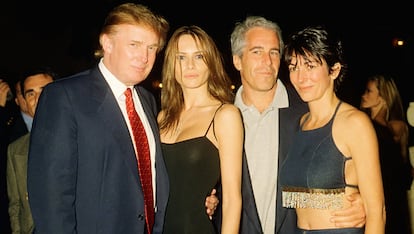
In another meeting on the matter, also held in the Situation Room, officials discussed a complaint by one of the young women associated with Epstein’s network that allegedly described Trump’s fetishistic interest in nipples. The debate over whether that document should be released reportedly lasted for hours. One official, according to the book, remarked that a discussion about nipples taking place in the same crisis room where Barack Obama had once monitored the operation to kill Osama bin Laden was “surreal.”
Trump has increasingly withdrawn into the White House. He has cut back on travel and rarely visits his Mar-a-Lago estate in Florida for weekend rounds of golf. He has built an administration effectively run by half a dozen people. Many senior officials, according to the authors, have little idea what is being discussed behind the closed doors of the Oval Office.
Haberman notes that Trump frequently repeats a particular claim: “We have the most transparent administration in history.” The reporter rejects that: “That is complete nonsense. In reality, they are incredibly good at keeping secrets.” As evidence, she points to the negotiations with Iran. According to her account, no senior official from the military, the intelligence community, the Pentagon or the State Department saw any documentation relating to the memorandum of understanding between Washington and Tehran aimed at ending the conflict until Vice President JD Vance unexpectedly produced it.
Swan argued that Trump’s second presidency differs markedly from his first. Whereas he once had to navigate Washington as a political outsider, rely on advisers he barely knew and remain focused on re-election, opinion polls and day-to-day political pressures, he is now far less constrained by those concerns. In Swan’s view, Trump’s attention has shifted away from electoral politics and towards the longer-term question of how history will judge him.
‘I am not a big supporter of Ukraine. Except for their women’
Another of the book’s more striking episodes concerns Trump’s tense Oval Office meeting with Ukrainian President Volodymyr Zelenskiy. According to Haberman and Swan, Trump was frustrated by the fact that the war in Ukraine had not ended despite his earlier promises that he could bring it to a close in 24 hours. As a result, when Zelensky arrived at the White House, Trump subjected him to an unusual and highly public dressing-down.
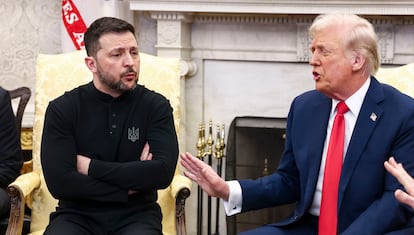
The authors write that, far from being embarrassed by the encounter, Trump later described it to aides as excellent television and favorably compared it to The Apprentice, the reality show that helped make him a household name. “I’m not a big supporter of Ukraine,” he admitted at another high-level meeting while sitting at the Resolute Desk. “Except for their women. They keep winning Miss Universe.” Trump once owned and promoted the Miss Universe pageant and has often boasted about the women who competed in it.
The book also describes the U.S. military operation in Venezuela in January 2026, when — in a matter of hours — the U.S. military captured and jailed president Nicolás Maduro. U.S. Secretary of State Marco Rubio, the reporters say, told Trump that Delcy Rodríguez was a corrupt but pliable politician and the best option to control the country. On another occasion, Trump privately floated the idea that Venezuela could one day become a U.S. state governed by a U.S.-appointed administration. The success of the operation, the authors suggest, strengthened his confidence in the use of military power.
So when Israeli Prime Minister Benjamin Netanyahu visited the White House to press the case for military action against Tehran, Trump gave his backing despite warnings from the CIA chief, who told him the plan was “farcical,” and from JD Vance, who warned him it was a very bad idea.
The race between Vance and Rubio
The book even devotes a section to JD Vance and the competition to succeed Trump. Although tradition dictates that the vice president becomes the party’s standard-bearer once a president has served two terms, Trump reportedly enjoys toying with the idea that he is still weighing his options between Vance and Rubio.
The episode recounted by Haberman and Swan unfolds during a White House dinner with media mogul Rupert Murdoch, attended by both Vance and Rubio. Just weeks earlier, Trump had sued Murdoch after one of his newspapers, The Wall Street Journal, published a sexually suggestive drawing that Trump was alleged to have sent to Jeffrey Epstein years earlier.
As the authors tell it, Trump spent the appetizers berating and threatening Murdoch. By the time the first course arrived, he was showering him with praise. Then, during the main course, he slipped into one of the rambling, free-associative monologues for which he is well known.
Then suddenly he turned to Murdoch and asked: “What do you think of JD?” The media mogul considered the question and answered without great conviction — given he had tried to sabotage Vance’s vice‑presidential nomination — “JD has the potential to be great.” Trump then asked: “And what do you think of Marco?” Murdoch answered immediately: “Marco is brilliant.”
Despite Trump’s efforts to keep the succession question alive, most observers, according to the authors, believe that Vance will be chosen.
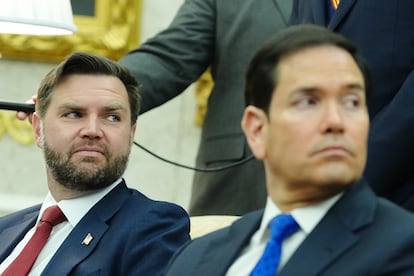
Haberman and Swan’s account depicts a president who is easily bored by meetings and given to biting, and at times ethically questionable, remarks. Defense Secretary Pete Hegseth, for example, is said to entertain him by showing him footage of drone strikes against human targets — videos that one official reportedly described as “Hegseth’s snuff films.”
When the two journalists sat down with Trump for the interview that would help conclude the book, the United States was already deeply involved in the conflict with Iran. Yet they found that the Resolute Desk was covered with photographs of trees.
Trump explained that he was considering planting a grove on White House grounds and appeared more interested in discussing the logistics of transplanting maples and oaks than in talking about Iran or other pressing matters of state. Haberman and Swan came away with the impression that this was not a diversionary tactic. He seemed genuinely fascinated by the trees.
Decorator-in-chief
Perhaps because of his background as a real-estate developer, the president is intensely focused on aesthetics and design. He has sought to remake parts of Washington, redesigning plazas and gardens, refurbishing the Lincoln Memorial Reflecting Pool — an effort that turned into a fiasco — while also planning a vast ballroom on the White House’s East Wing and pressing ahead with a proposal to erect a triumphal arch in a protected area.
His taste for ornamentation has also reshaped the White House itself. The Oval Office has become increasingly cluttered with gilded fixtures and gold-colored decorative elements. One episode in the book captures the extent of the obsession.
According to Haberman and Swan, White House press secretary Karoline Leavitt entered the Oval Office one morning to discuss the day’s agenda and found Trump personally engaged in redecorating. The authors describe him holding a tube of superglue and attempting to attach gold ornaments to the marble mantelpiece above the fireplace.
According to the book, “As he was known to prefer his own aesthetic handiwork to anyone else’s, the sight of the president squeezing glue onto gilded appliqués and mounting them on the wall himself surprised no one in his inner circle.”
Sign up for our weekly newsletter to get more English-language news coverage from EL PAÍS USA Edition








Che Guevara
Omar Sixto, Cuban-American Businessman: ‘The Solution For Cuba Is Not An Invasion, But A Humanitarian Takeover Of The Island’

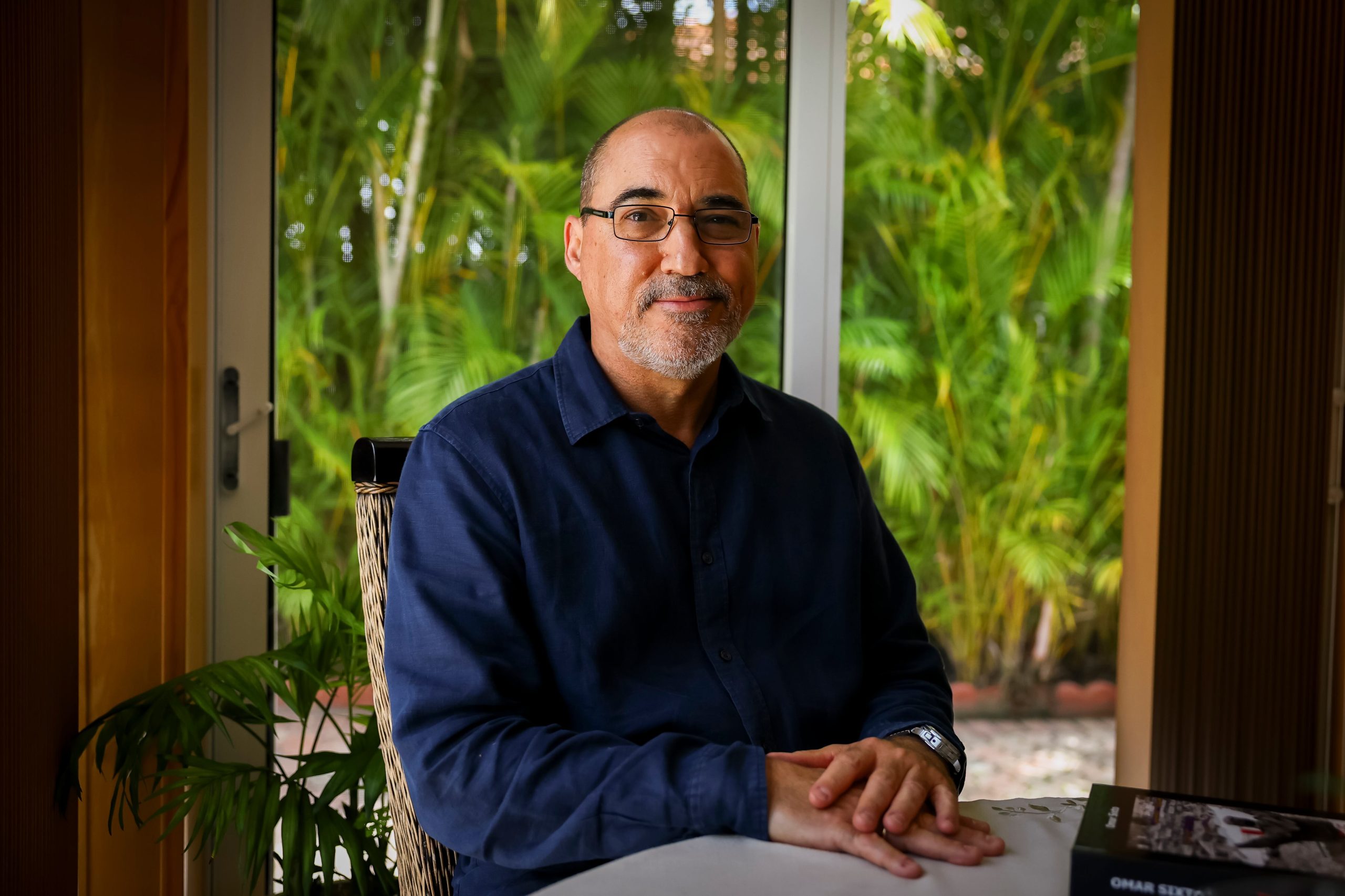
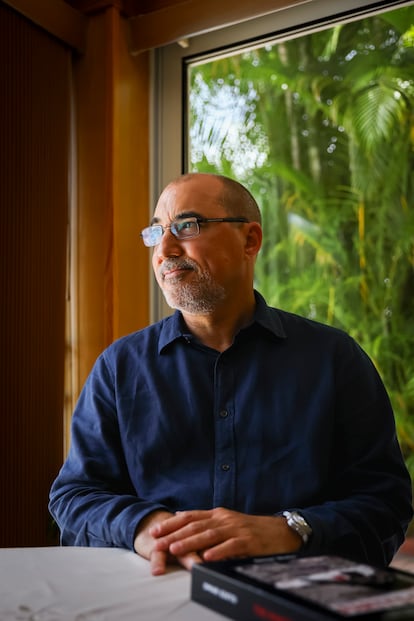
The Cuban-American businessman Omar Sixto (Havana, 1969) left the island 30 years ago and first settled in Madrid, Spain to pursue his history studies; later he moved to the United States, but he still maintains an emotional and intellectual bond with Cuba. A few months ago he published the essay Se acabó la diversión. La economía cubana: el salto del capitalismo al socialismo (1959-1965) [The fun is over. The Cuban economy: the jump from capitalism to socialism (1959-1965)], a detailed portrait of how far-reaching decisions—expropriations, nationalization, walking out on international financial institutions—were made very quickly and led Cuba to integrate into the Soviet production system until the USSR’s collapse.
For Sixto, that period produced “the failure” that Cuba is experiencing today. Like so many exiles living in Florida, he is watching events on the island with a mixture of sorrow and outrage: Cuba is a country on the brink of collapse that, since January, has received only one Russian ship with fuel because of the oil blockade imposed by U.S. President Donald Trump. The seed of this book lies in his years as a history student in Havana, during perestroika, when researching the economy “was almost forbidden.”
Although it is his military clothing and tactical equipment company that “puts food on the table,” Sixto sees his book as his own “small contribution so that, someday, Cubans on the island can return to civilization,” he says during a video interview from Miami. He is also connected as an external adviser to the newly created Cuban-American Chamber of Commerce, which seeks capital to help Cubans inside the island. In his view, a “humanitarian takeover” of Cuba is necessary to deliver basic infrastructure. Sixto, who says he is not affiliated with any party, is disappointed by Trump’s “inaction,” and fears the president may end up striking a deal with the regime.
Question. Why focus on the first six years of the Revolution?
Answer. It was an economy dependent on the United States, as almost all economies in the world were, as Mexico’s economy is today. That is a vulnerability, but not inherently bad. From January 1, 1959, Fidel Castro didn’t just change the rules of the game—he completely changed the game. That transformation took shape in those years. I stop in 1965 because that is when the important role Ernesto Guevara played in the destruction of the economy began to wane. In 1959, the first thing Fidel Castro and his group sought was to consolidate power. To do that they had to take economic power away from the class that would oppose them, and that is what they did. First they took property from the wealthy, then they took money from everyone. In 1960 they carried out the first massive confiscations of U.S. capital, of banks, and then they began with Cubans. Everything changed: within two years, a happy, music-loving country was in uniform and marching, and in three years it had nuclear weapons and the world was on the brink of nuclear war. It was a radical change in very few years.
Q. A happy country, you say? Your book documents the enormous inequalities that existed and the massive support the Revolution had.
A. When you move a society into a mood, it creates a wave: everyone wanted change in Cuba. The economy was much better than Spain’s at that point; Spaniards were still emigrating to Cuba. There were problems and suffering, as in all countries. I say it was a happy country because it worked. I say happy compared with what Cubans experienced afterward, because even under [Fulgencio] Batista’s dictatorship it was fairly lenient; it did not have a structured policy of repression comparable to Castroism. The only bombs that exploded in cinemas, theaters and restaurants were placed by Fidel Castro’s people.
Q. What does that span of time reveal for analyzing Cuba’s present?
A. It shows how they disarmed an economy that worked and tried to assemble one that they saw from the start did not work. And what was their solution? Keep trying, turning one screw here and another one there. By 1963 there was already a structural economic crisis. They survived thanks to Soviet subsidies, and remained parasitic on the Soviet Union until 1989. When the USSR ended, they were left adrift and introduced tourism, especially with the Spanish. They survived a few years on that until 1999, when [leftist Venezuelan leader] Hugo Chávez fell from the sky for them, and later [his successor Nicolás] Maduro until January 3. That short period is the cornerstone of today’s failure.
Q. In your book it seems that the shift to socialism was less a design responding to technical economic considerations than an abrupt jump driven by ideological motivations.
A. It began after they received the first embrace from [Soviet revolutionary Anastas] Mikoyan in Havana and then from [USSR leader] Nikita Khrushchev in New York. That’s when they said, ‘we have the backing, let’s move forward.’ On Guevara’s side it was ideological motivation; he was so ideologized that they eventually removed him because he was disruptive—very pro-China, very extreme. Cuban official history, the version I was taught at university and school, claims socialism was a necessary plan to achieve development and that everything was planned. That wasn’t the case. They brought in capable people early on to draft development plans and none worked.
Q. Why not?
A. There is no logical explanation for why a country would hurl itself into the abyss to the rhythm of a guaracha. There were some very good people—for example the economist [Rufo] López-Fresquet—which is why they removed him and put Ernesto Guevara in his place. At first there were still remnants of the previous Cuba and talented people in lower posts. The technicians and engineers had to leave, because they were expelled.
Q. Cuban authorities have just announced the biggest package of economic reforms in decades. Do you think these measures are viable?
A. They are measures to buy time. For them, every day is a victory. They won’t work. Some, I imagine, are preparing for the chaos of collapse, and that is the operation behind the 176 measures [to open up to the market]. It happened in the Soviet Union and Eastern Europe, where part of the elite took ownership of a ruined company. In Cuba, picture a state-owned cattle ranch: now it’s destroyed, with two old cows left. But how much land does it have? At the moment of change and a market economy, that land will be worth a lot of money.
Q. What options do you see?
A. The best solution would be to see the entire Cuban people, nonviolently, out in the streets facing them. The social pact has disappeared entirely, so there is no going back. Unless, since the regime is so adept at negotiating and the occupant of the White House loves to negotiate, there is a dirty deal that is neither a transition nor anything other than a pact of complicity like Venezuela’s. That could happen. It would hurt us a great deal.
Q. Do you agree with Marco Rubio’s strategy on Cuba?
A. Within the U.S. government there are two strands. Rubio’s is better prepared, more diplomatic and more knowledgeable of the reality, and in the Cuba case it used to have the upper hand. The other strand is JD Vance’s, closer to the MAGA project, aimed at the hard voter—the resentful worker who lost a job to a Chinese or Mexican factory. Trump’s problem is he has two ears: one day he listens to one side, the next day to the other. Cuba has no oil, and for him it’s not a fundamental problem so long as the U.S. coasts aren’t full of rafters. Today the faction that’s winning is the one saying, ‘leave that problem alone, it’s not ours. If they bother us, we’ll finish them off. But if not, don’t waste time or money on this.’
Q. Is there a plan?
A. I don’t think the United States has one, and if it did, the Pentagon’s attention and the money to do something in Cuba are focused on Venezuela. When humiliation weighs more than fear, that’s when people take to the streets. What I can’t understand is the indecision here; I don’t forgive it either, because each passing day means months more of reconstruction and hundreds of lives lost. Every day that passes complicates things further.
Q. Do you think nothing will happen?
A. Cuba’s situation is irreversible; the problem is how long it has lasted, since January 3 and long before that. At the end of January, when Trump issued the executive order declaring Cuba an unusual and extraordinary threat to the national security of the United States, the first possibility we all thought of was the extraction of this character [President Miguel Díaz-Canel]. That would have been a shock that could have moved the foundations of that entire dictatorship. It didn’t happen. Trump then turned his attention to Iran, and the Iranians mocked him, and he is still spinning his wheels. The most effective thing for me—though it is a dream—would be not an invasion but a humanitarian takeover of Cuba: let the U.S. government allow us to load ships with real humanitarian aid. We are not talking only about water tanks, but field hospitals, electrical generators, fuel for the equipment that needs to be moved. You can charter an oil tanker here in no time, we could fill it together and give it away. Money is not the problem.
Q. The Cuban-American Chamber of Commerce has just been created in exile. What is its goal? What is your connection to it?
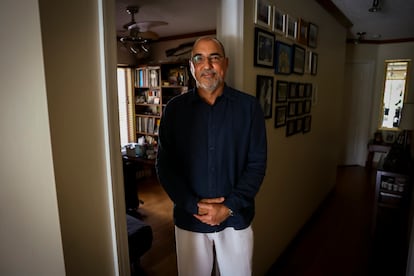
A. The Chamber of Commerce is mainly dedicated to raising capital. It’s a very good idea because it involves people who have many millions of dollars; they are older people who lost their country when they were young and are preparing a humanitarian plan, not an investment plan. First you have to lift people up. I will meet with them at the end of the month. My personal role won’t be large, but advising on a project to rescue Cubans will be valuable; I am available for that.
Q. How much money is estimated to be required?
A. We don’t know. We don’t know how this will end. Money only comes out when it’s needed.
Q. There are estimates that just fixing the electricity grid would cost $10 billion.
A. For a company that operates in that sector, that’s not so much. These are concessions over 30 or 40 years. Look at Japan and all of Europe with the Marshall Plan. In 20 years, where were they? Cuba was devastated when it finished its war [of independence, in 1898]. By 1920 the dance of millions was already underway and Cuba was the world’s leading sugar exporter. In 1940 it had the most advanced and progressive constitution. Cuba is a small country; reconstruction is not impossible. The social fabric will be much harder. I say the tree of the Cuban nation became bent because of many years—67 years. A humanitarian invasion would be the most effective solution.
Q. There is distrust about the exile community’s intentions.
A. There is a new tendency, coming from Havana, that says people here want to reclaim houses there and drag people out on the streets. I have an apartment that was expropriated from me, but I probably acquired it from someone from whom it was taken in 1959. I don’t want anything. However, if someone murdered or tortured, then yes—I want to see justice and punishment. But someone who stole a little should return what is tangible. I understand that someone who owned 100,000 hectares might want to reclaim it, but if I were a new Cuban state, I would not give it back for free. There must be a tax, because the state will need money to rebuild everything else; you have to pay something because the entire place must refounded, and you won’t simply recover what’s yours. I’ve also told this to the Chamber of Commerce.
Q. And where does democracy fit in?
A. That is fundamental. Democracy and liberty are the first two steps to establish a legal system that maintains respect for the law, respect for private property, respect for human rights, freedom for businesses and a financially responsible state that collects taxes, spends them well and does not squander them. It’s extremely difficult, but without democracy there is nothing. From here, not a peso will go if there is no democracy. There is no good dictator, neither [Nayib] Bukele nor [Miguel] Díaz-Canel.
Sign up for our weekly newsletter to get more English-language news coverage from EL PAÍS USA Edition

Bill Clinton
They Steal Our Data, They Steal Our Democracy. The Moral Catastrophe Of Big Tech’s Totalitarians-For-Profit

On November 10, 2019, Dr. Ursula von der Leyen, the president-elect of the European Union, made the trip from Brussels to Berlin to present me with the Axel Springer Award for The Age of Surveillance Capitalism. She seemed to grasp her historical moment at a time when Europe stood out as the only geopolitical force capable of stopping the freefall into digital dystopia.
“We believe in a human-centric approach. Europe puts values, rights, trust and the rule of law above all else. This must also apply to the European approach to the Digital age. For us, new technologies will never mean new values… The individual is first and foremost a citizen – with rights and control over our own lives…Analog or digital…”
The president-elect understood that those values would be ground to dust by the other great powers. “In the U.S., the market traditionally comes first… In Asia…the government tends to dominate, and the individual has to accept a subordinate role to the group. Russia… requires internet providers to install network equipment capable of identifying the source of traffic and filter content.”
“In contrast,” she emphasized, “Europe has a long tradition in balancing the power of government and market while attaching particular priority to the individual. That is Europe’s great advantage in shaping the digital age. Moreover, it is not too late. Of course, progress is not a given. We have to keep pushing.”
I recall the feeling in the room after her remarks. The freezing wind scraped the windows above the city, but inside we shared a sense of hope, warmth and solidarity. The woman who was to lead the EU grasped the significance of this next great civilizational transformation. We were relieved too by her understanding that among the great powers only the EU was prepared to act on the values, rights, and laws that could forge a democratic and digital century for Europe and the many others around the world desperate to outrun dystopia.
The dominant paradigm: 1997
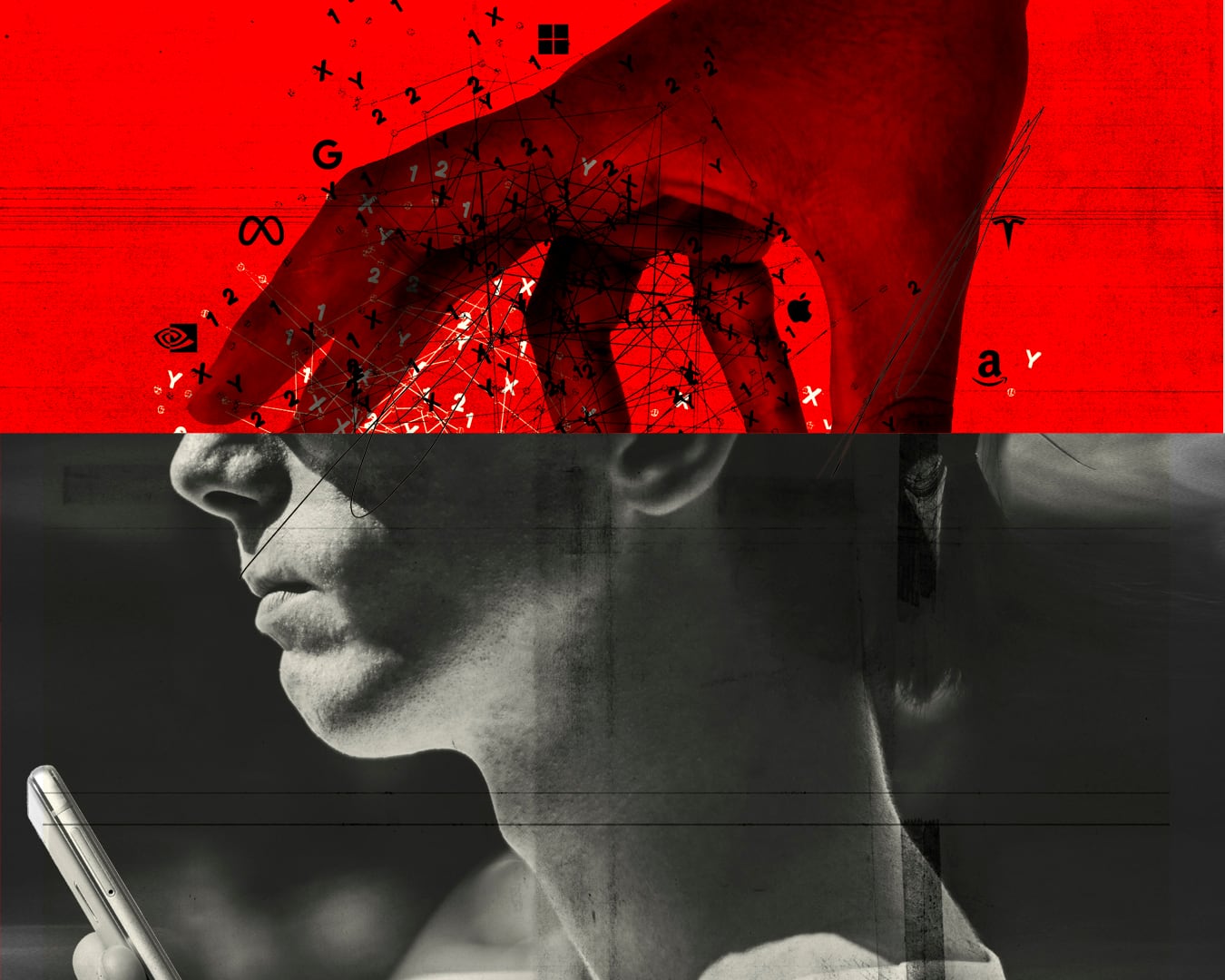
Most of us know that Democratic societies are under siege across the globe, and authoritarians are on the rise. We know that Big Tech is bigger than ever. The flywheel that drives tech’s most recent stage of development, often characterized as “Generative AI,” lays claim to the totality of human-generated information, capital, and natural resources. These facts are in plain sight, but less obvious is their explanation. Why democratic contraction and explosive authoritarian expansion? These are not random events or mere coincidence. They are twins born, two sides of one coin, an accidental dystopia crafted by democratic political leaders in a bonfire of ignorance, moral disorientation, and intellectual confusion.
Let’s visit for a moment a sunny July 2, 1997, at the dawn of the public internet when then-U.S. president Bill Clinton stepped up to a White House podium and introduced the Clinton-Gore Whitepaper on Electronic Commerce to a grand hall packed with the glitterati of the U.S. tech sector. The whitepaper was a critical point of origin for the madness that would curse the decades that followed. Clinton described electronic commerce as “the wild West of the global economy,” and then he pledged to keep it so.
“The Internet,” he said, should be a global free trade zone, a place where government makes every effort not to stand in the way… It was the textbook rendering of the neoliberal creed that elevates a free market above all other societal considerations.
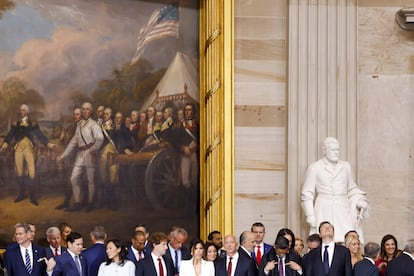
Clinton and Gore wrapped their ideology in Silicon Valley’s crackpot mythology of the internet as an extra-societal zone called “cyberspace” where the norms, rights, and laws of real-world democracies do not apply. The priority was business unrestricted by democratic governance. “We want the private sector to regulate itself. We want to encourage all nations to refrain from imposing discriminatory taxes, tariffs, unnecessary regulations, cumbersome bureaucracies.”
The U.S. abdication of the new global information space to private capital at that early stage of a vast structural transformation to an information civilization was a tragic “own goal” that left a void where democratic governance should have been. The U.S. and its sister democracies abandoned whole societies, including their own, to new forms of digitally mediated violence from state and market actors. They surrendered the opportunity to lay the foundations of a democratic digital century during its critical first decades, depriving the world of a clear alternative to the Chinese model of an authoritarian surveillance-based information civilization.
If this sounds eerily familiar, it’s because democratically elected leaders around the world are reenacting this drama, now under the moniker of so-called “Artificial Intelligence.”
Voids are fleeting, and the void of democratic governance at the birth of the public internet was quickly filled by surveillance capitalism and the kinds of predators who stalk every lawless gold rush.
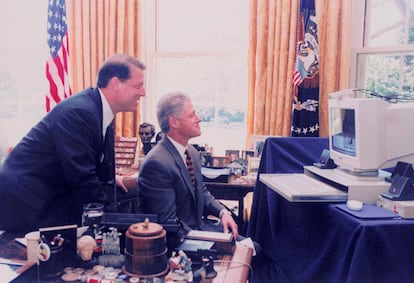
One year after Clinton’s giveaway, a 1998 BBC interview with Eric Schmidt anticipated the antidemocratic whirlwind to come. When asked about Silicon Valley’s politics, the then-CEO of software company Novell who would soon be tapped as Google’s first chief executive, barked his answers without hesitation: “We are anti-government, anti-regulation, anti-Congress.”
BBC: You want a jungle, in fact, don’t you? Where the most powerful survive, and there’s no safety net for those underneath?
Schmidt: That’s correct!
BBC: Are you proud of it?
Schmidt: (replying with a broad grin) Yes!
What made Schmidt’s demand for complete and unaccountable authority even more brazen was his understanding that in the absence of democratic governance an internet owned and operated by Silicon Valley was certain to transform societies in unimaginable and dangerous ways. “We’ve never run an experiment where all hundred or two hundred million people who are connected to the network, their voices are actually heard… We’ve never run such a large experiment in anarchy in the history of the world. All sorts of things are going to happen.”
Despite the unprecedented and therefore impossible-to-anticipate risks he foresaw, Schmidt insisted that he and his colleagues had the right to lead it all without interference, conjuring the same empty arguments that Gilded Age oligarchs relied on a century earlier and tech industry leaders parrot today.
“We want the government out of our business”, Schmidt told the BBC. “We want to be free to pursue our own interests…we also want government to leave us alone.”
Thanks to the Clinton-Gore doctrine, the Silicon Valley elite got its way by simply claiming experimental authority over a world-historic transformation in the global conditions of human communication, information integrity, the fate of truth, and the distribution of knowledge in an information civilization.
Thus began a multi-decade experiment that continues to this day, replete with the uncertainties and tragedies of global information anarchy based on “self-regulating” private ownership of the information space without constraint or accountability. There were to be no rights and no rights to have rights in this vision, neither for human subjects nor citizens. There were no guiding laws, no transparency, no democratic governance…. It was to be the companies who determined the answers to every question of knowledge, authority, and power: Who knows? Who decides? Who decides who decides?
What could possibly go wrong?
The new economic logic was born at Google in 2002, barely a year after Eric Schmidt was chosen as the startup’s first CEO. It was the gloomy emergency of the dot-com bust, and the Valley had yet to figure out how to turn “users” and their data into money.
In the heat of crisis, a small band of engineers and data scientists working closely with Google founders Larry Page and Sergey Brin stumbled into a discovery and a big idea. First, they determined that with each internet engagement, “users” unknowingly leave a trail of behavioral signals that can be captured, rendered as data, aggregated, and analyzed to reveal hidden depths of highly predictive personal information, and used to forecast future behavior.
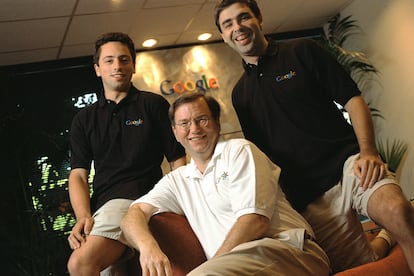
Next came Larry Page’s big idea. The experiences and behaviors of every person who touches the internet will become searchable, knowable, actionable. These enormous flows of personal data would enable behavioral predictions that can be sold in bulk like any other commodity — barrels of oil, tons of wheat, beginning with the famous “click-through rate.” Each step in the operation was designed to evade “user” awareness.
I’ve called these new data flows “behavioral surplus” because they were more than the company needed to support its “user” services. From Google’s viewpoint, the user as an actual human being was no longer the endgame. “Users” were redefined as passive zero-cost reservoirs of human- generated data for extraction, revenue, and profit with no further relevance to surveillance capitalism’s commercial project.
Now Google’s computers, referred to as “our AI,” told advertisers where to place their bets, and the money flowed. Everything depended on maximum data extraction tending toward totality. Each step in the operational sequence was designed to evade user awareness. The more data, the more accurate the predictions, the more knowledge, wealth and power for Google.
In real life, if you secretly take something from someone and sell it for your own profit, it’s called stealing. Back in Google’s infancy, these operations still required a moral reckoning. Some of the leadership team argued for transparency. Page and Brin insisted on aggressive data capture and retention. Page feared that transparency would lead to open rebellion from “users” and mobilize lawmakers into action against the company. Ultimately it was Page who made the final pronouncement: “THEY CAN NEVER KNOW.”
Rather than simply serving its “users,” Google would serve “users’” behavioral surplus to the machines. CEO Eric Schmidt quickly instituted a “hiding strategy.” Democracy may die in the dark, but it was decided that the operations of surveillance capitalism can only flourish in the dark. These choices condemned Google, and eventually the tides of surveillance capitalists that followed, to a permanent death match with democracy.
Surveillance capitalism now intermediates nearly all human engagement with digital architectures, information flows, digital products and services, and nearly all roads to economic, political, and social participation lead through its institutional terrain. The whitepaper laid down the paradigm and vocabulary for a new age in which the tech companies self-regulate but the people cannot. Every U.S. president to follow doubled down on Clinton’s message. Above all, democratic societies paid a high price for the political failure of leaders who nurtured a predatory new economics without considering the consequences that follow when human behavior is the commodity that drives economic growth.
It is astonishing to consider that in this zombie march toward dystopia our information spaces remain available for sale or hire by any individual, corporation, politician, dark money cabal, foreign power, disinformation factory, troll farm, authoritarian dictator, sociopath, narcissist, megalomaniac, malignant billionaire (or trillionaire) whether pursuing a personal, commercial, or political, agenda behind the cloak of secrecy that only the unique shadow privileges of the platforms can provide.
Information anarchy, including disinformation, polarization, and electoral dysfunction, favors autocracy, reshaping politics and polity across the world. Why? Because in the drive for totalities of human data, the algorithmic privileging of corrupt information is good for business, magnetizing engagement and exploding data flows. No democracy can long survive these conditions.
Today’s information spaces are a universe removed from the democratic archetype of the public square, leaving democracies in every region to face unrelenting pressure. From Brazil to Romania to Norway, Poland, Spain, Australia, India, Germany, the U.K. and beyond, we see democratic leaders struggling in the void, forced to improvise solutions to each new crisis. In most cases, there is genuine desperation to protect elections or institutions or people from chaos and even death by information anarchy. In May 2022, the Biden-appointed Commissioner of the U.S. Food and Drug Agency, Dr. Robert Califf, went on CNN to discuss the Agency’s finding that “misinformation” had become the leading cause of death in America, with a “disturbing” effect on Americans’ life expectancy.
Fool me twice
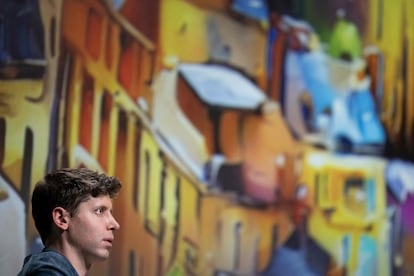
In 2019, I believed that the coming third decade was likely to be the moment when the democracies, led by the EU, would finally reclaim the void for democratic renewal and reconstruction. Instead, Mr. Sam Altman and his company, OpenAI, sought first-mover advantage in 2022 by abruptly releasing their AI ChatGPT directly into the consumer space, with no warning or institutional preparation. Altman and his team had no idea what to expect, only that they wanted to be first.
Journalist Karen Hao closely followed those early years of OpenAI’s arrival on the world stage with its obsessive drive toward dominating the totality of every resource. Its generative AI is “trained on more data and compute than have ever been used before…the maximalist form of deep learning,” she observes. “It feeds on the exploding troves of data amassed through surveillance capitalism…and abetted by the culture of AI research that views consuming as much data as possible as its moral responsibility.”
Here was a fresh round of theft, as contemptuous and brazen as the first. The race for totalities of data drowned out every moral and legal question as the AI companies went after everything: voices, faces, copyrighted materials, scraping every internet page and still warning that it wasn’t enough. Meta investors were assured that the company was feeding its AI by vacuuming up the hundreds of billions of images and videos on its pages along with posts, messages, comments. CEO Mark Zuckerberg confided that Meta planned to track, capture, and render as data the behaviors of its users as they interact with its AI services and products. Artists and lawyers, no longer naive, accused the companies of “stealing the world’s IP.”
Totalitarians-for-profit
The surveillance capitalist bosses are best understood not only in their economic roles as oligopolists and monopolists or in their societal and political roles as oligarchs, but rather in their unprecedented civilizational role as totalitarians-for-profit, rooted in the virgin spaces of an unprecedented market in human prediction that they themselves created.
Totalitarianism-for-profit is a new regime of power that departs in fundamental ways from the political totalitarianism analyzed in the wake of World War II by 20th-century thinkers such as Hannah Arendt, George Orwell, and many others. It does not achieve total domination through ideology and terror, as Hitler and Stalin once did.
Totalitarianism-for-profit introduces a vision of the future in which every societal domain is remade as information science that only the tech leaders can govern. Citizens have no standing in that imagined future. After decades of capturing, analyzing, and trading on behavioral surplus, there is little violence left to surprise us in the shift to the next stage of totalizing evolution when humanity is recast as simply “a human surplus,” the detritus of the fraught sub-optimized age of humans.
Far from mere “bros,” these corporate chieftains can fairly be described as the most dangerous leaders in the history of modern capitalism. Most recently, their abrupt introduction of so-called “generative AI” into the consumer space and the totalitarian ethos of their work expressed in the absolutist claim on all the world’s content, capital, and energy resources has only intensified the danger that we should ascribe to the men — not simply the machines.
This data-powered totalitarianism-for-profit aims toward a future that is decentered from the human, and in that essence claims its role as the enemy of democracy. It is not the future that we seek. It is not the inevitable fate of our people and our time.
Key to this drama is the lesson that surveillance capitalism was invented by a specific group of human beings in a specific time and place for specific reasons. It does not represent the destiny of digital technology, nor is it a necessary expression of information capitalism. It was intentionally constructed at a moment in history to solve someone’s problem and advance someone’s interests.
What does it mean to lose democracy?
Will our children understand the meaning of the phrase “liberal democracy” and its moral promise?
In 2024, the number of autocracies exceeded the number of democracies for the first time since 2002, the year surveillance capitalism was invented. That year, 91 autocracies accounted for 72% of the world population. There were 88 democracies in 2024, and among them only 29 were liberal democracies, the least common regime type accounting for less than 12% of the world’s population that year (900 million), the lowest in 50 years.

The year 2025 was worse. In 2024, the level of democracy for the average world citizen returned to 1985 levels. In 2025, it reached 1978 levels. There were 92 autocracies with 6 billion people, or 74% of the world population, and 87 democracies. With the U.S. losing its status as a liberal democracy, that regime type accounted for only 7% of the world population. According to the researchers at V-Dem, the Swedish institute that tracks these data each year, disinformation and polarization are key drivers of this democratic collapse and the rise of autocracies.
If you were a mere oligarch, or even some kind of tech bro, and you learned about all this, wouldn’t your very first reaction be to fix it? Because they can fix it. So why don’t they? Because these conditions are essential to their power over society. The only threat to that power is democracy itself: the rule of law, the governance of democratic institutions, privacy laws that kill behavioral surplus, laws that prosecute the tech leaders as thieves. They will not fix this.
The totalitarian-for-profit leaders of big tech reserve their most intense fear for the European Union. Their anxiety reflects the EU’s substantial legislative and judicial achievements: GDPR, E-privacy, the right to be forgotten, the Digital Services Act, the Digital Markets Act, the AI Act… The corporations regard these bodies of law as existential threats.
As the first comprehensive attempt at AI governance in the world and certain to trigger a multinational “Brussels” effect, the AI Act mobilized tech leaders to supercharge their ground troops of lawyers and lobbyists tasked with the goal of peeling back the most significant demands of the new legislation.
Europe, like the rest of the world, was relentlessly targeted by the forces of disinformation and polarization, fighting autocratic political factions within its political institutions as well as many of its member states. Elon Musk tried to tip the electoral scales in Germany in favor of the radical right. Mark Zuckerberg made a ridiculous video that blasted into the information space on January 7, 2025, shortly before the inauguration of his new patron, Mr. Trump. It included a special message for President von der Leyen: “We’re going to work with President Trump to push back on governments around the world that are going after American companies and pushing to censor more… Europe has an ever-increasing number of laws institutionalizing censorship and making it difficult to build anything innovative there.” Then came Mr. Trump and his Orwellian language games organized to diminish and insult the very actors that he most fears.
Back to the future: 2025
The language of many EU leaders appeared to change. Suddenly Clinton was in the room, and his 1997 speech was on the table. Now it was all “rollbacks of regulations,” “simplification,” “competitiveness,” “stress-testing,” “implementation dialogues,” “omnibus legislation,” “too much bureaucracy slowing us down,” “but we need further study and long delays in implementing changes.” The time-worn cliché, “innovation,” was dragged back into the center of debate — always under attack from regulations! and the rights of citizens!
Many of Europe’s most prominent civil society organizations issued thoughtful analyses showing how proposed legislative changes would weaken or destroy the hard-won rights and protections of the AI Act and other key legislative victories of the last decades.
President Von Der Leyen’s speech at the Copenhagen Competitiveness Summit in late 2025 responded to this new environment, channeling Clinton like the ghost of Christmas future: “speed up,” “combine public and private capital,” “scale up faster, cheaper,” “simplification,” “we need deregulation!”
President von der Leyen’s language moves back in time to the dawn of all things digital when the harms and violence that follow from the commodification of humanity and its revision as mere human surplus were not yet known to us. When we could not have imagined the eagerness to trade democracy and the rights of the many for the wealth and power of the few.
There is also deep irony in play. The situation is framed as a conflict between innovation and regulation, when neither one is relevant to the facts of the moment.
The tech companies are infinitely wealthy, and there is nothing to stop them from “innovating,” whatever that means. The facts suggest that they do not want to innovate. Surveillance capitalism has been insanely rewarding for the companies, executives, and investors. Even as they move forcefully into new dimensions of AI, they double down on the goals and operational imperatives of surveillance capitalism and the totalitarian-for-profit vision.
As to “regulation,” when we consider the harms produced by these commercial operations, harms so powerful that they are destroying democracy all over the world, one sees that the window for effective regulation has closed. When business practices extract an unacceptable moral and human cost, the historical experience has been to recognize the need for abolition, not to bargain over rules of engagement. Regulation did not address the scourge of child labor. Nor was there any meaningful way to regulate human slavery. Societies do not bargain with moral catastrophe. They recognize the need for fundamental change. If the culpability of the surveillance capitalists in the destruction of democracy is not such a moral catastrophe, then nothing is or ever will be.
Is President von der Leyen failing us, or are we failing her? Europe moves to the right, impelled by the very forces and dynamics that her 2019 solutions were intended to vanquish. The right has organized itself around new levers of power across EU institutions. The algorithms are on their side.
What the future needs from us
If democracy is to survive another generation, then the violence of the unprecedented market-based totalitarian powers now concentrated in the dominant tech corporations must be confronted and dismantled as we reset our societies for democratic success. Spanish Prime Minister Pedro Sánchez has grasped this democratic emergency perhaps more than any other current political leader. His powerful 2026 address to the World Government Summit in Dubai called for a new movement led by a “coalition of the digital willing” to “take back control” from the “failed states” of lawless social media platforms. Sánchez announced a series of policies with which Spain intends to lead by example. These include 1) Holding Tech executives criminally liable for illegal and toxic content on their platforms. 2) Criminalizing algorithmic manipulation and amplification of illegal content. 3) Identification of a hate and polarization “footprint” to reveal harmful platform operations and assign “legal, moral, and financial costs” to their deployment. 4) Investigation and pursuit of grok, Instagram, TikTok, and others whose manipulative “infringement” on, for example, election content, constitutes “foreign coercion.”
Importantly, in survey after survey and poll after poll, the people of the EU, and those in other nations and continents, especially our young Gen Z forced to come of age in the heated fishbowl of Clinton’s wild West internet, yearn to align themselves with the kind of future promised by President von der Leyen in 2019. They are eager to close the books on citizens’ helplessness, lawmakers’ complicity, and the myth of inevitability that freezes so many of us in deathlike resignation. And let’s be clear. The solution to today’s crisis will not be solved by trading the private power of the tech giants for the public power of the state. We return to the beginning and fill the void with mediating institutions designed to protect people and democracy from the equally dangerous pursuits of total power derived from the market or the state.
This is what the future needs from us now if democracy is to survive another generation. Situational awareness, grasp of the historical moment, and a sense of the immense opportunity to rescue and expand our democratic inheritance can help ignite a new conversation and a new movement that reaches across societies and continents.
Allegiance to democracy necessarily originates in allegiance to the well-being and capabilities of people. The concept of “democracy” is the one breakthrough idea in the long human story that insists on the worthiness of human beings, and thus our inalienable right to self-govern. It is in its essence an expression of respect for and faith in self and others.
It follows, then, that at its roots, the defense of democracy is an act of love we pay forward to a still indeterminate future. This requires mustering our faith in community, country, and in the global society to which we entrust our children and the generations that follow. But the work doesn’t stop there. If democracy is to survive the coming decades, it will be because enough people in enough societies chose to love the human and the kind of future only we can make. As you well know, love is always a gamble, but who among us has refused the bet?
She said it that night in Berlin: Europe puts values, rights, trust and the rule of law above all else. That is Europe’s great advantage in shaping the digital age. Moreover, it is not too late…progress is not a given. We have to keep pushing. YES! LET’S DO THAT!
Sign up for our weekly newsletter to get more English-language news coverage from EL PAÍS USA Edition

La Dirección Del PP Defiende El Comentario De Rajoy Sobre La Selección De Francia Como “un Sarcasmo” Y “sin Mala Intención”

Omar Sixto, Cuban-American Businessman: ‘The Solution For Cuba Is Not An Invasion, But A Humanitarian Takeover Of The Island’

Inside The White House: How Trump Wields Unchecked Power To Leave His Mark On History
Alhaurin el Grande and Coin launch historic 1.5 million kilo season for premium tomato

Los Aficionados Al Ciclismo En Barcelona: “Que Venga El Tour De Francia Es Como Ir Al Mundial De Fútbol”

Cheap Flights And Mass Tourism Are Adding €3,800 To The Cost Of The Average Spanish Home, New Report Warns


-
Alhaurin El Grande1 week ago
Alhaurin el Grande and Coin launch historic 1.5 million kilo season for premium tomato
-
 Antoni Gaudi2 weeks ago
Los Aficionados Al Ciclismo En Barcelona: “Que Venga El Tour De Francia Es Como Ir Al Mundial De Fútbol”
-
 Business & Finance1 week ago
Cheap Flights And Mass Tourism Are Adding €3,800 To The Cost Of The Average Spanish Home, New Report Warns
-
Calahonda2 weeks ago
Lorry snags power cable on A-7 in Mijas, creating danger for drivers and residents
-

 Barcelona1 week ago
Spain Is Set To Be Swarming With Rock Legends This Weekend – Here’s What You Need To Know
-
Latest1 week ago
Conservatives And Far Right To Govern Spain’s Andalusia Region
-

 Aleksandar Pavlovic2 weeks ago
Paraguay Elimina A La Apagada Alemania En Los Penaltis Para Firmar La Primera Gran Hazaña En Las Eliminatorias Del Mundial
-
Costa Calida2 weeks ago
How a local charity is helping struggling mothers in Cartagena