Connect with us

%

Thirty Puerto De Mazarron Neighbours Unite To Clean Beaches

Published

on

thirty-puerto-de-mazarron-neighbours-unite-to-clean-beaches

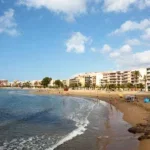
Volunteers successfully clean Puerto de Mazarron beaches after local festivities. Photo Credit: Neighbourhood Association of Puerto de Mazarron

In a demonstration of community spirit, solidarity, and care for the environment, around thirty volunteers gathered in Puerto de Mazarron for a beach cleaning day. Organised by the Asociación de Vecinos de Puerto de Mazarron, or the Puerto de Mazarron Neighbourhood Association, the event was held directly following the traditional local festivities of El Carmen. The primary aim of the day was to protect and clean up the beaches after a big event and raise awareness among residents and visitors alike about the vital importance of preserving the municipality’s stunning and famed coastline.

Coming together after the el carmen festivities

Over the course of around two hours, dedicated volunteers, as well as representatives from the environmental groups Auramar and NaturActua, cleaned rubbish from the El Puerto and Rihuete beaches. Together, they collected a wide variety of litter left there after the festivities, including plastic, paper, wood, and other waste. The collective effort also inspired beachgoers; many locals and tourists who were enjoying their Sunday morning near the areas joined in to help.

Overall, the project was a resounding success, with organisers satisfied with the turnout from both the Neighbourhood Association and the community. Given the success, the organisation will continue carrying out volunteer cleaning initiatives.

A vital reminder on environmental responsibility

To conclude the day, the organisation shared a reminder on environmental responsibility, stating, “The cleanest person is not the one who cleans the most, but the one who litters the least.”

Grateful members of the community praised the initiative, stating that these types of cleaning workshops are needed in popular areas like Puerto de Mazarron where large summertime gatherings can lead to piles of rubbish on the sand and in the water.

Helping to protect the forgotten areas of the coastline

Members of the Neighbourhood Association also suggested other beaches where these types of initiatives could be useful. “An activity like this is absolutely necessary on the Isla beach,” stated one resident. “It is full of plastics and, above all, thousands of microplastics in the water. There are sunflower seed shells, popsicle sticks, bags, and candy wrappers. It is the forgotten area of Puerto de Mazarron.”

%

Italian Village Hits Bare-Chested Tourists With €200 Fines

Published

on

italian-village-hits-bare-chested-tourists-with-e200-fines

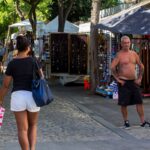
Tourist strips off in heat. Credit: Mick Harper – Shutterstock

Varenna, by Lake Como in Italy, has banned shirtless strolling and swimwear away from beaches. Instant fines of €50 to €200 now apply to anyone walking village streets in bare chests, risqué wear, or bathing attire alone.

These changes form part of new urban, police-enforced regulations that took effect on June 27 after multiple complaints were received from locals about foreigners, mostly, stripping off where it was not considered appropriate. The council introduced the measures to ease pressure from rising visitor numbers on a community of roughly 650 permanent residents.

Noisy foreign tourists stripping off

Mayor Mauro Manzoni expressed pride in receiving hundreds of thousands of guests yearly yet insisted local quality of life must stay protected. “Residents cannot see their daily comfort sacrificed for the sake of mass tourism,” he said.

Tour guides and operators will also find extra controls under the same package. Groups stay limited to 25 people maximum while loudspeakers and any form of voice amplification face are outright prohibited. Guides who break those limits risk being instantly slapped with a fine of between €100 and €400 and possible bans lasting several months from leading tours through the village.

Tourists must stop milling around

Public spaces also receive further safeguards under new rules. Groups cannot obstruct pathways or gather on designated roads, piazzas or bridges, keeping movement open for everyone who lives or visits there.

Shop owners across Varenna have given the rules strong local backing. Proper dress suits shops, restaurants, churches and the main square, one trader noted, while swimwear stays suitable only by the water. Enforcement is essential, another owner added, describing the step as timely and well judged.

Several other Italian towns adopt same strict view

Several Italian destinations have already taken comparable action against disruptive habits. Sorrento previously imposed heavy fines after labelling bare-chested walking and town swimwear as widespread indecorous behaviour. Portofino later banned certain selfies and created no-waiting zones to stop crowds lingering in tight spots.

Narbonne in France has threatened clothing fines of its own. Spanish destinations have made similar rules and fines common across many cities, towns and villages for tourists who remain underdressed once they leave the coast.

Online comments from readers worldwide largely support Varenna’s stance. Many call the dress code a reasonable minimum standard applied evenly. Others recall the traditional Italian practice of changing in cabanas before entering streets or businesses and urge wider adoption of group-size limits in crowded heritage sites.

Clear expectations now form how visitors should appear while exploring when away from the waterfront.

Continue Reading

%

Marbella Council Auctions Off Retired Police Horses

Published

on

marbella-council-auctions-off-retired-police-horses

Virginia inspecting the horses. VdN FB

Marbella local council has launched an auction for five horses from the local police unit that are too old and can no longer perform their duties. Bidders can place offers on the group from a starting price of €600, with individual animals valued between €50 and €150 depending on each case.

Previous auction attempts

Council officials tried a similar process three years ago when six horses, including one pony, went on sale after developing various health issues. That 2023 effort set a combined starting price of €1,625 yet attracted little interest and closed without any sales. Four of those same animals now return to the auction block together with a fifth newcomer named Ruidoso XVII.

Reasons behind the decision

The local police have declared the horses unfit for continued police work due to ongoing expenses for stabling, feeding, farrier services, veterinary care and medical attention. Animal welfare rules require finding destinations suited to their specific conditions. Many suffer from chronic problems such as tendonitis, degenerative arthritis causing lameness, skin melanomas, colic, dermatitis and, in one instance, incomplete training.

The contracts stress that new owners must provide dignified care and avoid any unnecessary harm to the equines.

Community fundraising drive

Animal advocates responded quickly to the news. Marbella Activa launched an online micro-donation campaign one week ago and has already fundraised over €900. Supporters hope to use these funds to bid successfully and find suitable retirement placements.

Participants from Marbella focused on animal and environmental protection have joined forces for the auction entry. Contacts with sanctuaries and specialised equine centres continue, including facilities that offer animal-assisted therapy for children. Virginia de Nibiru, a well-known activist, has also called for support through her social media channels.

Bidding closes on Monday, July 20, after which administrative steps will finalise the transfer to approved buyers.

Public criticism mounts

Local residents of Marbella have expressed strong views on the matter. Many argue that while resources are available for various council positions and consultants, they are insufficient for these retired animals that once faithfully served the police force. Commentators described the low reserve prices as an attempt to offload the horses quickly rather than invest in proper long-term care at quality sanctuaries.

Critics call for greater accountability, suggesting the council should cover veterinary costs and monitor the animals’ wellbeing throughout their remaining years instead of going after a low-cost sale.

This latest development revives questions about how public bodies handle working animals once their service ends. Supporters hope the combined efforts will lead to positive outcomes where the horses receive appropriate retirement environments matching their needs.

Continue Reading

%

The Milan Sculptor Behind The Iconic Trophy

Published

on

the-milan-sculptor-behind-the-iconic-trophy

As we near the end of the World Cup battle of 2026, we wonder if it will be Spain or Argentina that get to take home the glory and lift the famous trophy. Every World Cup-winning captain since 1974 has lifted the same iconic prize. Yet, the story of Silvio Gazzaniga, the Milanese sculptor who created it, and the tale of the design is not commonly known to most people.

Why FIFA needed a fresh design

Under tournament rules in 1970, any nation that won the World Cup three times was allowed to keep the trophy permanently. When Brazil achieved this milestone that year, they walked away with the original Jules Rimet Trophy, leaving FIFA with the sudden mammoth task of designing a brand-new replacement worthy of the global game.

An international design competition attracted 53 entries from artists across 25 countries. Among them was Gazzaniga, an employee at the renowned trophy manufacturer G.D.E. Bertoni. Rather than submitting simple sketches, Gazzaniga took a gamble and produced a three-dimensional plaster model. The tactile submission allowed judges to truly appreciate the fluid movement and symbolism of his vision, securing him the winning bid.

Symbolism in gold

Gazzaniga wanted the trophy to express the emotional peak of sport rather than just raw victory. His design depicts two stylized human figures rising in spirals to support the globe. As he later explained, he wanted to capture the dynamic energy of an athlete’s struggle, the exhilaration of triumph, and the universal joy shared by supporters.

Born in Milan in 1921, Gazzaniga trained at the Brera Academy of Fine Arts before building a distinguished career creating prestigious silverware, including the UEFA Cup and UEFA Super Cup. He passed away in 2016 at the age of 95, leaving behind his iconic work.

The trophy stands 36.5 centimetres tall, weighs 6.175 kilograms, and is forged from solid 18-carat gold. Its base features two bands of green malachite, emulating the pitch, with the underside engraved with the name of every winning nation since 1974.

Who now keeps the original?

One of the footballs misconceptions is that World Cup winners take the golden trophy home forever. In reality, the original masterpiece never leaves FIFA’s possession permanently. The victorious captain lifts the genuine article during the stadium presentation before it is returned to safekeeping.

Instead, the winning nation receives a gold-plated bronze replica to display. This strict protocol was directly influenced by the fate of the original Jules Rimet Trophy. After being permanently awarded to Brazil, it was stolen in Rio de Janeiro in 1983 and never recovered.

Gazzaniga’s design has been untouched in design since its 1974 debut. By now ensuring the original trophy never permanently leaves its possession, FIFA has created a wonderful sporting tradition where every generation of champions lifts the exact same piece of history.

Continue Reading
Advertisement
Advertisement

Spanish Real Estate Agents

Tags

Trending

Copyright © 2017 Spanish Property & News