Connect with us

%

Renfe Opens All Trains To Dogs Weighing Up To 40 Kg

Published

on

renfe-opens-all-trains-to-dogs-weighing-up-to-40-kg

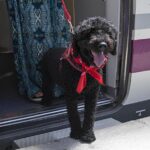
Dogs now welcome aboard Renfe trains. Credit: Renfe

Renfe has just introduced a major change for pet owners across Spain. From July 21, travellers can take dogs up to 40 kg on virtually every service, including AVE, Avlo, Alvia, Euromed, Intercity, Avant and Media-Distancia routes.

Dogs travel next to owners on special seats

Passengers have to book a ticket plus a supplement for their dog. The animal sits in the window seat beside its owner. Rules require a non-extendable lead of 1.5 metres and a muzzle in stations plus during boarding and alighting. Owners must bring vaccination records or a pet passport, plus, very importantly, a cleaning kit. These will be checked by ticket collectors before boarding.

Lo anuncié hace meses y hoy lo cumplimos. Las mascotas son familia, y ya pueden ocupar un hueco a nuestro lado en el tren.

En todos los trenes de @Renfe desde el 21 de julio y para perros de hasta 40kg. pic.twitter.com/ioUKHTJqJM

— Óscar Puente (@oscar_puente_) July 17, 2026

Staff hand out seat covers and mats on many services. Each train accepts a maximum of two large dogs in one specially signed carriage. Exclusions apply to dogs under one year old, females in season, or those from potentially dangerous breeds.

Expansion builds on earlier limited trials

This update extends a service that began in 2022 on selected high-speed routes only. Earlier coverage in Euro Weekly News explained initial options for large dogs on certain AVE trains.

Some passengers raise concerns over dogs in shared spaces

Not everyone welcomes extra animals in public transport or in many other public areas. Companies in Spain, such as El Corte Inglés, introduced a policy towards greater tolerance of dogs several years ago. Critics worry about allergies, pests, fear of larger dogs, or potential mess and noise during long journeys. Other travellers mention discomfort sharing confined train carriages with pets, especially on crowded services or hot summer days. Similar complaints have appeared in forums and social media whenever transport firms expand pet access.
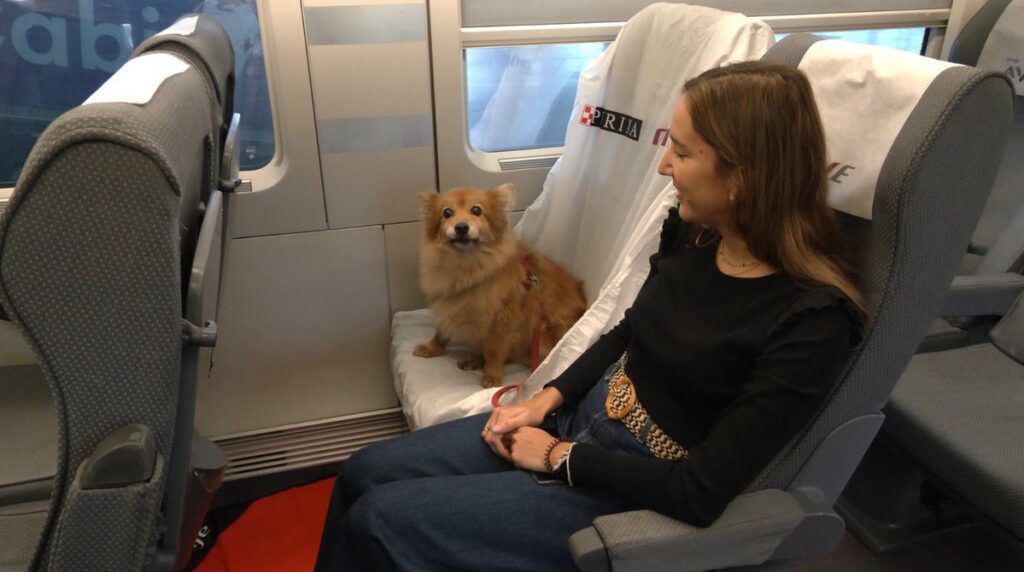
Dog aboard train
Dogs now on board.
Credit: @DelegGobMurcia X

Practical details for travellers

Bookings open via the Renfe website, app or agencies. A doggie footprint icon shows which services accept larger pets. Owners receive a reminder email 24 hours before departure. Supplements cost €40 on most long-distance trains, while regional services use standard fares.

Pet owners should arrive early at stations to complete checks. This change of policy makes Spain one of the most accommodating countries in Europe for travelling with bigger dogs by rail. Full rules appear on the official Renfe site.


%

Marbella Police Cracking Down On Alcohol And Drugs

Published

on

marbella-police-cracking-down-on-alcohol-and-drugs

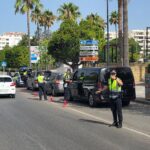
Marbella police cracking down on alcohol and drug use behind the wheel. Credit: Marbella Policia Local

Marbella local police officers have been carrying out a new set of preventive controls in the La Campana district to reinforce road safety throughout the city and support safer conditions for all road users.

Alcohol and drug testing operation

Police officers joined forces with the Directorate General of Traffic (DGT) for a campaign focused on alcohol and drug detection. Their main objective centred on finding drivers who could endanger everyone using the roads. Recent national data puts the problem into context. Civil Guard traffic officers completed 144,346 drug tests in 2025. This total exceeds the 122,938 tests from 2024 and represents the highest number since 2021. Sanctions with loss of points, reached 70,717 drivers last year for drug driving. The figure increased by 6,403 from the year before.

Motorcycle and moped inspections

Officers carried out specific inspections on motorcycles and mopeds during the controls. Teams verified that vehicles met all technical requirements and followed current regulations fully. Extra attention went to unauthorised modifications, exhaust systems and further components which might compromise safety or generate complaints from locals. These actions help ensure greater safety for every person on the roads in the district.

Alcohol controls and safety research

Alcohol test numbers climbed in recent years to more than six million checks in 2025. Year-on-year comparisons prove difficult following changes in recording methods. Research from Valencia University indicates accident risk can triple even at alcohol levels of 0.5 grams per litre or less. Traffic authorities maintain action on several fronts at once. Surveillance campaigns run continuously together with regulatory updates and education initiatives aimed at drivers. These measures operate under the Safe System framework set out in the 2030 Road Safety Strategy. Sustained reductions in road accidents and their impacts form the central purpose.

Marbella police dedication to road safety

Preventive operations of this kind demonstrate the ongoing commitment from Marbella police to safer mobility for residents and visitors. They promote rule compliance and help reduce local road accidents. Responsible driving continues to save lives in towns across the country.

Sign up for personalised news

Subscribe to our Euro Weekly News alerts to get the latest stories into your inbox!

By signing up, you will create a Euro Weekly News account if you don’t already have one. Review our Privacy Policy for more information about our privacy practices.

Continue Reading

%

Hästens Marbella By Bdhome: The Architecture Of Rest

Published

on

By

hastens-marbella-by-bdhome:-the-architecture-of-rest

Hästens Marbella by bdhome.

In a world where luxury is often associated with speed, novelty and excess, Hästens invites us to look in another direction: towards time, craftsmanship and the quiet value of things made properly.

At bdhome Marbella, official distributor of the prestigious Swedish brand Hästens, we believe that true residential luxury begins with the way a home makes you feel. A beautiful bedroom is not only a matter of design. It is a place where wellbeing, comfort and rest become part of everyday life.

The story of Hästens is extraordinary because it did not begin with beds. It began in 1852 with saddlery. In nineteenth-century Sweden, the Hästens family worked with horsehair, leather and natural materials, creating products for the equestrian world. But when the rise of the motor industry changed everything, the family did not disappear with the trade that had shaped them. Instead, they adapted. They transformed their knowledge of natural materials, comfort and handcraft into something unexpected: the creation of some of the world’s most respected beds.

Six generations later, Hästens remains a family company with a deep respect for the human hand. In an age where many businesses try to grow by replacing people with automation, Hästens asks a different question: what if human craftsmanship is not a cost to eliminate, but the very value to protect?

Each Hästens bed carries with it knowledge passed from person to person, generation after generation. It speaks of time, responsibility, natural materials and the decision to preserve an identity even when modern industry often moves in the opposite direction.

This philosophy was beautifully expressed by Jan Ryde, fifth generation of the Hästens family, in his book When Business Is Love. For him, love in business is not sentimental. It is practical. It means caring for people, working with honesty and integrity, protecting craftsmanship, building lasting relationships and proving that a company does not have to choose between humanity and profitability.

At bdhome Marbella, this vision connects deeply with our own history. After 30 years helping international homeowners on the Costa del Sol create elegant, comfortable and timeless homes, we understand that a bed is never just a bed. It is part of the architecture of rest.

We do not simply furnish bedrooms.

We help create spaces where design, wellbeing and sleep come together naturally.

Hästens Marbella by bdhome

Private Sleep Experience · By appointment

C/ Antonio Herrero 3, Local 1 · 29602 Marbella

+34 952 861 122 · info@bdhome.es

hastensmarbella.com

Continue Reading

%

Spain Warns Drivers Over Hazard Lights

Published

on

spain-warns-drivers-over-hazard-lights

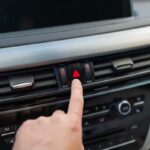
Spain’s DGT reminds drivers that hazard lights are only for genuine emergencies, not illegal stops. Credit : Andriiii, Shutterstock

It happens every day on streets across Spain. A driver pulls up outside a shop, stops in a bus lane or double parks for ‘just a minute’, switches on the hazard lights and assumes that’s enough to avoid getting into trouble. According to Spain’s Directorate General of Traffic (DGT), it isn’t.

The traffic authority is reminding motorists that hazard lights, often called warning lights or ‘four way flashers’, do not give drivers permission to stop wherever they like. If your vehicle is parked or stopped somewhere it shouldn’t be, turning on the hazard lights won’t make it legal and, in some situations, you could still face a €200 fine.

The reminder comes as many drivers continue to misuse the lights, often believing they act as a temporary pass for quick stops, collections or deliveries. The DGT says that’s one of the most common misunderstandings on Spanish roads.

Why your hazard lights don’t make an illegal stop legal

For many drivers, switching on the hazard lights has become almost automatic. Someone jumps out to collect a takeaway, drop off a parcel or pick up a passenger, and the warning lights start flashing before the engine is even switched off.

The problem is that the law doesn’t work that way.

Under Article 109 of Spain’s General Traffic Regulations, hazard lights are intended to warn other road users about an exceptional situation that could present a danger, not to excuse an illegal stop.

That includes situations such as a mechanical breakdown, a road traffic accident or any other incident that forces a vehicle to stop unexpectedly in a place where it could create a hazard.

A voluntary stop is something entirely different. If you choose to stop in a prohibited area, on double yellow lines, in a bus lane or in double parking simply because you expect to be there briefly, activating the hazard lights does not change the nature of the offence.

In other words, the flashing lights may warn other drivers that your vehicle is there, but they do not give you permission to leave it there.

The DGT also points out another common mistake.

Some motorists use their hazard lights when pulling over to the side of the road. The correct signal while carrying out that manoeuvre is the appropriate indicator, not the hazard lights. Even then, using the indicator does not make it lawful to stop somewhere where stopping is prohibited.

The mistake that could leave you with a €200 penalty

One of the biggest myths among drivers is that staying inside the car somehow changes the rules.

It doesn’t. Whether you’re waiting for someone, answering a phone call or expecting to drive away after a few seconds, an illegal stop remains an illegal stop. If your vehicle blocks part of the carriageway or makes it more difficult for traffic to pass, the offence becomes more serious.

According to the DGT, that can result in a €200 fine.

The authority also reminds drivers that hazard lights are compulsory in some situations.

If your vehicle breaks down or has to stop in circumstances that could endanger other road users, failing to warn approaching traffic correctly may also lead to a penalty.

In those cases, the fine can start at 80. The purpose of the system is simple. Drivers approaching from behind should immediately understand that something unexpected has happened ahead.

Using hazard lights for everyday parking or convenience weakens that message and can create confusion for other motorists.

Another common habit the DGT wants drivers to avoid

Incorrect use of hazard lights isn’t limited to parking. Many drivers also switch them on the moment they see slow moving traffic or a queue forming ahead, even while their own vehicle is still moving.

The DGT says that’s not the recommended way to warn other road users.

If traffic begins to slow, drivers should brake progressively so that their brake lights clearly show vehicles behind that speed is being reduced.

Hazard lights should only be activated once the vehicle has come to a complete stop and there is a genuine risk of being hit from behind by approaching traffic.

Although many motorists have seen different habits on Spanish roads over the years, that remains the guidance set out by the traffic authority.

What hazard lights are actually for

Hazard lights are one of the simplest safety systems fitted to every vehicle. Their purpose is to communicate that something unusual has happened.

Perhaps the car has broken down. Perhaps there has been an accident. Perhaps the driver has been forced to stop because continuing would be unsafe.

Those are the situations where the flashing lights help other drivers understand they may need to slow down or change lane. Using them simply because it’s easier than finding a legal parking space sends the wrong message and reduces the value of a warning system designed to prevent collisions.

For motorists, the safest approach is also the simplest. If you’re stopping because of an emergency or an unexpected problem, use your hazard lights.

If you’re stopping because you’re collecting someone, making a quick delivery or popping into a shop, the flashing lights won’t protect you from a parking ticket or a traffic fine.

As the DGT continues to remind drivers, hazard lights are a safety warning, not a free pass to ignore the parking rules.

Continue Reading

Trending

Copyright © 2017 Spanish Property & News