Connect with us

%

Brit Expats In Spain Launch Free Five-Day Heart Failure Challenge

Published

on

brit-expats-in-spain-launch-free-five-day-heart-failure-challenge

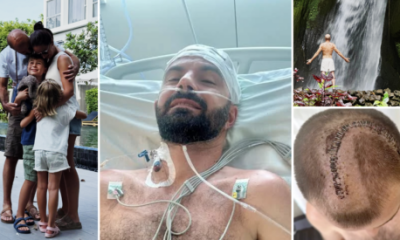
Katrina and Gareth advising and protecting against heart failure. Credit: G&K & ChrisGoesEverywhere – Shutterstock

Couple who survived a near-fatal diagnosis launches free program to help the newly diagnosed, people living with heart failure, and their carers. Gareth and Katrina Robinson know exactly how it feels when a heart failure diagnosis lands like a bombshell. Three years ago, Gareth’s sudden tiredness, nosebleeds, dizziness and night-time leg cramps were dismissed as stress. Katrina sensed otherwise and pushed him to get checked out in hospital. Doctors later confirmed he was roughly 20 minutes from a stroke, with his heart pumping at just 15 per cent ejection fraction. “I was basically drowning in my own blood,” Gareth said.

Today, the British couple behind the growing Heart Failure – From Diagnosis to Strength Facebook community are launching a free Five-Day Heart Failure Challenge for people newly diagnosed, living with heart failure, or supporting someone who is.

But this is more than two people sharing their story. Gareth brings the lived experience of surviving severe heart failure and rebuilding his life. Katrina is a qualified holistic practitioner, with professional experience helping people manage anxiety, fear, stress and the emotional impact of difficult life experiences. Together, they combine lived experience with practical and emotional support to help people navigate the frightening early stages of a diagnosis.

The five-day challenge is designed to help participants understand what they are facing, work through fear and overwhelm, build confidence and discover practical ways to start moving forward, while complementing, rather than replacing, professional medical care.

Turning isolation into connection for expats and others

Many people with heart failure, especially British expats living far from family, can suddenly find themselves isolated. Fatigue, medication routines, breathlessness and the loss of the social identity they once had can lead to withdrawal. For carers, life can change overnight too, as they suddenly become researchers, advocates and emotional anchors for someone they love.

Katrina remembers sitting at Gareth’s hospital bedside searching medical journals while fighting her own fear. Early online searches filled her with frightening statistics about life expectancy. Their message now is different: don’t let fear write the rest of your story. The challenge focuses on what people can understand, influence and work on today — rather than becoming trapped in worst-case scenarios.

The three pillars: Clarity, Capability and Community

The programme rests on three simple pillars. Clarity helps people understand what heart failure actually means, challenge frightening misconceptions and begin processing the diagnosis without feeling completely overwhelmed. Capability focuses on rebuilding confidence in everyday life, physically, mentally and emotionally, encouraging participants to understand their own limitations, recognise what they can control and work alongside their healthcare professionals as they rebuild strength and independence. Community tackles one of the biggest problems after diagnosis: feeling alone. Patients and carers can connect with people who genuinely understand the fear, frustration and uncertainty that can follow a heart failure diagnosis.

Day one digs into individual fears and frustrations so the rest of the challenge can be shaped around what participants actually need. The following days introduce practical tools for managing the emotional impact of diagnosis, developing healthier routines, building confidence and staying connected. The emphasis is simple: you don’t have to figure everything out on your own.

Who can join and how to get involved

Anyone facing a heart failure diagnosis, living with heart failure, or supporting someone who is can take part. Expats in Spain dealing with distance from family and established support networks, people still processing a new diagnosis, and carers feeling overwhelmed are particularly welcome. All sessions take place online.

Demand is already building through the couple’s Facebook community, Heart Failure – From Diagnosis to Strength. Gareth and Katrina’s own journey, from a hospital bed and a 15 per cent ejection fraction to rebuilding Gareth’s fitness, changing their lifestyle and creating a new approach to living with heart failure has given them a powerful message of hope.

“A diagnosis is not the end of the book; it’s the start of a new chapter,” they say. Their goal is straightforward: no one should have to face the fear, confusion and uncertainty of heart failure alone.

For reliable medical information, people should continue to work with their cardiologist, heart failure team and cardiac rehabilitation service. The British Heart Foundation also provides extensive information and support for people living with heart failure and their families.

To join the waiting list for the free Five-Day Heart Failure Challenge, join the Heart Failure – From Diagnosis to Strength Facebook community and register interest as the launch approaches.

This is more than a challenge. It is a hand held out by two people who have walked the path — one who survived it, one who stood beside him, and both determined to help others find their way through it.

%

Health Card Request Sparks Violent Rampage At Spanish Health Centre

Published

on

health-card-request-sparks-violent-rampage-at-spanish-health-centre

Staff eventually managed to get the two men outside and locked the door behind them. Photo credit: Screenshot from Españanosevende on Instagram

Healthcare workers at a Spanish health centre were left facing a terrifying situation during a night shift after a man allegedly turned violent when staff asked for a health card. The incident at the Sineu out-of-hours health centre in Mallorca left a nurse reportedly unable to work because of anxiety, while the building itself was damaged during the confrontation.

The man, of Moroccan nationality had arrived at around 4am with another man and a woman. The second man was reportedly bleeding heavily and appeared to be unconscious, prompting staff to assess him. A doctor then asked for his health card, according to an account from a witness at the centre. That request was followed by an alleged outburst that rapidly escalated inside the facility.

Glass door smashed during confrontation

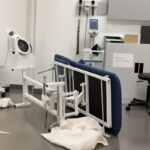
According to the witness, the man said he had no documentation, health card or DNI before becoming increasingly aggressive before picking up a nursing bed, knocking over a medical trolley and kicked the entrance door several times, smashing the glass.

Healthcare workers were confronted with the threat inside the centre while they were trying to deal with the medical emergency that had brought the group there. Staff eventually managed to get the two men outside and locked the door behind them. The Guardia Civil was called, with officers later finding the man outside the health centre waiting for an ambulance.

Nurse left unable to return to work

For one member of staff, the consequences reportedly continued long after the confrontation ended. A complaint has been filed, and the nurse has received legal assistance from the College of Nursing, according to the report. Video footage recorded during the incident has also reportedly been handed to the Guardia Civil and included with the police report.

The footage provides investigators with visual evidence of what happened inside the health centre and the behaviour that staff were dealing with during the incident. For the workers that were providing overnight medical care, the episode has left them with  vulnerability and trauma that many other care worker face when dealing with distressed or aggressive people when there may be only a small number of colleagues on duty.

Violence erupts during overnight medical care

The Sineu facility operates as an out-of-hours centre, providing medical attention during periods when ordinary health centres are closed. The incident occurred during the early hours of July 19, when staff were working through the night. The group had arrived because one of the men apparently required medical attention.

Instead of concentrating solely on treating the injured man, staff found themselves dealing with an alleged violent confrontation inside their workplace. Staff ultimately secured themselves inside the building after getting the group outside. The Guardia Civil’s attendance brought police intervention to the scene, while the ambulance was also involved in the man’s subsequent care.

Attack raises concern for Spanish healthcare workers

The incident is just another mounting backdrop of concern over aggression towards medical staff in Spain. Healthcare workers can face verbal abuse, threats and physical attacks while carrying out their jobs, with incidents becoming particularly difficult for those working alone or with limited colleagues during overnight services. At Sineu, the alleged confrontation was not confined to an argument at reception. Staff were reportedly faced with broken glass and medical equipment being lifted during the altercation.

The reported anxiety suffered by the nurse shows the personal cost can continue after the immediate danger has passed. A health centre should be a place where medical staff can treat patients without having to protect themselves from violence. For the workers involved, that expectation was shattered during a single overnight shift. The investigation will now establish what happened and whether further action will be taken over the alleged assault and damage.

Footage handed to Guardia Civil

The witness who recorded the incident reportedly provided the footage to the Guardia Civil. That evidence could be significant in establishing the sequence of events and determining what occurred inside the centre.

The investigation will determine the legal consequences of the incident, but for those working at the Sineu centre, the memory of a routine request for a health card allegedly escalating into violence is unlikely to disappear as quickly as the broken glass was cleared away.

Continue Reading

%

Mijas Golf Families Live In Fear After Violence And Sudden Eviction Threats

Published

on

mijas-golf-families-live-in-fear-after-violence-and-sudden-eviction-threats

Building becoming notorious amongst residents. Credit: Photo supplied

Quiet family life in a multinational residential complex in Mijas Golf has turned into daily dread. Residents who once enjoyed green spaces, a swimming pool with Mediterranean and Sierra de Mijas views, and easy access to golf, now report broken locks, neglected gardens, main gates left open for strangers at all hours, and letters demanding they pack up and leave within weeks.

Complaints started rolling in soon after the complex changed hands in 2023. Access control failed, CCTV stayed offline, fire equipment and handrails needed attention, sewage and drainage problems raised public health worries, and communal facilities including the pool and gym fell into poor shape. Some neighbours also brought up uncontrolled dogs and aggressive behaviour.

One resident documented formal notices about unrestricted access and damaged gates as early as June, followed by detailed health and safety reports in early July. Rental contract questions were raised in mid-July too, long before any violence. Rodrigo, a father of small children on the site said, “We can’t go on like this anymore. We’re already looking for somewhere to move to, but it’s not easy at such short notice.”

Intimidation from unidentified men

Letters ordering residents to leave arrived recently. Unidentified men described as “bully boys” from Torremolinos then turned up to enforce the message. They carried no official identification and showed none of the usual professional approach expected in Spanish eviction processes.

Many owners have stayed silent on formal correspondence. Many at the site refused to speak through fear of repercussions. Both Spanish and international tenants, the majority of whom pay rent and bills on time, now feel pressured and watched with unrecognised people and cars arriving through the night.

Nearby residents across the wider Mijas Golf resort lower their heads when the complex is mentioned. It has gained a reputation throughout the resort. Estate agents still list properties online under a different address in an apparent effort to protect the image.

Fatal attack inside the complex

Horror struck on the evening of August 10. A 25-year-old man of, left in a wheelchair after a previous shooting, was stabbed in the chest inside his home. Neighbours found him bleeding heavily and contacted the emergency services, but he later died. Guardia Civil officers attended after reports of the attack but found no sign of suspects at the scene. Security correspondence has intensified since then One resident sent urgent notices about previous deficiencies and demanded immediate repairs, including security installations which had fallen into disrepair. By August 12 a reply confirmed work on the locks had begun. Later that same afternoon apartments received formal notice to vacate. Some residents challenged it and sought legal clarification about the 15-day deadline that followed the raising of safety concerns.

Community reputation in tatters

What was once a tucked-away, safe spot for families with children has gained a bad name. Families still live there, paying their way and causing no trouble, yet the whole community now walks in fear. Similar worries have surfaced elsewhere on the Costa del Sol, including squatter occupations that unsettled another golf resort and a suspected double murder in a Mijas house fire. Mijas town hall has also moved to take over dozens of long-neglected urbanisations in a bid to improve services, as reported here, but even the council admits there is little they can do.

Local voices insist the sequence of unresolved security failings, the fatal attack, rapid lock work, and sudden vacation notices, deserves closer attention from higher authorities. Residents say they simply want the place made safe again so ordinary families can live without looking over their shoulders.

Continue Reading

%

Torremolinos Presses Ministry For New Police Station

Published

on

torremolinos-presses-ministry-for-new-police-station

Mayor Margarita del Cid with Mayor of Benalmadena Juan Antonio Lara, and chief of police Credit: MdC Insta

Tired of waiting, Torremolinos Town Hall has welcomed the Ministry of the Interior’s decision to put a new National Police station for the town and neighbouring Benalmadena into the second phase of the State Security Infrastructure Plan (Plise). Officials still want clear timelines after years of waiting. The go-ahead was given, and then nothing happened. Local residents are at their wit’s end waiting.

Council calls for urgent meeting and detailed schedule

Mayor Margarita del Cid said the local authority handed over a plot of more than 5,200 square metres next to El Pozuelo free of charge and completed every administrative step the ministry requested. The land has been accepted since 2024. “There is no reason for this project to sit without a defined date until 2034,” she stated in a council note.

Councillors have asked for an urgent meeting with Ministry of the Interior in Madrid and a detailed calendar covering project drafting, tender and the start of works. They argue the facility serves two large municipalities whose population multiplies for much of the year. Reports put the investment at €11 million.

Old station site eyed for protected housing

Separately, Torremolinos will push the central government to commit now to handing over the current police station plot on Calle Skal. The central-location land would go towards publicly protected housing once the new building opens.

“We are not asking for another announcement or an eight-year window. We are asking for a calendar. After years of paperwork, land transfers and repeated requests, Torremolinos and Benalmadena need to know when the project will be drawn up, when it will go out to tender and when the diggers will arrive,” the council repeated.

Both town halls have treated the new station as a long-running joint demand. Inclusion in the police 2026-2034 programme is viewed as progress, yet local leaders say concrete dates remain essential so the infrastructure can move forward without further delay.

Continue Reading
Advertisement
Advertisement

Spanish Real Estate Agents

Tags

Trending

Copyright © 2017 Spanish Property & News