Connect with us

France

Spain Builds New High-Speed Lisbon-Madrid Train Route After France Shuns Plans To Expand Line To Paris


Published

on

spain-builds-new-high-speed-lisbon-madrid-train-route-after-france-shuns-plans-to-expand-line-to-paris

%

Macron Signs Assisted Dying Into Law: Who Actually Qualifies In France

Published

on

macron-signs-assisted-dying-into-law:-who-actually-qualifies-in-france

President Emmanuel Macron, who signed France’s assisted dying law this week. Credit: Gints Ivuskans / Shutterstock

Emmanuel Macron has signed assisted dying into law after four years of fierce debate, but the right exists only on paper for now. Patients will not be able to request it until the government finalises the practical rules early next year.

Macron signs the law after four years of debate

President Emmanuel Macron signed France’s assisted dying law on Wednesday August 19, formally publishing it in the Journal Officiel, France’s official gazette, and closing a process that began in 2023. The National Assembly adopted the final text on Wednesday July 15, and France’s Constitutional Council validated the law on Friday August 14 after Prime Minister Sébastien Lecornu, Senate President Gérard Larcher and around 60 senators tried to have parts of it struck down.

The Élysée Palace called the law “an essential safeguard for our fellow citizens” and said it completed “an exemplary democratic debate”. It has been described as one of France’s biggest social reforms since same-sex marriage was legalised in 2012.

Who qualifies for assisted dying in France

The law grants a right to aide à mourir, or aid in dying, to adults who are French nationals or settled legal residents. Applicants must have a serious and incurable illness in its terminal or advanced phase, causing physical suffering that cannot be relieved, and must keep full mental capacity to make a free and conscious choice until the final moment. Psychological suffering alone cannot qualify someone for the procedure under the law.

A single doctor leads the assessment alongside other health professionals and must give a reasoned answer within 15 days of a written request. Patients then face a minimum two-day reflection period before confirming their decision, and may withdraw consent at any point. Patients are expected to administer the lethal substance themselves, except where a physical disability prevents this. Healthcare workers, pharmacists and private or Catholic-run clinics can still refuse to take part on grounds of conscience, provided the clinic is not the only facility available locally.

Why nobody can actually access it before 2027

Despite the promulgation, no patient can request the procedure yet. The Health Ministry must still write the decrees that set out the practical mechanics, including which substances can be used, and the government has committed to publishing them within six months of the law being signed.

France’s Haute Autorité de Santé, the national health authority, is due to give its own opinion on prescriptions and complications by November, before any decree can be finalised. Officials are targeting early 2027 for the law to become usable in practice.

Spain has already granted the same request more than a thousand times

The debate is not new for readers in Spain, where a similar law, the Ley Orgánica de Regulación de la Eutanasia (Spain’s organic law regulating euthanasia), has applied since June 25 2021, open to Spanish nationals and anyone with legal residency, including British nationals settled here. Read EWN’s essential guide to assisted suicide in Spain for the full picture.

Spain’s Health Ministry recorded 2,432 requests between the law’s introduction and the end of 2024, of which 1,123, or 46 per cent, ended in an assisted death. In 2024 alone, 426 people used the law, and more than 550 did so in 2025, according to ministry figures reported in June.

The right that collapsed in the House of Lords

Britain came close to a similar law of its own. The Terminally Ill Adults (End of Life) Bill passed the House of Commons in June 2025 in a historic vote but stalled in the House of Lords, where opponents tabled more than 1,200 amendments.

Because backbench bills can only be debated on Fridays, the delay ran out the parliamentary clock, and the bill fell on Friday April 24 2026. Labour peer Lord Falconer called it “an absolute travesty of our processes”, and Kim Leadbeater, the MP who introduced the original bill, said supporters would try again in the next parliamentary session.

For now, British nationals wanting an assisted death have a legal route in Spain, will have one in France from next year, and still have none at home.

Continue Reading

climate change

Jellyfish strike France’s biggest nuclear plant again and shut down three reactors

Published

on

By

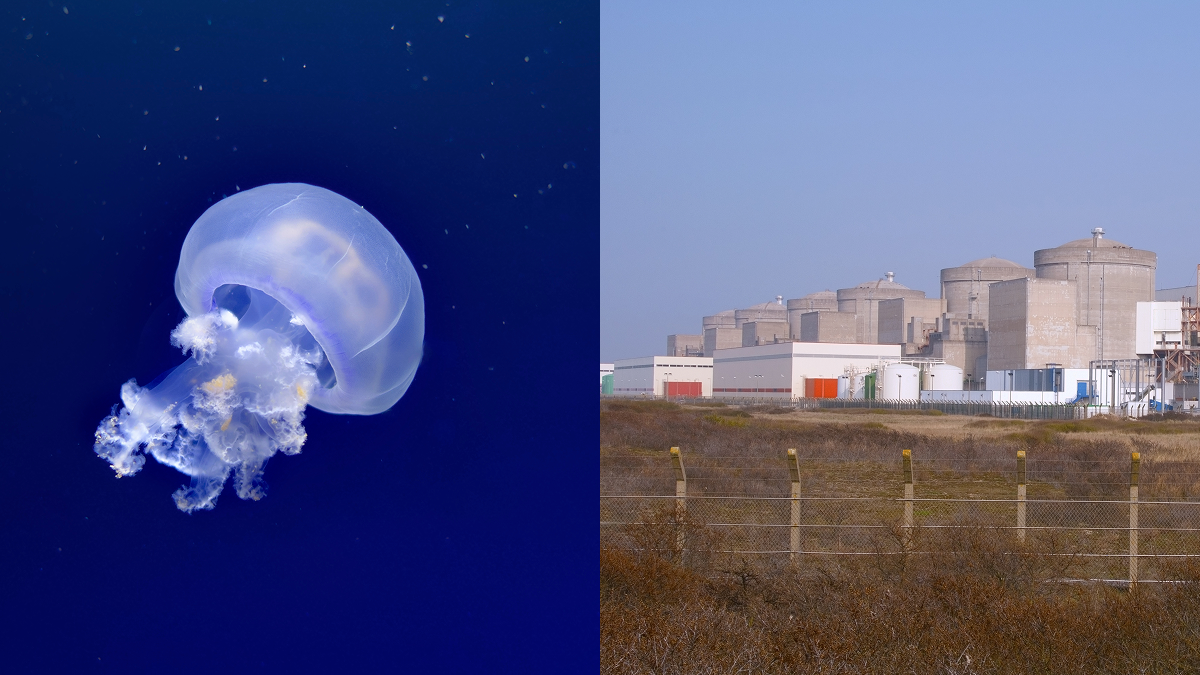
A swarm of jellyfish shut down reactors at Gravelines, the largest nuclear power plant in Western Europe, for the second August running.
Credit: CVancoillie / Igor Karpenko 64 / Shutterstock

A swarm of jellyfish has knocked out three reactors at Europe’s largest nuclear plant, and the strangest part is not that it happened but that it happened almost exactly a year to the day after the last time it did.

Three reactors down, one still running at full power

On Monday August 10, operator EDF said swarms of jellyfish had clogged the seawater filters that cool Gravelines, the plant near Dunkirk that draws its water from a canal linked to the North Sea. Three of the six 900-megawatt reactors shut down automatically, a fourth had its output halved, and a sixth was already offline for scheduled maintenance. Only one reactor kept running at full capacity.

“This situation has no impact on the safety of the facilities, the safety of personnel, or the environment,” EDF said in a statement. The company added that jellyfish have little ability to swim against a current, which is why so many were carried straight into the cooling system. 

The same plant, almost the same date, two years running

This is not the first time Gravelines has been beaten by jellyfish. Almost exactly a year earlier, on August 10 2025, a swarm forced every reactor at the plant offline, taking engineers more than a week to fully reconnect the site to the grid, according to French newspaper Le Monde.

EDF spent hundreds of thousands of euros after that shutdown on preventive measures, including boats that trawl the water around the plant around the clock and thermal cameras to track incoming blooms. This time, reports suggest the swarm grew too fast for those defences to keep up. 

Why jellyfish keep finding their way into a nuclear plant

Gravelines draws its cooling water from a canal connected to the North Sea, where jellyfish are a normal presence in summer. Warmer sea temperatures extend their breeding season and speed up the growth of jellyfish polyps, the dormant, bottom-dwelling stage that can suddenly bud into a swarm.

Marine biologists also point to overfishing, which has stripped the sea of natural predators including tuna and turtles, and to plastic pollution, both of which tip marine ecosystems further in jellyfish’s favour.

France’s nuclear fleet is already stretched by the heat

The Gravelines shutdown wiped out about 3.2 gigawatts of capacity at the height of a summer heatwave. It came a day after France recorded a nuclear shortfall of 15.6 per cent, the largest ever calculated from EDF’s own data, as other reactors were throttled back because nearby rivers ran too warm to safely cool them.

France normally exports more electricity than it imports, drawing more than 70 per cent of its own supply from nuclear power. This summer, extreme heat has repeatedly pushed the country the other way, forcing it to lean more heavily on gas and imported power to make up the shortfall. 

Gravelines is not the only plant jellyfish seem to have it in for

Jellyfish have disrupted nuclear cooling systems elsewhere before, including a three-day shutdown at Sweden’s Oskarshamn plant in 2013 and two separate incidents at Scotland’s Torness plant, in 2011 and 2021. Energy analysts increasingly regard the blooms as a recurring, underappreciated risk for coastal power stations as seas continue to warm.

EDF has not said how long it will take to bring Gravelines back to full output. Last year’s clean-up offers a clue though: the plant needed more than a week before every reactor was reconnected to the grid.
Continue Reading

%

Jellyfish Strike France’s Biggest Nuclear Plant Again And Shut Down Three Reactors

Published

on

jellyfish-strike-france’s-biggest-nuclear-plant-again-and-shut-down-three-reactors

A swarm of jellyfish shut down reactors at Gravelines, the largest nuclear power plant in Western Europe, for the second August running. Credit: CVancoillie / Igor Karpenko 64 / Shutterstock

A swarm of jellyfish has knocked out three reactors at Europe’s largest nuclear plant, and the strangest part is not that it happened but that it happened almost exactly a year to the day after the last time it did.

Three reactors down, one still running at full power

On Monday August 10, operator EDF said swarms of jellyfish had clogged the seawater filters that cool Gravelines, the plant near Dunkirk that draws its water from a canal linked to the North Sea. Three of the six 900-megawatt reactors shut down automatically, a fourth had its output halved, and a sixth was already offline for scheduled maintenance. Only one reactor kept running at full capacity.

“This situation has no impact on the safety of the facilities, the safety of personnel, or the environment,” EDF said in a statement. The company added that jellyfish have little ability to swim against a current, which is why so many were carried straight into the cooling system. 

The same plant, almost the same date, two years running

This is not the first time Gravelines has been beaten by jellyfish. Almost exactly a year earlier, on August 10 2025, a swarm forced every reactor at the plant offline, taking engineers more than a week to fully reconnect the site to the grid, according to French newspaper Le Monde.

EDF spent hundreds of thousands of euros after that shutdown on preventive measures, including boats that trawl the water around the plant around the clock and thermal cameras to track incoming blooms. This time, reports suggest the swarm grew too fast for those defences to keep up. 

Why jellyfish keep finding their way into a nuclear plant

Gravelines draws its cooling water from a canal connected to the North Sea, where jellyfish are a normal presence in summer. Warmer sea temperatures extend their breeding season and speed up the growth of jellyfish polyps, the dormant, bottom-dwelling stage that can suddenly bud into a swarm.

Marine biologists also point to overfishing, which has stripped the sea of natural predators including tuna and turtles, and to plastic pollution, both of which tip marine ecosystems further in jellyfish’s favour.

France’s nuclear fleet is already stretched by the heat

The Gravelines shutdown wiped out about 3.2 gigawatts of capacity at the height of a summer heatwave. It came a day after France recorded a nuclear shortfall of 15.6 per cent, the largest ever calculated from EDF’s own data, as other reactors were throttled back because nearby rivers ran too warm to safely cool them.

France normally exports more electricity than it imports, drawing more than 70 per cent of its own supply from nuclear power. This summer, extreme heat has repeatedly pushed the country the other way, forcing it to lean more heavily on gas and imported power to make up the shortfall. 

Gravelines is not the only plant jellyfish seem to have it in for

Jellyfish have disrupted nuclear cooling systems elsewhere before, including a three-day shutdown at Sweden’s Oskarshamn plant in 2013 and two separate incidents at Scotland’s Torness plant, in 2011 and 2021. Energy analysts increasingly regard the blooms as a recurring, underappreciated risk for coastal power stations as seas continue to warm.

EDF has not said how long it will take to bring Gravelines back to full output. Last year’s clean-up offers a clue though: the plant needed more than a week before every reactor was reconnected to the grid.

Continue Reading

Trending

Copyright © 2017 Spanish Property & News