
European News
Portugal moves to stop pets being left behind in wildfires and floods

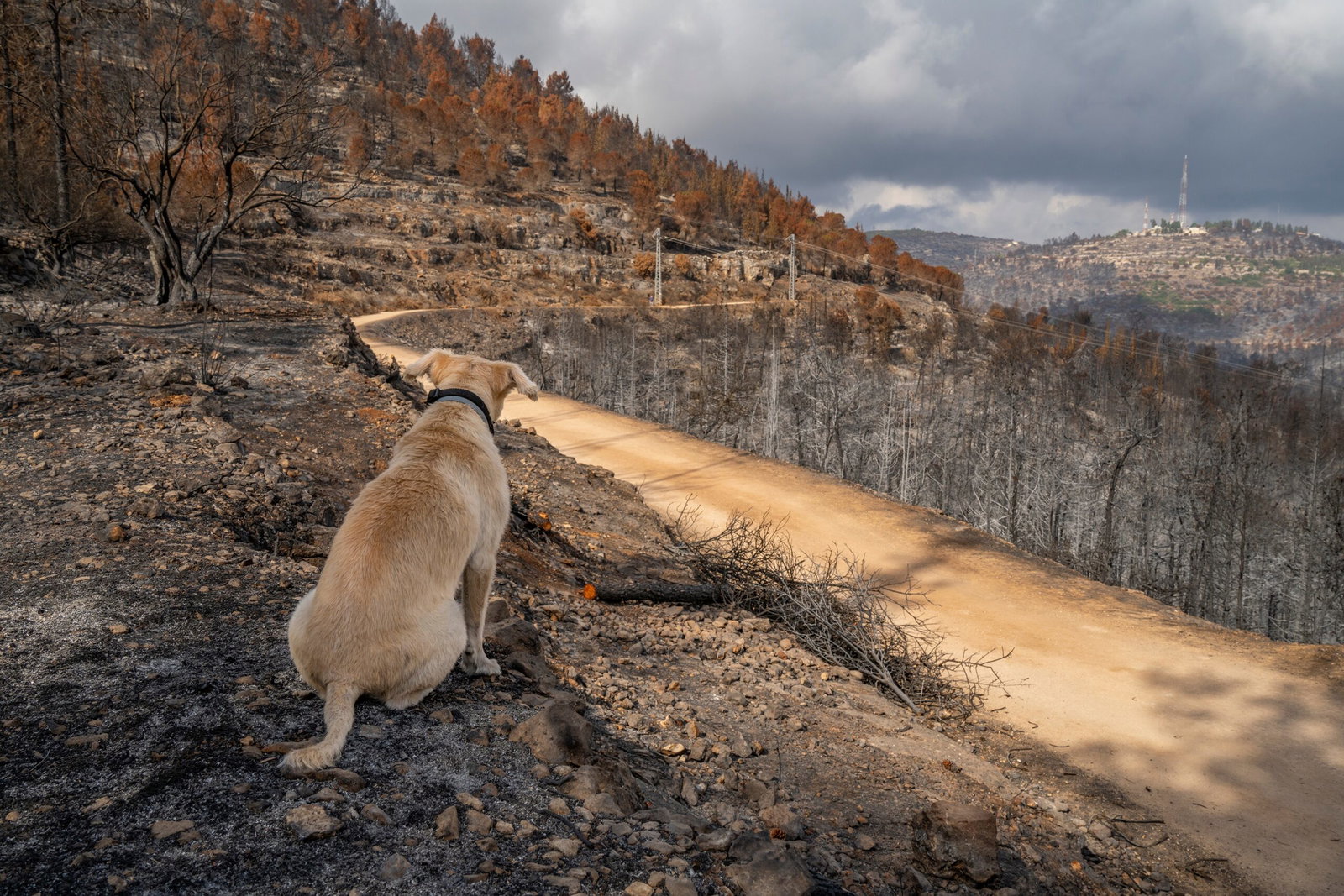
Emergency planning must now take animals into account. Photo credit: Moshe EINHORN/Shutterstock
For families forced to flee their homes during a wildfire, flood or other disaster, one of the most frightening decisions can be what to do with their animals. Portugal has now taken steps to make sure that saving pets and other animals is not left entirely to owners, volunteers or charities when an emergency strikes.
From August 8, animals are formally part of Portugal’s civil protection system, meaning emergency planning must account for their search, rescue, evacuation, accommodation and care during disasters. The move puts Portugal ahead of the debate over how governments should protect animals when communities are evacuated and raises an obvious question for Spain, where the law already requires animal-protection measures in civil protection plans.
Portugal changes the rules for animals in emergencies
Portugal’s Law No. 38/2026, published on August 3, changes the country’s Civil Protection Framework Law and came into force on August 8. The legislation establishes that civil protection is responsible for protecting and rescuing animals as well as people and property in danger. The change is particularly significant because it moves animal rescue beyond being an issue dealt with primarily by individual owners or animal charities.
Emergency planning must now take animals into account, including their search, rescue, evacuation, accommodation and supply needs. Municipal authorities will also have to incorporate these considerations into their emergency planning. That could make a crucial difference during fast-moving disasters, when residents may have only minutes to leave their homes. A family told to evacuate because of an approaching wildfire, for example, should not have to choose between getting themselves to safety and returning to find a frightened dog, cat or other animal.
What happens to animals when disaster strikes?
Animals are often among the most vulnerable victims of major emergencies. Domestic animals can become trapped inside homes, while livestock may be left behind when farms are evacuated. Shelters can also face difficulties accepting animals, leaving owners reluctant to leave without them. Portugal’s new framework seeks to address that problem before an emergency happens.
The Portuguese Veterinary Medical Association has welcomed the incorporation of animals into civil protection, highlighting the importance of planning for their rescue and evacuation. The legislation also provides for arrangements allowing animals to be received and assessed during emergency operations. That is significant because simply telling people that their animals are protected is very different from having an organised system ready to respond.
Spain already has animal protection in its emergency plans
Spain, however, is not starting from scratch, the country’s Animal Welfare Law, Ley 7/2023, already requires civil protection plans to contain measures for protecting animals in accordance with existing legislation. Spain therefore recognised the need for animal protection during emergencies before Portugal introduced its latest changes.
The difference is that Portugal has now gone further in defining animal rescue as part of the civil protection response itself. Spain’s system is divided between national, regional and local authorities, meaning the practical arrangements can vary depending on the type of emergency and where it occurs.
Recent disasters have exposed the problem
Spain has already seen how quickly animals can become caught up in major emergencies. During the devastating DANA floods in Valencia, animal-protection organisations helped rescue and care for companion animals affected by the disaster. The Government subsequently provided financial support for organisations involved in those efforts. Wildfires this year have created similar situations, with vets, sanctuaries, volunteers and animal charities repeatedly rescuing victims and taking animals from areas threatened by flames.
The scale of the problem becomes particularly clear when evacuation orders cover rural areas containing large numbers of livestock, horses and domestic animals. For owners, evacuation is not simply a matter of getting themselves into a car and driving away. Animals may need transport, temporary accommodation, food, water and veterinary attention. Larger animals can require specialist vehicles and equipment. Without advance planning, those needs can quickly overwhelm voluntary organisations.
When will Spain follow Portugal?
There is currently no announced date for Spain to introduce an equivalent Portuguese-style reform, partly because Spanish law already requires animal-protection measures within civil protection planning. That makes the comparison between the two countries more complicated than simply saying Portugal has acted while Spain has not. Spain has already established the legal principle.
What remains less clear is whether it will develop a nationwide operational system comparable to Portugal’s new approach, with clearly defined responsibilities for finding, rescuing and evacuating animals during emergencies. Spain’s civil protection framework continues to evolve as authorities prepare for increasingly serious risks, including wildfires, floods and extreme weather. New emergency-planning measures have also included provisions relating to animal protection, suggesting that the issue is already being incorporated into Spain’s wider disaster planning.
But Portugal’s move could increase pressure for further action, for Spanish pet owners, farmers and animal charities, the distinction matters. When an evacuation order arrives, knowing that animals are legally protected is reassuring. Knowing who is responsible for getting them out could be far more important. Portugal has now taken a clear step towards answering that question. Spain has the legal foundation already. The next question is whether it will turn that foundation into a system that works when the emergency is actually happening.









The situation demonstrates the scale of the pressure facing Ceuta. Photo credit: CitezenGo on X
Residents in Ceuta are facing a migration crisis that has moved far beyond the border, with around 1,500 migrants now living in makeshift shelters on a beach while police investigate alleged sexual assaults involving girls under 14. Thousands of people have taken to the streets demanding action, while Italy and Denmark are pressing for tougher European migration policies and repatriation centres outside the EU.
The situation has placed the Spanish enclave under intense pressure after the mass arrival from Morocco. Accommodation is struggling to cope, vulnerable migrants are living without permanent shelter and local authorities are calling for greater support as European governments debate how to prevent another large-scale crossing.
Around 1,500 migrants camp on Ceuta beach
Playa del Trampolín has become an improvised settlement for around 1,500 migrants who have nowhere else to stay after existing reception facilities reached capacity. Makeshift shelters made from reeds, branches, plastic and other materials now line parts of the beach. Many of those staying there are understood to be from sub-Saharan Africa, including a sizeable group of Sudanese migrants.
The beach has effectively become temporary accommodation, with people sleeping outdoors while waiting for authorities to determine what will happen next. The situation demonstrates the scale of the pressure facing Ceuta. The city has limited space and resources to accommodate a sudden increase in arrivals, while people requiring protection cannot simply be left without somewhere safe to stay. The beach camp has also created additional demands for local services, with municipal workers dealing with the consequences of hundreds of people living in an area that was not designed to function as a migrant reception centre.
Un safari por la Playa del Trampolín, en Ceuta. Así lucía esta mañana. Contrario a toda normativa municipal y quedando cada día más limitada la zona de baño para los ceutíes. Estoy esperando a ver si algún grupo ecologista se manifiesta al respecto. Háganlo ustedes y verán… https://t.co/Ev4QYVHlW9 pic.twitter.com/RkNnIzwwFS
— Rubén Pulido (@rubnpulido) August 9, 2026
Concerns grow over vulnerable children
The situation involving minors has added another serious concern, at least five girls under the age of 14 have reportedly been treated at Ceuta’s University Hospital following alleged sexual assaults, according to health sources cited by Spanish media. Police are investigating several suspected cases and prosecutors are examining some of the allegations.
The cases remain under investigation and the allegations should not be described as confirmed rapes. There have been no convictions establishing that the reported assaults took place as alleged. Nevertheless, the reports have intensified concerns about the safety of vulnerable migrants, particularly children who arrive without the protection of parents or other adults. The issue also highlights the difficulties faced by authorities when large numbers of people arrive in a short period and existing accommodation and safeguarding systems are placed under severe pressure.
Thousands protest in Ceuta
The situation has now triggered a major public response within the city as thousands of people gathered in Ceuta for a demonstration under the slogan “Basta ya. Ceuta no se rinde” (enough is enough, Ceuta will not give up) calling for action from the Spanish Government and greater support for the city.
The protest brought together people from different religious and cultural communities, making it broader than a demonstration organised around a single political group. The message from the streets was focused on the impact of the migration crisis on daily life in Ceuta and the need for authorities to regain control of a situation that has developed rapidly.
Ceuta’s president Juan Jesús Vivas has also called for greater assistance from Madrid, arguing that the city cannot be expected to deal with the consequences of a crisis of this scale on its own. The pressure is particularly acute because Ceuta is a small Spanish territory surrounded by Morocco. Its geography means that accommodation, healthcare and emergency services can quickly become overwhelmed when arrivals increase sharply.
This was Ceuta yesterday.
It doesn’t matter how hard Pedro Sánchez tries to sell us out, the people of Spain won’t allow it to happen. 🇪🇸❤️ pic.twitter.com/FgZensNzyM
— Ada Lluch (@AdaLluch) August 10, 2026
Italy and Denmark call for repatriation centres
The political consequences are no longer limited to Spain, Italian Prime Minister Giorgia Meloni and Danish Prime Minister Mette Frederiksen have joined forces in demanding a tougher European response to irregular migration. The two leaders have rejected what they describe as “uncontrolled immigration” and called for repatriation centres to be established in third countries outside the EU. Their proposal is aimed at people who have been ordered to leave Europe but cannot be returned immediately to their countries of origin.
Under the idea being promoted by the two governments, migrants awaiting removal could potentially be transferred to facilities outside the European Union rather than remaining inside Europe while their cases are resolved. Meloni has already pursued a similar approach through Italy’s agreement with Albania, although that arrangement has encountered legal and operational difficulties. The Italian and Danish governments are also calling for more effective deportations and stronger measures against irregular migration.
Migration policy under renewed pressure
The timing of the proposal is significant because the Ceuta crisis has provided a fresh example of the difficulties faced by European countries when large numbers of people arrive within a short period. The debate is not limited to how migrants enter Europe. Governments are also facing questions over accommodation, returns, child protection and what happens to people whose applications fail.
The European response has traditionally relied on a combination of border controls, asylum procedures, agreements with countries outside the bloc and returns. Meloni and Frederiksen are now pushing for greater use of arrangements outside EU territory, arguing that Europe needs alternatives to the current system. That approach is likely to face scrutiny over the legal safeguards that would apply to people transferred to third countries, particularly those seeking asylum or claiming protection.
Ceuta left dealing with immediate consequences
While governments debate longer-term solutions, Ceuta is dealing with the immediate consequences. Around 1,500 migrants remain in the beach camp, existing facilities are under pressure and allegations involving minors are being investigated. At the same time, thousands of residents have publicly demanded action and local authorities are seeking additional help. The crisis has therefore developed into three connected problems for Spain.
There is the question of what happens to those who arrived during the mass crossing, the urgent need to provide safe accommodation for those who remain and the wider question of how Europe intends to handle irregular migration in the future. For Ceuta, the consequences are already being felt on the ground.
A beach has become an improvised camp, local services are under strain and residents are demanding answers. Meanwhile, two European governments are using the latest crisis to press for a fundamental change in how migrants who have no right to remain are dealt with. The events in Ceuta have turned a sudden border crisis into a much wider European argument over migration, returns and who should carry responsibility when the existing system reaches its limits.

Última Hora Del Terremoto En Colombia, En Directo | Al Menos 132 Muertos Y 570 Heridos Por El Seísmo De Magnitud 7,4

Could The Rock Become A New Gateway Into Schengen?

Antonio Banderas Turns 66 At Starlite Gala
First EasyJet passenger from UK refused entry to Gibraltar after new treaty
How one music festival is putting Los Alcázares and Murcian talent on Spain’s map

US Recalls Over 19 Million Eggs Due To Salmonella Outbreak That Has Caused Illness In Nearly 100 People


-
easyJet2 weeks ago
First EasyJet passenger from UK refused entry to Gibraltar after new treaty
-
Costa Calida2 weeks ago
How one music festival is putting Los Alcázares and Murcian talent on Spain’s map
-
 America2 weeks ago
US Recalls Over 19 Million Eggs Due To Salmonella Outbreak That Has Caused Illness In Nearly 100 People
-
Latest2 weeks ago
Trump And Far Right Seize On Spanish Migration Crisis
-
Latest2 weeks ago
Thousands Of Migrants Swim From Morocco To Spain’s Ceuta Territory
-

 New Developments2 weeks ago
Inside The Most LUXURIOUS Apartment Building In Spain!
-

 Uncategorized2 weeks ago
Ex-Sky Sports star teases tell-all after shock F1 exit
-

 Latest2 weeks ago
Suspect In Murder Of Hungarian Woman In Benahavis Attempts To Slit His Own Throat As Guardia Civil Make Arrest