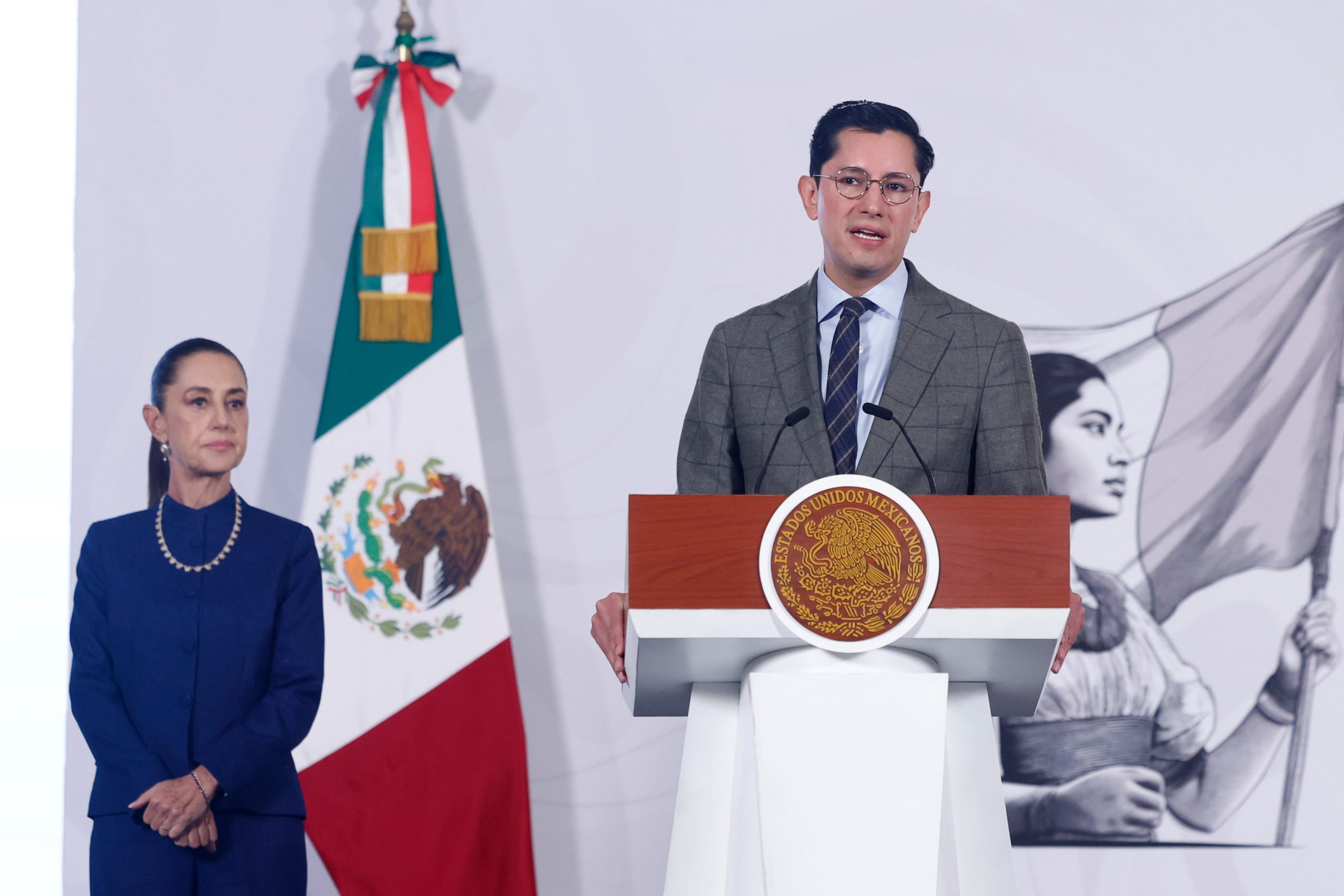
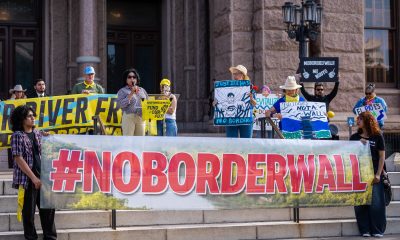
The Mexican government is continuing its efforts to identify those responsible for the deaths of 17 Mexican migrants who died during encounters with U.S. Immigration and Customs Enforcement (ICE). Foreign Affairs Undersecretary Roberto Velasco said on Wednesday that Mexico has filed 20 complaints with U.S. authorities, only four of which have received a response. The Foreign Ministry has spent more than $24,000 repatriating the bodies and has maintained a formal request to the Justice Department for an investigation into the causes of the deaths.
“We want an investigation to be carried out and, if any member of ICE, or any private contractor responsible for running or overseeing a detention center, was responsible, then action should be taken. There are simply too many cases,” said Mexican President Claudia Sheinbaum.
One state prosecutor has responded to Mexico’s complaint by backing ICE’s account. The official, from Florida, upheld the immigration agency’s investigation into the death of 19-year-old Royer Pérez, the youngest Mexican victim.
Pérez was arrested in January by police in Volusia County, northern Florida, and charged with identity theft and resisting arrest. He was transferred to a state detention facility, where he later died despite efforts to revive him. The official account initially pointed to suicide, but testimony from detainees and a preliminary report from the local medical examiner’s office suggested he was killed by guards. Mexico has repeatedly called for the circumstances surrounding his death to be clarified, but U.S. authorities have so far declined to open any additional investigation.
Four other state prosecutors, from Illinois, California, Texas and Florida, as well as district attorneys in Oxnard, San Bernardino, Chicago and Atlanta, have also replied, but only to acknowledge receipt of Mexico’s complaints. The government is still awaiting formal responses.
Of the 17 deaths recorded, at least four occurred inside the Adelanto immigrant detention center in California. The victims were Alberto Gutiérrez Reyes, Ismael Ayala Uribe, Gabriel García Avilés and José Guadalupe Ramos Solano. Their families and civil society organizations allege negligence, mistreatment and inadequate medical care.
Sheinbaum’s administration has also filed a complaint with the Department of Homeland Security and ICE officials demanding accountability from the private companies that manage detention facilities. Among them is GEO Group, which operates Adelanto and several other migrant detention centers. The company has faced longstanding allegations of medical negligence, excessive use of force, overcrowding, sexual abuse, unsanitary conditions and inadequate food.
Meanwhile, Volker Türk, the United Nations High Commissioner for Human Rights, has responded to a letter from the Mexican government raising concerns about the deaths of Mexican migrants in U.S. state custody.
“He informed us that he had forwarded the information to the U.N. Human Rights Council for its independent consideration. He will continue to monitor conditions in detention centers and the human rights of migrants, and he called on U.S. authorities to conduct prompt investigations,” Velasco said.
Sign up for our weekly newsletter to get more English-language news coverage from EL PAÍS USA Edition
In U.S.-Mexico relations, everything is happening everywhere at the same time. In the same week that Andy López Beltrán, son of former president Andrés Manuel López Obrador, lashed out at the Trump administration for revoking his visa — and the ruling Morena party rushed to rally behind him and called for 200 meetings to defend national sovereignty — several U.S. officials have celebrated the strong coordination between the two countries on social media and revealed new security agreements. “Our defense cooperation continues to grow stronger,” U.S. Ambassador to Mexico Ronald Johnson wrote on Sunday to announce Mexico’s access to the U.S. drone procurement market. Furthermore, despite the rift over the Andy López case, President Claudia Sheinbaum changed her mind this week and authorized Security Secretary Omar García Harfuch to travel to the DEA conference in Argentina.
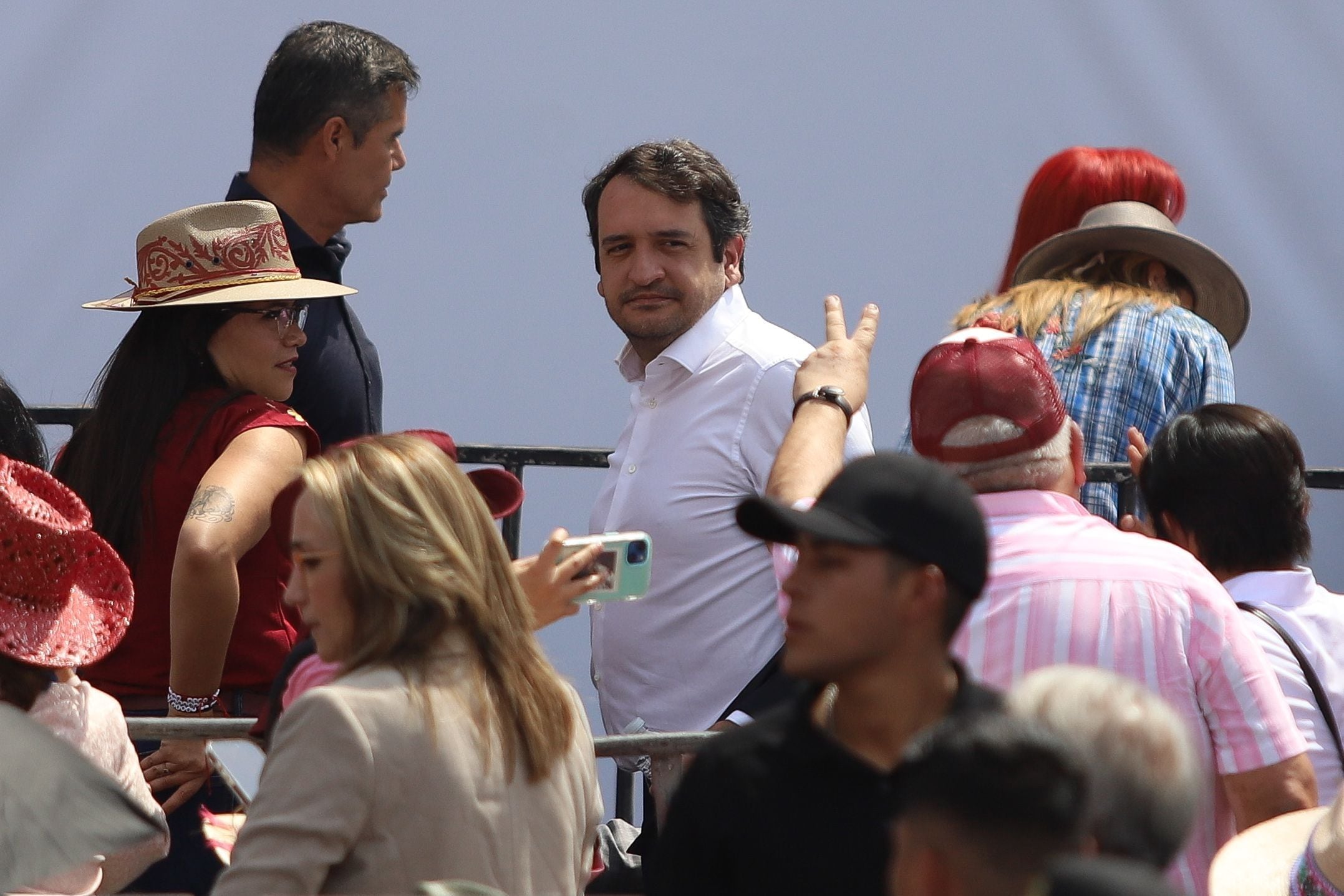
Trump’s latest rebuke to Morena was revealed Thursday in a three-page letter written by Andy López Beltrán, the party’s former secretary of organization: the United States had revoked his entry permit. López Beltrán accused the Republican president of a “political” move performed “in a Hitlerian style.” He denied that U.S. authorities had any evidence against him “of any immoral or criminal act.” Sheinbaum herself has defended that position several times this week, saying “there is nothing against the former president’s son,” while his uncle, José Ramiro López Obrador, went further, asserting that what the Trump administration is after is Andrés Manuel López Obrador: “The one they really have it in for isn’t the young man, but the older one.” The party has closed ranks around the case, calling it outright political “interference.”
The United States, for its part, continues its usual one-step-forward, one-step-back dynamic. X accounts such as Johnson’s, or that of Christopher Landau, the former ambassador and current undersecretary of state under the Republican, show these constant shifts. Thus Landau — who calls himself “the visa remover” — posted a provocative message after López Beltrán’s announcement — “Are you enjoying the show? Refill your popcorn… you’ll love this next part” — and hours later invoked the monarch butterfly migration as an example of “the enduring and symbiotic relationship between the U.S. and Mexico”: “We mustn’t allow the occasional flareup of political drama to distract us from this fundamental point,” he added.
The same goes for the U.S. embassy’s account. On Saturday, the diplomatic mission first issued a “clear and consistent” message: “The United States will cancel any visa when there are reasons to do so, regardless of who the holder is, where they live, or what their political opinions may be. Visas are a privilege, not a right.” Shortly afterward, it chose as its photo of the week one of Johnson and García Harfuch: “Under the leadership of President Trump and President Sheinbaum, We’re delivering tangible results on priority issues.”
It is against this backdrop of shifting sands that Harfuch will attend the International Conference on Drug Control, a meeting organized by the DEA and Argentina’s Ministry of National Security that will bring together hundreds of high-ranking security officials from various countries. “At first we had said no, because you know the history of the DEA’s relationship with Mexico, especially in recent years,” Sheinbaum said on Friday: “But then everyone [in the Security Cabinet] was unanimous and voted that we should go so that the world knows what is being done in Mexico and that it is being done well.”
That security cooperation is the very same one the United States calls for on a daily basis and which has been put to the test ever since its Department of Justice accused Rubén Rocha Moya and nine other officials from Sinaloa of working for Los Chapitos. Washington requested the arrest and extradition of the Morena state governor. The Mexican government granted neither. That impossible demand marked the decline of a collaboration between the two countries that had led Sheinbaum to hand over dozens of drug lords to U.S. justice and to fortify the border. The indictment of Rocha Moya exposed Mexico’s last line of defense: the protection of its sovereignty. In this tug-of-war between two countries that share almost 2,000 miles of border, the governments are continuing to try to at least get their security relationship back on track.
Sign up for our weekly newsletter to get more English-language news coverage from EL PAÍS USA Edition
The government of Mexico has stepped up negotiations with the United States to contain the U.S. tightening of trade, especially in key sectors such as automotive and steel. Economy Secretary Marcelo Ebrard said on Thursday that the negotiating team reviewing the United States–Mexico–Canada Agreement (USMCA) has asked for a discount on the 25% tariff imposed by the Trump Administration on cars manufactured in Mexico and exported outside the alliance, and for greater flexibility in the duties applied to its steel sales.
Negotiations over the USMCA have entered a new phase of greater scrutiny in which every industrial sector on the table will be crucial to the economic performance of its members: Mexico, Canada and the United States. In July, Washington ruled out the possibility of swiftly renewing the agreement — which supports about $1.5 trillion in annual trade — for a further 16 years. Instead, the world’s largest economy has pushed its partners into a process of detailed, periodic bilateral meetings in which every trade issue is examined not only as a business matter but also through the Republicans’ political lens. In that context, Ebrard also disclosed that Mexico has requested a halt to the imposition of new tariffs while the treaty review is under way.
“I brought a study that says: you are charging 15% on a vehicle made in Japan, South Korea, Germany or Morocco, and you want to charge us 25% on the ones we make in Mexico. So give me a discount, because we buy more U.S. parts than the other countries I just mentioned,” the official told reporters.
The report on the negotiations was first published by The Wall Street Journal, which said that Claudia Sheinbaum’s government presented this counterproposal to the Trump Administration, which in turn is pushing to raise even further the rules vehicles must meet to qualify for the agreement’s preferential treatment for vehicles made in North America. According to the WSJ, the U.S. Trade Representative’s office has proposed amending the rules of origin to specify that only cars with 50% U.S. components would be covered by the USMCA.
The change would be significant both operationally and to the spirit of the agreement, shifting the advantage more strongly toward the United States, at least in the automotive sector, one of the pillars of trade among the three countries. Under the current USMCA rules, 75% of a vehicle’s content must originate in North America for it to qualify for preferential tariff rates. Outside that threshold, and under Section 232 provisions, the United States applies an additional 25% tariff on autos.
Ebrard confirmed that his delegation has been persistent in its demands, though he avoided revealing details about Washington’s requests or the progress of talks. The two sides will meet again in September. The executive branch had previously said its review strategy would focus on improving its stance in the automotive and steel sectors, without outlining a specific plan.
Currently, much of Mexico’s steel exports are also subject to U.S. Section 232 tariffs, a measure Washington justifies on national security grounds. Those tariffs were 25% and were later raised to 50% as of June 2025 for most products made from that raw material. “We have also raised the steel issue. Mexico runs a steel deficit with the United States. So: why do you put a 50% tariff on me?” Ebrard asked. Mexico argues that the steel tariffs lack commercial justification because the United States runs a surplus in bilateral trade. According to figures from the Mexican steel industry, that surplus exceeds $4 billion in finished products.
Trump has made the USMCA a recurring target of his attacks. He often threatens to tear up the free-trade framework he promoted during his first term in favor of a protectionist scheme to revive U.S. manufacturing. That strategy has fueled uncertainty in Mexico, whose value proposition as a manufacturing hub rests on preferential access to the world’s largest consumer market. In that context, the Mexican government is seeking to prevent the treaty review from becoming a pretext for new retaliatory measures against its factories. “We have proposed that, while talks on the free-trade agreement review continue, no further tariffs be imposed,” the secretary added. “We are the most persistent, persevering, patient and insistent delegation,” he stressed.
Despite the ups and downs, the Latin American country continues to benefit from a relatively stronger position than other exporters. Eighty percent of Mexico’s exports go to its northern neighbor and, of those, eight in 10 enter under USMCA preferential treatment. The agreement will remain in force at least until 2036, although it is subject to annual reviews. However, termination remains possible if any of the three partners notifies its withdrawal.
Canada and Mexico are confident that the economic benefits of integration will outweigh Trump’s pressures, who is approaching the halfway mark of his term. In that context, companies are watching the outcome of the negotiations closely because much of the conditions for producing and exporting from the Latin American country will depend on them.
“Prospects for foreign direct investment (FDI) in coming years will depend largely on the outcome of the USMCA review, tariffs and the international economic environment,” wrote wealth manager Skandia. “If the country maintains macroeconomic stability, strengthens the rule of law, improves energy and logistics infrastructure and keeps clear rules for investment, FDI will continue to grow,” the firm predicted.
Sign up for our weekly newsletter to get more English-language news coverage from EL PAÍS USA Edition
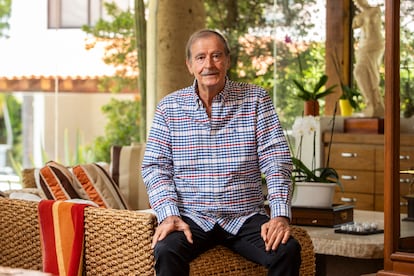
Twenty-six years ago, Vicente Fox Quesada defeated the dominant Institutional Revolutionary Party (PRI) to become the first president from an opposition party in Mexico, as the candidate of the conservative National Action Party (PAN). Today, at the age of 84, he looks back with nostalgia on the golden years of that transition, of which he was both the protagonist and beneficiary, and angrily describes the institutional erosion he blames on former and current presidents Andrés Manuel López Obrador and Claudia Sheinbaum. Fox recently returned from Peru, where he paid witness to the swearing-in of Keiko Fujimori, and seems enthusiastic about the rise of right-wing governments across the region; a spread for which he has a simple explanation: “When after two or three populist administrations there haven’t been any results, people say, ‘Enough.’”
In his hacienda, located on a ranch in Guanajuato, Fox spends his days planning how to prevent Sheinbaum’s ruling leftist Morena party from maintaining its legislative majority in the 2027 elections, which he sees as the only way to stop a political agenda he sees as dangerous and outdated. Along with business magnate Ricardo Salinas Pliego and some of the former members of his cabinet, he is promoting an initiative he calls Alma de México (Soul of Mexico), which focuses on finding and training local political leaders. Their idea is to prepare them for candidacy with the “democratic opposition” parties (PAN, PRI and Somos), to pave the way for a new Chamber of Deputies in next year’s legislative elections.
Question. How do you see the state of democracy in general at the moment?
Answer. Let’s go back 200 years, to that incredible idea the founding fathers in the United States had when they developed this concept of democracy as a model that would help to develop individuals and people, communities, cities and nations, that would guarantee justice, economic growth and job creation, to a just electoral competition that would be fair for all. A true dream, a true ideal. Then the rest of us came and somehow, we screwed up that whole idea that had been so well thought out and so brilliant. Today there are around 30 truly democratic countries. And the rest, we’re halfway democratic or we are democratic with low rates of participation, and many more are simulated democracies. Democracy has been used as a stepping stone to power, they invent a thousand promises, candidates get smart and look for how they can seize power; they get there, and may God have mercy on us. That’s happening all over the world. And then there’s the other distortion of democracy, which is populism.
Q. What is populism?
A. It is everything and nothing. It is a jump up to get to power, and once they arrive to power, they do whatever they feel like. They undermine all the principles and values of democracy, freedom and the market economy. They deal a blow to the market economy, they destroy institutions, and therefore, they have nothing to do with democracy. In today’s world, where there are democracies, there is economic success, job creation and progress and prosperity at very high levels. But there are only a handful of nations that are truly democratic.
Q. Among which you do not count Mexico?
A. Of course not. Are you messing with me or what?
Q. Democracy is in crisis, it has been said for years.
A. In Mexico there is no longer any crisis, it’s been eaten by the populists. How can you start governing a country and destroy an airport into which $13 billion has already been invested? That didn’t go through Congress, nor through the Mexican people, nor through the economic and business sector. It was approved in the turbulent mind of López Obrador. He came to take control and say, “Look Mexicans, I’m in charge here, and I’ll fuck up anyone who complains.” And then there is Claudia Sheinbaum, who is much more elegant, with a smile on her face, but she has already destroyed the judicial power, she’s already destroying the electoral authority, she has already destroyed all the checks and balances.
Q. To what do you attribute the rise of the right in Latin America?
A. The populist wave came from São Paulo, that’s where it took hold, and quickly won elections in several countries: Brazil, Argentina, Chile, Peru, Colombia, Venezuela, and that ideology of [leftist] populism triumphed. How did it do that? It’s very simple, “I will give you what you want, but you have to do what I say. Don’t protest, I will give you social services, I’ll bribe you, I’ll give you whatever you want, but you have to obey me.” Look at this monumental deception by López Obrador with his “the people, the people, the people.” Which people? They just decide, and steal. I used to say, “This can’t happen in Mexico because we’re next to the United States, because we’ve built a democratic tradition, because we’re a more structured country” — and damn it! López Obrador comes along and surprises us all.

Q. Why do you think López Obrador won?
A. Our mistake was to forget about the reality of the poor, of those who have the least, of those who have no opportunity. We didn’t do enough — not the businesspeople, not the governments — so that citizens would stand with their government. I mean, a large part of it is our fault.
Q. What does it tell you that Argentina, Colombia, Peru are turning to the right?
A. It’s the deception, the lack of follow-through by the populist governments. Pure “blah blah blah”: “I’m going to do this, I’m going to give you that, I am delivering for you, I will send you direct payments, I will create social services for you, but don’t worry, respect me, I am the government.” But the disappointment has been huge. When after two or three populist administrations there haven’t been any results, people say “enough.”
Q. 26 years have passed since you kicked the PRI out of the Los Pinos presidential palace, after a fight that went on for several generations. What do you see as having been the mistakes made by that transition government?
A. I look at it from a marketing perspective. To get into power, sometimes you offer too much, you promise too much. And then people’s enthusiasm and commitment to that leader start to erode, because the results don’t come as quickly as expected. But if you don’t make promises, someone else comes along and promises even more. Let me tell you something: I feel that the issue of social programs has been taken terribly off track. They’ve reached such a level that they’re now a joke, and look at Claudia Sheinbaum in the polls: when asked what Claudia does well, 90% say social programs. People say, “Claudia is good because she gives me money.” Come on! That money is going to run out, and that’s not the way to create upright, ethical, successful citizens who look out for their nation and for themselves. Social services destroy personal initiative and entrepreneurship, and they strip people of that desire to strive to become someone and achieve great goals. They lead you to comfort, to the tranquility of living a mediocre life; they destroy all human initiative.
Q. During your administration, what could you have done better?
A. I’m biting my tongue, because it’s a point in favor of that damn Lopitos [López Obrador], who destroyed the country, but he did have one good move: someone got an idea one day and told him, “Raise the minimum wage.” I had that opportunity, I talked about the notion with business leaders, I met with them once a month, and when I would mention the subject of wages, of raising them more quickly, the response was very negative, and I followed their lead. That is one of the things I could have done better. The other: revolutionize the educational system at top speed. Because that is the way to give people not money, but training, competitiveness, hunger for starting economic, creative, all kinds of projects. Not giving them money for them to lie around. And of course, that is going to come out and Morena is going to say, “Here comes Fox, he’s going to take your social services away,” and they’re going to crush me, but it’s important to speak the truth.
Q. What is the Soul of Mexico initiative you’re leading?
A. Vicente Fox, back in the saddle…
Q. Sounds like you want to do something before political retirement.
A. I am 84 years old. No man, look, what is it all about? History is repeating itself: 71 years of putting up with it until the bubble burst, which finally happened in 2000 — the PRI was out. But in eight years, these guys have done more damage to the country than the PRI did in 70. So what am I saying? That the only way to get rid of them is democratically, through the ballot box, and that’s why we have to foster civic engagement, why we have to convince people to vote, and why we have to take the first step — the one that’s actually within our reach — so that in 2027, no one has a majority. It’s not even about whether the opposition, the PAN, or the PRI will win — no. It’s about ensuring that no one has a majority, so that when it comes time to pass the budget, everyone in Congress has to reason, debate, put forward ideas, and make proposals — and so that Morena doesn’t get to control the entire budget. It’s so simple that I hope people understand it. And that’s what this is for: to identify and train leaders, and put them forward so that the parties can nominate them.
Q. Do you sleep well?
A. My life is routine, I get up at six o’clock in the morning, I go to bed at eight o’clock at night, and I sleep like an angel.
Sign up for our weekly newsletter to get more English-language news coverage from EL PAÍS USA Edition