
Cuba
Katrina Castro Versus ICE: US Accuses A Former Cuban Judge Of Being Communist


At 1.30 p.m. on Sunday in South Florida, the Broward Transition Center front desk officer will ask visitors to leave all their belongings, except for keys, in the waiting room lockers. About 20 people are grouped together — women who drove several miles, men on their day off, bored and impatient children. All are asked to pass through a scanner so they can access the interior of the Immigration and Customs Enforcement (ICE) enclave, which has a capacity for about 700 detainees.
When another officer opens the door to the facility’s dining room, each visitor will look for their relative, locate them, and embrace them as if their lives depended on it. Katrina Castro-Menéndez is the only one who remains seated. She looks like the schoolgirl her parents have forgotten to pick up.
“Katrina?” the journalist asks from a distance. Katrina, 41, stands. She has dark skin and old, noble eyes, a gray uniform and a rosary that hangs from her neck. She is the former Cuban judge who was detained by ICE officers last June outside her home in Cooper City. She bursts into tears. This is the first time Katrina has received a visit in detention. Neither her husband, Deyni Rojas González, nor her 15-year-old daughter can go to the Broward center. The authorities do not allow her husband in because he does not have either residency or citizenship. Neither have they been able to see Katrina for several days through the usual authorized video calls available to detainees as her husband’s ID as a beneficiary of a humanitarian parole program in the United States has expired.
The dining room is filled with people and voices. Guards talk around one of the tables; there is a man who goes every Sunday to see his ex-partner, Adys Lastres Morera, whom ICE arrested for being the sister of Ania Guillermina Lastres Morena, the executive president of the Cuban military conglomerate GAESA, the consortium in the crosshairs of Donald Trump’s administration, which controls 40% of the Cuban economy. They sit across from each other catching up. Alina Rosales Aguirreurreta, the daughter of Cuban General Ulises Rosales del Toro, was also detained in the Broward center.
Driven by Secretary of State Marco Rubio, the U.S. government intends to target not only Cuban institutions that allegedly pose a threat to U.S. national security, but also people or family members who have links with institutions such as the Ministry of the Revolutionary Armed Forces, the Cuban Institute of Friendship with the Peoples, and the Committees for the Defense of the Revolution. After the last sanctioned entities were announced in recent months, Rubio said anyone “providing services to these sanctioned actors is at risk of being sanctioned themselves.” Although the warning is mostly aimed at entities or individuals with economic ties to Castroism, ICE has lately been targeting relatives of Cuban ministers, officials or senior public officials in the U.S.
Katrina, however, was not born into Cuba’s elite, but rather into a modest family in the province of Matanzas. She wanted to get out of there and study and she finally got to do so at the University of Havana where she read law and graduated as a lawyer. She was then sent to the court in Cárdenas as part of her social service to the country. She became a judge and in that position she earned 190 pesos a month (around $7). “That’s why no one wanted to work there, because that was the salary,” she says.
She then worked at the Municipal Court of Central Havana. “They were simple cases. My sentencing framework was between three months and a year. It was generally fines. There were no important cases. It was the man who stole the bicycle on the corner, or the one who stole the fruit from a shop,” she explains.
But now the Trump administration claims that Katrina cannot be in the U.S. for several reasons: one, for having tried to obtain immigration benefits through fraud or willful misrepresentation. Another, because she is a judge, and if she is a judge, she has to be a member or affiliate of the Communist Party or any other totalitarian party, according to the authorities. In this case, the Communist Party of Cuba (PCC).
Now it’s Katrina’s word against that of the U.S. Department of Homeland Security. The federal agency insists that Katrina said she was not a member of a Communist Party. However, according to documents consulted by EL PAÍS, the authorities insist that her work as a judge in the Cuban judicial system implies an affiliation or association with the Communist Party that should have been revealed.
Katrina stresses she never belonged to the party. Although the PCC’s statutes admit people over 18 years of age, it is exceptional. Most enter after the age of 30. Katrina was only 23 when she became a judge. “The prosecutor will never be able to prove that I was [a member], just as I cannot prove that I was not. They also say that as a judge I would have to have belonged to the party, and that’s not the case. That is an inconsistency,” she says. EL PAÍS confirmed with at least three other judges that belonging to the PCC is certainly not a mandatory requirement to occupy the position of judge in the Cuban justice system.
During the visit, Katrina looks out a window. She stops for a few minutes to think, then says, “I know that I will never set foot out there again.” It’s not a complaint, just a truth. She is a lawyer. She is convinced that probably nothing she says will convince the prosecutor or the judge who is hearing her case.
The unexpected arrest
Katrina left her position as a judge in 2014 and began working as a lawyer at the Bufete Colectivo de Centro Habana. In 2019, she got a student visa to study a master’s degree in human rights at the Autonomous University of San Luis Potosí in Mexico where she had been told that practicing the profession “was going to be complicated,” but she did not want to return to Cuba. She began working with human rights organizations, especially the Center for the Opening and Development of Latin America (CADAL) foundation, which has been accused of promoting the fall of Castroism. This meant she would not be able to work again in Cuba, even if she wanted to.
When she was about to start her doctorate, Katrina decided to go to the U.S. where she planned to work as a lawyer. To do so, she needed to revalidate her university degrees. On August 13, 2021, she presented herself at a border point in Arizona, and was released with an I-220A status, the same one that has recently kept more than 500,000 Cubans in legal limbo.
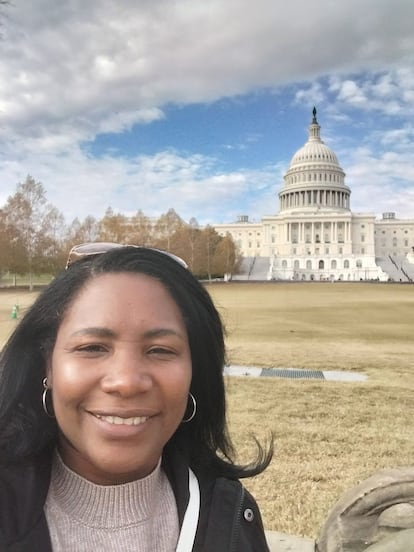
While she had no legal documents, Katrina lived a peaceful existence in the U.S. Her daughter went to school, Katrina working as a cleaner and her husband as a gardener. On June 12, her husband left the house at about 6 a.m. Two hours later, while her daughter was sleeping, Katrina got into her 2017 Chevrolet Trax and saw a black Cadillac parked behind her. She remembers thinking it was badly parked. She started her car but another vehicle cornered her. “I thought they were going to ask me about a neighbor. I had no idea. So I rolled down the window and they said, ‘What’s your name?’ I said, ‘Katrina.’”
Six officers approached her. While one twisted her arm, another told her: “Katrina, you have been detained by immigration, you have to get out of the car.” She began to cry. “My daughter, my daughter is in the house,” she said. “Yes,” they replied. “We know that your husband left earlier and that your daughter is at home sleeping. Your husband is going to come back and take care of your daughter, but now you are coming with us.”
After a while, her husband received a call. “I was working when an unknown number called me,” he said. It was Katrina. “She told me: ‘Deyni, it’s me, they arrested me.’” She was taken to the ICE offices in Miramar, and then to Broward.
The authorities wake the detainees at Broward at 6 a.m. to clean. Twice a day they let them go out to the yard to see the sun and touch the artificial grass, do a little exercise or play volleyball. They also have a room with board games. While the facility has come under fire for its lack of medical care, especially after the death of Marie Ange Blaise, a 44-year-old Haitian migrant who suffered from blood pressure problems, Katrina says she prefers it to other detention centers.
“It’s very difficult to be here without knowing what’s going to happen. You can be moved at night to another place — a place much worse than this which takes me away from my family. The fact that my daughter is half an hour away gives me strength,” she says. Her favorite time is when she can visit the chapel to pray, something she had never done before. “I feel so at peace when I walk in there, so calm,” she says.
During the conversations she had with EL PAÍS last week, Katrina was particularly nervous as she would soon have her first hearing with the judge. Up to then, she had only had meetings with the prosecutor that didn’t bode well. She knows that every defendant should be heard. But “they don’t want to listen to you. You are guilty and proving otherwise is going to be difficult. They are assuming that I made the mistakes intentionally. No one will ever believe in your innocence,” she says.
Katrina will have to explain several inconsistencies in her immigration process. The first time she signed a Form I-589, an Application for Asylum and Withholding of Removal, it was not she who made the application, but a law firm which asked not to be named. The lawyers asked her to tell them why she believed she was an asylum seeker, but they were the ones who filled out the information on the application, for which they charged $3,000. “I saved that by cleaning floors and not buying anything for my daughter,” Katrina says.
In the application, the lawyers stated that the former judge had not been a member of any political organization or group. However, when another attorney later filed Form I-485, or Application to Register Permanent Residence under the Cuban Adjustment Act, Katrina answered a series of questions that didn’t align with her previous answers. When asked if she had ever been a member, participated or been associated in any way with any organization, association, fund, foundation, party, club, society or similar group in the U.S. or anywhere else in the world, including any military service, Katrina answered yes. She said she had belonged to the Committees for the Defense of the Revolution (CDR), the organization sanctioned by Marco Rubio, and to the Federation of Cuban Women (FMC).
Katrina had told the truth, but it wouldn’t go in her favor. The CDRs are a mass organization created in Cuba in 1960 with the aim of guaranteeing surveillance in the neighborhoods. All Cuban citizens automatically become part of them after the age of 14. The FMC includes all women over that age. There is no question of not belonging, it is simply part of the ordinary life of Cubans within a totalitarian system. For decades, joining this type of organization is a prerequisite to getting a house, a car, a television or a steady job. Many people have been active in these groups, less out of conviction and more out of necessity. Generations of Cubans have belonged to these same organizations and have later received protection in the U.S.
However, when asked if she had belonged to a Communist Party, Katrina replied emphatically that she had not. The U.S. Department of Homeland Security insists this is a lie. “Under penalty of perjury, you omitted your connection with the Communist Party as a criminal judge in the Municipal People’s Court of Central Havana,” says the procedural file from the DHS.
“So you were from the Communist Party?”
On August 5, Katrina came before the judge for the first time. The judge was astonished that she didn’t have a lawyer, but Katrina said she would defend herself. The judge wanted to know if she had lied during the asylum process. “I didn’t lie, I did my process with that lawyer. He never interviewed me, he only asked me why I was applying for asylum. I never had the slightest idea that something was wrong with my process,” she said. Then the judge asked about the FMC and the CDRs. “Yes, I belonged to the CDRs, which all Cubans, men and women, belong to. I also belonged to the FMC, which all the women who live on the island belong to. And I was from the FEU (University Student Federation), because I studied at the university, like all students,” she replied.
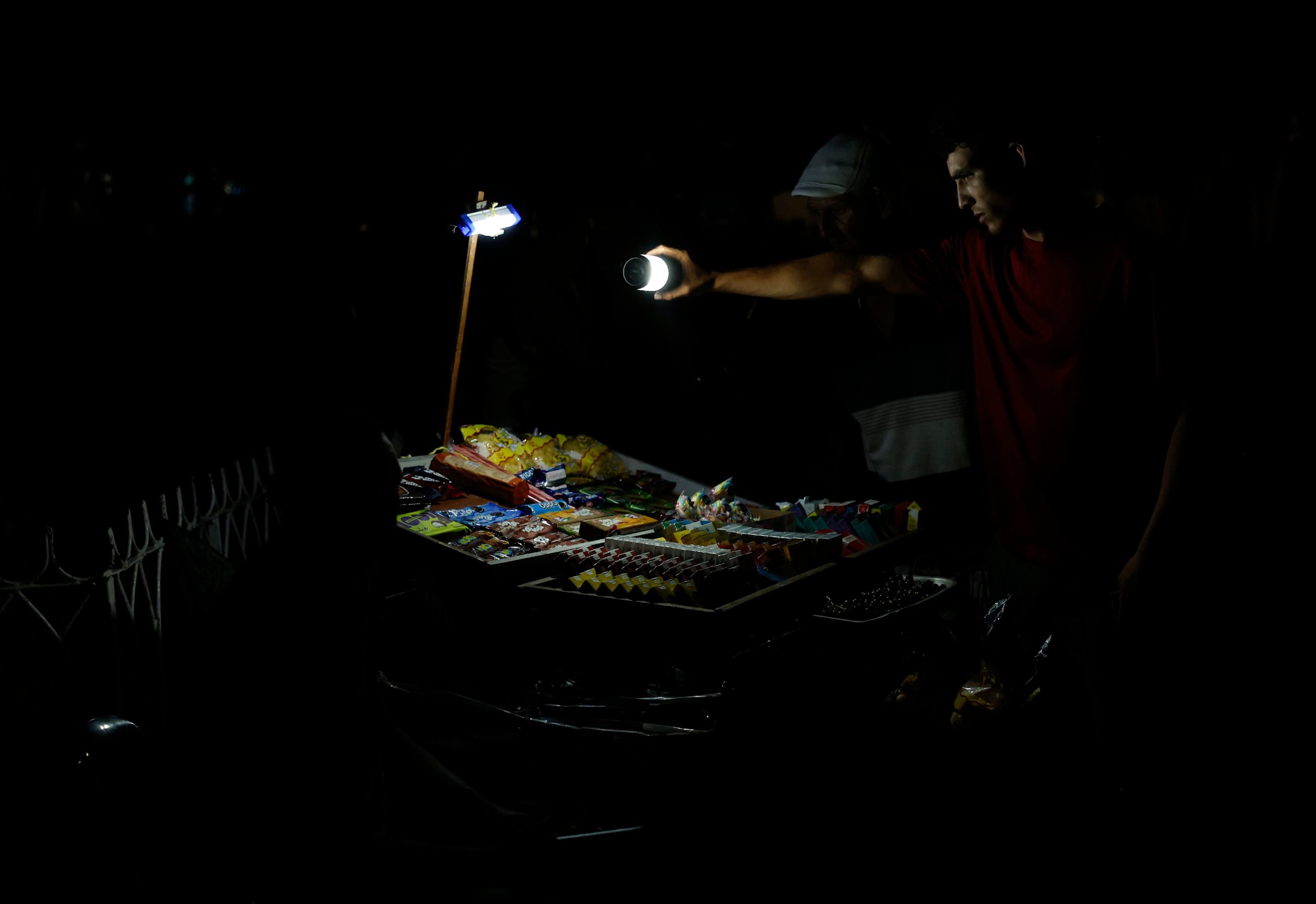
“So you were from the Communist Party?” the judge asked again, and Katrina again said, “No, I have not been a member of the Communist Party in any country in the world.” After the session, Katrina was relieved. She had been allowed to speak, to tell her truth before the law. She still harbors hope, the possibility that tomorrow she will be allowed to go home. But most of the time she thinks her definitive departure from the U.S. is imminent. Preparing for this eventuality, she thinks about what she will say to her daughter, a conversation that she has rehearsed during confinement. “How do I tell her that we are going backwards? To a country where there is no electricity three days in a row? A country where all people do is get up and breathe, because they have nothing to do? What will become of my family without me? And what am I going to do without my family?”
Sign up for our weekly newsletter to get more English-language news coverage from EL PAÍS USA Edition









“How cheaply the new Carlos Saladrigas wants to buy us!” Fidel Castro wrote in 2008, at the age of 81, after illness had forced him to hand over political power to his brother Raúl and devote himself to churning out his Reflections in state media. According to Castro, Saladrigas, a successful Cuban American businessman from South Florida, was trying to take over Cuba “with Miami money.”
The claim came as a surprise to Saladrigas. Cuba had always been more of a drain on his finances than a source of profit. “Buying cheap has never been my goal. My aim has never been to make money in Cuba,” he says.
Saladrigas was born in 1948 in Havana’s then-affluent Miramar neighborhood. His father was a lawyer who worked for the Ministry of Education. His mother owned a fashion store that imported dresses. A year after the Cuban Revolution began, his mother told him he would be leaving the country alone under one of the so-called waiver visas, a special authorization issued by the U.S. government that allowed 14,000 Cuban children to enter the United States as part of what became known as Operation Peter Pan. It was a dark episode in which some children never reunited with their families, others disappeared from view, and some were victims of sexual abuse. In August 1961, young Saladrigas arrived in Florida.
“That decision was my mother’s. My father didn’t want it,” Saladrigas recalls from his home in Miami. “He was convinced, as many here were for years, that the Americans would not allow communism in Cuba and that they would do something. There were rumors that parental rights would be taken away in Cuba. Today it’s unclear whether those rumors were started by the CIA or by the Cuban government itself, but any scenario seemed possible. That frightened many parents, and my mother took the risk of sending me without knowing when we would reunite. I have four children, and every time one turned 12 my wife and I discussed this. Would we do the same or not? To this day I have never been able to answer that.”
His parents arrived the following year. Money was scarce. He dropped out of secondary school and later resumed his studies in evening classes. He went on to study business administration, attended Harvard Business School, worked for accounting firms and in real estate, and was eventually hired by PepsiCo.
He later left the corporate world and, in 1984, founded The Vincam Group, a pioneering human-resources management company. Before he sold it in 2000, it was considered the largest Hispanic-owned company of its kind in the United States. Since then, Saladrigas has founded three more companies and later sold them. The Peter Pan child had become a capitalist.
“I am a capitalist because I believe that, generally, when a country’s problems can be solved by markets, markets offer the best solution. But not all a country’s problems find answers in markets; that is the mistake many make,” he says. “That is why I believe one of the great errors of American capitalism has been taking market logic too far, into sectors that do not belong to the market but to the state.”
Today, Saladrigas is dedicated to advising, devising strategies, and supporting businesses. He devotes much of his time to thinking about Cuba, alongside the Cuba Study Group, the organization he co-founded to promote the growth of the private sector on the island. At this point in his life, at age 78, Saladrigas has come to realize what he considers to be a truth: that if there is one thing the Cuban government fears, it is money.
“That is, us — the exile community, the very exile community they created,” the businessman says. “Although individually it has been hard, the Cuban exile community as a group has succeeded in the arts, in academia and in business. That is due in part to our DNA as Cubans. That is why my optimism about Cuba’s future is based solely and exclusively on what I see of its people,” he explains. “The exile community has also been very generous in extending a hand to the Cuban people in every sense. That is part of the success: the fact that we have not forgotten Cuba.”
After more than half a century of building an ideological wall between those on the island and those outside it, the Cuban government, in the depths of its current crisis, has called on exiles to return and help revive the country’s ailing economy with their dollars.
When the government announced a package of measures in June as a first step toward liberalizing the economy, President Miguel Díaz-Canel declared: “To anyone who wants to build a future with Cuba, without seeking to impose anything on it, we say with our hearts on our sleeves: this is your home, and our door is open to you, because at this moment, this homeland cannot afford to lose a single good Cuban.”
Question. Would you be one of those Cubans willing to go and invest in Cuba?
Answer. Those of us Cubans who felt that deep attachment to Cuba are getting quite old. There is a sector of the community that 20 years ago, or under Barack Obama, would have been willing to go and set up businesses in Cuba. But many people already have what they call an investment horizon. When you are 30 years old, your investment horizon is long. When you are 78, it is short. I no longer see my investments there as long-term, because at some point I will not be here.
Q. And what could Cuba count on now?
A. We can count on all the family investment that exists here, which is large and important, and on many younger Cubans who are very interested in seeking new business opportunities in Cuba. But it is not what it would have been 30 years ago, because there is a whole generation emotionally tied to Cuba that achieved the most economic success because they have been here longer. That group is the least interested in the new adventure of moving to the island.
In the case of Venezuela, how many Venezuelans do you know who have gone back to invest there? None. Nobody who is already established here is going to go live in Cuba. So you cannot run a business there unless you partner with someone. That is why we have always thought the point is not to go invest alone, but to co‑invest with Cubans in Cuba. But there must be change. Right now it is unsustainable.
Q. What guarantees does an entrepreneur who wants to invest on the island today have?
A. Practically none. The idea that the exile community is the most logical point for Cuba’s economic salvation has been one we have put forward for years. We continue to think that the exile community will be a fundamental driving force of economic recovery — not the only one, but a very important one.
There are two sectors within the exile community that are essential. The family sector, which sends significant remittances. All that capital can be used to grow small businesses in Cuba. The other capital the exile community has is more formal capital, where you invest after conducting an investment analysis and assessing risks. That capital needs more formality in the country. Cuba will not have that formality until it has a stable macroeconomic climate and a serious banking system, a serious currency, and laws that respect private property. So that if you have a dispute with the government, you can take them to independent courts. None of that is being done.
Q. So political change is the first guarantee for any investor who sees an opportunity in Cuba…
A. Without political change, these measures lack seriousness and credibility. Last year the government seized all foreign currency bank accounts from the Vietnamese, its privileged partners. What credibility can this government have? None.
Q. After Díaz-Canel announced the new package of changes, people said Cuba was finally opening to capitalism. To what extent is that true?
A. The government hasn’t even talked about political change, and we don’t believe it will. Opening to what? They are taking measures that, although most of them we can criticize, are necessary and good — measures they should have taken 20 or 30 years ago. But it seems to me they themselves lack the capacity to manage the changes because they want to control everything. That is my first impression. The second is that the measures are destined to fail.
Q. Why?
A. Because Cuba has reached the end of the road. Every day, the situation gets worse. What is needed are deep, swift and sustained measures to open up the economy. Cuba cannot recover on its own at this point. It does not have the capacity.
Without a significant change in the judiciary, so that it is truly independent of the political sphere, it won’t work. Without fundamental changes to the system’s structure, constitutional changes that clearly state that Cuba is going to open up, and an end to the monopoly of a single political party, nothing will work. At the same time, if the United States does not lift the economic sanctions, Cuba will not recover.
Q. How much does the success of any reform effort depend on Washington?
A. The embargo’s sanctions, plus all the additional ones, have a cumulatively devastating impact on a market economy. Although the embargo limited Cuba, it did not finish off Cuba while Cuba was not a market economy. But now that Cuba has a new need — because it has no option but to open to the market — this is killing it because there is no investment and no inflow of money.
What I don’t understand about the [Trump] administration is its lack of clarity about its expectations. At the same time, the Cubans are playing a game of trying to do as little as possible, or at least to avoid the most significant reforms, and leaving the hardest issues for later to see what happens after November, whether the elections and the war with Iran prove distracting enough. That is a factor complicating everything.
I don’t know how much longer the Cuban people can endure this. It’s been five or six months since the administration imposed the oil embargo, and the aid the U.S. government has announced for a population that is dying of hunger is a drop in a bucket.
Q. What can we expect for Cuba from the Trump administration?
A. I highly value Cuban sovereignty and independence. Our people have shed much blood for it. The things I hear from Trump, if serious, worry me enormously. Words like: “I will be the president of Cuba,” or “Cuba is mine when I want it.” Those words reach deep into my heart. They are painful to hear. I don’t want Washington to be the one to solve Cuban problems. We have to solve them ourselves, exercising our autonomy.
On the other hand, I applaud that pressure has been put on a regime that has refused to change. Obama handed them change on a silver platter, and they chose not to seize the opportunity. It’s almost a schizophrenic scenario because I believe there is a great opportunity for a serious, sincere negotiation that could lead to solutions. But that requires Cuban leaders to be willing to engage.
Q. You have said Cuba first needs a stabilization period and then a reconstruction period. How would those be implemented?
A. The stabilization period runs from the moment the reforms begin until the point at which Cuba becomes an investment-grade destination for private capital. In other words, until private investors feel confident and secure enough to invest.
That will be the most difficult period because no one will invest heavily during that time. Meanwhile, schools and hospitals must be maintained, people must be fed, a tax system must be created, a banking system and an economy must be established, the peso defended, the Cuban currency strengthened. These are things that must happen in the first three, four or five years at most. I hope it does not take longer because if the measures are slow, the people will continue to go hungry.
Q. And after that?
A. Once Cuba is stabilized, foreign investment will begin to arrive, large companies will be created, factories established, people will have jobs, Cuba will have agricultural production. The electricity system will stabilize, the government will stabilize. At that point, at the end of the stabilization period, free elections can be held. A new government will be established. There must be a new constitution and that constituent process must be participatory for the people. There must be openness. It cannot be done in secret. Transparency is the most important thing for Cuba’s future, and we must achieve it. One of the things we have recommended and continue to recommend is a kind of Marshall Plan for Cuba.
Q. How would that Marshall Plan proposal work without losing sovereignty?
A. It must be a pact in which Cuba commits to implementing these changes while maintaining its independence, but the United States should remove all sanctions by executive order for a period of two to three years until Cuba implements the measures. At that point, a Marshall Plan for Cuba would be prepared, where loans could be granted on very long terms, repayable later or even forgivable. That money would be used to restore the power grid, support schools, public order, hospitals — all the activities the country needs.
Then the private sector will experience extraordinary growth. SMEs will expand. Cuba will begin to produce food. That is where healing and stabilization begin. For the United States, it would be the best investment, as it was in Japan after the war. We must learn to understand our sovereignty as something different from what José Martí may have envisioned. Martí feared economic integration, but today economic integration is almost inevitable.
Q. Would there be anything in the Cuban system worth preserving in that future country?
A. Two sectors must be saved because they are very important: health and education, and they must be accessible to the entire population. No one truly understands what socialism is, neither in Cuba nor in Miami. However, there are many European countries where socialism has produced extraordinary results, but those are socialisms within a market. As I said in Havana many years ago: Cuba has been very efficient and very good at managing poverty, but disastrous at creating wealth, and without wealth you cannot solve poverty. We are at a new starting point, with a great opportunity to create something better. We can distill a system that works for Cuba, one that harnesses the full strength of markets while also retaining the sense of humanity we want Cuba to have.
Sign up for our weekly newsletter to get more English-language news coverage from EL PAÍS USA Edition



Katrina Castro Versus ICE: US Accuses A Former Cuban Judge Of Being Communist
Q&A: What To Know About The Next Two Solar Eclipses In Spain

Family Of Former Mexican Federal Police Officer Killed On Ukraine Frontline Faces Agonizing Wait For His Remains


-

 Uncategorized2 weeks ago
Lewis Hamilton hits gold with $10bn jackpot but British star snubs Monaco move: F1 News Recap
-

 Uncategorized1 week ago
Racing star was destined for F1, now he
-
airport threat2 weeks ago
Explosive device on drone sparks major German airport investigation
-
Latest2 weeks ago
Migrant Rush To Spain’s Ceuta: 72,000 Crossed, 2,000 Remain And 77 Died
-
Mallorca2 weeks ago
Palma mayor fights to keep TUI water bus project afloat
-

 New Developments2 weeks ago
How To Get A Tourist Rental Licence In Andalusia (Spain) – Step-By-Step Guide 2025
-

 animals2 weeks ago
Four Youths Who Broke Into Mallorca’s Marineland To Swim With Dolphins Hit With €360 Fines
-
Latest1 week ago
EU Tells Meta, TikTok To Boost Monitoring, Fact-Checking