Connect with us

%

Marbella’s Parks Are Getting A Bin Upgrade

Published

on

marbella’s-parks-are-getting-a-bin-upgrade

Anyone who has ever wrestled a toddler’s sticky ice cream wrapper into an overflowing wasp riddled bin knows the struggle and Marbella Town Hall has heard.

Bigger bins, less mess

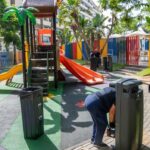
Council chiefs have begun a refit across Marbella’s parks, playgrounds and green spaces, with 149 new bins being rolled out to replace tired, overflowing containers that have seen better days.

Gone are the old 30-litre containers. In their place, workers are fitting 50-litre units, a jump of 66.7 per cent in capacity per bin. Once the full rollout is finished, the combined capacity across all 149 bins will reach 7,450 litres, according to figures released by Marbella council. Overall, swapping out the smaller bins for the larger ones will add 2,980 litres of extra capacity across the area, concentrated in spots where families, children and daily visitors gather in large numbers.

Seventeen parks first in line

The first phase covers 109 bins spread across 17 public parks, adding up to 5,450 litres in total. Parque de la Constitucion tops the list with 25 new bins, followed by Xarblanca with 15, El Capricho with 19 and La Represa with six. Playground areas at Rio Huelo, Albarizas, Antonio Lizarza, La Chumbera, Distrito 5, Maria Auxiliadora, plaza de la Concordia, Manuel de Falla, La Patera II, calle Vazquez Clavel and Los Naranjos de Marbella will also benefit. Parque del Calvario is included too.

A further 40 bins, worth another 2,000 litres, are being held back in reserve for future repairs or reinforcement work elsewhere in the town.

Recycled materials and easier emptying

Each new bin is built from recyclable materials and designed for straightforward emptying. Crews can mount them on a dedicated post or attach them to existing supports, giving flexibility depending on the location. Old bins won’t go to waste either. Once taken out of service, they’ll be handed to the Parks and Gardens department, which will assess whether they can be repaired and put back to use somewhere else in town, cutting down on unnecessary waste.

Marbella has renewed more than a thousand bins over the past four years, with 500 fitted in 2022, 250 in 2023, 100 in 2024 and roughly 200 more planned across 2025 and early 2026. Combined, that fleet now provides a total capacity of 119,000 litres for street cleaning across the town.

Councillor Lopez explained that the scheme has rolled out in stages under a 2022–2026 framework contract covering high-capacity, sealed-design bins, chosen for their durability and low maintenance needs. Sealed 120-litre containers already installed in higher-traffic areas will continue operating too, with each model matched to the needs of its particular location.

Residents are reminded that the new bins are strictly for small amounts of rubbish while using public spaces, not for household waste or bin bags.

%

TikTok Changes How Gen Z Finds Holidays

Published

on

tiktok-changes-how-gen-z-finds-holidays

TikTok is changing how Gen Z travel Credit: THICHA SATAPITANON / Shutterstock.com

The perfect reel of some colourful tapas, a quirky village festival or a winding mountain path can now inspire a holiday to a whole audience within seconds.

TikTok changes travel inspiration

Short-form videos are influencing how younger travellers choose destinations, activities and experiences, with Spain receiving fresh attention from a generation searching for new ideas online. A study commissioned by TUI Musement found that 48% of Gen Z participants cited TikTok as a source of travel inspiration. Recommendations from family and friends followed at 43%.

Research was carried out by Appinio in January 2026 among respondents in Spain, Italy and the UK. Gen Z respondents born between 1997 and 2012 were more likely to look to TikTok than to traditional personal recommendations when searching for holiday ideas. Search engines such as Google also remained a leading source overall, cited by 42% of those who took the survey.

Viral videos inspire real trips

Viral content is also influencing what travellers book once they have started planning. More than four in ten respondents, or 43%, said they had booked a trip or activity after seeing a viral post or video.

That figure reached 50% among Gen Z, while millennials recorded an even higher figure of 52%. Content creators also played an important role, with 43% of respondents saying influencers affected their decisions about where to go or what to do. A further 27% said they had changed their destination after following an influencer recommendation.

Spain’s food, landscapes, traditions and historic towns are well suited to this visual style of travel. Local markets, regional recipes, traditional celebrations and unusual heritage sites can all provide inspiration for a short video—and a future visit.

Showing different sides of Spain

Spain’s official tourism website is using its own social media channels to encourage visitors to discover lesser-known traditions, villages and slower travel experiences.

Its recommendations include food and customs from different regions, villages with unusual landscapes and heritage sites, plus nature-based trips such as thermal bathing, countryside walks and mountain excursions. Spain.info describes social media as a way to find new perspectives on the country and plan experiences beyond its best-known destinations.

Traditional grape harvesting, roasted chestnuts, historic monuments and rural landscapes can offer visitors a closer connection with local life. Such experiences may also appeal to expats who want to explore more of the country they now call home.

Spain through a younger lens, but it comes with pressure

Travel habits do not end when visitors arrive. TUI Musement found that 39% of respondents had visited a tourist attraction with the main purpose to take the perfect photo or record a video to be shared, with 73% sharing holiday content online at least occasionally. Social media also affected expectations, with 37% saying they felt pressure to make their holidays appear exciting online. That figure rose to 45% among Gen Z.

Digital travel inspiration is giving younger visitors new reasons to explore Spain’s regional food, heritage and natural scenery. For those living in Spain, it may also provide fresh ideas for day trips, weekend breaks and local experiences that are easy to miss when visiting the same familiar destinations.

TikTok may be changing how travellers find Spain, but it’s the country’s cultural traditions, stunning landscapes and wonderful communities that remain the reason those videos have such an influence.

Continue Reading

%

Italian Tourist Injured After Empty Toledo Train Suddenly Moves By Itself

Published

on

italian-tourist-injured-after-empty-toledo-train-suddenly-moves-by-itself

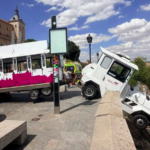
The train was completely empty when it moved. Photo credit: Bomberos Ayuntamiento de Toledo on Facebook

A sightseeing trip in Toledo turned into a terrifying accident when an empty tourist train suddenly began moving without a driver, struck an Italian visitor and crashed into a wall beside the city’s famous Alcázar.  The 44-year-old man was walking through the historic centre when the train rolled away from its stop on the Cuesta de Capuchinos at around 02:45pm on Saturday.  The vehicle had no passengers and no driver on board when it began moving.

The tourist was hit during the uncontrolled journey and suffered an open injury to one arm. He was taken by emergency services to Toledo University Hospital for treatment. His condition was reported as stable, the train on the other hand continued downhill before reaching the area around Calle Unión, where it crashed into the wall separating the road from the Alcázar gardens.

Ghost Train

The train had been stationary at its usual stop beside the Alcázar when it unexpectedly started moving.  There was nobody at the controls and no passengers inside. The exact reason it began rolling has not yet been established. A possible technical failure is among the initial lines of investigation, but authorities have not confirmed that this was the cause.

The tourist train normally carries visitors around Toledo’s historic centre, taking them past some of the city’s best-known landmarks. Its route begins close to the Alcázar and includes major sights such as the Puerta de Bisagra, the Puerta del Sol and the San Martín Bridge.

Tourist injured during the runaway

The Italian visitor was in the area when the train reached him. Emergency crews treated him at the scene before taking him to Toledo University Hospital.

The Ayuntamiento de Toledo confirmed that he had suffered an open injury to one of his arms. Other initial reports have described injuries to the man’s legs, but the confirmed information from the city authorities refers to an open arm injury.

Locomotive left hanging beside Alcázar

The incident became even more dramatic when the train reached the area beside the Alcázar. After striking the tourist, the vehicle continued towards Calle Unión and collided with the wall beside the park. The impact damaged the structure and left the front of the locomotive suspended over the drop.

The unusual position of the vehicle made removing it a complicated operation. Police, firefighters and emergency teams were called to the scene, while heavy lifting equipment was needed to secure the train and remove it safely. The locomotive was eventually taken away for examination as investigators began working to establish why it had moved in the first place.

Investigation launched in Toledo

The Ayuntamiento de Toledo has opened an investigation into the accident, police are examining how the tourist train was able to leave its parking position without anyone operating it and why it was not stopped before reaching the pedestrian area.

A possible brake problem has been mentioned among the initial hypotheses, although this has not been established as the cause. The investigation will have to determine whether a mechanical or electrical fault, or another problem, was responsible. Until that is established, it remains unclear exactly what caused the vehicle to start moving.

Questions over tourist safety

The incident has raised obvious questions because the vehicle is specifically used to transport visitors around one of Spain’s most heavily visited historic cities. Toledo attracts tourists throughout the year, with the area around the Alcázar forming part of the main sightseeing route through the old city. The runaway happened in the middle of that environment, meaning pedestrians were exposed to a vehicle that was moving without anyone at the controls.

The absence of passengers was the crucial difference between a serious accident and a potentially much larger disaster. Had the train begun moving while carrying tourists, the consequences could have been considerably worse. For now, the injured Italian visitor is receiving medical care, while investigators focus on the vehicle itself and the circumstances surrounding its unexpected departure. The train that should have been taking visitors on a sightseeing trip through Toledo instead became the centre of an emergency operation, after apparently setting off on its own, hitting a tourist and ending up suspended beside the Alcázar.

Continue Reading

%

Driver Disruptions As Almuñecar Hosts La Vuelta

Published

on

driver-disruptions-as-almunecar-hosts-la-vuelta

Start of La Vuelta stage. Credit: Joan Llado

Local drivers need to plan carefully next week as Almuñecar gears up for a landmark moment in Spanish cycling.

Special traffic and parking measures kick in from 3pm on Thursday, September 3, and run through until 3pm on Friday, September 4. Friday sees the start of stage 13 of La Vuelta a España 2026, making this the first time the Costa Tropical town has hosted a stage departure of Spain’s biggest and most famous cycle race.

Key streets and areas hit by bans

Expect the weekly market at the Blas Infante enclosure to be cancelled. Parking bans and a halt to any roadworks apply in Puerto de la Cruz, Baracoa (from the Puerto de la Cruz junction to the local music school); Paseo Blas Infante; Larache (in the bays next to Paseo Blas Infante); Cristóbal Colón; and Khan Jounes. These steps keep the departure zone clear and safe for the peloton.

Practical advice for Almuñecar drivers

Anyone living, shopping or working near the affected streets should rearrange journeys well ahead of time. Stick strictly to signs and follow directions from police and civil protection teams on the ground. Extra patience will pay off as the town prepares for the big send-off.

Leaving a bit earlier or using alternative routes around the centre will help avoid unnecessary hold-ups. Traders and residents in those spots get particular thanks for their understanding during the restrictions.

Historic stage details worth knowing

Riders roll out with a flying start on the N-340 heading towards Motril. The 192.8-kilometre medium-mountain route then climbs to Loja, taking in three categorised climbs: the first-category Venta de la Cebada, the third-category Alto del Legionario and the second-category Puerto de Granada.

The full route information sits on the official La Vuelta site at lavuelta.es. Almuñecar folk already know how lively the town gets for big local events like this.

Keep an eye on local updates, leave plenty of time, and the historic departure should run smoothly for everyone on the roads.

Continue Reading
Advertisement
Advertisement

Spanish Real Estate Agents

Tags

Trending

Copyright © 2017 Spanish Property & News