
Alicante
Vueling cuts all winter flights from Cardiff Airport to Málaga and Alicante, just months after going on sale


Vueling has scrapped all winter flights from Cardiff to Málaga and Alicante, with no sign of return. Credit: Gav Smith / Shutterstock
Anyone hoping to fly direct from south Wales to the Costa del Sol this winter now has no back-up option, and passengers already booked to Alicante will be flying with an airline that never actually sold them their initial ticket.
Vueling drops Alicante for the whole winter
Cardiff Airport has confirmed that Vueling is withdrawing its winter service to Alicante, only months after tickets for the route went back on sale this spring.
A Cardiff Airport spokesperson said: “We are disappointed that Vueling has taken the decision to withdraw its Cardiff to Alicante service for the winter season.” The airport added that “Alicante remains a popular destination from Cardiff, with TUI and Ryanair continuing to offer direct flights this winter.”
Passengers heading to the Costa Blanca are not left with nothing this winter though, with both of those airlines still flying Cardiff to Alicante directly.
Málaga’s Christmas link disappears without explanation
Passengers checking bookings this month found that the airline’s short Christmas link to Málaga, which had run for the past two winters, had vanished from sale too. No equivalent statement has been issued about Málaga so far. The route was always the smaller operation of the two, limited to a short window around Christmas and New Year rather than the full winter, which may explain why its disappearance has drawn less attention than the Alicante withdrawal.
Anyone flying to the Costa del Sol does not have the same fallback as Alicante passengers, with no direct alternative currently on sale from Cardiff to Málaga.
A route that had just been growing
Vueling has flown from Cardiff for more than 12 years, and the Málaga service in particular had been expanding rather than shrinking until now. The airline added extra weekly Málaga flights from June 2025, taking the route from four departures a week to five during that autumn’s half-term period, after Cardiff Airport said customers had been “asking for more choice” on the route.
Cardiff Airport published its winter 2026/27 schedule this spring, with Málaga listed for a five-week Christmas and New Year window. Within months, both that slot and the Alicante service had disappeared from Vueling’s Cardiff timetable.
A taxpayer-backed airport that says it is thriving
The timing is awkward for an airport that spent the spring celebrating its finances. The Welsh Government, which has owned Cardiff Airport since 2013, won a legal fight in the Competition Appeal Tribunal on Tuesday April 7, 2026, confirming it can continue paying the airport more than 205 million pounds (€239 million) over 10 years, after Bristol Airport challenged the subsidy as unfair.
Cardiff Airport says the investment is working. It reported more than a million passengers in the 12 months to June 2026, a rise of 24 per cent that it says made it the UK’s second fastest-growing airport, according to Civil Aviation Authority figures. Critics of the subsidy have pointed out that Cardiff still carries a fraction of the traffic handled by Bristol, the rival airport many Welsh passengers weigh up against it for flights to Spain.
No promise of a return
Neither Vueling nor Cardiff Airport has said whether the Alicante or Málaga routes will be back for summer 2027. For now, Cardiff’s map of direct Spain flights this winter looks a lot more bleak than it did in the spring, with one popular route gone entirely and the other continuing only because rival airlines stepped in.


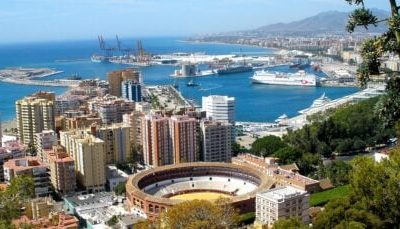






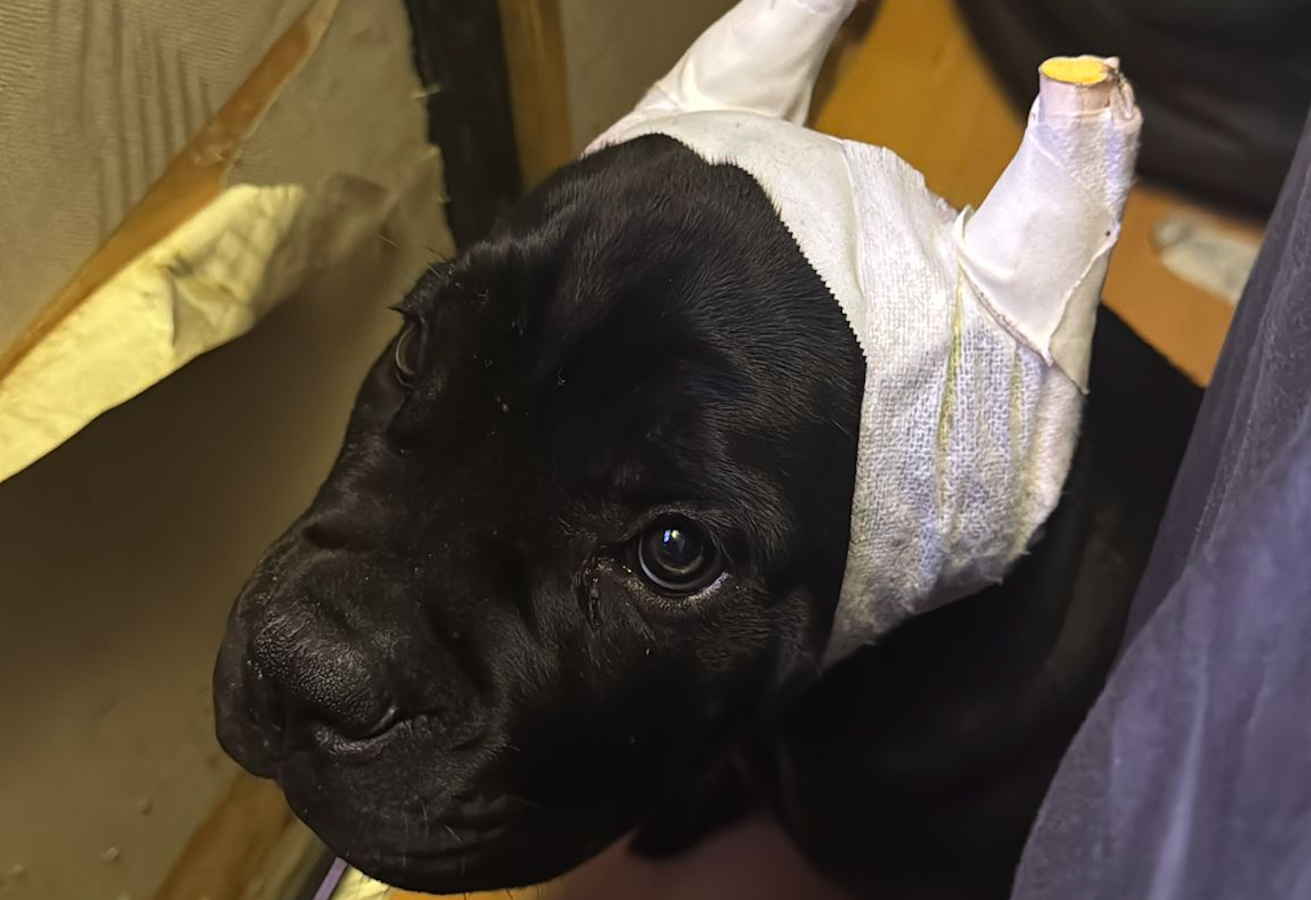
According to the Guardia Civil, the network operated in different parts of Spain. Photo credit: Guardia Civil. es
Anyone buying a dog would expect to receive an animal that has been properly cared for and legally treated. But a Guardia Civil investigation has uncovered an alleged network in which dogs were sold after undergoing illegal cosmetic amputations to their ears and tails, with buyers even able to agree how the cuts should look.
The operation, named Goscan, has resulted in 14 people being arrested and another six being investigated for alleged offences against animals, unlawful practice of professional activities and falsification of documents. The network operated in several parts of Spain and also sold and exported dogs to Mexico, according to the Guardia Civil. The investigation began with one dog arriving at a veterinary hospital in Cáceres.
One injured dog exposed the network
The animal, an Italian mastiff, had been taken to the hospital because of a medical condition. During the examination, veterinarians noticed that its ears and tail had recently been amputated. The discovery was reported to SEPRONA, the Guardia Civil’s environmental protection unit. Investigators identified the owner, who produced a certificate claiming that the procedures had been carried out legally in Russia, where cosmetic ear and tail alterations are permitted.
The document raised further questions. After contacting Russian authorities, investigators established that the certificate was false and had allegedly been created to make the operations appear lawful and avoid Spanish regulations. The trail led officers to the dog’s breeder in Alicante, where the investigation began to reveal a much larger operation.
Buyers could choose how the dogs were cut
According to the Guardia Civil, the organisation did not simply sell dogs that had already been altered. Buyers could allegedly agree with the sellers on the type of ear and tail cuts they wanted for aesthetic reasons. The investigation found that some purchasers first acquired dogs with their ears and tails intact before later arranging the procedures themselves. Nine arrests were made in connection with these cases. The operation also provided buyers with material intended to help them deal with the consequences of the procedures.
Investigators say the breeders supplied videos explaining how to care for the wounds and carry out the subsequent treatment following the amputations. They also provided falsified documentation designed to give the impression that the operations had been performed legally. That meant the scheme involved more than the sale of dogs with altered appearances. Investigators say it helped customers obtain animals, arrange cosmetic procedures and then create paperwork intended to conceal what had happened.
Veterinarian supplied official documents
The investigation also uncovered the involvement of a qualified veterinarian. According to the Guardia Civil, the veterinarian supplied the breeder with blank official passports and documents already bearing the professional’s signature and stamp. The breeder allegedly completed the paperwork herself.
Investigators also discovered that the breeder had implanted microchips in puppies despite allegedly lacking the veterinary qualification required to carry out that work. The use of veterinary documentation was significant because it could make animals subjected to illegal procedures appear to have received legitimate veterinary treatment. The Guardia Civil says both sellers and some buyers knew that the amputations were illegal and that the documentation used to justify them was false. Six people are being investigated in relation to these offences.
Network operated across Spain and abroad
The investigation did not remain confined to the Alicante breeding operation. According to the Guardia Civil, the network operated in different parts of Spain and also had an international business, including the sale and export of dogs to Mexico.
The initial investigation resulted in three arrests involving the owner of the mastiff and two people responsible for the breeding facility. Further enquiries then identified the wider structure led by the breeder, her partner and a friend. The operation eventually resulted in 20 people being placed at the disposal of the judicial authorities: 14 arrested and six investigated.
Investigation now before the courts
The case has been sent to the judicial authority in Novelda, Alicante, where the alleged offences will now proceed through the legal system. The investigation began because a veterinary team noticed something unusual while treating a sick dog. What initially appeared to be an isolated case of recent ear and tail surgery instead led investigators to an alleged commercial network operating across Spain.
For the animals involved, the investigation has also exposed the human decisions behind the procedures. According to investigators, some buyers were not simply accepting dogs that had already undergone cosmetic surgery. They were choosing the appearance they wanted and arranging amputations for aesthetic reasons. The Guardia Civil’s findings now place 14 people under arrest and another six under investigation, while the network’s use of falsified veterinary documentation and instructions for treating surgical wounds forms part of the case being examined by the courts.

Councillor, Nayma Beldjilali, at the opening of the exhibition ‘Kurios’. Credit: Ayuntamiento de Alicante.
Cirque du Soleil fans have two chances to step into the world of Kurios in Alicante this August, with a special exhibition at Alicante railway station and the main show continuing under the Big Top at Playa de San Juan.
The free exhibition, Kurios – Cabinet of Curiosities: Beyond the Stage, can be visited at the railway station until Sunday, August 16, giving visitors an opportunity to discover more about the creativity behind the production.
Free Kurios exhibition at Alicante railway station
Visitors can take a closer look at characters and figures from the production, as well as costumes, designs and some of the creative work that goes into bringing Kurios to life.
One of the highlights is an installation inspired by the first hot-air balloons of the 19th century, reflecting the inventions and unusual machines that feature throughout the show.
The exhibition provides a glimpse behind the scenes of the production and offers an additional experience for anyone planning to see the main performance at Playa de San Juan.
Admission to the railway station exhibition is free, making it an easy way for residents, visitors and Cirque du Soleil fans to discover some of the ideas and designs that have helped make Kurios an international success.
Kurios continues under the Big Top
Meanwhile, there is still time to see the full Cirque du Soleil production, which remains at Playa de San Juan until Sunday, August 23.
Kurios follows a scientist who believes there is a hidden world filled with strange ideas and extraordinary characters. When he manages to open the door to it, his laboratory is taken over by a colourful collection of visitors and creations.
The production combines Cirque du Soleil’s famous acrobatics with imaginative characters, unusual machines, elaborate costumes and a distinctive visual world inspired by invention and curiosity.
The show first premiered in Montreal in 2014 and has since been seen by more than six million people in over 40 cities worldwide.
Its Alicante run gives Costa Blanca audiences the opportunity to experience the production beneath Cirque du Soleil’s famous Big Top, while the railway station exhibition provides another way to explore the world behind the performance.
Tickets for the Alicante performances are available through cirquedusoleil.com/kurios.
Alicante
Remarkable archaeological discovery: Iberian cemetery dating back 2,200 years uncovered in Alicante
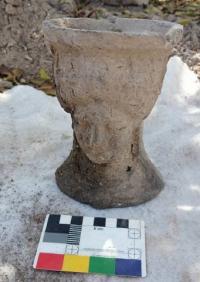
Archaeological excavation in Albufereta uncovers Iberian cemetery. Credit: Ayuntamiento de Alicante.
A remarkable archaeological discovery in Alicante has revealed an Iberian cemetery dating back more than 2,200 years, with excavations uncovering an impressive collection of weapons, jewellery and ceremonial artefacts. Among the most significant finds is a rare incense burner believed to represent the goddess Tanit, offering fresh insight into life and burial customs during the third century BC.
Ancient cemetery discovered in Albufereta
An archaeological excavation in Alicante’s Albufereta district has uncovered an Iberian cemetery dating back more than 2,200 years, revealing weapons, jewellery and a rare ceremonial incense burner believed to represent the goddess Tanit.
The discovery was made during work on a private development site where archaeological monitoring was required under regional heritage laws.
Archaeologists uncovered a small family burial ground dating from the final third of the third century BC. Four tombs contained a remarkable collection of grave goods, including complete sets of Iberian warrior weapons such as falcatas, spears, shields, javelins, knives, horse equipment and spurs, suggesting those buried belonged to a military elite.
Other finds included bronze clothing ornaments, weighing scales and weights linked to trade, a cartwheel and a carved stone fragment believed to be part of a deer sculpture. Around 30 small ceramic vessels used during funeral banquets were also recovered.
Rare artefacts offer glimpse into Iberian life
One of the most significant discoveries is a well-preserved incense burner in the form of a woman’s head, thought to represent the goddess Tanit.
Experts believe the cemetery dates from the Carthaginian conquest of south-eastern Spain and may be linked to the nearby Tossal de Manises settlement.
All of the artefacts will now be conserved by Alicante Council and are expected to be studied further before eventually going on public display. The discoveries are expected to provide archaeologists with valuable new information about Iberian society, religious beliefs and funerary practices during a key period in the region’s history.

Un Joven Armado Con Una Espada Mata A Una Persona Y Hiere Tres En Un Instituto De Suecia
Ronda’s September Feria returns with bulls back in the ring after two years away
Almería’s 2027 total eclipse already pushing hotel prices and demand through the roof
EU Tells Meta, TikTok To Boost Monitoring, Fact-Checking
Fireworks disaster at Costa Blanca spectacular leaves 27 injured in Altea

Courageous Costa Del Sol Father Seeking To Raise Funds For Specialised Treatment In Germany As He Battles Brain Cancer


-
Latest2 weeks ago
EU Tells Meta, TikTok To Boost Monitoring, Fact-Checking
-
Altea2 weeks ago
Fireworks disaster at Costa Blanca spectacular leaves 27 injured in Altea
-
 Andalucia2 weeks ago
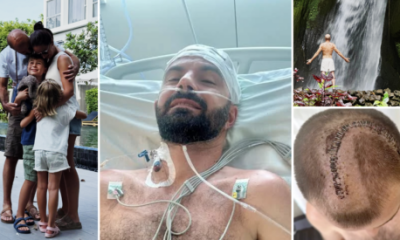
Courageous Costa Del Sol Father Seeking To Raise Funds For Specialised Treatment In Germany As He Battles Brain Cancer
-

 Bogotá1 week ago
Última Hora Del Terremoto En Colombia, En Directo | Al Menos 132 Muertos Y 570 Heridos Por El Seísmo De Magnitud 7,4
-

 800 metros lisos1 week ago
Attaoui Saca Un Bronce En 800m De La Casi Nada
-

 New Developments2 weeks ago
Stylish 3-Bedroom Apartment With Panoramic Sea Views – Benalmádena
-
Latest1 week ago
EU Curbs On ‘forever Chemicals’ In Food Packaging Kick In
-
Latest2 weeks ago
Record-Breaking Flamingo Colony Sees 600 Chicks Ringed At Spain’s Fuente De Piedra Lagoon