Connect with us

Ceuta

Última Hora De La Entrada De Inmigrantes A Ceuta, En Directo | Se Eleva A 67 El Número De Migrantes Muertos Tras La Entrada Masiva A Ceuta


Published

on

ultima-hora-de-la-entrada-de-inmigrantes-a-ceuta,-en-directo-|-se-eleva-a-67-el-numero-de-migrantes-muertos-tras-la-entrada-masiva-a-ceuta

Trasladan el cuerpo de un migrante muerto durante el paso de la frontera desde Marruecos a Ceuta.

El último balance de Interior eleva a 67 el número de migrantes muertos tras la entrada masiva a Ceuta, mientras que más de 48.000 de las casi 50.000 que llegaron procedentes de Marruecos ya han regresado. La noche en la ciudad autónoma ha transcurrido con normalidad, y las entradas se han detenido en su totalidad. Mientras, ha empezado la instalación de las barreras de contención en el espigón del Tarajal. El líder del PP, Alberto Núñez Feijóo, ha asegurado que lo que ha ocurrido en Ceuta es una “ocupación premeditada” y culpa al Ejecutivo. En Melilla, el Gobierno ha informado de que se va a proceder a la “apertura gradual de la frontera” en el paso de Beni Enzar. La reapertura se realizará por fases y, de momento, exclusivamente para el tránsito de vehículos de la Operación Paso del Estrecho. El presidente del Gobierno, Pedro Sánchez, ha enviado este sábado una carta a las instituciones europeas para quejarse de la actitud de algunos países ante la crisis migratoria de Ceuta. En la misiva, el jefe del Ejecutivo ha pedido una reunión de los ministros del Interior de los Veintisiete. El ministro del Interior, Fernando Grande-Marlaska, ha defendido la actuación del Gobierno en la crisis migratoria de los últimos días. “Hemos revertido la situación en 24 horas”, ha dicho.


Seguir leyendo

Ceuta

Spain PM Pedro Sanchez Slams ‘selfish’ European Allies After Schengen Suspension – As 22 EU Leaders Issue Damning Joint Letter Over Ceuta Crisis


Published

on

spain-pm-pedro-sanchez-slams-‘selfish’-european-allies-after-schengen-suspension-–-as-22-eu-leaders-issue-damning-joint-letter-over-ceuta-crisis

SPANISH prime minister Pedro Sanchez has launched a stinging attack on the ‘selfish, polarising and unlawful’ reaction of some European allies to the ongoing migration crisis in Ceuta. On Friday

Continue Reading

%

Spain’s Ceuta Border Farce: Did Officials Look The Other Way?

Published

on

spain’s-ceuta-border-farce:-did-officials-look-the-other-way?

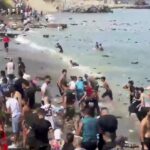
Floods of Moroccan residents invate Ceuta. Credit: Visigrad X

Spanish politicians finally admitted Friday night that more than 50,000 people mostly male, crossed from Morocco into Ceuta in a matter of hours. Local provincial president Juan Jesus Vivas put the number closer to 60,000. Nearly 48,300 had apparently already walked or swam back by early evening, leaving only about 2,000 still inside the enclave. However, those figures have not yet been independently verified. Fifty-seven people died in the crush and the water.

What remains is a deep sense of anger that any of this was allowed to happen at all.

How the human flood began

Young men, some still in swimming trunks and flip-flops, simply walked or swam around the Tarajal breakwater and border fence on Thursday. Border guards were overwhelmed within minutes. Reception centres filled past breaking point. Parks and streets became open-air camps. Shops slammed shut as groups were filmed looting. Residents reported broken doors, stolen goods, fights in the street and groups of foreigners demanding food or phones.

🚨#BREAKING: The Moroccan Muslims who have invaded the small Spanish city of Ceuta are now BREAKING INTO STORES by the HUNDREDS.

Police are completely overwhelmed.

Migrants can be seen running from one store to the next, grabbing items and running.

WHERE IS THE MILITARY?!!!!! pic.twitter.com/NjqQAI4zgD

— Matt Van Swol (@mattvanswol) July 31, 2026

Spanish police took scores of calls about clashes between the newcomers and locals. Army units and extra officers arrived late, after the damage was already done.

Prime Minister Pedro Sanchez flew in on Friday, called the whole episode a “violation of Spanish territory“, blamed trafficking gangs and a recent Supreme Court ruling, then promised quicker returns and a line of buoys in the sea. Residents who met him outside the heliport and the town hall could not hold back their frustration. They told him exactly what they thought of the government’s performance on immigration and protecting the borders. And it was not pretty.

Why this should never have happened

A Supreme Court decision earlier this month ruled that people intercepted at sea, for example, in a small boat, could not be turned straight back to where they came from. Word of that ruling spread fast on social media, and traffickers and rumour-mongers seized on it. Moroccan forces on the other side of the fence appeared to do very little to impede the illegal emigrants until the crowds were already moving. Some, even appeared to be facilitating it at first.

Spain has lived through previous border crises with mass runs at breaching the border. Lessons from those situations were said to have been learned. Instead, a tiny enclave of 83,000 people was left to cope with a human tide the size of a small city while Madrid reacted after the event.

Many in Ceuta spent Thursday night and Friday morning locked indoors, watching foreigners fill their streets. Local festivals planned for the weekend were cancelled. Businesses lost a full day’s trade. Anger in the population is raw and justified. Shops and services are said they will stay closed until after the weekend for safety reasons.

Mainland Spain stays clear … for now

Ceuta sits on the North African coast, separated from the Spanish mainland by the Strait of Gibraltar. No large groups from this particular crossing have appeared in Andalucia, Madrid or the Costa del Sol. Spanish authorities say the returns are continuing and the border is now under tighter control.

Mainland residents face no immediate risk from the people who entered Ceuta this week. That fact should bring some relief. It does not erase the disgrace of how easily the enclave was breached.

Questions that still need answers

Who left the border exposed after the Supreme Court restricted summary returns at sea? Why were Moroccan forces so slow to act on their side of the fence? How many more times will Spanish towns and cities be left exposed while politicians issue statements after the event?

Residents in Ceuta are already asking those questions. Expats and mainland Spaniards watching the footage have every right to ask them too. A country that cannot protect a small piece of its own territory has a diplomatic problem far bigger than one chaotic Thursday.

Security Alert:  The arrival of thousands of migrants from Morocco to Ceuta and hundreds to Melilla in the past 24 hours may lead to unpredictable and dangerous situations. Spain has deployed the Spanish military to contain the developing situation, together… pic.twitter.com/X0j74vvZ3U

— U.S. Embassy Madrid 🇺🇸🇪🇸 (@USembassyMadrid) July 31, 2026

Continue Reading

%

Secret Talks, Intelligence Reports And Ceuta: Vox Wants It All Revealed

Published

on

secret-talks,-intelligence-reports-and-ceuta:-vox-wants-it-all-revealed

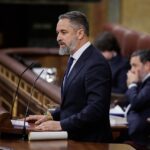
The party wants copies of communications, emails and official documents exchanged between Prime Minister Pedro Sánchez. Photo credit: Congreso de los Diputados

Vox, is demanding answers, not from Morocco, but from Spain’s own government. The party has launched a parliamentary offensive calling for Foreign Minister José Manuel Albares and CNI director Esperanza Casteleiro to appear before Congress following the migration crisis that overwhelmed Ceuta. At the centre of the row is one question: what was being discussed between Madrid and Rabat before thousands of migrants crossed into Spanish territory?

For Vox, this is no longer simply a migration issue. The party argues that Parliament has a duty to establish exactly what information the government had before the crossings, what discussions took place with Morocco and whether ministers acted quickly enough as the situation deteriorated. Rather than accepting official statements, Vox wants both senior figures to answer questions publicly before MPs.

Vox wants ministers in the hot seat

Vox has formally requested that Albares appear before the Foreign Affairs Committee to explain what it describes as the government’s handling of the July migration crisis and its contacts with Morocco throughout the month. The party is also demanding that Esperanza Casteleiro, head of Spain’s National Intelligence Centre (CNI), appear before the relevant parliamentary committee to explain the intelligence services’ role before and during the crisis.

According to Vox, Parliament deserves to know exactly what information the government received before the mass arrivals into Ceuta, what warnings may have been issued and what conversations took place with Moroccan authorities. The party argues that both the diplomatic and intelligence response should now be examined by elected representatives, insisting that the scale of the crisis justifies full parliamentary scrutiny.

Demand for government documents

The requests go well beyond public appearances, alongside the calls for both officials to testify, Vox is seeking access to a wide range of government documents. The party wants copies of communications, emails and official documents exchanged between Prime Minister Pedro Sánchez, ministers and senior government officials relating to the migration crisis. It is also requesting intelligence reports produced by the CNI before and during July, along with communications between the Spanish government, Morocco and the EU’s border agency, Frontex.

Vox is also asking for details of National Security Council meetings held in recent months, particularly any discussions relating to Ceuta, Melilla and border security. The party believes those documents would help establish how the government assessed the situation before the crossings intensified, whether concerns were raised internally and what decisions were taken as events unfolded. Vox says MPs cannot properly examine the government’s response without access to the same information ministers received during the crisis.

Questions over Morocco contacts

The timing of those communications is central to Vox’s argument, the party says Congress should know what contacts took place between Spanish and Moroccan officials before the crisis escalated and while migrants continued arriving in Ceuta. Spain and Morocco remain in regular contact over migration, border security and policing, particularly when pressure increases around Ceuta and Melilla.

Vox is not questioning whether those conversations took place, instead, the party wants Parliament to know exactly what was discussed during July and whether any warnings or concerns were communicated before the situation reached breaking point. The government has already acknowledged that Albares remained in regular contact with his Moroccan counterpart, Nasser Bourita, during the emergency. Officials have described those conversations as part of ongoing cooperation aimed at reducing the crossings and coordinating the response. Vox argues Parliament should now hear exactly what was discussed.

Political pressure grows

The migration crisis has quickly become one of the biggest political issues facing the government. The mass arrivals into Ceuta prompted emergency deployments, humanitarian concerns and renewed debate over Spain’s border policy and relationship with Morocco. Opposition parties have accused the government of failing to control the situation, while ministers insist they acted responsibly under exceptionally difficult circumstances.

Vox has taken the strongest position, using the crisis to press for greater transparency over Spain’s diplomatic and intelligence contacts. The party maintains that any discussions held with Morocco before the crossings should be fully explained to elected representatives. It also argues that Parliament should establish whether government departments, intelligence services and diplomatic officials had access to information that could have altered Spain’s response had it been acted upon sooner.

The government rejects suggestions that it failed to respond appropriately, maintaining that cooperation with Morocco remained essential throughout the emergency.

Congress now faces another battle

Whether Albares or Casteleiro will appear depends on parliamentary procedures and the decisions of the relevant committees. For now, the government’s position remains that diplomatic contacts with Morocco were part of efforts to manage the crisis and maintain cooperation between the two countries.

Vox, however, says those assurances are not enough, the party wants ministers to answer questions publicly, intelligence officials to explain what they knew and Parliament to examine the documents surrounding one of Spain’s most serious migration emergencies in recent years. With the political fallout from Ceuta continuing to dominate the national debate, the row over what happened behind closed doors between Madrid and Rabat now looks set to move into Congress, where Vox hopes ministers will be forced to explain exactly what was known, what was discussed and how Spain responded before the crisis reached its peak.

Continue Reading

Trending

Copyright © 2017 Spanish Property & News