
History
Krakatoa exploded 143 years ago today: Noise heard 5,000km away that shaped Spain’s south-east

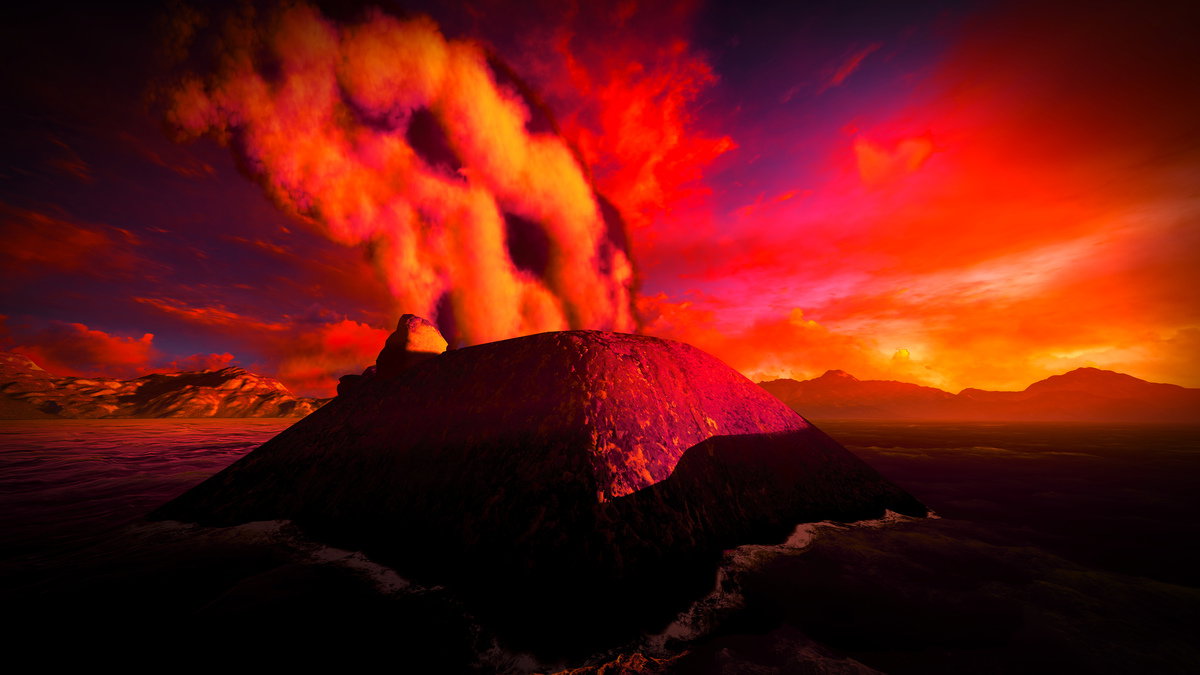
History’s loudest recorded bang went off on August, 27 1883. Sailors off Rodriguez Island, nearly 4,800 kilometres from Indonesia’s Sunda Strait, thought they were hearing distant naval guns. What they actually heard was Krakatoa tearing itself apart. That same morning is still in the calendar as one of those rare days when a local disaster became a planetary weather story, and Southeast Spain was part of it.
What actually blew on August 27, 1883
Krakatoa was not one neat cone like a cartoon volcano. Three volcanic peaks, Rakata, Danan and Perboewatan, sat in a line in the strait between Java and Sumatra, then part of the Dutch East Indies. Activity had been building since May. Ash shot six kilometres up on May 20. More smoke and smaller vents followed in June. But the real violence started on August 26. Four enormous explosions the next morning finished the job.
Around 10am local time, the biggest blast flung ash tens of kilometres into the sky. Instruments later showed that the pressure wave was circling Earth more than three times. Two-thirds of the island dropped into a new caldera. Waves of 40 metres and more smashed the Sunda Strait coasts. Sumatra took a wall of water more than 40 metres high. A four-metre pulse reached Sri Lanka. Ships off South Africa felt the sea lift. Most of the dead, usually put at about 36,000, though the true figure was never settled, drowned rather than burnt. Bodies drifted for weeks.
Energy released that morning is often compared with 200 megatons of TNT, thousands of times the power of the Hiroshima bomb. Tambora in 1815 still beats it for raw volume of rock. Krakatoa wins the grim prizes for noise, telegraph-age reporting and a climate fingerprint scientists can still trace.
Older Javanese chronicles talk of a much earlier collapse, sometimes dated to 416 or the mid-sixth century. Geologists have not pinned that event down with certainty. What 1883 did leave is a paper trail: lighthouses already shaken in the late 1870s and then months of warnings nobody could act on at that scale.
How an Indonesian volcano reached Murcia and Alicante
Ash and sulphur compounds stayed in the stratosphere for years afterwards. Northern Hemisphere summers ran about 0.4ºC cooler the following year. Sunsets turned theatrical reds and oranges (Edvard Munch’s The Scream is often tied to those skies). Some observers swore the Moon looked green or blue. Noctilucent clouds were noted more often, though the link is still debated.)
Spain did not get a tsunami from Krakatoa. It got a change in the weather ledger. Research on the south-east Iberian Peninsula, such as in Murcia, Alicante, Almeria and neighbouring areas, found lower maximum temperatures, a bump in rainfall and fewer punishing droughts in the years after 1883. Cereal prices eased. Farmers who lived with thin soils and unreliable summers caught a break that climate historians have called unusual for a “year without summer” story.
Further west, daily sunshine records at the San Fernando observatory near Cadiz dropped by hundreds of hours a year after the eruption. Particles high overhead scattered sunlight. Less glare reached the ground. That is a long way from Java, but barometers and sunshine cards in Spain picked it up all the same.
Spain’s weather service still uses the episode as a teaching moment. AEMET staff have pointed out that 1883 was when Europeans first watched a pressure wave arrive from both east and west and understood the upper air as one system, not a set of local skies. AEMET still lives off that idea every time a Saharan dust plume or an Atlantic storm is tracked from space.
Why the anniversary still matters on Spain’s costas
Readers on the Costa Blanca and Costa Calida know how fast rain, heat and harvest can turn. Recent seasons have gone the other way: raisin grape growers in Axarquia counting losses after relentless heat and older memories of Storm Celia breaking a Costa Blanca drought. Krakatoa is a reminder that climate shocks are not only local. A volcano on the other side of the planet once watered parts of Spain that now pray for storms.
Volcanic risk is not abstract for Spanish readers either. Tenerife has logged more than 1,700 earthquakes this year, with swarms felt in the island’s biggest cities. La Palma’s 2021 eruption buried homes and farmland for 85 days. Krakatoa’s child cone, Anak Krakatau, still coughs and has collapsed before, sending local tsunamis. Spain’s own coasts already know smaller cousins of those waves: meteotsunamis that flooded Mallorca and Menorca’s seafronts and the latest Mallorca sea surges.
What is left of Krakatoa now
Only the southern stump of Rakata stayed above water. From 1927 a new island, Anak Krakatau (“child of Krakatoa”), grew in the old caldera. It remains active and still worries Indonesian authorities. Global climate, though, has moved on. One 1883-scale blast is not a model for today’s heatwaves. It is a calibration point: proof that what goes into the stratosphere does not stay over Java.
Useful background can be found in Britannica’s Krakatoa entry, NOAA’s account of the 1883 eruptions, and the Murcia to Alicante climate study in the International Journal of Climatology. Spanish coverage of the Iberian fingerprint is also collected by ABC.
One hundred and forty-three years on, the lesson is blunt. A roar heard almost 5,000 kilometres away still belongs in a Spanish newspaper, because the sky that carried it did not stop at the Sunda Strait.




Arriate
The Heroic Last Stand Of ‘La Portuguesa’ – The Female Soldier Who Fought Franco’s Fascists, Now Found Buried In A Mass Grave In Malaga

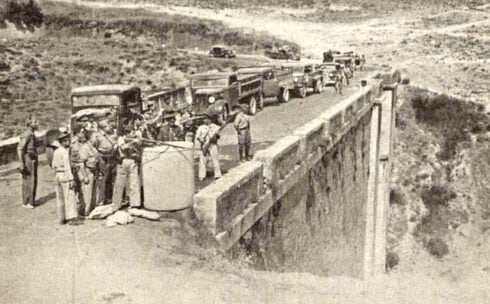 HISTORIANS believe they have discovered the remains of celebrated female fighter hidden among six men in a Spanish Civil War mass grave in Malaga. The excavation team unearthed her among
Krakatoa exploded 143 years ago today: Noise heard 5,000km away that shaped Spain’s south-east
El último Show De Sara Alonso Tras Subir Al Podio En Chamonix: De Ser Embestida Por Una Vaca A La Serpiente De Hip-Hop

Ryanair Boss Offers ‘maths For Dummies’ To Spain’s Transport Minister After Calling Him A ‘failure’


-

 800 metros lisos2 weeks ago
Attaoui Saca Un Bronce En 800m De La Casi Nada
-
aragon wildfire2 weeks ago
Flames force Spanish troops to evacuate 1,000-year-old kings’ bones from burning monastery
-

 New Developments2 weeks ago
Inside The Most LUXURIOUS Apartment Building In Spain!
-
 Altas temperaturas2 weeks ago
Francia Encara Su Quinta Ola De Calor En El Peor Verano Desde Que Hay Registros
-
Costa del Sol2 weeks ago
Motril Port closing in on record cruise year with 47,000 summer passengers
-
Axarquia2 weeks ago
Velez-Malaga’s €9.14m budget windfall to keep water bills steady for locals
-
Austria2 weeks ago
Electric cars can legally drive 30km/h faster than petrol cars in one European country: Will Spain be next?
-

 %2 weeks ago
Reale Insurance, Santa Ponsa: More Than 30 Years Protecting What Matters Most