
Costa del Sol
290 players head to Mijas for huge Costa del Sol pickleball tournament

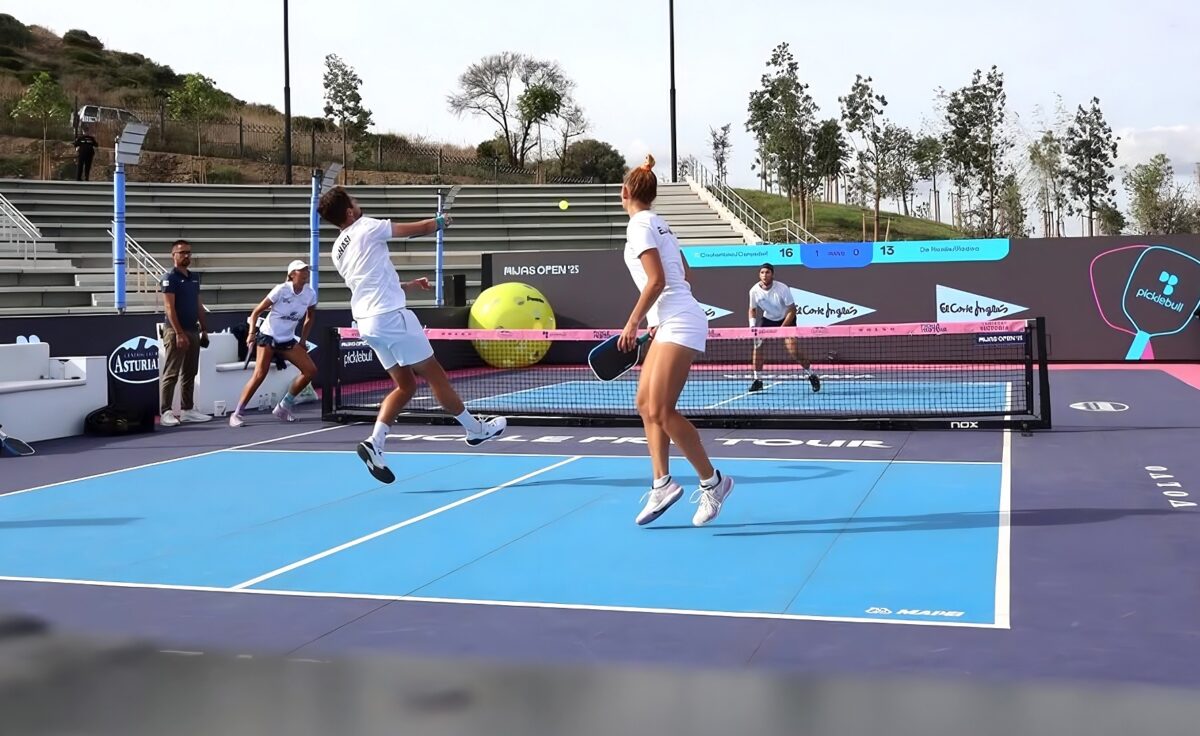
Mijas is getting ready for a major pickleball weekend as 290 players descend on the Costa del Sol for the Costa del Sol Mijas Open 2026 from September 11 to 13.
Matches will be played across 17 courts at the new El Gran Parque in Mijas, with the tournament forming part of the national Pickle Pro Tour organised under the Real Federacion Española de Tenis (RFET). The event is free to watch, with play starting at 9am.
Competition will cover 26 categories, including PRO, 3.5 and 4.5 levels, plus age groups for players over 50 and 60. A total of 866 matches are scheduled during the three-day tournament.
Sunday will bring the five PRO finals, covering men’s and women’s singles, men’s and women’s doubles and mixed doubles.
Pickleball or padel? What is the difference?
Confusion between pickleball and padel is understandable, particularly in Spain where padel has become hugely popular. Pickleball uses a solid paddle and a lightweight plastic ball with holes. The court is smaller than a tennis court and has no walls, while a special seven-foot area beside the net is known as the “kitchen”, where players cannot volley.
Padel uses a different solid racket and a tennis-style ball. Matches are generally played in doubles on an enclosed court measuring 20 by 10 metres, with glass walls forming part of the game. Players can use those walls to return the ball, creating longer and more tactical rallies.
Pickleball is often easier for beginners to learn, while padel involves a little more running and movement. Both sports share some similarities with tennis but have their own rules and playing styles.
Mijas event open to spectators
Mijas hosted the Pickle Pro Tour last year, when local player Maria Costantino won the mixed doubles title.
This year’s tournament is the penultimate event on the 2026 calendar and follows stops including Madrid and A Coruna. With hundreds of matches packed into one weekend, visitors will get a close look at one of the world’s fastest-growing racket sports.











The annual Quejigal returns with a special Malaga twist for 2026. Benalmadena is getting ready for a night of flamenco, traditional music and dancing as the Festival Flamenco El Quejigal returns to Los Nadales on Saturday, September 12.
Now in its 23rd year, the popular festival starts at 9pm at the Recinto Ferial Los Nadales, bringing together three very different and rich sides of true Andalucian musical roots and culture.
This year’s programme features the Raices de Almogia verdiales group (highly recommended), flamenco dancer Antonio de Veronica and singer-songwriter Juanfra Carrasco.
Verdiales brings Malaga tradition to the stage
One of the biggest attractions will be Raices de Almogia, a panda de verdiales bringing one of Malaga Province’s oldest musical traditions to Benalmadena. But what is verdial? Verdiales combines music, singing and dancing and is closely linked to the real and original rural Malaga. The colourful groups traditionally perform with instruments including guitars, violins, tambourines and cymbals.
Antonio de Veronica will then take to the stage with a spectacular flamenco dance performance before Juanfra Carrasco closes the evening on a passionate high note.
The Extremaduran singer and composer is a pupil of Seville’s Triana flamenco school and has built a growing reputation on the flamenco circuit.
Free flamenco night for locals and newcomers
Previous years of El Quejigal have welcomed respected names, including singers Arcangel and Rancapino Chico, plus dancers Pepe Torres and Ana Pastrana. Benalmadena’s Culture Department works with Peña Flamenca La Repompa throughout the year on projects including Semana Flamenca and the Benalmadena Flamenco Guitar Fest to keep the original spirit alive.
Flamenco was added to UNESCO’s Representative List of the Intangible Cultural Heritage of Humanity in 2010.
A fully-stocked bar run by the Peña Caballista will offer drinks and refreshments at popular prices during the event. Admission is free every year.

Netflix just dropped new Michael Schumacher trailer and it looks incredible
More Than 1,000 Migrants Rescued Off Coast Of Canary Islands In A Week

Not Even One Beer: Spain’s 0.2 Drink-Drive Limit Could Finally Come Into Effect


-
Costa del Sol2 weeks ago
Mijas police step up rubbish patrols as residents complain about dumped waste
-
Celebrity News2 weeks ago
The world bids farewell to Dolly Parton: The voice behind Jolene is gone
-

 Uncategorized2 weeks ago
McLaren launch FIA appeal as result saga takes new twist:
-
Latest2 weeks ago
At Least 50 Injured After Fireworks Explode At Spanish Fiesta
-
Abondance2 weeks ago
France’s famous cheeses could taste different after drought forces farmers to change cows’ diets
-
History2 weeks ago
Krakatoa exploded 143 years ago today: Noise heard 5,000km away that shaped Spain’s south-east
-

 %2 weeks ago
54 Hectares Destroyed In Barcelona Fire As Man Arrested Over Suspected Arson
-
cocaine1 week ago
‘Blazing Saddles’: bizarre discovery sparks major police operation in Spain