Connect with us

%

Salobreña Cat Charity Demands Councils Act

Published

on

salobrena-cat-charity-demands-councils-act

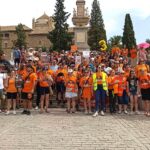
Protest by Homeless Cat from Salobreña. Credit: HC FB

Homeless Cat Salobreña has joined a major Granada protest calling on town halls to comply with Spain’s animal welfare laws and properly fund the management of street cat colonies.

Members of the Salobreña group joined animal welfare associations, colony carers and other supporters at the Jardines del Triunfo in Granada this weekend, saying volunteers have been left carrying responsibilities that should fall to local authorities.

Salobreña volunteers say enough is enough

Homeless Cat Salobreña manages feline colonies and helps cats find new homes, but says it has spent three years waiting for councils to put the legislation into practice.

Volunteers say local authorities should provide funding, apply for state grants and find other sources of finance rather than relying on unpaid carers to keep colonies running. “Volunteers are not workers. We are here to collaborate, not to do their work for free,” the group said during the protest.

Spain’s Animal Welfare Law places responsibility for managing community cats with local authorities. Municipal programmes are expected to include population control through the CER method, capture, sterilisation and return, as well as feeding, veterinary care, colony mapping and measures to deal with neighbourhood disputes.

Around 100 cat colonies across Salobreña

Homeless Cat estimates that around 100 feline colonies are spread across Salobreña, with volunteers continuing to identify and monitor them.

Figures from the association show that 111 cats, 42 males and 69 females, have already been sterilised during 2026. The group also says 60 cats have been abandoned in the municipality this year.

Abandonment is itself prohibited under Spain’s national animal welfare legislation, which also gives community cats legal protection and sets out rules governing their management.

Calls for protection against abuse

Volunteers say they are also facing hostility from some residents over feeding points and abandoned animals.

“We are tired of having to confront neighbours who throw away food, abandon or mistreat cats,” the group said. Homeless Cat says its campaign will continue until councils meet their legal responsibilities, adding that it will not take a step backwards in its demand for better protection and properly managed feline colonies.

%

Not Even One Beer: Spain’s 0.2 Drink-Drive Limit Could Finally Come Into Effect

Published

on

not-even-one-beer:-spain’s-0.2-drink-drive-limit-could-finally-come-into-effect

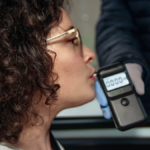
Spain’s proposal would cut the general blood alcohol limit from 0.5 to 0.2 grams per litre. Credit: AlvaroRT / Shutterstock

A small beer with lunch would be enough to put most drivers over the line, and the bill that would do it is back on the table. It lost by a single vote in March, and it returns to Congress with nothing changed.

Interior Minister Fernando Grande-Marlaska confirmed on Monday September 7 that the government will again push its proposal to cut the blood alcohol limit for drivers from 0.5 to 0.2 grams per litre, in the parliamentary session that has just begun. He was speaking at DGT headquarters in Madrid while presenting Spain’s summer road-safety figures. 

Nothing changes at the roadside for now. The 0.5 limit stays in force unless Congress votes for the change, and the last attempt failed by the narrowest margin possible.

What a 0.2 limit would mean at the wheel

The proposed rate is 0.2 grams per litre in blood, or 0.1 milligrams per litre in exhaled air. Pere Navarro, director general of the DGT (the Spanish traffic authority), was blunt when the plan was first put forward: at 0.2, a driver cannot drink absolutely anything. He has described the figure as close to zero tolerance. A single glass of wine or a caña before driving would no longer leave any dependable margin.

Most drivers in Spain are currently allowed 0.5 grams per litre in blood, or 0.25 milligrams per litre in breath. Novice drivers in their first two years and professional drivers, including lorry, bus and taxi drivers, are held to 0.3. The bill would remove that split and apply 0.2 to everyone.

The vote that was lost by one

The proposal was defeated on Wednesday March 18 in the Congress Interior Committee, sitting with full legislative powers, by 19 votes to 18. PP, Vox, ERC and UPN voted against it. Their reasons differed. PP argued the change belonged in traffic regulations rather than in the law itself, Vox called the measure revenue-driven, and ERC withdrew support after its own amendments on traffic examiners in Cataluña were rejected.

Marlaska asked on Monday that no parliamentary group subject the bill to what he called unmentionable political horse-trading, saying the debate was about saving lives and nothing else. 

Sharing the location of an alcohol check would become an offence 

The returning text carries more than just the headline number. It would also ban spreading, by any public or private means, information on where police alcohol and drug checkpoints are set up, which covers social media posts and navigation apps that flag them to other drivers. Individual users who share those locations could be sanctioned.

The penalties are graded, running from two licence points for a reading between 0.2 and 0.5 up to six points and a €1,000 fine at the top band. The law would take effect two months after publication in the Boletín Oficial del Estado, the state gazette.

The summer figures behind the new push

Marlaska raised the bill while reporting that 240 people died in 218 fatal crashes on Spanish roads in July and August, 10 more than in the same period last year and an average of four deaths a day. Roughly half of the drivers killed on Spanish roads last year had alcohol, drugs or prescription medication in their system, according to the DGT toxicology report published in July. Alcohol alone was found in about a third of the cases analysed.

That report also feeds the opposing argument. Among drivers who tested positive for alcohol, a large share were well beyond the current limit rather than fractionally over it, which critics have used to question whether a 0.2 threshold would reach the drivers doing the most damage.

The numbers haven’t changed, and the same result could be looming

The bill has to be registered and taken into consideration again before it can reach another committee vote, and Marlaska gave no date beyond the current session, which runs to December.

The numbers in the committee remain the same since March, and unless one of the four parties that blocked it decides to have a change of heart, the same outcome could be waiting on the other side, while drivers may still keep their slightly wider leniency during a test. 

Continue Reading

%

Mijas Huge Costa Del Sol Pickleball Tournament

Published

on

mijas-huge-costa-del-sol-pickleball-tournament

Pickleball championships return to Mijas. Credit: Ayto

Mijas is getting ready for a major pickleball weekend as 290 players descend on the Costa del Sol for the Costa del Sol Mijas Open 2026 from September 11 to 13.

Matches will be played across 17 courts at the new El Gran Parque in Mijas, with the tournament forming part of the national Pickle Pro Tour organised under the Real Federacion Española de Tenis (RFET). The event is free to watch, with play starting at 9am.

Competition will cover 26 categories, including PRO, 3.5 and 4.5 levels, plus age groups for players over 50 and 60. A total of 866 matches are scheduled during the three-day tournament.

Sunday will bring the five PRO finals, covering men’s and women’s singles, men’s and women’s doubles and mixed doubles.

Pickleball or padel? What is the difference?

Confusion between pickleball and padel is understandable, particularly in Spain where padel has become hugely popular. Pickleball uses a solid paddle and a lightweight plastic ball with holes. The court is smaller than a tennis court and has no walls, while a special seven-foot area beside the net is known as the “kitchen”, where players cannot volley.

Padel uses a different solid racket and a tennis-style ball. Matches are generally played in doubles on an enclosed court measuring 20 by 10 metres, with glass walls forming part of the game. Players can use those walls to return the ball, creating longer and more tactical rallies.

Pickleball is often easier for beginners to learn, while padel involves a little more running and movement. Both sports share some similarities with tennis but have their own rules and playing styles.

Mijas event open to spectators

Mijas hosted the Pickle Pro Tour last year, when local player Maria Costantino won the mixed doubles title.

This year’s tournament is the penultimate event on the 2026 calendar and follows stops including Madrid and A Coruna. With hundreds of matches packed into one weekend, visitors will get a close look at one of the world’s fastest-growing racket sports.

Continue Reading

%

Benalmadena Flamenco Festival’s Folk Traditions

Published

on

benalmadena-flamenco-festival’s-folk-traditions

Verdiales light up the night. Credit: Ayto

The annual Quejigal returns with a special Malaga twist for 2026. Benalmadena is getting ready for a night of flamenco, traditional music and dancing as the Festival Flamenco El Quejigal returns to Los Nadales on Saturday, September 12.

Now in its 23rd year, the popular festival starts at 9pm at the Recinto Ferial Los Nadales, bringing together three very different and rich sides of true Andalucian musical roots and culture.

This year’s programme features the Raices de Almogia verdiales group (highly recommended), flamenco dancer Antonio de Veronica and singer-songwriter Juanfra Carrasco.

Verdiales brings Malaga tradition to the stage

One of the biggest attractions will be Raices de Almogia, a panda de verdiales bringing one of Malaga Province’s oldest musical traditions to Benalmadena. But what is verdial? Verdiales combines music, singing and dancing and is closely linked to the real and original rural Malaga. The colourful groups traditionally perform with instruments including guitars, violins, tambourines and cymbals.

Antonio de Veronica will then take to the stage with a spectacular flamenco dance performance before Juanfra Carrasco closes the evening on a passionate high note.

The Extremaduran singer and composer is a pupil of Seville’s Triana flamenco school and has built a growing reputation on the flamenco circuit.

Free flamenco night for locals and newcomers

Previous years of El Quejigal have welcomed respected names, including singers Arcangel and Rancapino Chico, plus dancers Pepe Torres and Ana Pastrana. Benalmadena’s Culture Department works with Peña Flamenca La Repompa throughout the year on projects including Semana Flamenca and the Benalmadena Flamenco Guitar Fest to keep the original spirit alive.

Flamenco was added to UNESCO’s Representative List of the Intangible Cultural Heritage of Humanity in 2010.

A fully-stocked bar run by the Peña Caballista will offer drinks and refreshments at popular prices during the event. Admission is free every year.

Continue Reading
Advertisement
Advertisement

Spanish Real Estate Agents

Tags

Trending

Copyright © 2017 Spanish Property & News