The details matter. Credit: New Africa / Shutterstock
Imagine a British retiree who has lived in Spain for twenty years, has no children, and has always supported a particular charity back home. Naturally, she wants that charity to receive something when she is gone. It sounds simple enough. But it is rarely as straightforward as it seems, particularly once Brexit is added to the mix.
The starting point is usually good news. If you have no forced heirs under Spanish law, you are generally free to leave your estate, or part of it, to whichever cause you choose. Spanish and foreign charities alike can, in principle, be named as beneficiaries in a Spanish will.
Where things get more complicated is on the tax side. Unlike individuals, charities and foundations are not taxed under Spanish Inheritance and Gift Tax. That might sound reassuring, but it does not mean the inheritance arrives tax-free. Depending on how the organisation is structured, it could still face Corporate Income Tax or, if based outside Spain, Non-Resident Income Tax.
Spain does offer a beneficial tax regime for qualifying non-profit organisations, but it is not automatic. The organisation must meet a list of requirements and formally apply for it. And, crucially, this regime has traditionally been available mainly to entities based in the EU or the European Economic Area. Since the United Kingdom left the EU, it appears that UK-registered charities may no longer qualify for this route in the same way they once did, which could mean a higher tax bill than the testator ever intended.
There is a further wrinkle. Some UK charitable structures operate as trusts rather than as charities with their own separate legal personality. Spanish law does not recognise trusts, which can create additional uncertainty over how the inheritance is treated for tax purposes.
None of this means you should abandon the idea. It simply means the details matter. Before finalising a will that leaves assets to a charity, it is worth confirming exactly how that organisation is structured and reviewing what the tax outcome is likely to be under current rules. At White & Baos Lawyers, we help clients get this right from the outset, so that a generous gesture reaches its intended cause as fully as possible. Reach out to us, today, and we will walk you through it.
You may be interested in the following services and articles:
Presentation of La Mata Fiestas. Credit: Ayuntamiento de Torrevieja.
La Mata will celebrate its patron saint fiestas from Saturday, September 12 to Wednesday, October 7, with almost a month of religious ceremonies, live music, food and family activities.
The programme combines long-standing traditions with entertainment for all ages, culminating in the procession of the Virgen del Rosario and continuing through to the final celebrations on October 7.
Traditional Surriagaso launches almost a month of celebrations in La Mata
Celebrations begin on Saturday, September 12 at noon with the traditional Surriagaso, accompanied by music, DJs and water activities.
The following morning brings one of the first religious events of the programme. A pilgrimage will leave the parish church at 9:30 AM on Sunday, September 13 and make its way to Eduardo Gil Rebollo Park.
An outdoor Mass will then be held at 11:00 AM, bringing residents together as the patron saint celebrations get under way.
The programme continues the following weekend with activities combining local traditions with entertainment for younger residents.
Children’s run, foam party and outdoor cinema fill the September programme
Children take centre stage on Saturday, September 19 with a San Fermin-style children’s run beginning from Plaza Gaspar Perello at 11:30 AM.
The run will be followed by a foam party, while the day’s entertainment continues in the evening with an outdoor cinema session in Plaza Encarnacion Puchol from 8:45 PM.
The traditional dawn Rosary takes place at 7:30 AM on September 20, followed by Mass. Later that day, the popular bar route begins at noon.
Further highlights arrive the following weekend, including the floral offering on September 26.
Food takes centre stage on September 27 with the paella competition beginning at 10:00 AM. Inflatables, music and another foam party will accompany the competition, creating a full day of family entertainment.
Multicolour Parade and Virgen del Rosario procession headline October events
Some of the biggest events of the La Mata fiestas will arrive during the first weekend of October.
The Multicolour Parade takes place at 6:00 PM on Saturday, October 3, bringing a colourful procession through the town before live music from Orquesta Atenas begins at 10:00 PM.
Religious celebrations take centre stage the following day.
On Sunday, October 4, the main Mass begins at 7:30 PM before the Virgen del Rosario is carried through La Mata in the traditional procession.
Fireworks will follow the procession, providing one of the major spectacles of the fiestas.
After almost a month of religious events, music, food, children’s activities and community celebrations, La Mata’s 2026 patron saint fiesta programme will conclude on Wednesday, October 7.
The rescue says this is not the first incident in which someone has entered the property or left food for its horses. Photo credit: Alexander Sánchez
I’m sure plenty of us have seen, or been involved in, the hard work that volunteers and employees put into running an animal rescue. Countless animals depend on them every day, while huge amounts of time, effort and personal money can go into making sure those animals have everything they need.
For EquiScire, a horse rescue and rehabilitation centre in Cádiz province, that work took an alarming turn on Tuesday morning when staff arrived to find three of their rescued horses suffering from serious digestive problems.
Horses have extremely sensitive digestive systems
What initially appeared to be an isolated case quickly became a much bigger concern. Penny, the oldest member of the herd, was actively colicking when staff members arrived, but within minutes they discovered that two other horses were also suffering from acute diarrhoea. “That was when we knew something wasn’t right,” the EquiScire team told the Euro Weekly News.
Horses are particularly vulnerable to digestive disturbances because of the way their gastrointestinal system works. They cannot vomit because the muscular valve between the oesophagus and stomach prevents food from travelling back up, meaning problems in the digestive tract can become serious quickly. Changes to feed can also contribute to digestive disorders and colic, while severe diarrhoea can lead to dehydration and electrolyte imbalances.
EquiScire staff immediately began checking the feeders and water troughs for anything unusual, but initially found nothing. It was only when they walked around the lower section of the paddock that they discovered what had happened. “As we walked down the lower part of the paddock we noticed some handmade canes that had a fork-like device attached on the end of them thrown on the floor next to a prickly pear cactus that is on the other side of the fence. They definitely were not there the evening before.”
Trespasser allegedly picked prickly pear fruit
According to the rescue, the equipment indicated that at least one person had climbed through the fencing and entered the property to collect prickly pear fruit from the cactus. The mature fruit that was ready to eat had apparently been taken, while rotten and fermented fruit was left inside the paddock. Some of the horses subsequently ate it.
Prickly pear, or Opuntia, is not automatically poisonous to livestock. However, the plant can have a laxative effect and excessive amounts have been associated with diarrhoea in animals. The cactus also carries sharp spines and tiny barbed glochids which, if eaten or embedded in the mouth and digestive tract, can cause severe pain, deep ulceration, abscesses and heavy drooling.
For Penny, the situation was particularly serious because she already suffers from gastric ulcers. The sudden consumption of rotten and fermented fruit placed additional strain on her already compromised digestive system and contributed to the severe stomach problems she experienced. One of the other affected horses had eaten less of the discarded fruit and recovered within two days. India, however, became much more seriously ill.
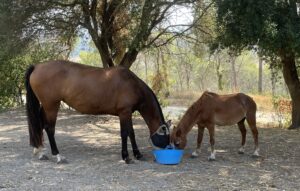
Penny and India suffered the worse effects. Photo credit: Alexander Sánchez
Existing illness made India particularly vulnerable
India and Tsuki both have piroplasmosis also known as Tick fever, a protozoal disease that affects red blood cells and can cause anaemia and other serious health problems. Eva, a volunteer, explained that while the condition can be managed, treatment does not simply make the underlying parasite disappear.
“There is no cure for piroplasmosis, only managerial treatments that keep the parasite at bay,” Eva said, explaining that the horses generally receive an intravenous treatment top-up once a year. The concern is what happens when a horse’s immune system becomes weakened.
In India’s case, the severe digestive problems meant she was unable to absorb the nutrients she needed, leaving her more vulnerable to the effects of her existing condition. “She was the worst one out of the three. She had such bad tummy issues that she was not able to absorb any nutrients, leading to her immune system weakening.” Fortunately, Eva said their vet responded immediately and India is already showing signs of improvement.
It is not the first time horses have been fed
The rescue says this is not the first incident in which someone has entered the property or left food for their horses. A few years ago, staff repeatedly arrived to find potato, onion and other vegetable peelings scattered around the paddocks. They eventually discovered that a woman who walked past the property each morning had been feeding the horses because she believed they enjoyed it. Co founder Alex told us “She said she did not know that the vegetables were toxic,”.
For the rescue, the incident highlighted a simple but important point: people should never feed someone else’s animals without permission. Even something intended as a harmless treat can cause a digestive emergency, particularly when the animal has existing health problems.
The cost goes beyond the vet bill
For a small rescue fundingits work from its founders’ own pockets, the consequences extend beyond the immediate veterinary treatment. “Our rescue is currently funded straight out of our pockets, and we put a lot of love and care into assuring all our rescues receive the topmost care,” Alex said.
“A careless, senseless act like this can put a lot of pressure on an already struggling centre and cause funds that could have gone towards rescuing other horses or covering food costs to be spent treating horses for something that could otherwise have been prevented.”
All three horses have pulled through, but EquiScire hopes the incident will serve as a warning to anyone tempted to feed an animal simply because they think they are doing something kind. The rescue is considering putting up signs asking people not to feed the horses, although locals have warned that signs alone may not stop everyone. Anyone wishing to support EquiScire can do so through its GoFundMe account or contact the rescue directly at EquiScire@gmail.com.
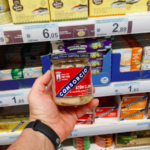
The OCU study examined 32 tins of light tuna in oil. Photo credit: Jose Rosa Vazquez
If you regularly reach for a tin of tuna when you need a quick lunch, you probably do not spend much time wondering whether one brand is actually better than another. They can look almost identical on the supermarket shelf, with the same promises of olive oil, quality tuna and an easy meal for a few euros.
But the price on the label does not necessarily tell you what you are getting. A major OCU analysis of 32 tins of tuna sold in Spain found clear differences between products, with some of the lowest-scoring options receiving just 64 points out of 100.
Three tuna products came bottom
The OCU study examined 32 tins of light tuna in oil, including 19 products in olive oil and 13 in sunflower oil. Researchers assessed everything from the tuna species and oil used to freshness, salt, labelling, the proportion of fish in each tin, physical defects and the results of professional tasting.
The lowest score went to Conservas Ortiz AOVE Eco, which received 64 points. OCU highlighted its relatively high salt content and shortcomings in its labelling, although no significant defects were found during the tasting assessment.
Next came Carrefour’s pack of tuna in sunflower oil, with 65 points. The product was marked down following the tasting assessment and because some defects were detected. OCU also noted that its competitive price did not translate into a quality level that matched the better-performing products.
Cabo de Peñas Aceite Eco scored 67 points. Its relatively high salt content and only acceptable labelling affected the result, while OCU also considered its price high compared with the quality offered.
The biggest problem was salt
Salt was one of the clearest weaknesses across the products tested. The average salt content was 1.04 per cent, while the Spanish Agency for Food Safety and Nutrition considers a food to have a high salt content when it exceeds 1.25 per cent.That does not mean the tuna tested was unsafe. In fact, OCU’s laboratory checks produced reassuring results on some of the issues consumers might worry about most.
Testing found that the fish in all 32 products belonged to authorised species for light tuna, while analysis of the fatty-acid profile confirmed that the oil used matched what was stated on the packaging. Histamine levels were low and mercury concentrations were well below the permitted maximum in every product examined.
Cheap tuna beat premium products
One of the more surprising findings was that spending more did not guarantee better tuna. For the olive-oil products, prices ranged from €11.39 to €42.95 per kilogram of drained tuna. OCU found that two supermarket own-brand products offered very good quality for less than €15 per kilogram: Sal de Plata from Aldi and Hacendado from Mercadona.
Sal de Plata received 86 points, making it the highest-rated product in the analysis, while Hacendado scored 85. Both were recognised for their quality and value for money.The findings also show why comparing the price of the whole tin can be misleading. Different packs may contain different amounts of actual tuna, so OCU compared prices according to the weight of drained fish rather than simply the size or price of the packet.
What should shoppers look for?
The organisation considers the overall quality of the products analysed to be good and says there are plenty of worthwhile options. Shoppers should pay attention to the salt content, the amount of tuna compared with the covering liquid and the information provided on the label. The study also found that good-quality tuna does not necessarily come with a premium price tag.
The important point for shoppers is that OCU has not found a safety problem with these tins. Its testing found no worrying levels of mercuryor histamine in any of the 32 products, and all contained the type of tuna and oil stated on the label. The differences were mainly in quality, salt levels, labelling, taste and value for money.