
%
Cádiz Horse Rescue Nightmare As Three Animals Fall Ill After Trespasser Enters Paddock

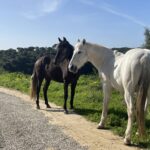
The rescue says this is not the first incident in which someone has entered the property or left food for its horses. Photo credit: Alexander Sánchez
I’m sure plenty of us have seen, or been involved in, the hard work that volunteers and employees put into running an animal rescue. Countless animals depend on them every day, while huge amounts of time, effort and personal money can go into making sure those animals have everything they need.
For EquiScire, a horse rescue and rehabilitation centre in Cádiz province, that work took an alarming turn on Tuesday morning when staff arrived to find three of their rescued horses suffering from serious digestive problems.
Horses have extremely sensitive digestive systems
What initially appeared to be an isolated case quickly became a much bigger concern. Penny, the oldest member of the herd, was actively colicking when staff members arrived, but within minutes they discovered that two other horses were also suffering from acute diarrhoea. “That was when we knew something wasn’t right,” the EquiScire team told the Euro Weekly News.
Horses are particularly vulnerable to digestive disturbances because of the way their gastrointestinal system works. They cannot vomit because the muscular valve between the oesophagus and stomach prevents food from travelling back up, meaning problems in the digestive tract can become serious quickly. Changes to feed can also contribute to digestive disorders and colic, while severe diarrhoea can lead to dehydration and electrolyte imbalances.
EquiScire staff immediately began checking the feeders and water troughs for anything unusual, but initially found nothing. It was only when they walked around the lower section of the paddock that they discovered what had happened. “As we walked down the lower part of the paddock we noticed some handmade canes that had a fork-like device attached on the end of them thrown on the floor next to a prickly pear cactus that is on the other side of the fence. They definitely were not there the evening before.”
Trespasser allegedly picked prickly pear fruit
According to the rescue, the equipment indicated that at least one person had climbed through the fencing and entered the property to collect prickly pear fruit from the cactus. The mature fruit that was ready to eat had apparently been taken, while rotten and fermented fruit was left inside the paddock. Some of the horses subsequently ate it.
Prickly pear, or Opuntia, is not automatically poisonous to livestock. However, the plant can have a laxative effect and excessive amounts have been associated with diarrhoea in animals. The cactus also carries sharp spines and tiny barbed glochids which, if eaten or embedded in the mouth and digestive tract, can cause severe pain, deep ulceration, abscesses and heavy drooling.
For Penny, the situation was particularly serious because she already suffers from gastric ulcers. The sudden consumption of rotten and fermented fruit placed additional strain on her already compromised digestive system and contributed to the severe stomach problems she experienced. One of the other affected horses had eaten less of the discarded fruit and recovered within two days. India, however, became much more seriously ill.
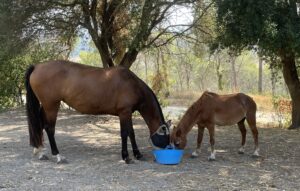
Existing illness made India particularly vulnerable
India and Tsuki both have piroplasmosis also known as Tick fever, a protozoal disease that affects red blood cells and can cause anaemia and other serious health problems. Eva, a volunteer, explained that while the condition can be managed, treatment does not simply make the underlying parasite disappear.
“There is no cure for piroplasmosis, only managerial treatments that keep the parasite at bay,” Eva said, explaining that the horses generally receive an intravenous treatment top-up once a year. The concern is what happens when a horse’s immune system becomes weakened.
In India’s case, the severe digestive problems meant she was unable to absorb the nutrients she needed, leaving her more vulnerable to the effects of her existing condition. “She was the worst one out of the three. She had such bad tummy issues that she was not able to absorb any nutrients, leading to her immune system weakening.” Fortunately, Eva said their vet responded immediately and India is already showing signs of improvement.
It is not the first time horses have been fed
The rescue says this is not the first incident in which someone has entered the property or left food for their horses. A few years ago, staff repeatedly arrived to find potato, onion and other vegetable peelings scattered around the paddocks. They eventually discovered that a woman who walked past the property each morning had been feeding the horses because she believed they enjoyed it. Co founder Alex told us “She said she did not know that the vegetables were toxic,”.
For the rescue, the incident highlighted a simple but important point: people should never feed someone else’s animals without permission. Even something intended as a harmless treat can cause a digestive emergency, particularly when the animal has existing health problems.
The cost goes beyond the vet bill
For a small rescue funding its work from its founders’ own pockets, the consequences extend beyond the immediate veterinary treatment. “Our rescue is currently funded straight out of our pockets, and we put a lot of love and care into assuring all our rescues receive the topmost care,” Alex said.
“A careless, senseless act like this can put a lot of pressure on an already struggling centre and cause funds that could have gone towards rescuing other horses or covering food costs to be spent treating horses for something that could otherwise have been prevented.”
All three horses have pulled through, but EquiScire hopes the incident will serve as a warning to anyone tempted to feed an animal simply because they think they are doing something kind. The rescue is considering putting up signs asking people not to feed the horses, although locals have warned that signs alone may not stop everyone. Anyone wishing to support EquiScire can do so through its GoFundMe account or contact the rescue directly at EquiScire@gmail.com.









Fallece A Los 73 Años El Irreductible Actor, Director, Dramaturgo Y Poeta Catalán Manel Dueso

Gibraltar Gears Up To Celebrate First National Day Since Historic Post-Brexit Treaty Tore Down Border With Spain

Spain’s New ‘affordable’ Housing Portal Launches With Zero Flats In Andalucia Or Madrid
France’s famous cheeses could taste different after drought forces farmers to change cows’ diets
Krakatoa exploded 143 years ago today: Noise heard 5,000km away that shaped Spain’s south-east

54 Hectares Destroyed In Barcelona Fire As Man Arrested Over Suspected Arson


-
Abondance2 weeks ago
France’s famous cheeses could taste different after drought forces farmers to change cows’ diets
-
History2 weeks ago
Krakatoa exploded 143 years ago today: Noise heard 5,000km away that shaped Spain’s south-east
-
 %2 weeks ago
54 Hectares Destroyed In Barcelona Fire As Man Arrested Over Suspected Arson
-
cocaine2 weeks ago
‘Blazing Saddles’: bizarre discovery sparks major police operation in Spain
-
botanical garden Orchidarium2 weeks ago
Wands out in Estepona: Costa del Sol town celebrates 25 years of Harry Potter on film
-
Airport malaria2 weeks ago
Mosquito stowaway kills two Frankfurt Airport workers in rare malaria outbreak
-

 Andalucia2 weeks ago
Spain’s Expat Havens: These Are The Towns Where Foreign Buyers Outnumber Spanish Ones – Sometimes By Two To One
-
Latest2 weeks ago
‘We Feel Abandoned’: Clashes In Spain’s Ceuta As Locals Grow Tired Of Migrant Crisis