
Donald Trump
The $8 Trillion In US Debt Held Abroad: The Hot Potato Linking Trump And The World









11-S
Una Anécdota De Trump Sobre Haber Sido Rescatado Por Bomberos En El 11-S Genera Cuestionamientos Sobre Su Veracidad


Donald Trump
Some 170,000 Salvadorans With TPS Anxiously Await Program’s End: ‘My Life Is In The United States’

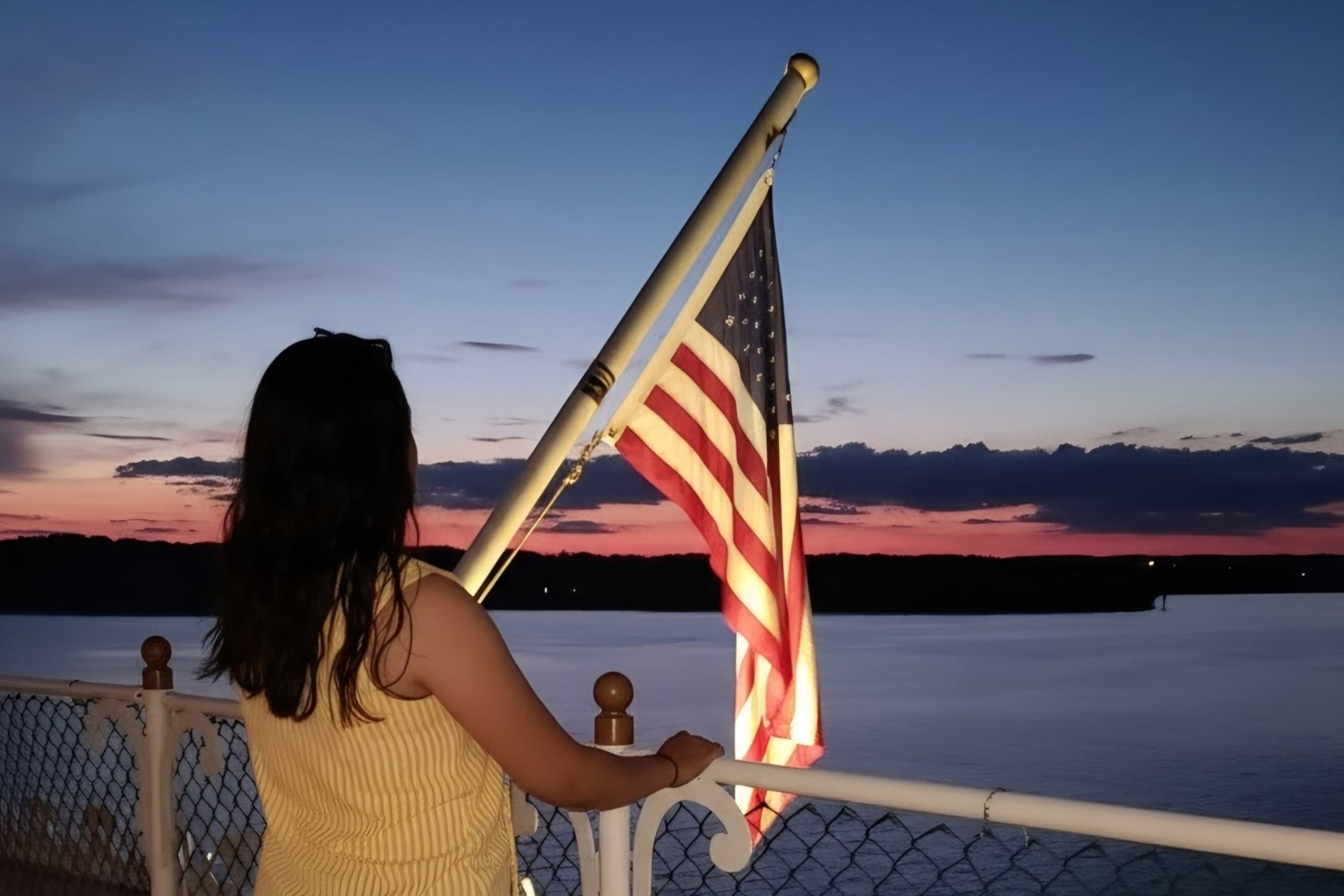
Wednesday, September 9 is the date about 170,000 Salvadorans had circled in red on their calendars. A date they have awaited with fear and uncertainty because it is the day the Temporary Protected Status (TPS) program ends — a program that for more than two decades has allowed them to live and work in the United States legally. Since 2001, when the status was granted again — Salvadorans were the first to receive it in 1990 as a result of the civil war in their country, but it expired in 1992 and was not renewed then — beneficiaries have had to renew it every 18 months. They have followed the rules, paid the fees, and integrated into a country they consider their own more than the one where they were born. Over a quarter-century they have learned the language, started businesses, raised families, bought homes… They are part of the country’s economic and social fabric, but the end of TPS would leave them in limbo.
They have watched President Donald Trump make carrying out the largest deportation in history a priority of his second term. One by one, the Republican has dismantled humanitarian programs that allowed non-citizens to live in the country, enlarging the list of people deemed deportable. The administration has ended TPS for more than a dozen countries. Recently, protections for Haitians and Syrians were canceled. Many of those who had been living and working legally are now packed into detention centers run by U.S. Immigration and Customs Enforcement (ICE) or have been deported to the countries they fled to escape violence and poverty.
Salvadorans fear the same fate. In their case, they were granted TPS because of the devastation left by the civil war fought from 1979 to 1992 and the two earthquakes in 2001. Those who could leave did so in search of a better life — and they achieved their dream. The prospect of returning to a place they no longer recognize as their country, where violence and poverty persist, seems impossible and unjust. They have met every obligation imposed by the government, never committed crimes (a requirement to renew TPS), and now face losing everything and being separated from their loved ones.
These are the stories of some of the people in that situation.
José Urias, 47, businessman: “About 40 American families depend on my company”
José Urias entered the United States in 1995, “chasing a dream, like everyone else.” In the 31 years he has lived in the country he has married, had two children (aged 14 and 20) and started several businesses in the state of Massachusetts. He works in construction and also runs a dumpster rental company. “We have helped create jobs. Most of the people who work for me are U.S. citizens. About 40 families depend on the company,” he says. Urias hires plumbers, electricians, architects and other skilled construction workers.
“After 25 years with TPS, many of us have businesses, families… Some have college degrees and professional careers; we have doctors, nurses, psychologists, we are in every field,” he says. “To have done everything right and then be told, well no, everything you’ve done doesn’t matter, that doesn’t seem fair,” he adds, complaining about discriminatory treatment of their children. “They are treating them as if there are different classes of American citizens. There isn’t a first class and a second class, everyone is equal. Our children have the same rights as any other American citizen,” he insists.
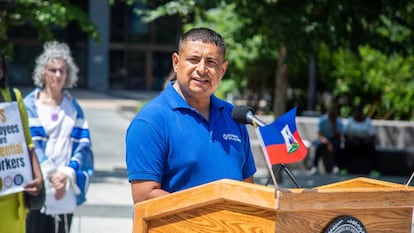
This businessman is one of the tepesianos who decided to organize with other migrants in the National TPS Alliance in 2017 to fight Trump’s first-term attempt to end the program — an effort courts blocked, and which was revived when he returned to the White House in January 2025. “It forced us to fight to defend our families and our future,” he says, adding that it affected his “peace of mind.”
His children’s future is his greatest concern. His eldest is in his third year of college and his parents are supporting his studies financially. “My son has suffered anxiety and depression, because we are the ones supporting him, and he worries about what might happen to us and whether he will be able to finish his degree,” he says.
One of the administration’s most-used arguments for ending TPS is that it is temporary, as the name implies. However, after 25 years with a temporary permit, beneficiaries complain that the problem is there has been no pathway to permanent residency. “You try to adjust your status, but they have manipulated the system so you can’t. They say you haven’t tried because you don’t want to, but that’s a lie,” he explains.
Urias applied for an adjustment of status through his brother, a U.S. citizen, 11 years ago but has not yet received a response. He has no family left in El Salvador because his parents and siblings live in the United States. He has no definite plan in case he is forced to leave the country. “I’ve always said that after what happens on September 9 we’ll make decisions,” he says.
Virginia, 20, student: “I always answer calls because I don’t know if it could be my mother trying to reach me from a detention center”
Virginia is not a TPS beneficiary, but its cancellation will change her life — like the lives of hundreds of thousands of children whose parents were protected from deportation by the humanitarian program. Her mother was born in El Salvador, a country she fled decades ago, and Virginia now lives in fear of being separated from her. “I was about 12 the first time we talked about why she came to the United States; recently I asked again and she explained that the war there caused her a lot of trauma: the shootings, the street clashes… my grandparents didn’t live in a safe area, so they were very exposed to all of that. She also suffered many abuses within her own community,” she explains. Her mother, who prefers not to be named because of the risks identification could pose, is now 47 and has held TPS since 2001. She is married and has two other daughters, 12 and 13, and lives in Massachusetts.
The approach of September 9 and the fear of losing the benefit have shaken Virginia’s life. In her second year of college, she moved out of student housing to return home every night. “During my first year of college I lived on campus; I was there almost all the time and hardly ever went home. It was easier for me to focus on my studies and assignments without having to drive back every weekend,” she says. “This semester I started commuting from home because I wanted to spend more time there in case something happened to my mom. My family and my mom are my priorities now. My sisters are still children and I think it’s hard for them to understand, but I know they definitely feel the same way,” she adds.

The idea that her mother might have to leave the country is not openly discussed, but it is a threat the family lives with. The mother works with the National TPS Alliance and the father is employed in construction. Although they have not detailed what they would do if they had to separate, they are taking precautions, such as saving money. The father does not take a day off and Virginia balances work with her studies. “Our priority is to save money in case something happens to her,” she says.
Virginia knows that if her mother had to return to El Salvador she would have to assume her role with her younger sisters, since her father works nonstop. She says her mother tries not to show her concern and stays strong to avoid worrying her daughters. Sometimes, however, reality overwhelms her. “The other day I left the house and she sent me a message saying, ‘Can you come back and bring me some water? I think I’m having a panic attack.’ So I know it’s a difficult situation for her, though she’s doing a great job staying strong for the sake of her family.”
While they await a decision that will define their future, the whole family tries to carry on with life as normally as possible, though with precautions that reveal their underlying fear. “I always keep my phone with me and I always answer calls because I don’t know if it could be my mother trying to contact me from a detention center,” she admits.
Roxana Guillén: “I can’t leave now. My life is here and my daughter needs me”
Roxana prefers to use this name rather than her own. She lives with her 21-year-old daughter in Maryland. She has worked for nine years at a recovery center for people with addictions in Baltimore and is active in defending TPS. “I can’t leave now. My life is here and my daughter needs me,” she says. “To carry on, keep living my life, keep working, keep fighting,” she responds when asked about her plans. “I am a social fighter and that is what I am going to do, as far as I can. Work with members of Congress so they pass a law, because there are four bills. That’s what we need,” she says.
The lack of an agreement between Republicans and Democrats has prevented a solution for more than a million people who have lived and worked for years in the United States under the TPS umbrella and now face deportation. On Tuesday, Roxana was preparing to attend a vigil at the Capitol, where beneficiaries and their advocates gathered to ask for an extension of the program on the eve of its expiration.
In the more than two decades she has been in the United States, Roxana has made a living however she could, working nonstop. “I cleaned houses, sold Avon and cared for children. I did anything I could to survive.” She had fled, like her compatriots, the violence and poverty that ravaged the Central American country. Over the years she worked her way ahead and started a catering business providing food to construction workers, delivering lunch daily. She did that for 13 years until she decided she needed a job that required less physical effort. Now, she does not want to lose it. “A work permit is really important to me because here I can only work if I have papers. If I have to give it up I would be left with nothing,” she says about the possibility of losing her work authorization.
Her daughter is in college. “My life is here now. Here I have my home, here I have my job, here I have my daughter,” she says.
Sign up for our weekly newsletter to get more English-language news coverage from EL PAÍS USA Edition


F1 champion Max Verstappen reveals his

Fallece A Los 73 Años El Irreductible Actor, Director, Dramaturgo Y Poeta Catalán Manel Dueso

El Liverpool Apaga El Efecto Julián Alvarez
France’s famous cheeses could taste different after drought forces farmers to change cows’ diets

54 Hectares Destroyed In Barcelona Fire As Man Arrested Over Suspected Arson
Krakatoa exploded 143 years ago today: Noise heard 5,000km away that shaped Spain’s south-east


-
Abondance2 weeks ago
France’s famous cheeses could taste different after drought forces farmers to change cows’ diets
-
 %2 weeks ago
54 Hectares Destroyed In Barcelona Fire As Man Arrested Over Suspected Arson
-
History2 weeks ago
Krakatoa exploded 143 years ago today: Noise heard 5,000km away that shaped Spain’s south-east
-
cocaine2 weeks ago
‘Blazing Saddles’: bizarre discovery sparks major police operation in Spain
-

 Andalucia2 weeks ago
Spain’s Expat Havens: These Are The Towns Where Foreign Buyers Outnumber Spanish Ones – Sometimes By Two To One
-
botanical garden Orchidarium2 weeks ago
Wands out in Estepona: Costa del Sol town celebrates 25 years of Harry Potter on film
-
Airport malaria2 weeks ago
Mosquito stowaway kills two Frankfurt Airport workers in rare malaria outbreak
-
Costa Blanca North2 weeks ago
Everything you need to know about the final weekend of Benidorm Pride