Connect with us

Alejandro Betancourt

Ferraris, Porsches, 17 Guns And A United Arab Emirates Residency Card: The Search Of Alejandro Betancourt’s Mansion In Spain

Published

on

ferraris,-porsches,-17-guns-and-a-united-arab-emirates-residency-card:-the-search-of-alejandro-betancourt’s-mansion-in-spain
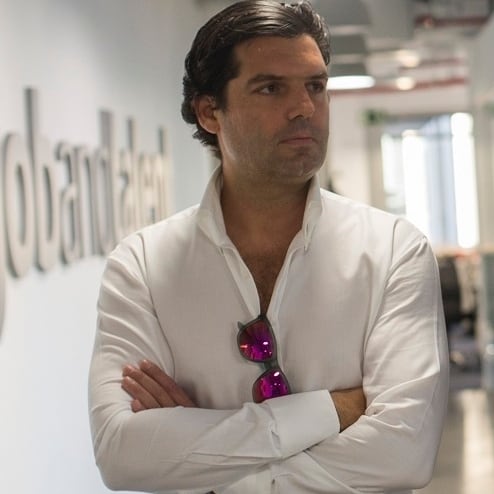
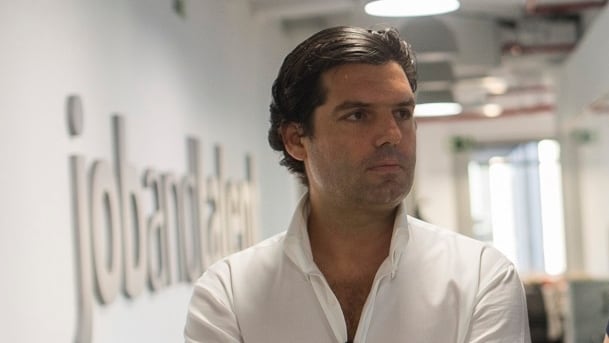
Alejandro Betancourt in Madrid in 2016, in a photo from his website.

Alejandro Betancourt’s tentacles in Spain are long. The Venezuelan businessman who amassed a fortune after his country’s power crisis at the end of the 2010s has seen his wealth rise again after the Trump administration touched him with the magic oil wand, entrusting him with crude exploitation in a deal with the government of Venezuela’s interim president, Delcy Rodríguez. The billionaire’s assets in Madrid alone are substantial, according to police documents that are part of an ongoing investigation into alleged money laundering. Authorities seized five luxury cars, a United Arab Emirates residency card and 17 firearms at his private estate in Toledo.

Documents being published by EL PAÍS lay out how a joint operation organized by Switzerland and the police and Anti-Corruption Prosecutor’s Office in Spain carried out a series of judicial searches on August 28 last year that targeted the billionaire, who remains under investigation in Spain for money laundering and tax evasion. Six officers from the Economic and Fiscal Crime Unit (UDEF) attended the Alamín estate, 35 miles from Madrid in Toledo province, carrying an order from High Court Judge Santiago Pedraz. The property, bought by Betancourt in 2012, is valued at over €25 million ($28.7 million) and covers 1,440 hectares. Police say that although the property is registered to the company Inversiones Agrícolas Trieste, it is where the Venezuelan actually lives when he is on Spanish soil.

The tycoon has been under investigation by Spanish authorities since June 2025, when the Anti-Corruption Unit filed a complaint against him, his business partner Pedro Trebbau, and four other individuals for allegedly bringing money into Europe derived “from fraud” totaling $4.35 billion stemming from a loan from the state-owned oil company PDVSA to the private firm Administrador Atlantic. Specifically, the prosecution believes Betancourt laundered part of that money — an amount not yet quantified — through investments in companies and real estate in Spain.

Police searched six addresses in Spain, including the Alamín estate, to trace the funds. At Betancourt’s property they found several luxury cars: two Porsche Cayennes, a third Porsche with Venezuelan plates, a Ferrari F12 Berlinetta without plates and a Mini Cooper Cabrio. Officials consulted the Swiss authorities about whether to seize them and three of the vehicles were flagged as relevant to the investigation.

The Venezuelan vanished, sources in the investigation said, once the UDEF entered the grounds. Agents had tracked him and knew he was at Alamín, but after gaining access they found only his wife and sister. That did not stop the search, which was detailed in a police report. In his mother’s bedroom they found a UAE residency card in the businessman’s name issued December 6, 2023, and valid until December 5, 2025, and in another room they found a cellar with “an indeterminate number of bottles of wine and alcoholic beverages.”

The estate contains a room “set up as an armory” which, according to the police account, was “locked,” but later opened by a man of about 42 who said he was “responsible for keeping the key” to the room. He said he did not know what was inside and, once police opened it, they found 17 weapons (13 rifles and four shotguns) “without the corresponding documentation” and registered in the name of a third party, M. E. G. R. They also found three firearm silencers and assorted ammunition. The only cash discovered amounted to $8,600.

Betancourt’s networks in Spain extend to some well-known figures in the conservative opposition Popular Party and to the publisher of a mainstream outlet, according to sources close to the probe. The estate is not his only lavish property. On the Madrid–Toledo border the Casa de Yeguas of Alamín was also searched, where the UDEF found only “tools,” “agricultural equipment,” “derelict buildings and stables,” “old furniture” and “remnants of agricultural products.” They also found 60 cows and two fighting bulls.

Through his companies, the Venezuelan owns two other flats in the capital — one facing the Puerta de Alcalá and another on Paseo de la Castellana, both in well-heeled downtown neighborhoods. Officers likewise found nothing of note there. In one flat, inside the master bedroom’s dressing room, they examined two safes built into the wall — one behind a mirror and the other “revealed after removing a piece of furniture.” The Police Technical Intervention Group (GOIT), which specializes in this type of search, found nothing beyond an empty Cartier envelope.

Part of the seized material was sent to the Swiss investigators, while little progress has been made on the Spanish case since then. Judge Pedraz attempted to dismiss the case on one occasion after Betancourt submitted a document in which Venezuela exonerated him of the alleged corruption offenses involving PDVSA. If the money does not have an illicit source (in this case, embezzlement from the oil company, the proceeds of which were used to enrich the defendants), it could not be proven that the investments in Europe were made to launder this money. The Criminal Chamber of the National Court ordered the judge to reopen the case and wait for the United States to provide the testimony of five key witnesses. These are five individuals who have already been convicted there in connection with the scheme known as “Money Flight,” which acknowledges that payments were made to PDVSA officials to enable money to be siphoned off from the oil company through a disguised operation.

The Anti-Corruption Prosecutor’s Office maintains that if those witnesses testify in the Spanish case the predicate offense would be established and investigators could deepen the probe into Betancourt and his circle’s alleged money laundering activities. Betancourt rejects any corruption accusation and has submitted Venezuelan documentation seeking exoneration. Washington, which has made Betancourt its point of contact with Delcy Rodríguez’s government, has for months not replied to the Spanish High Court’s request for judicial cooperation, which is not only stalling the investigation but has put it on a timetable. Judge Pedraz has said that if he does not have a response by December, he will have no choice but to close the investigation into the billionaire.

Sign up for our weekly newsletter to get more English-language news coverage from EL PAÍS USA Edition


Alejandro Betancourt

United States Stalls Spanish Investigation Into Alejandro Betancourt, Its New Oil Czar In Venezuela

Published

on

united-states-stalls-spanish-investigation-into-alejandro-betancourt,-its-new-oil-czar-in-venezuela

The hand of the United States has resurfaced in the legal proceedings facing Alejandro Betancourt. This time in Spain. The Venezuelan businessman, identified as the architect of the deal that will give Donald Trump control of a fifth of Venezuela’s oil, has been under investigation by Spain’s National Court (Audiencia Nacional) for more than a year on charges of money laundering and tax evasion. But the case has been stalled for months, and sources close to the investigation point to one party responsible: Washington.

Judge Santiago Pedraz is waiting on a response to a formal request for legal assistance sent to U.S. authorities that never arrives, and after shelving the case once already, he has issued a new warning: if there is no answer from the United States by December, he will close the case again.

Behind this story lies more than a simple delay; it’s about a figure of critical interest to the United States. Betancourt has emerged as the man behind the oil deal that Washington and Caracas signed a few weeks ago, one that will allow the United States to profit to the tune of millions of dollars from a quarter of Venezuela’s oil reserves. Trump’s inner circle is well aware of his legal cases in Venezuela, the United States, Switzerland, and Spain —the latter two still active— but has used him to achieve its goal of reviving Venezuela’s oil business following the capture of Nicolás Maduro this past January 3.

The signing of that deal put the businessman and his multiple legal cases under scrutiny, but the White House —and acting Venezuelan president Delcy Rodríguez— have not only defended him publicly, but had also been maneuvering for months to protect him legally, as U.S. media has extensively documented.

The Spanish judicial proceeding, which is investigating the origin and destination of more than 4 billion dollars allegedly diverted from PDVSA, Venezuela’s state oil company, is waiting for Washington to respond to a request to take testimony from a series of key witnesses, since they have already been convicted in the United States. Their testimony could help establish the underlying crime in Madrid, but nearly a year after that request was made, no one has responded.

The money laundering offense under investigation in Spain requires a predicate crime that establishes the illicit origin of the funds. Judicial sources explain that if the witnesses confirm corruption at the oil company, it would establish that the money that reached Spanish territory has illicit roots, and the Spanish case could move forward to examine how that money was laundered by feeding it into a legal financial system. Betancourt, known in Spain for having become the owner of the Hawkers eyewear brand, invested millions in numerous Spanish companies and even bought a castle in Toledo.

The five “essential” witnesses have already been convicted in the United States for the same PDVSA corruption scheme, known as Money Flight. They are Abraham Ortega Morales, the oil company’s former director of financial planning; Carmelo Urdaneta, a senior official in Venezuela’s oil sector; Álvaro Ledo Nass, PDVSA’s former legal advisor; Luis Fernando Vuteff, an Argentine businessman and son-in-law of opposition figure Antonio Ledezma; and Luis Carlos de León, former financial director of Electricidad de Caracas, a PDVSA subsidiary.

Sources at the Audiencia Nacional explain that there is no legal deadline by which the country must respond. So when does it usually respond? “When it’s in its interest,” notes one judge who asked to remain anonymous. Spain and the U.S. have well-oiled judicial cooperation systems backed by cooperation treaties. In fact, the Ministry of Justice keeps a Spanish liaison judge in Washington to help facilitate cooperation. Until a few weeks ago that position was held by María de las Heras, though she has just been replaced by judge Íñigo Herrero.

Prosecutorial sources who have worked in international cooperation explain that collaboration with the United States isn’t always straightforward, given the country’s size and the fact that its 50 states plus federal system operate separately. Cooperation becomes more difficult, they say, when what’s being requested is a measure that limits rights —such as a search and seizure or a wiretap— but they note that taking testimony via videoconference, as in this case, “should move quickly.”

In this impasse, Betancourt is shoring up his legal position with documents from Venezuela’s Public Ministry certifying that, despite all the schemes and suspicions in which the businessman has ended up involved, the case against him in his home country was dismissed without his involvement being proven.

EL PAÍS reached out to the U.S. Department of Justice, which did not respond; the State Department, which declined to respond officially; and the Pentagon, which merely offered the same statement issued after the announcement of the oil deal with Betancourt, reports Macarena Vidal Liy.

American help in Switzerland

The proceedings in Spain stem from an investigation opened in Switzerland nearly a decade ago. The Zurich Prosecutor’s Office had an extradition order against Betancourt from the United Kingdom, where he remained confined between his two mansions because he was barred from leaving the country. But in May, U.S. efforts to help him paid off. As The Washington Post revealed, senior Trump administration officials —then-Attorney General Pam Bondi, her deputy Todd Blanche, and Deputy Secretary of State Christopher Landau— pressured Swiss prosecutors directly seeking information and favorable treatment for their ally.

The Zurich Prosecutor’s Office declined to confirm to this newspaper whether that pressure influenced its decision, but it did confirm that it withdrew the extradition request, citing particularities of British law. Thanks to that withdrawal, the travel restrictions the U.K. had imposed on him while reviewing the extradition request were lifted, and Betancourt was able to resume flying by private jet to Venezuela and the United States to finalize the details of the historic oil deal announced by Trump nearly two weeks ago.

The case in Switzerland remains open, but another detail revealed by The Post showed that the United States has no interest in cooperating. The Prosecutor’s Office asked the U.S. Department of Justice to arrest Betancourt if he entered U.S. territory, and not only did it fail to do so, but it also shielded him as its business partner.

Meanwhile in Spain, the Anti-Corruption Prosecutor’s Office —which filed the original lawsuit in June 2025 not only against Betancourt but also against his cousin Pedro Trebbau, his partner Francisco Convit, and three other people— remains determined to prove a multimillion-dollar fraud.

According to the investigation, in 2012 the Venezuelan oil company issued a 4.35 billion loan to the private company Administrador Atlantic that was, in reality, only meant to get the money out of the country so it could eventually be laundered, allegedly, through accounts belonging to Venezuelan businessmen and former officials. Anti-Corruption investigators believe that “significant amounts of money” were invested in Spanish territory in real estate and other assets after the money was brought from Venezuela “through bribes paid to officials” totaling 42 million dollars.

This vast money-laundering network has international ramifications. Sources close to the investigation explain that between March and April of 2025 there was a meeting at Eurojust —the European Union’s agency for judicial cooperation— where officials from various countries, including Spain, shared information on how to address this complex money-laundering scheme, which sought to conceal, through overlapping companies and different countries, the enormous amount of money under investigation.

Although Judge Pedraz had shelved the case in March, the Criminal Chamber forced him to reopen it following an appeal from the Anti-Corruption Prosecutor’s Office, which considered the dismissal “premature.” Testimony was still needed from those witnesses, who can only be interrogated with Washington’s cooperation. And nothing has moved since.

Betancourt isn’t willing to lose any legal battle, and he has armed himself both inside and outside Spain. Outside the country, back in 2019, he hired Rudy Giuliani —then Donald Trump’s personal lawyer— to defend him before the U.S. Department of Justice, where he had been named an unindicted co-conspirator in the Money Flight case. In Spain, he has retained the law firm of José Antonio Choclán, one of the most sought-after criminal defense attorneys in major corruption cases. The firm has defended, among others, singer Julio Iglesias, the former lover of Spain’s emeritus king, Corinna Larsen, broker Víctor de Aldama in the Koldo case —a corruption scandal implicating the Socialist Party (PSOE)— and former Real Madrid footballer Cristiano Ronaldo.

While the United States has yet to respond to the request for legal assistance, Betancourt has submitted to the Spanish court a document from the Directorate General of International Criminal Cooperation of Venezuela’s Prosecutor’s Office, which was overhauled in February following the capture of Nicolás Maduro. Unlike the terms former Attorney General Tarek William Saab and several Chavista officials used to describe Betancourt in the past, this document now clears him of all responsibility.

The speed of Venezuelan justice contrasts sharply, in this case, with the slowness of the American one. In just six days —following a formal request from his own lawyer in Caracas on June 30— the agency’s director, Ana Osto Ascanio, signed a response detailing the investigation point by point. It reaffirms that the Venezuelan case was closed in 2023 with “res judicata” status, meaning, the Venezuelan prosecutor’s office argues, that he cannot be prosecuted in another country for the same acts, according to investigation documents reviewed by EL PAÍS.

Various sources consulted at the Audiencia Nacional point out the speed with which Delcy Rodríguez’s government —which now backs Betancourt— handed over this document, even as Venezuela has gone decades without cooperating in other major Spanish judicial cases, such as the extradition of ETA members sheltering in the country. One such case involves the Audiencia Nacional’s renewed effort to locate 14 ETA members in hopes that Maduro’s fall would open a new avenue for cooperation, a request that remains unresolved.

Judge Pedraz’s ultimatum, in any case, still stands. In a filing dated August 10, the judge stated that he cannot continue pursuing proceedings into the money laundering charge because, without establishing the predicate crime (corruption), they would be “useless.” The judge asserts that he “cannot wait indefinitely for U.S. authorities” to act on Spain’s request, calling it contradictory that they have shown “great interest and cooperation” while failing to respond. He therefore allows a “reasonable amount of time” that, in his view, “cannot extend beyond December of this year.”

The clock, once again, is running in Betancourt’s favor. And in this case, the United States doesn’t need to make major moves that later get exposed in the American press months down the line. Simply doing nothing is enough.

Continue Reading

Trending

Copyright © 2017 Spanish Property & News