
Donald Trump
From Airbnb To Stray Cats: Trump’s Childhood Home In Queens Sells For $2 Million

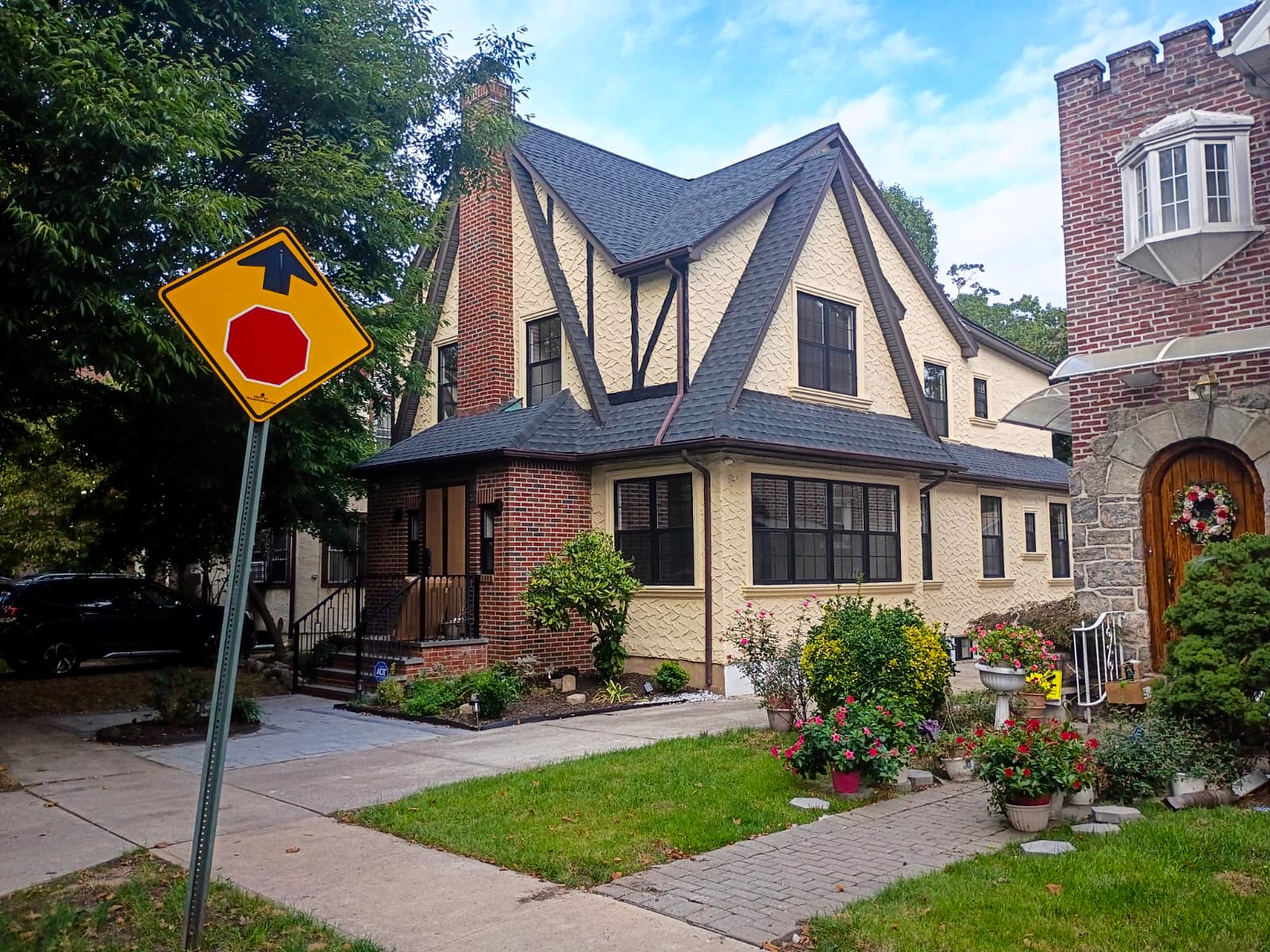
The Jamaica–179th Street subway stop in Queens is only about a 10-minute walk from Wareham Place. But an abyss separates the two places. From the crowded low-rise blocks of busy shops, where spotting a white resident is difficult, to single-family homes with manicured yards on quiet streets where cars rarely pass. “Different parts of Queens were rough; this was an oasis,” Donald Trump said in a 2015 New York Times interview. This “oasis” is where the man who is now president of the United States lived as a child, in a house an anonymous family has just bought for $1.93 million.
The property where young Donald took his first steps does not stand out today among the row of detached homes in this upscale neighborhood in Queens, one of New York’s five boroughs. Freshly renovated with new windows and doors, moving boxes inside already suggest an imminent relocation. This charming Tudor-style house, built in 1940, went on the market last November for $2.3 million.
Since its most famous tenant moved to the White House for the first time, the property has gone through several phases. “It’s very quiet now, but when Trump won in 2016 it was complete madness. There were reporters everywhere asking about the house and about the Trumps,” said John Sing, who lives a few blocks away. From that moment, when the world was stunned by the electoral victory of a businessman best known to the public for the reality show The Apprentice, the Wareham Place house became a pilgrimage site for Trump fans who, for a modest $725 a night on Airbnb, could sleep within the walls where the world’s most powerful man —with a nod to Xi Jinping — began to crawl.
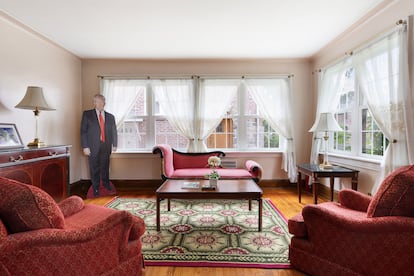
The listing included an overnight stay in a house decorated with merchandising featuring the president, such as a life-size cardboard cutout, framed magazine covers, and pocket editions of his book The Art of the Deal. Plaques pointed out what was “probably” the president’s childhood bedroom and the room where he was “probably” conceived.
But the business was apparently not lucrative —$725 a night is likely a deterrent even for the most ardent Trump supporter— because later the house fell into a period of abandonment, inhabited only by feral cats. Some still roam outside today. That period ended in March 2025, when a businessman bought the five-bedroom, three-bath property for $835,000, renovated it and put it back on the market in November for $2.3 million in search of a tidy profit.
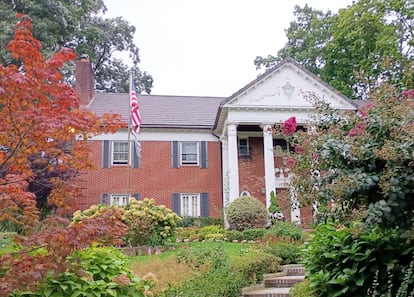
Trump may have only lived in the house for his first four years, but he spent much more time in the neighborhood. His parents, Fred and Mary Anne, moved a few doors away to a much larger, more ostentatious 23-room brick mansion with white columns that bring to mind — a topic for a psychoanalyst, perhaps? — the White House. The sellers said the buyers intend to live in the house and prefer to remain anonymous, and that their decision had nothing to do with who the former occupants were.
Opinions in the neighborhood are divided. Mohsena Mustafá, a 57-year-old woman of Bangladeshi origin who lives nearby, says that even though it was long ago, it is an honor for the area to have had such a distinguished resident. “Trump is a businessman who works hard to defend the country,” she said. Just the opposite of what a man walking his dog thinks; he cannot understand how anyone would pay so much for such a small house. Asked his name, he gestures no. “Haven’t you heard? Trump goes after anyone who criticizes him. I don’t want my name in a newspaper,” he said.
Sign up for our weekly newsletter to get more English-language news coverage from EL PAÍS USA Edition









The Venezuelan migrant shot by an Immigration and Customs Enforcement (ICE) agent in Austin, Texas, is being held at a detention center in Pearsall, about a two-hour drive from the state capital, the office of his lawyer, Kate Lincoln-Goldfinch, said. Wilber Rafael Garcés Pérez still has the bullet lodged in his body, has not received pain medication, and had to sleep on the floor, Lincoln-Goldfinch said.
The 28-year-old migrant was making DoorDash deliveries on Sunday morning when he was intercepted and shot by at least one ICE agent at an intersection in Austin. It is unclear exactly what happened before at least one federal officer fired at the blue Toyota Corolla Garcés was riding in and before the migrant was taken to the hospital. Videos shot by passersby showed a vehicle stopped in front of a black pickup and, seconds later, several gunshots.
In another video filmed in front of the car, a man is seen sitting in the driver’s seat with the door open when an agent approaches him and quickly turns away while speaking into what appears to be a portable radio or cellphone. The footage does not show the agent providing emergency aid to the driver. Finally, another video shows a man on a stretcher being loaded into an ambulance.
During Sunday afternoon and part of Monday morning, his lawyer and his wife, Elizdar, unsuccessfully tried to obtain information about Garcés’s whereabouts and condition. The lawyer even posted a video on her Instagram account a few hours ago asking ICE to contact her.
After that, Lincoln-Goldfinch’s press contact, Fabiana Meléndez, confirmed to EL PAÍS that the lawyer was able to speak with Garcés. That is when she obtained details about his condition.
‘Mama, Immigration is chasing me’
Lincoln-Goldfinch had previously told a local outlet that Garcés left for work in the morning and around midday called his wife to report the incident. “He called screaming that he had been shot and was in a lot of pain and then hung up,” Lincoln-Goldfinch said.
A similar account was given by the migrant’s mother, Flor Pérez, from Venezuela. “He called me at 1.40 p.m., Venezuela time. He shouted: ‘Mama, Immigration is chasing me, they shot me’ […] He hung up quickly to call his wife,” she told independent journalist Carlos Moreno by phone.
ICE, the most visible agency in President Donald Trump’s anti-immigrant apparatus, said in a statement sent to EL PAÍS that the Department of Homeland Security’s investigative division and the Federal Bureau of Investigation are leading the probe into “the agent involved in a shooting against an undocumented migrant from Venezuela.” It added that Garcés entered the United States irregularly during the administration of Joe Biden and that he had a final order of removal. “His condition is stable and he is in federal custody awaiting deportation,” the statement said.
The Texas Department of Public Safety said ICE requested assistance at about 12.50 p.m. local time regarding a pursuit of a blue Toyota Corolla. That agency added that its officers arrived after the shooting.
Austin Mayor Kirk Watson, meanwhile, called for an independent investigation. “While I’m angry and disappointed, I’m not surprised. This has happened in other cities. With the rogue nature of ICE and the chaos we’re seeing fomented by ICE, there’s no reason to be surprised,” the Democrat wrote on his X account.
“Though APD [Austin Police Department] was not involved in the shooting, I believe that there needs to be an investigation that APD assures is clear-eyed, as complete as possible, and independent,” he added.
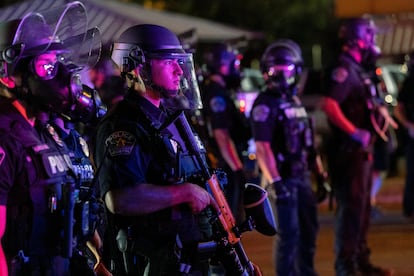
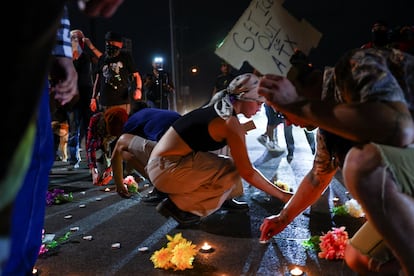
The incident comes just over two months after ICE shot immigrant Lorenzo Salgado Araujo in Houston during an operation in which he was not the target, as the Department of Homeland Security itself acknowledged. The Mexican died that same day and the incident sparked large protests in the city. The case is being reviewed by a grand jury at the request of the Harris County district attorney’s office, the largest in the state and where the shooting occurred.
As in this Sunday’s case in Austin, Salgado’s son, Ronaldo, did not receive immediate information about his father’s medical condition when he went to the scene. He went to the hospital where he believed his father was being treated and was not informed of his condition there either. By then, DHS had already briefed the press about the Mexican immigrant’s death.
Sign up for our weekly newsletter to get more English-language news coverage from EL PAÍS USA Edition
ABC
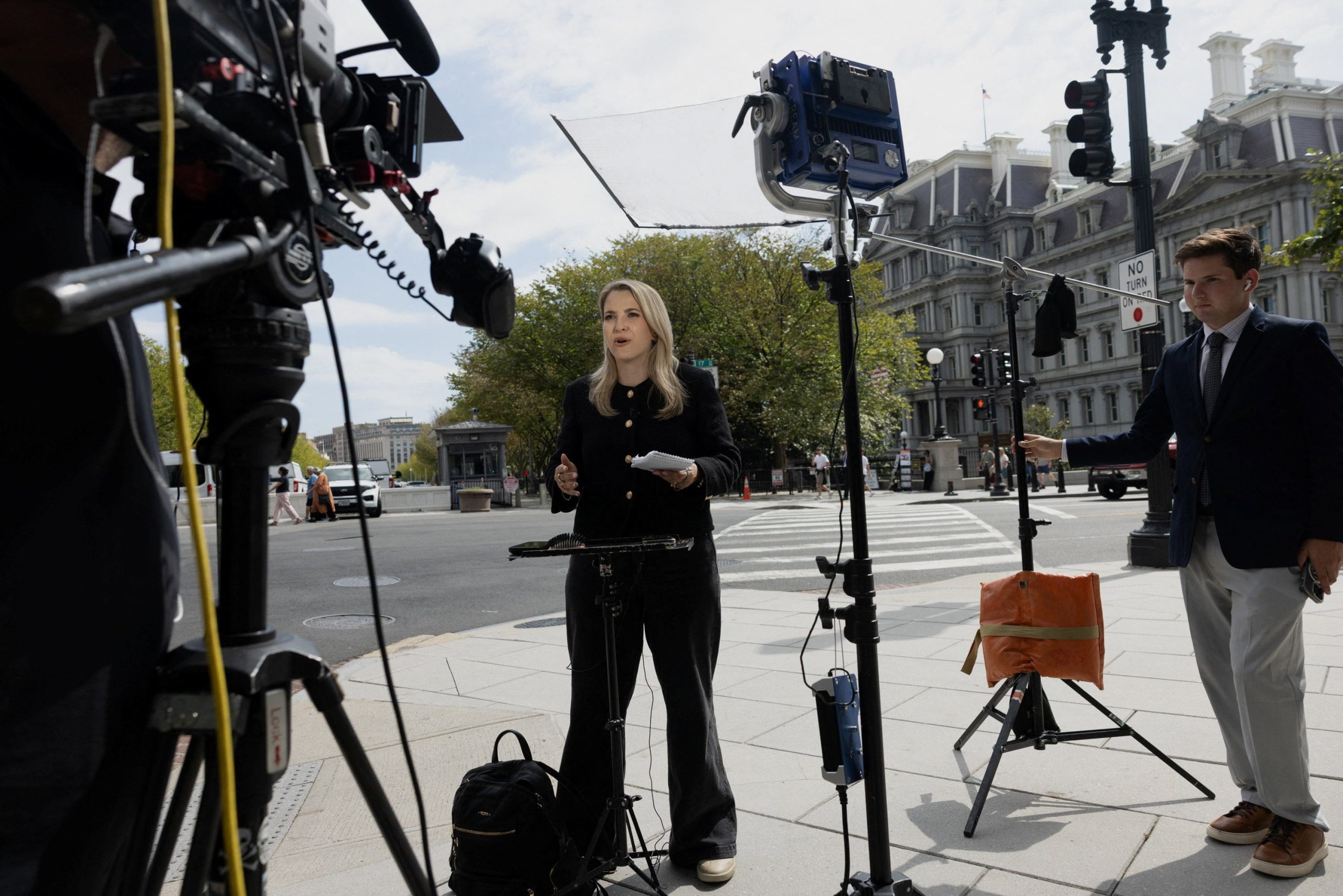
Major Television Networks Pull Out Of Presidential Press Pool Following Lawsuit Filed Against Trump By CNN, MS NOW, And ‘Politico’

Alejandro Betancourt
Ferraris, Porsches, 17 Guns And A United Arab Emirates Residency Card: The Search Of Alejandro Betancourt’s Mansion In Spain

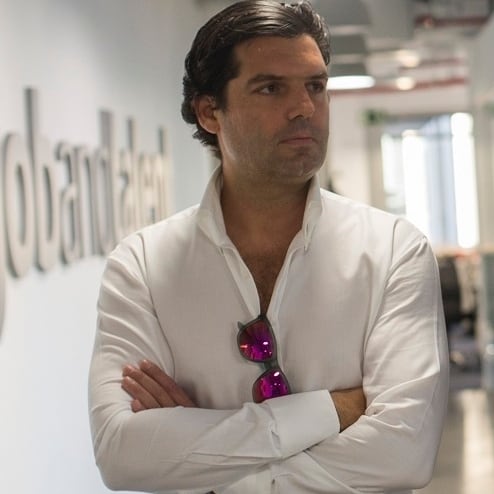
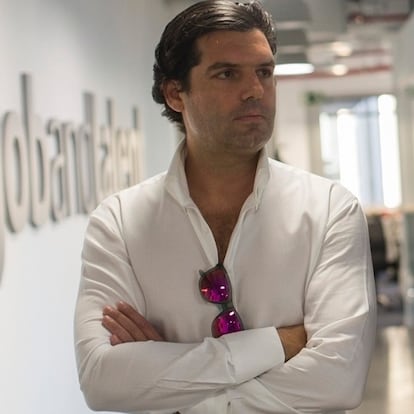
Alejandro Betancourt’s tentacles in Spain are long. The Venezuelan businessman who amassed a fortune after his country’s power crisis at the end of the 2010s has seen his wealth rise again after the Trump administration touched him with the magic oil wand, entrusting him with crude exploitation in a deal with the government of Venezuela’s interim president, Delcy Rodríguez. The billionaire’s assets in Madrid alone are substantial, according to police documents that are part of an ongoing investigation into alleged money laundering. Authorities seized five luxury cars, a United Arab Emirates residency card and 17 firearms at his private estate in Toledo.
Documents being published by EL PAÍS lay out how a joint operation organized by Switzerland and the police and Anti-Corruption Prosecutor’s Office in Spain carried out a series of judicial searches on August 28 last year that targeted the billionaire, who remains under investigation in Spain for money laundering and tax evasion. Six officers from the Economic and Fiscal Crime Unit (UDEF) attended the Alamín estate, 35 miles from Madrid in Toledo province, carrying an order from High Court Judge Santiago Pedraz. The property, bought by Betancourt in 2012, is valued at over €25 million ($28.7 million) and covers 1,440 hectares. Police say that although the property is registered to the company Inversiones Agrícolas Trieste, it is where the Venezuelan actually lives when he is on Spanish soil.
The tycoon has been under investigation by Spanish authorities since June 2025, when the Anti-Corruption Unit filed a complaint against him, his business partner Pedro Trebbau, and four other individuals for allegedly bringing money into Europe derived “from fraud” totaling $4.35 billion stemming from a loan from the state-owned oil company PDVSA to the private firm Administrador Atlantic. Specifically, the prosecution believes Betancourt laundered part of that money — an amount not yet quantified — through investments in companies and real estate in Spain.
Police searched six addresses in Spain, including the Alamín estate, to trace the funds. At Betancourt’s property they found several luxury cars: two Porsche Cayennes, a third Porsche with Venezuelan plates, a Ferrari F12 Berlinetta without plates and a Mini Cooper Cabrio. Officials consulted the Swiss authorities about whether to seize them and three of the vehicles were flagged as relevant to the investigation.
The Venezuelan vanished, sources in the investigation said, once the UDEF entered the grounds. Agents had tracked him and knew he was at Alamín, but after gaining access they found only his wife and sister. That did not stop the search, which was detailed in a police report. In his mother’s bedroom they found a UAE residency card in the businessman’s name issued December 6, 2023, and valid until December 5, 2025, and in another room they found a cellar with “an indeterminate number of bottles of wine and alcoholic beverages.”
The estate contains a room “set up as an armory” which, according to the police account, was “locked,” but later opened by a man of about 42 who said he was “responsible for keeping the key” to the room. He said he did not know what was inside and, once police opened it, they found 17 weapons (13 rifles and four shotguns) “without the corresponding documentation” and registered in the name of a third party, M. E. G. R. They also found three firearm silencers and assorted ammunition. The only cash discovered amounted to $8,600.
Betancourt’s networks in Spain extend to some well-known figures in the conservative opposition Popular Party and to the publisher of a mainstream outlet, according to sources close to the probe. The estate is not his only lavish property. On the Madrid–Toledo border the Casa de Yeguas of Alamín was also searched, where the UDEF found only “tools,” “agricultural equipment,” “derelict buildings and stables,” “old furniture” and “remnants of agricultural products.” They also found 60 cows and two fighting bulls.
Through his companies, the Venezuelan owns two other flats in the capital — one facing the Puerta de Alcalá and another on Paseo de la Castellana, both in well-heeled downtown neighborhoods. Officers likewise found nothing of note there. In one flat, inside the master bedroom’s dressing room, they examined two safes built into the wall — one behind a mirror and the other “revealed after removing a piece of furniture.” The Police Technical Intervention Group (GOIT), which specializes in this type of search, found nothing beyond an empty Cartier envelope.
Part of the seized material was sent to the Swiss investigators, while little progress has been made on the Spanish case since then. Judge Pedraz attempted to dismiss the case on one occasion after Betancourt submitted a document in which Venezuela exonerated him of the alleged corruption offenses involving PDVSA. If the money does not have an illicit source (in this case, embezzlement from the oil company, the proceeds of which were used to enrich the defendants), it could not be proven that the investments in Europe were made to launder this money. The Criminal Chamber of the National Court ordered the judge to reopen the case and wait for the United States to provide the testimony of five key witnesses. These are five individuals who have already been convicted there in connection with the scheme known as “Money Flight,” which acknowledges that payments were made to PDVSA officials to enable money to be siphoned off from the oil company through a disguised operation.
The Anti-Corruption Prosecutor’s Office maintains that if those witnesses testify in the Spanish case the predicate offense would be established and investigators could deepen the probe into Betancourt and his circle’s alleged money laundering activities. Betancourt rejects any corruption accusation and has submitted Venezuelan documentation seeking exoneration. Washington, which has made Betancourt its point of contact with Delcy Rodríguez’s government, has for months not replied to the Spanish High Court’s request for judicial cooperation, which is not only stalling the investigation but has put it on a timetable. Judge Pedraz has said that if he does not have a response by December, he will have no choice but to close the investigation into the billionaire.
Sign up for our weekly newsletter to get more English-language news coverage from EL PAÍS USA Edition
Spain’s new emergency corridor rule starts October 1. What every driver needs to do
Benidorm offers young drivers up to €250 towards driving lessons
Major Benidorm housing project gets green light after 20-year wait
The Vocabulary You Need To Understand The Spanish Citizenship Process
Ibiza council hits illegal tourist rental with €793,000 fine – but will the owner pay that much?

94% Of Spanish Homes Are Energy Inefficient – Could Tighter Rules Be Coming?


-
Latest1 week ago
The Vocabulary You Need To Understand The Spanish Citizenship Process
-
Holiday rentals2 weeks ago
Ibiza council hits illegal tourist rental with €793,000 fine – but will the owner pay that much?
-
 Energy efficiency & certificates2 weeks ago
94% Of Spanish Homes Are Energy Inefficient – Could Tighter Rules Be Coming?
-

 Argentina1 week ago
The Falklands: The Open Wound That Unites Argentines
-

 Andalucia2 weeks ago
There’s One Chief Consultant Orthopaedic And Trauma Surgeon In Marbella You Can Trust Under The Knife
-
 Alex Saab6 days ago
Maduro Ally Alex Saab Pleads Guilty In US Money-Laundering Case
-
easyJet1 week ago
146 slide off easyJet flight after powerbank fire at Milan airport
-
Affordable homes Spain2 weeks ago
Costa Blanca renters may be missing out on Spain’s new affordable homes