
Donald Trump
Renovating The White House Or Banning Journalists: Trump Invokes National Security To Push Through His Most Controversial Plans









The iconic GALA Hispanic Theater in Washington, D.C., a pioneer in presenting Spanish-language plays in the U.S. capital, hasn’t been immune to the impact of Donald Trump’s aggressive immigration policies. Faced with the intensification of raids by Immigration and Customs Enforcement (ICE) across D.C., this center for Hispanic culture has become a refuge for the Latino community on more than one occasion.
“When things were really bad in this area, there was a time when we couldn’t leave the theater after the 10 p.m. rehearsal. We had to stay put until 5 a.m., with two actors who were crying the whole time,” Gustavo Ott sighs. Born in Venezuela, he’s the artistic director at the theater, which is now celebrating its 50th anniversary. The young Latinos studying acting under his supervision suffered persecution by ICE agents, who followed them home to arrest their parents.
The neighborhood where the theater is located, Columbia Heights, was one of the first where residents confronted agents, blowing whistles to alert locals about their presence and putting chalk on the wheels of unmarked ICE vehicles. And the anguish and resilience of the community will be brought to the stage at GALA this season. In June of 2027, the theater will present Botiquín de mariachis de Columbia Heights (with the English title Columbia Heights Mariachi Bar), by Mexican playwright Jaime Chabaud. It’s a portrait of resilience, hope and quiet resistance, reflecting the current reality. “We’ve lived through major crises here,” Ott points out.
Role reversal
The theater troupe’s support for the Latino community dates back to its origins. GALA — an acronym for Grupo de Artistas Latinoamericanos (“Group of Latin American Artists”) — was founded in 1976, in order to promote Hispanic culture in a country where the Spanish language wasn’t widely spoken and the traditions were different. The gamble taken by the founding couple, Hugo and Rebecca Medrano — a theater director born in Argentina and an American dancer — was innovative. Putting on Spanish-language plays in Washington, D.C. and in the mid-1970s, at that, by no means guaranteed success.
Being the only theater in town that offered plays in Spanish attracted the Latino audience, a growing community in the city. And, for everyone else, the couple decided to use subtitles. At the time, this was an unusual role reversal and it has continued to this day.
Upon entering the theater – located in a century-old building in the Columbia Heights neighborhood – the three screens surrounding the stage immediately catch your eye: one on each side, with another one above it. And then, the cascade of English-language phrases begins. This is a nod to the experience of segments of the Latino community, who are accustomed to having to read the dialogue when their lack of knowledge of the most widely-spoken language in the country prevents them from following a story.
“It’s magnificent. I speak some Spanish, but the person accompanying me doesn’t. So, they can read the subtitles. It’s a way to promote Hispanic culture and it’s part of the Washington community,” says Rochelle Granat, an American woman seated in the theater’s bar.
The beginnings were modest. Hugo – an actor, who emigrated to Spain after the 1966 military coup in Argentina – didn’t want to stay in the European country, which was emerging from Francisco Franco’s dictatorship. And so, he decided to try his luck in the United States. Unwilling to give up his acting career, he and his wife decided to found a theater to serve the Latino community and offer them what wasn’t available at the time: culture in their own language.

“It was a great opportunity for the Latino community to have access to theater. The fact that it’s in Spanish is what I like most,” says Álvaro García, a Colombian man who has been attending GALA’s plays for three decades. On Thursday, September 17, he and his American wife attended the performance. His Colombian friend and the man’s partner (also regular theatergoers) joined them.
Hugo and Rebecca started their venture in a garage in the Adams Morgan neighborhood. They later moved to a warehouse and a convent school, until the opportunity arose to set up shop in the Columbia Heights building. The property is steeped in history: it served as a grand musical theater in the 1920s, before becoming a movie theater.
The building was one of the few to survive in a predominantly African American neighborhood where, in 1968, following the assasination of Martin Luther King Jr., numerous riots took place. The locals, who had grown up going to the theater, marked it, in order to prevent it from being burned down.
The area became conflict-ridden and the theater was eventually abandoned. It stood empty for many years, until it re-emerged as a survivor from a previous era.
Lorca, with subtitles
The neighborhood has changed, and so has the audience. There are increasingly more spectators who don’t speak Spanish and have to read the subtitles, including younger generations of Latinos.
“Nowadays, we’re very surprised. Because, for example, we performed The House of Bernarda Alba (1936) in January and February of this year. And [the theater] was full of people who didn’t speak the language. It’s [by Federico García] Lorca and they came to read [the subtitles],” Ott notes.
He explains that one of the reasons for the theater’s success is the quality of the translations. “We believe that the translation has to be of a high, literary standard. It can’t simply be an AI thing,” he says. “It’s not just about communicating with the audience. The audience has to feel pleasure because they’re reading something worthwhile. Our translations are very literary,” he emphasizes. Last year, the subtitles were written in verse for the translation of Lope de Vega’s Fuenteovejuna (1619).
One of the keys to survival is adaptation. Hence, the GALA Hispanic Theater is now looking to attract new generations of Latinos who don’t speak Spanish, while also expanding its audience by focusing on bilingualism during performances.
Approximately 30% of GALA’s audience doesn’t speak Spanish. Accordingly, the theater has begun introducing English through musicals.
Garbo, the unsung Spanish hero
To make their performances accessible to non-Spanish speakers, the production company has chosen to stage Garbo: The Actor Who Saved the World, a play running until September 27. Garbo is the code name of Juan Pujol, a Spanish spy who became a key figure in the success of the D-Day landings that helped bring an end to World War II.
Ott wrote the script. He explains that Garbo “is a hero whose story resonates with the traditional American community that doesn’t speak Spanish, because they recognize elements of World War II and they’re familiar with what happened in Normandy.”

Pujol, without any prior training, became a double agent who invented an imaginary network of spies to deceive the Germans into believing that the Allies would launch their attack at Pas-de-Calais, not Normandy. As a result, the Nazi army concentrated its resources in the wrong place. For the British, his name was Garbo; for the Germans, he was Arabel. His cover was so successful that he received military decorations from both sides of the conflict: he was awarded the Iron Cross by the Nazis and was made a Member of the Order of the British Empire.
Preparations for the 2027-2028 theatrical season have already begun. The selection of plays to be performed is based on GALA’s “seasonal themes.” And, this time around, they’re looking ahead to the 2028 presidential elections. “‘Confrontation,’ for example, might be one of the words we use. We’ll also keep in mind that our community is constantly being persecuted, even around the theater. So, ‘persecution’ will be another one,” Ott affirms.
Sign up for our weekly newsletter to get more English-language news coverage from EL PAÍS USA Edition

Diésel sintético
Trump’s Plan To Ban Diesel Exports Aggravates Europe And Latin America’s Energy Crisis

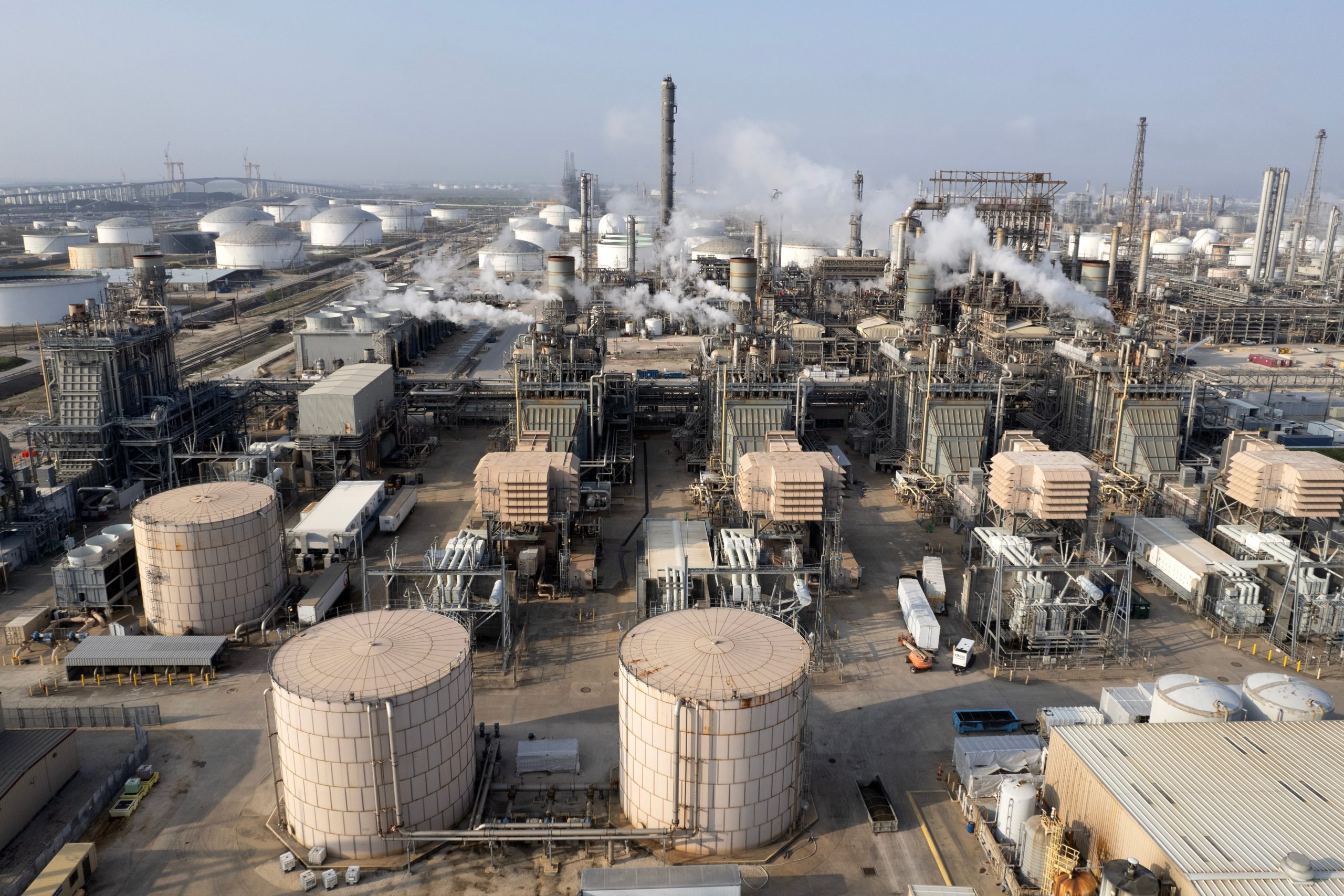
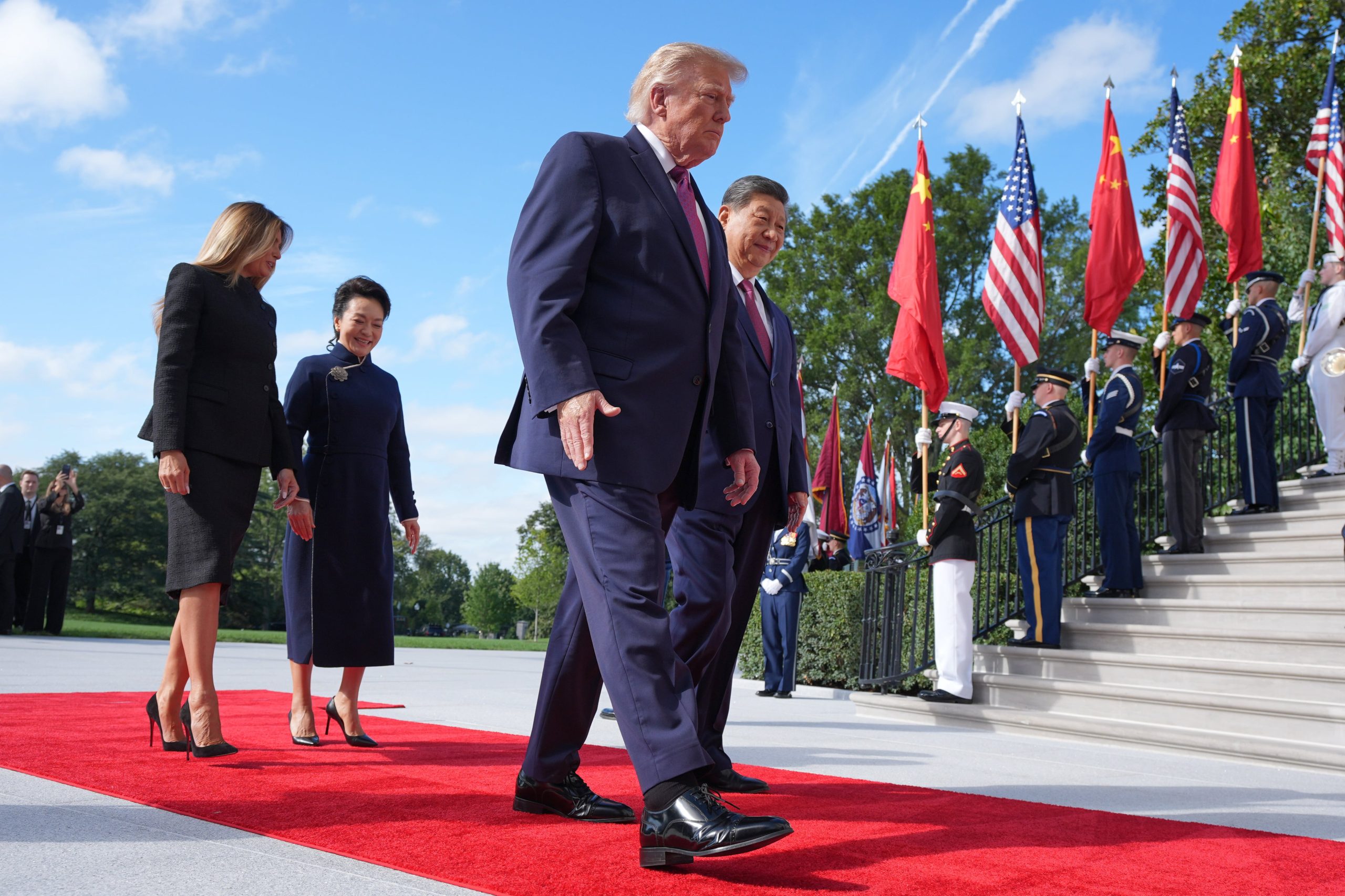
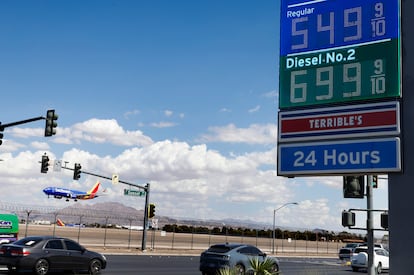
The United States and its energy industry are making a killing selling crude oil and its derivatives to the rest of the world. The world’s largest economy is filling part of the gap left by supply cuts from Gulf countries due to the war in Iran, and from Russia due to Ukrainian attacks on its refineries. But everything has its limits, and the breaking point was reached on Tuesday, September 22, when diesel surpassed $6.50 a gallon at U.S. pumps.
Shortly after this threshold was crossed, President Donald Trump publicly expressed his support for banning diesel exports for the first time, in order to bring down the price of the fuel at home. The measure would have a massive impact on an energy market that has already become a pressure cooker. And Latin America and Europe, the main buyers of American diesel, would be the hardest hit.
“I’ve said let’s not send out the diesel,” the American president declared on September 22, after a meeting with Ukrainian President Volodymyr Zelensky on the sidelines of the UN General Assembly General Debate in New York. Trump now has the power to further exacerbate the energy crisis that he himself unleashed back in February, by launching the war against Iran. The spike in energy prices has significantly impacted the wallets of his own constituents.
On Wednesday, September 23, Politico offered more clues about how the White House would implement such a measure. Apparently, the Trump administration plans on imposing a 90-day export ban, according to five sources familiar with the matter. And this is no longer merely a threat, but a plan with a clear timeframe. The ban would last until the end of the year, the peak season for diesel demand in North America and Europe.
With the November midterm elections just around the corner – and with the large majority of polls showing the Republicans losing – the temptation to ban diesel exports also faces significant obstacles. There are divided opinions on the matter, even within the White House itself, and there’s significant opposition from the powerful U.S. oil lobby. There’s also the expectation that reduced diesel production will ultimately drive up the prices of other fuels, such as gasoline, in the domestic market. But Trump seems more concerned with sending a signal to his voters. It’s an almost desperate attempt to reverse a trend that’s extremely worrying for his political interests.
The proposed ban, whether partial or total, couldn’t have come at a worse time for Europe, where fuel prices are skyrocketing and severely impacting agriculture, transportation and industry. On the continent, diesel still accounts for almost two-thirds of the energy consumed for road freight transportation. And the United States is by far its main supplier: so far this year, it has provided a third of European diesel imports (in August, it was half) and a tenth of total consumption.
Far from weakening, this relationship has intensified since Russia stopped supplying fuel to much of the rest of the world. The supply crisis has worsened due to Ukrainian attacks on Russian refineries, launched in response to the war initiated by Vladimir Putin, and the growing difficulties faced by Persian Gulf countries in shipping their refined products through the Strait of Hormuz and the Red Sea.
The perfect storm that’s been brewing for months in the global diesel market can only worsen if, purely for electoral gain, Trump ends up sending a proposal to Congress to ban exports of the fuel. With the ongoing wars in Iran and Ukraine, global refining capacity has dropped by some five million barrels per day, which has exacerbated the diesel deficit even as diesel remains the world’s most in-demand fuel.
After Trump’s announcement, diesel prices on the London market rose by 7%, despite the relative stability of crude oil.
“The underlying problem is that the rest of the global refining system doesn’t have enough spare capacity to compensate for these losses,” explains Kerstin Hottner, head of commodities at Vontobel, an asset manager. “In recent years, refining capacity has decreased in both Europe and the United States. And the facilities that remain operational are already running near their maximum capacity.”
If Washington goes ahead and cuts off the American diesel supply to the rest of the world, the situation will become even more unsustainable. “An export ban would be devastating for diesel supplies in Europe; it would be a struggle to replace them,” Josh Michalowski warns EL PAÍS in an email. He covers the European diesel market at Argus, a market intelligence firm focused on commodities and energy.
“Almost a third of U.S. [diesel] exports go to South America, which would be the hardest-hit region, and Central America: together, they account for almost half of the total,” Jorge León, the head of Geopolitical Analysis at the Norwegian firm Rystad Energy, explains in a phone interview. “It would also be relevant for Europe, but [the continent] has less exposure.”
Six of the seven largest buyers of diesel processed in U.S. refineries — totaling 1.5 million barrels per day — are located in either Europe or Latin America: Brazil, Chile, Mexico, Peru, France and the United Kingdom. This is according to data from the industry analysis firm Kpler. The only exception on that list is Morocco.
“Just because of Trump’s words on Tuesday, the price of diesel has gone up [in Europe] and down in the United States. If he finally takes this step, the situation will be quite complicated,” León predicts. Without U.S. diesel, European gas stations wouldn’t run dry, because Europe produces around 70% of its diesel domestically. But there could be isolated shortages and — this is for certain — the price surge could only get worse. This past August alone, the price of fuels and lubricants soared by almost 24% year-over-year in the EU, according to figures published on September 22 by Eurostat.
An unprecedented ban
U.S. crude oil exports were banned until late 2015 when, under Democratic President Barack Obama, Congress lifted the ban and allowed domestic oil companies to fill their coffers by selling their surplus (generated by the surge in fracking) abroad. Diesel exports, however, have never been banned. Political desperation, however, could change this historical paradigm.
The midterm elections are just around the corner. And the Republican Party’s prospects are bleak, with more and more polls pointing to a resounding defeat in both the House and the Senate. And one issue stands out above the rest: the price of oil and gas, particularly diesel, which has hit an all-time record high. This has fueled inflation and taken money out of the pockets of American workers, something the real estate and gambling magnate promised to address, back when he made his bid for a return to the White House in 2024.
The export ban has already been proposed by some U.S. senators. In fact, the candidates most actively pressuring the White House to have Trump impose it are primarily from the midwestern states (including Iowa, Nebraska, Michigan, Kansas and Texas). The Midwest is a major Republican stronghold and essential to their chances of surviving the elections in November.
However, there are also prominent dissenting voices among Republicans. These include Energy Secretary Chris Wright, a climate change denier and former fossil fuel executive, and Interior Secretary Doug Burgum. In recent weeks, they’ve expressed doubts about whether the proposal would have the desired effect.
The risk, moreover, is that a measure with a short-term, electoral motivation could end up being counterproductive. Initially, with the export ban, the price of diesel in the U.S. would fall, given the greater supply. Despite American refineries operating at 97% of their maximum capacity, at this time of year, U.S. diesel reserves are currently 13% below the average for the last five years.
After that initial benefit to consumers, however, significantly lower margins “could reduce refiners’ incentive to maintain exceptionally high throughput,” Kpler warns. In that regard, and as Goldman Sachs analysts pointed out on Wednesday, September 23, since refineries produce gasoline and diesel from crude oil, lower margins would lead them to reduce their total processing volume. As a result, this would drive up the price of gas.
“Banning diesel exports is a simplistic, obvious solution: it might alleviate the price increase for farmers and truckers before the midterm elections, but it would [eventually] have harmful effects in the form of higher gas prices,” warns Gonzalo Escribano, director of the Energy and Climate program at the Elcano Royal Institute, a Madrid-based think tank. “Furthermore, in the medium and long term, it would represent a significant loss of confidence in [the United States] as a reliable supplier. [it would create] a growing fear that something similar could happen with oil and natural gas [exports].”
As with every one of Trump’s sudden U-turns, the consequences would affect everyone.
Sign up for our weekly newsletter to get more English-language news coverage from EL PAÍS USA Edition

Lewis Hamilton calls for Ferrari investigation after Azerbaijan Grand Prix flop

New Asbestos Certificate Required To Sell Or Rent Property In Catalonia

Market Snapshot: German Market In Q2 2026


-
Latest2 weeks ago
The Vocabulary You Need To Understand The Spanish Citizenship Process
-

 Argentina2 weeks ago
The Falklands: The Open Wound That Unites Argentines
-

 Alex Saab2 weeks ago
Maduro Ally Alex Saab Pleads Guilty In US Money-Laundering Case
-

 New Developments2 weeks ago
How To Get A Tourist Rental Licence In Andalusia (Spain) – Step-By-Step Guide 2025
-

 Uncategorized2 weeks ago
‘Lewis will never trust Charles again’ – F1 journalist issues shocking Ferrari statement – GPFans.com
-

 %2 weeks ago
Benahavis Wildfire Stabilised: 300 Hectares Burnt
-

 Arganzuela1 week ago
Detenido Un Hombre Por La Muerte De Una Mujer De 47 Años En El Distrito De Arganzuela De Madrid
-
Best airlines1 week ago
Spanish airline Vueling named Europe’s best low-cost carrier for 2026