Connect with us

%

Spain’s PP Proposes Splitting Large Flats

Published

on

spain’s-pp-proposes-splitting-large-flats

Spain’s PP proposes making it easier to divide large flats into smaller homes. Credit : I.K.Media, Shutterstock

What if one large apartment could become two smaller homes? That’s the idea behind a new proposal in Spain that could make it easier for property owners to divide spacious flats into separate homes, potentially helping to ease the country’s housing shortage.

The proposal comes from the opposition Partido Popular (PP), which wants to make better use of existing properties rather than relying entirely on new construction. It focuses on large apartments measuring around 150 to 200 square metres.

For homeowners, the change could open up new possibilities, from selling part of a property to creating an additional rental home.

But no new law has been approved. Dividing an apartment is already possible in some parts of Spain, although strict planning rules and administrative requirements can make the process complicated.

Why Spain’s PP wants to divide large apartments

The idea was presented on October 22 by Juan Bravo, the PP’s deputy secretary responsible for finance, housing and infrastructure.

According to El País, Bravo suggested making it easier to turn large flats into two or more smaller homes, arguing that Spain needs to make better use of the housing it already has.

A 160-square-metre apartment, for example, could potentially become two 80-square-metre homes, provided the layout and local regulations allow it.

Instead of building new homes from scratch, the idea is to make better use of existing properties by turning large flats into smaller homes. This could be particularly relevant in cities where larger apartments are expensive and smaller homes are in high demand.

However, the proposal does not specify how many additional homes could be created or when any changes might take effect.

The PP has also put forward wider housing proposals, including changes to planning rules and measures intended to encourage construction. But dividing large apartments is not a completely new concept. Property owners in several Spanish cities can already do so, provided they meet the necessary requirements.

Can you already divide an apartment in Spain?

Yes, but the process is not as simple as putting up a wall and adding another front door. Anyone wanting to turn one apartment into two legally separate homes must first check whether local planning rules allow it.

The requirements vary depending on the municipality, the autonomous community and the building itself.

Spain’s Horizontal Property Law also governs certain changes to properties within apartment buildings.

In some cases, owners need approval from their community of property owners. Where the law requires a community vote for a division, a three-fifths majority of owners and ownership shares generally applies, although exceptions and other legal conditions may affect individual cases.

A technical project and municipal authorisation may also be required. Each new home must meet the relevant standards for living space, ventilation, natural light, access and essential facilities.

As Euro Weekly News has previously explained, Spain does not have a single nationwide minimum size for residential properties. The rules differ between regions and municipalities.

That means a large apartment cannot necessarily be divided into as many smaller units as its floor area might suggest.

Once the work has been authorised and completed, the owner may also need to formalise the division before a notary and register the new properties separately.

These requirements can make the process expensive and time-consuming, even when the building is suitable.

What could change for homeowners?

The PP’s proposal aims to make dividing large flats easier, potentially allowing more owners to create independent homes from properties they already own.

For someone with a spacious apartment, that could mean selling two smaller properties instead of one large flat, or keeping one home while renting out the other.

It could also help create smaller homes in areas where demand is strong, without requiring additional land for construction.

But the benefits would depend on the property.

Some apartments may be difficult to divide because of their layout, lack of separate access or insufficient natural light. Others could require costly building work.

There are also legal and financial considerations, including planning permission, renovation expenses, taxes and the approval of other owners where required.

And while creating smaller homes could increase housing supply in certain buildings, it would not necessarily make them affordable.

The biggest unanswered question is what the PP would actually change. The party has outlined the idea, but detailed legislative measures have not yet been adopted.

For now, homeowners cannot assume that a large apartment can automatically be divided into separate properties. Anyone considering such a project should check with their local council and consult an architect or property lawyer before starting work.

The proposal may eventually make that process easier. Until then, the existing rules continue to apply.

%

Keeping A Law Office Secure Without Hiring A Single Techie

Published

on

keeping-a-law-office-secure-without-hiring-a-single-techie

Picture this. It is 7 a.m. before a major hearing and your case files refuse to open. The screen just blinks. For plenty of attorneys that scene stops being a bad dream and turns into a very real morning.

A legal practice runs on tight deadlines and court dates. It also runs on secrets that must stay secret. Technology promised to make all of that lighter. Too often it does the opposite.

Where legal work meets technology

The right managed IT services for law firms quietly guard confidential records while handing attorneys back the hours they would rather spend on actual cases. In plain terms this model moves technology work off a lawyer’s desk and onto a specialised partner.

What falls under that umbrella? Infrastructure sits there. So do cybersecurity and cloud services. Help desk support rounds it out. A dedicated team works in the background so nobody in the firm ever opens a server cabinet.

Compare it to hiring a locksmith for a whole building. Doors lock. Keys work. You never had to learn the trade yourself.

The headaches nobody warned you about

Lawyers touch sensitive client information by the hour. A single leaked file breaks trust that took years to build. It can invite real penalties too.

Old laptops freeze mid draft. Connections drop during trial prep. These little annoyances pile up until a whole afternoon vanishes.

The usual suspects look like this:

  • Security holes that leave records open to breaches
  • Downtime that stops billable work cold
  • Growth that technology cannot keep up with
  • Compliance rules tied to strict data protection laws

A partner built for regulated work

Eighteen years of IT work across regulated industries can sit behind a serious legal engagement. That is the kind of depth Andersen brings when it oversees infrastructure, applications, security and cloud operations through a dedicated team for law firms. Such experience matters most for practices leaning on specialised legal applications.

Case management lives in those tools. So does document handling. Client communication runs through them every day. When confidentiality carries legal weight this track record stops being a nice extra. It becomes the whole point.

When the filing cabinet moves to the cloud

Think back to the locked metal cabinet in the corner. One drawer held a career’s worth of paper. That era faded fast.

Attorneys now want case records in a courtroom. They want them at a kitchen table. They want them on a delayed train. A secure cloud environment lets attorneys reach case files and financial records from wherever they happen to stand.

There is a quieter benefit too. A flood no longer wipes out an entire archive. Neither does a fire. The files simply live somewhere safer than a shelf.

A guard that never clocks out

Cyber threats keep strange hours. So, the defence cannot nod off either. Watching systems around the clock catches trouble while it is still small.

Proactive protection shields sensitive client data from breaches. The aim stays blunt. Stop the intruder at the door, long before records are in danger.

Continue Reading

%

Halloween Party In Hotel Algorfa

Published

on

halloween-party-in-hotel-algorfa

Carolina Serrato as Lady Gaga. Credit: Carolina Serrato / Instagram.

Halloween at Hotel Algorfa is shaping up to be a Bad Romance with a Thriller twist as Michael Jackson and Lady Gaga tribute entertainment takes over the venue for two nights. Live vocals, fancy dress and Halloween-themed drinks will bring the celebrations to Algorfa on Friday and Saturday, October 30 and 31.

Lady Gaga meets Michael Jackson on Friday

The first night, on Friday, October 30, features Lady Gaga versus Michael Jackson, performed by Carolina Serrato and Mampuelle.

The live-vocal show begins at 8:30 PM, with tickets priced at €10 per person.

Guests are also encouraged to dress for Halloween, with the best dressed receiving a free shot.

With two huge pop catalogues behind the theme, there is plenty of scope for a night moving from Jackson favourites such as Thriller, Billie Jean, Beat It and Smooth Criminal to Gaga hits including Poker Face, Bad Romance, Just Dance and Born This Way.

Halloween celebrations continue on Saturday night

The Halloween celebrations continue on Saturday, October 31, from 8:30 PM until late, with more Michael Jackson and Lady Gaga entertainment and a Pick Your Poison drinks menu.

Anyone arriving in costume can also claim a free shot, giving guests another reason to get into the Halloween spirit for the second evening of entertainment.

The two-night programme means Halloween celebrations at Hotel Algorfa will begin a day early before continuing through Halloween night itself.

Pick Your Poison menu adds Halloween flavour

Special cocktails cost €5 and include Bellhop Blood, Vampire’s Kiss Sangria and The Ghost, alongside a non-alcoholic Pumpkin Punch.

Halloween shots cost €2.50, with Frankenstein Juice, Brain Hemorrhage and Clear Ghost among the choices.

The themed menu will be available alongside the entertainment as Hotel Algorfa transforms the weekend into a celebration of pop music and Halloween.

Hotel Algorfa bookings now available

Hotel Algorfa is at Calle Pablo Picasso 1, Algorfa, 03169.

To book, call (+34) 966 729 707 or message (+34) 711 033 195.

Continue Reading

%

Is Andalucia Earthquake-Ready? We’re About To Find Out

Published

on

is-andalucia-earthquake-ready?-we’re-about-to-find-out

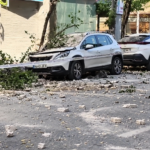
Rubble-strewn street in Granada after August earthquake. Credit: Junta

Andalucia’s emergency services are preparing for a major earthquake exercise in the Granada Province on November 10, when around 200 participants will test how effectively authorities can coordinate their response to a serious tremor.

Known as Respuesta26, the Junta de Andalucia-led exercise will examine how emergency plans are activated, command centres established, resources deployed and communications maintained between different organisations.

The test comes just months after a damaging earthquake sequence shook Granada province, forcing hundreds of residents from their homes and triggering extensive building inspections. It will put the region’s emergency arrangements under scrutiny, although the Junta has not confirmed whether the November scenario will recreate the specific problems experienced during the summer.

What will happen during the Granada earthquake test?

Respuesta26 will bring together regional emergency teams, firefighters, medical services, municipal authorities, local police, Civil Protection volunteers and representatives of central government. Granada Provincial Council, universities and professional organisations are also expected to participate.

The exercise will test four key areas: activating emergency plans, establishing command posts, mobilising personnel and equipment, and ensuring effective communication between the organisations involved. The Junta has described Respuesta26 as the largest earthquake exercise in Spain involving different levels of government.

These arrangements are crucial when a major emergency crosses municipal boundaries and requires several organisations to work together. Emergency teams need to know who is in charge, where resources are required and how reliable information will reach those making decisions.

However, the precise operational scenario has not been publicly confirmed. It is not yet clear whether participants will also practise rescuing people trapped in damaged buildings, evacuating residents or assessing properties at risk of collapse, as in previous exercises.

Andalucia has also staged large-scale emergency simulations involving different hazards. In 2025, the Junta organised Response25, a major tsunami emergency exercise in Cadiz, based on a hypothetical earthquake-triggered tsunami.

Granada’s earthquake damage raises the stakes

The exercise follows the seismic sequence that began on August 14 and included two magnitude 4.8 earthquakes, on August 15 and 18. More than 1,500 earthquakes were recorded during the sequence by early September, according to the Junta. The tremors caused damage to buildings across the Vega de Granada and led to precautionary evacuations.

By September 7, around 600 people had been evacuated from their homes, with many subsequently allowed to return following safety assessments. Technical teams carried out inspections to establish whether affected buildings could be occupied safely.

The Junta also approved €7 million in funding for repairs to public infrastructure and facilities in 27 towns affected by the earthquakes. The regional government’s funding announcement sets out the support for towns affected by the seismic sequence.

The scale of the response illustrates the demands placed on authorities when an earthquake causes widespread disruption. As well as dealing with immediate emergencies, officials must assess damaged properties, determine whether residents can return home and coordinate recovery work.

Will the exercise test real earthquake emergencies?

Granada has previously rehearsed the practical consequences of a major earthquake. A council-led drill in 2019 included simulated building damage, injured people, individuals trapped under rubble and missing persons.

That earlier exercise shows that local emergency services have experience of practising scenarios involving rescue operations and damaged buildings. It does not, however, establish that Respuesta26 will repeat those elements.

The distinction is important because testing command structures and communications is not the same as rehearsing a complex rescue operation. Both are important, but each presents different challenges.

One question for the Junta is whether the November exercise will test the full chain of emergency response, from the initial alarm and deployment of rescue teams to building inspections and decisions about evacuating or returning residents to their homes. Confirmation of the scenario would help establish exactly what lessons the exercise is intended to deliver.

Continuamos para bingo.
#Terremoto Here We go

#Granada https://t.co/s0ebQOL78T

— Fornizio Rumano (@FornizioRumano) August 18, 2026

What could the results mean for people?

For people living in Granada and elsewhere in Andalucia, the value of Respuesta26 will depend on what it reveals about the region’s ability to respond under pressure. An exercise can help identify communication problems, clarify responsibilities and expose weaknesses in emergency procedures before a real disaster occurs. Its findings can then inform improvements to plans and coordination between agencies.

The August earthquakes also revealed that the consequences of a tremor can extend well much further than just the initial shaking. Building safety, evacuation decisions and the return of displaced residents can all require sustained cooperation between emergency services, engineers and local authorities. The Junta has not yet confirmed whether these specific challenges will form part of the November simulation.

Respuesta26 will therefore provide an opportunity to test the readiness of important parts of Andalucia’s earthquake response. Whether it also examines the practical difficulties faced by residents during the Granada emergency remains a key question ahead of November 10.

Continue Reading

Trending

Copyright © 2017 Spanish Property & News