Connect with us

%

Pet Owners In Spain Urged To Keep Emergency Card In Wallet In Case Of An Accident

Published

on

pet-owners-in-spain-urged-to-keep-emergency-card-in-wallet-in-case-of-an-accident

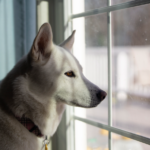
The card could make a considerable difference during an emergency. Photo credit: Volodymyr TVERDOKHLIB/Shutterstock

If you live alone with a dog, cat or another animal, there is one frightening question you may never have considered: what happens to them if you are suddenly taken to hospital and nobody knows they are waiting at home? A simple card kept inside your wallet or purse could make sure they are not forgotten. 

Pet owners are being urged to carry an emergency card stating that they have an animal at home, together with the information someone would need to make sure it is looked after if its owner is unable to return.  The idea is particularly important for people who live alone with their pets. If an accident leaves you unconscious, you are taken away by ambulance or you are unexpectedly admitted to hospital, the people treating you may have no reason to know that a dog, cat or other animal is sitting behind your front door waiting for you.

The small card with a very important job

The emergency card is designed to fit into a wallet alongside your bank cards or driving licence. It should clearly state that there is an unattended animal at home and provide enough information for someone to arrange immediate care. At a minimum, owners should include their name and address, the type of animal they have and the name of the pet. A trusted emergency contact who can get into the property and take responsibility for the animal should also be listed. For animals with additional needs, the card can contain information that could be vital if somebody else suddenly has to take over their care.

That could include medication, allergies, ongoing medical conditions, mobility problems, dietary requirements and the name and contact details of a friend or the animal’s veterinary practice. The aim is to give someone enough information to act quickly if needed. Spanish pet organisations have already promoted wallet-sized versions of this type of card. Wamiz España and Purina, for example, provide a downloadable emergency card specifically designed to be carried in a wallet and used if the owner suffers an accident or needs emergency hospital treatment. 

What happens if nobody knows about your pet?

It is easy to assume that someone will eventually realise there is an animal at home. That may not happen. A person living alone could be taken from work, the street or their car without being able to tell anyone where they live or that they have animals. If they are unconscious or seriously injured, even their mobile phone may be inaccessible. Meanwhile, the animal could be waiting at home without food, water or medication.

This is especially worrying for pets that rely on medication at particular times of the day. A dog with a heart condition, a cat receiving regular treatment or an older animal with health problems could become seriously unwell if nobody reaches them. An emergency card does not need to contain a huge amount of information. A clear message such as “I have a pet alone at home”, followed by the owner’s address and emergency contact details and medication the animal needs, may be enough to alert somebody to the problem.

Keep the information easy to find

The card needs to be somewhere emergency personnel are likely to find it. A wallet or purse is useful because it is normally carried with the owner and can be checked for identification and emergency information. Owners can also make the same information available elsewhere, such as through an emergency contact on their phone, a note attached to their keys or information left somewhere accessible at home. The important thing is that the details are kept up to date. If the emergency contact moves, changes their telephone number or can no longer look after the animal, the card should be replaced. 

Owners should also make sure the person listed actually knows they have been nominated and has access to the animal if necessary. For something that takes only a few minutes to prepare, the card could make a considerable difference during an emergency. You may not be able to tell anyone about the animal waiting at home, so make sure the information can speak for you.

%

Costa Del Sol Tolls Winter Rates October 1

Published

on

costa-del-sol-tolls-winter-rates-october-1

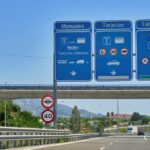
Good news is back for anyone heading across the Costa del Sol this autumn. Toll prices on the AP-7 have returned to their cheaper winter prices from October 1. Summer peak pricing ended on September 30, so the standard 2026 tariffs now apply at the Calahonda, San Pedro Alcantara and Manilva toll booths.

Standard prices for cars and light vehicles

Each booth charges in two ways. The “troncal” is the main toll on the motorway itself, while the “lateral” is a smaller charge for joining or leaving via a slip road. The light category covers motorbikes, cars, certain two-axle vans and two-axle minibuses. All prices include IVA, Spain’s version of VAT, and the summer price is in brackets:

Calahonda main toll: €5.70 (€9.25)
Calahonda slip road: €3.55 (€5.75)
San Pedro main toll: €3.85 (€6.25)
San Pedro slip road: €2.20 (€3.60)
Manilva main toll: €2.45 (€4.05)
Manilva slip road: €1.20 (€2.00)

Driving the full route between Malaga and Guadiaro now costs €12 each way, compared with €19.55 over the summer.

What about heavy vehicles?

Reductions are smaller for bigger vehicles. “Pesado 1” (Heavy 1) covers two- and three-axle lorries and some vans or minibuses towing trailers. Prices at Calahonda and San Pedro stay as they were in summer, but Manilva falls from €4.60 to €3.65 for the main toll and from €2.25 to €1.80 for the slip road.

“Pesado 2” (Heavy 2) includes lorries with four or more axles and several types of coach. These drivers pay less at every booth:

Calahonda: €11.35 main toll (was €15.25) and €7.05 slip road (was €9.50)
San Pedro: €7.70 main toll (was €10.35) and €4.45 slip road (was €5.95)
Manilva: €4.80 main toll (was €6.95) and €2.35 slip road (was €3.40)

Why are tolls cheaper from October?

Ausol, the company that runs the motorway, uses a two-season system set under national government regulations. Peak rates apply from June 1 to September 30, plus 17 days around Easter, running from the Friday before Holy Week to the Sunday after Easter Sunday. Standard rates cover everything else.

Summer prices sit roughly 63% above standard ones, which is why October feels like a relief even though this is simply the normal winter tariff rather than a new discount.

How do these prices compare with last winter?

Standard rates are a touch higher than a year ago. Calahonda’s main toll went from €5.50 to €5.70, San Pedro’s from €3.71 to €3.85, and Manilva’s rose by 9 cents to €2.45.

Continue Reading

%

Two Guardia Civil Officers Shot

Published

on

two-guardia-civil-officers-shot

Two Guardia Civil officers have been injured in a shooting in Catalonia after a police operation targeting suspected motorway thieves ended in an armed confrontation.

The incident happened at around 10pm on Thursday, October 1, in the Can Parellada area of Terrassa, Barcelona.

One of the officers was seriously injured after being hit by four shots and was taken to Parc Taulí Hospital in nearby Sabadell for treatment.

Despite the severity of his injuries, his life is not believed to be in danger. The second Guardia Civil officer was also injured during the confrontation.

Three suspects have since been arrested in connection with the shooting, according to the latest reports from the Mossos d’Esquadra investigation.

Officers were following suspected motorway thieves

The two Guardia Civil officers were working in plain clothes and travelling in an unmarked vehicle as part of an operation targeting a group of suspected thieves.

The suspects are described by Spanish police sources as ‘teloneros’, a term used for criminals who target vehicles and lorries on motorways, often stealing goods from trucks.

The operation began around the AP-7 motorway, close to the Porta de Barcelona service area in Castellbisbal.

A pursuit subsequently developed and continued into Terrassa, eventually reaching Calle Europa in the Can Parellada neighbourhood.

According to investigators, the suspects opened fire after discovering that they were being followed by the Guardia Civil.

An exchange of gunfire then took place in the street.

The more seriously injured officer suffered four gunshot wounds, including injuries to his abdomen, leg and arm. He was taken to hospital and required surgery. Reports say he remains outside life-threatening danger despite the seriousness of his injuries.

Three arrests after overnight police operation

The Mossos d’Esquadra launched an investigation immediately after the shooting, with its Criminal Investigation Division taking charge of the case.

Police subsequently located several of the suspected attackers inside an occupied warehouse in Terrassa.

A specialist Mossos unit, the GEI, was brought in during the early hours of Friday morning before officers entered the building and arrested three people.

One of those detained is suspected of being the person who fired the shots, although the investigation is continuing and further arrests have not been ruled out.

The incident has highlighted the risks faced by officers carrying out surveillance operations against organised groups involved in motorway and lorry thefts.

The investigation remains ongoing as detectives work to establish exactly what happened during the pursuit and determine the involvement of each of those arrested.

Continue Reading

%

Brussels Takes Action Against Spain Over Failure To Update Blackout Plan

Published

on

brussels-takes-action-against-spain-over-failure-to-update-blackout-plan

Spain now has two months to respond to Brussels’ formal notice. Photo credit: Drop of Light/Shutterstock

When the lights suddenly go out, most people are not thinking about European electricity regulations. They are thinking about how long the fridge will stay cold, whether the phone still has enough battery and how they will pay for anything if the card machines stop working. After Spain’s huge blackout in April 2025, the question of how prepared the country really is for another major power failure has become much harder to ignore.

Now Brussels has opened a formal infringement procedure against Spain because the country has not notified the European Commission of its updated electricity risk-preparedness plan, despite the deadline passing in January 2026. France is facing the same action, while Belgium has received an additional formal notice.  The Commission’s action does not mean Brussels has declared Spain incapable of preventing another blackout, nor does it say the missing plan caused the April 2025 outage. It concerns Spain’s failure to notify the updated plan required under EU rules.

Spain missed the January deadline

Under EU Regulation 2019/941, member states must adopt and publish an updated electricity risk-preparedness plan every four years. The latest plans were due to be notified to the European Commission by 5 January 2026. Spain had not done so by the deadline, according to the Commission, which has now sent the country a letter of formal notice. Spain has two months to respond. If Brussels decides that the response does not resolve the issue, the procedure could move to the next stage, known as a reasoned opinion. 

These plans are not simply paperwork sitting in a Brussels filing cabinet. They are supposed to set out the measures a country has planned or taken to prevent, prepare for and deal with an electricity crisis. That includes situations caused by extreme weather, malicious attacks, fuel shortages and other events capable of disrupting electricity supplies. Because European electricity networks are interconnected, a serious incident in one country can also affect its neighbours.

What should Spain’s plan cover?

The purpose of the preparedness plans is to establish how countries would respond if their electricity systems came under serious pressure. They are based on national and regional crisis scenarios and are intended to help ensure that electricity can be directed where it is needed during a crisis. The plans also have to consider how countries would cooperate with one another when an emergency crosses national borders. 

That cross-border element is particularly relevant to Spain. The Iberian Peninsula’s electricity system is connected to the wider European network through interconnections with France, while Spain and Portugal operate closely linked electricity systems. The European Commission itself has been reviewing the EU’s electricity security rules in light of recent crises. In January 2026, it said the review had taken lessons from the April 2025 blackout across the Iberian Peninsula, alongside other energy-security problems, and identified the need for a stronger approach to future risks. 

The blackout that left millions without power

The timing is likely to make the latest Brussels action particularly significant for people in Spain. On 28 April 2025, a massive power failure swept across Spain and Portugal, leaving millions without electricity. Trains stopped, traffic lights went out, businesses were unable to operate normally and card payments and other services were disrupted. Last year EWN reported at the time how the blackout affected everyday life across Spain, from transport and communications to shops and petrol stations.

Spain and Portugal blackout: what really caused the chaos? The European Commission has subsequently examined the lessons from the event as part of its wider assessment of European energy-security rules. However, the current infringement procedure is not an accusation that Spain’s delayed preparedness plan caused that blackout. The two issues should not be confused. For people who experienced the outage first-hand, though, the idea of Spain being told it has not submitted its latest preparedness plan is likely to raise an obvious question: what happens if the lights go out again?

What happens now?

The infringement procedure does not immediately impose a fine or change how electricity is supplied to Spanish homes. Spain now has two months to respond to Brussels’ formal notice and address the failure to notify its updated risk-preparedness plan. If the Commission is not satisfied with the response, it can issue a reasoned opinion setting out the alleged breach in greater detail and giving Spain another opportunity to comply. 

If the matter remained unresolved after that stage, the Commission could ultimately take the case to the Court of Justice of the European Union. Spain is not the only country facing action over the missing update. France has also been sent a formal notice, while Belgium had already received a letter in March 2026 over earlier failures relating to its electricity risk-preparedness plan and has now received an additional notice concerning its latest update. 

For anyone living in Spain, the practical issue is simple: electricity crises can affect far more than the lights in your home. The 2025 blackout showed what happens when transport, communications, payments, businesses and essential services suddenly lose power. EWN has also reported on more recent local power cuts, including repeated outages affecting residents around Mijas and Fuengirola during the summer of 2026. Power blackouts force Las Cañadas residents onto streets Brussels is now waiting for Spain to explain why its updated national plan has not been notified, and what it intends to do about it.

Continue Reading
Advertisement
Advertisement

Spanish Real Estate Agents

Tags

Trending

Copyright © 2017 Spanish Property & News