Connect with us

%

More Than 4,200 Rental Homes Withdrawn

Published

on

more-than-4,200-rental-homes-withdrawn

Less and less for rent. Credit: Victor Sanchez G – Shutterstock

Estate agents report more than 1,500 rental contracts have been put on hold as property owners reconsider their plans following the Government’s latest housing decrees.

A total of 4,235 homes have been withdrawn from Spain’s long-term rental market or redirected towards other uses in just ten days, according to the Federation of Real Estate Associations (FAI).

The figures, gathered from more than 600 estate agencies, point to an immediate reaction among property owners following the announcement of the Government’s latest housing measures. The federation says 88.9 per cent of the agencies surveyed have detected changes in second homeowners’ behaviour.

FAI’s findings also suggest that the disruption extends beyond properties being advertised. A further 1,523 rental contracts have reportedly been delayed or put on hold, leaving prospective tenants waiting to find out whether their agreements will go ahead.

Where have the 4,235 homes gone?

The federation’s survey breaks down the changes reported by estate agents over the ten-day period.

  • 2,067 homes were withdrawn directly from the long-term rental market.
  • 1,224 properties were redirected towards the sales market.
  • 944 homes were switched to seasonal rentals or room-by-room lets.
  • 1,523 rental contracts were reportedly blocked or delayed.

The 4,235-property figure combines homes withdrawn from ordinary residential renting with those moved into other uses. It does not mean that all these homes have been left empty or removed permanently from the housing stock.

FAI says the changes have been particularly noticeable among small property owners, some of whom are reconsidering whether to offer their homes under long-term rental agreements.

The survey also found that 72.4 per cent of agencies had experienced delayed or suspended rental contracts. Meanwhile, 56.6 per cent reported owners putting properties up for sale instead of renting them, while 38.9 per cent had seen homes redirected towards seasonal or room rentals.

Rental activity could fall by up to 30 per cent?

FAI warns that the number of completed rental transactions could fall by between 25 and 30 per cent in the coming weeks. That is a forecast from the federation, rather than a confirmed fall in completed rentals. It is based on the combination of properties leaving the long-term market and agreements that have been delayed or suspended.

The association attributes the changes to uncertainty following the Government’s housing decrees, which include measures affecting rental contracts and protections for tenants.

The decrees were rejected by Congress but the Government has sought to revive them through the parliamentary process. The resulting uncertainty has become a concern for property owners and investors trying to assess the rules that will apply to rental homes.

FAI president José María Alfaro has acknowledged the difficulties tenants face in accessing housing and the financial pressure caused by high rents. However, he argues that the measures have also raised concerns among small landlords about protection against unpaid rent and the procedures involved in recovering a property. The survey records what estate agents say they have observed; it does not establish that the decrees alone caused every property owner’s decision.

Investors are also becoming more cautious

The concerns extend beyond individual landlords. A report published by Cinco Días on October 13 said property investors were becoming more cautious following the housing measures and the announcement of a general election for November 29.

The report said some residential investment transactions were being reviewed or potentially delayed. One major transaction under consideration involves a portfolio of around 1,900 rental homes owned by Greystar and Vía Célere, valued at approximately €530 million. The potential buyer was expected to wait for greater political clarity before proceeding, according to the report. The transaction has not been confirmed as cancelled.

Spain was still on course for a record year in overall property investment, but industry experts warned that prolonged uncertainty could have a greater effect on future investment decisions, particularly projects involving homes intended for long-term rental.

What happens next?

The immediate question is whether the changes reported by estate agents will be reflected in wider rental-market statistics over the coming months. Idealista’s figures published on October 15 show that competition for advertised rental properties was already intense, with an average of 43 people per listing bidding for the same home during the third quarter of 2026, up 16 per cent on a year earlier.

If fewer homes are offered for long-term rent while demand remains strong, tenants could face even less choice. However, the latest FAI survey does not establish how many of the reported withdrawals will be permanent, nor how the changes will affect rents nationally.

For people looking for a home, the figures provide another reason to monitor local availability closely. For the property sector, the coming weeks should show whether the reported disruption is temporary or signals a more lasting change in landlords’ willingness to offer long-term rentals.

%

Mijas Donkey Retirement Park

Published

on

mijas-donkey-retirement-park

Visitors to Mijas Pueblo have long met its working donkeys on the village streets. Now, those animals are a step closer to a quiet sanctuary as Mijas Town Hall has received the project plans for ‘El Burrito’, a recreational park to be built on the village’s Vial Sur.

Room for up to 48 donkeys

Up to 48 animals will have a home here, in a space fully adapted to their needs. Adult donkeys needing time to recover will also be welcome before they are moved to new homes. Plans cover two separate areas: a refuge for the animals’ care, and a visitor centre dedicated to the donkey, one of Mijas’ best-known attractions.

Welfare is front and centre of the design. The refuge will have grazing areas, stables, quarantine pens, veterinary shelters and handling zones, plus paths, fencing and waste facilities.

Beds in the stables will be renewable and absorbent, so the animals will not have to lie directly on concrete, much gentler on their joints and hooves. The Town Hall has also required compartments big enough for the donkeys to walk in, turn around, move freely and lie down. Each stable will have a drinking trough, lighting and fixing rings to make cleaning and maintenance easier.

Buildings will follow the lie of the land, using timber, planted roofs and earthy colours so they fit into the landscape. Natural ventilation and drainage-friendly flooring are also included.
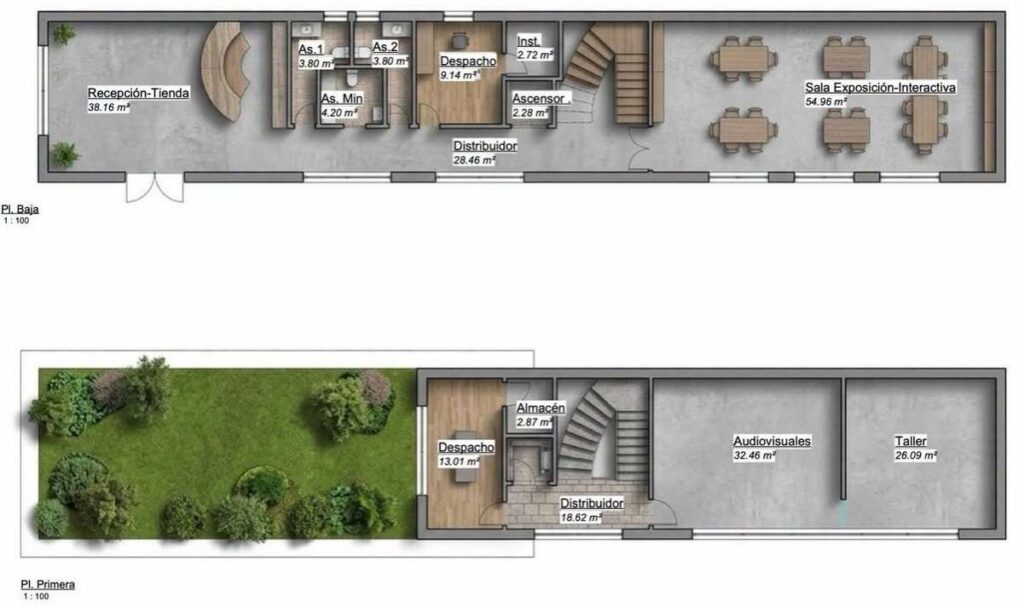
El Burrito donkey sanctuary plans
New layout plans
Credit:MijasTH/FB

Extra care for donkeys who need it

A veterinary shelter, larger than the ordinary stables, will look after animals needing observation, rest or special treatment. It will make life easier for the staff and allow care tailored to each animal’s needs.

Anyone interested will also be able to learn about the donkeys too. An existing building will be renovated as a cultural and educational interpretation centre, doubling as the visitor reception. It will explain the donkeys’ characteristics and their place in Mijas’ identity.

Donkeys became famous here through the ‘burro-taxi’, the village’s tradition of donkey rides in the early 1960s, when workers riding home were asked by visitors for photos and rides, the council’s tourism website currently lists 60 burro-taxis still work in the service today.

For even more information on the project, you can see our earlier report on the El Burrito donkey sanctuary here by EWN.

Continue Reading

%

Spain’s New 400 Phone Rule Starts Saturday

Published

on

spain’s-new-400-phone-rule-starts-saturday

Spain introduces new 400 phone numbers to identify sales calls from October 17. Credit : Andrii Iemelianenko, Shutterstock

If you live in Spain and regularly receive unwanted sales calls, a new rule coming into force on Saturday, October 17, could make them easier to identify. Companies covered by the legislation will have to use nine-digit telephone numbers beginning with 400 when making commercial calls.

The measure is designed to help consumers distinguish commercial calls from other communications, rather than ban telemarketing altogether. The rules were formally established in a government resolution published in Spain’s Official State Gazette (BOE) on April 16, giving telecoms operators and businesses six months to prepare.

Similarly, commercial telephone calls will now be regulated in a dedicated nine-digit number, and this will enable subscribers to distinguish between commercial calls and ordinary calls and customer services.

However, the legislation includes exceptions, and a call from a 400 number should not automatically be regarded as fraudulent.

What changes for sales calls in Spain from October 17?

Under the new system, companies affected by the law must use the telephone numbers starting with 400 when making business calls to potential customers.

This change is to make the phone call more easily understandable before you even pick up the receiver.

Sales calls could come from different phone numbers in the past, which made it difficult for consumers to distinguish between legitimate calls and marketing calls or scams.

According to the resolution of the Spanish government, which is in the BOE, the 400 series has been specially reserved for commercial calls. The new law establishes a six-month period of implementation, from the date of its entry into force on April 17.

October 17 marks the deadline when the new numbering requirements are due to become fully operational.

Speaking at the Foro CREO event on October 14, Minister for Digital Transformation Óscar López explained that this measure will apply to any company that contacts people who are not their customers to offer their products and services.

The minister explained that the consumers would then recognize the purely commercial nature of these calls, and could therefore choose whether or not to answer them.

The rules are not meant to mean that every call from a company has to begin with 400.Customer service calls are treated separately. Depending on the kind of call, companies use geographical telephone numbers, designated short numbers or the 800 and 900 ranges.

The National Markets and Competition Commission (CNMC) has also explained that the legislation allows certain businesses and circumstances to be exempted from it.

Can you call back a 400 number or block sales calls?

One of the most important changes in the new numbering system is that 400 numbers can only be used to make outgoing calls.

The BOE resolution expressly prohibits incoming calls to these numbers. To be clear, if you don’t answer a call from a number beginning with “400,” you won’t be able to call it back.

The numbers are used exclusively for commercial communication and may not be used for ordinary customer service numbers.

There is also a clause in the law enabling the telephone companies to offer subscribers the possibility of blocking calls from the 400 number range.

However, the law speaks of the ‘option’ that service operators can offer upon request, not the automatic blocking that every service provider must have. To avoid such calls, people should ask their telephone service provider if they block the number 400.

Also, consumers should note that a prefix known to the public is no guarantee that the caller is reliable.

If you receive an unexpected call, you should not give out any bank details, passwords or PINs. If a person claims to be from your bank, the power company, the telephone company, or other company, hang up immediately and contact the company independently at the official telephone number of the company.

What happens if a company keeps calling from another number?

The new rules are supposed to make it easier to identify the commercial calls, and prevent businesses from using other numbers for the same purpose.

According to the Ministry for Digital Transformation, telephone companies are supposed to block commercial calls that do not comply with the new rules on calling.

The CNMC is responsible for supervising the allocation and use of the 400 range, alongside the responsibilities of other relevant authorities.On October 14, Óscar López also explained that consumers receiving calls from other telephone numbers can also inform the CNMC about suspected abuses.

However, because the legislation provides for certain exceptions, not every commercial call made from a different prefix necessarily constitutes a breach of the rules.

This new measure, which is part of the Spanish fight against telephone fraud and for greater transparency in communication, is to be found in a new scheme for detecting telephone fraud.

The government had already introduced a number of measures to tackle telephony fraud, including a prohibition on suspicious telephone traffic and stricter controls over the identification of SMS senders.

Anti-fraud measures were said by Óscar López  to have blocked more than 400 million calls and 32 million messages in the course of the campaign. The 400 range adds another layer of protection by making it possible to differentiate more clearly between commercial calls and ordinary communications.

Continue Reading

%

Spain’s 24-Hour Shop With No Tills Expands To Barcelona Airport

Published

on

spain’s-24-hour-shop-with-no-tills-expands-to-barcelona-airport

Customers enter by identifying themselves with their mobile phone number. Photo credit: ACHPF/Shutterstock

If you have ever needed a drink, a sandwich or a snack at an awkward hour, you will know how useful it is to find a shop that is actually open. Now, a Catalan chain that lets customers shop without going through a traditional checkout is bringing its round-the-clock convenience stores to Spain’s airports, starting with a new shop at Barcelona-El Prat.  Big Fish is not a conventional supermarket. Its small, automated shops sell ready-to-eat food, drinks, snacks and other convenience products for people who need something quickly, rather than somewhere to do their weekly shopping.

The stores operate 24 hours a day and are designed to let customers pick up what they need without waiting for a cashier. The new shop occupies 60 square metres in Terminal 2 of Barcelona-El Prat Airport, in the international departures area near the W boarding gates and beside the duty-free store. It is Big Fish’s first airport location and takes the company into the travel retail market, where passengers often have limited time to buy food or drinks before boarding. 

How does the automated shop work?

Customers enter by identifying themselves with their mobile phone number and bank card. Once inside, they can browse the shelves, pick up products and leave without scanning their purchases or paying at a conventional till.  The system uses cameras, intelligent sensors and computer vision to identify which products customers take or return. 

It then calculates the bill automatically, with payment handled through the card registered when entering the shop. The technology comes from Techtail, another business within Grupo Moure, which also owns Big Fish. Rather than relying on vending machines, the format allows customers to walk around a shop, handle products and check packaging before deciding what to buy. 

At the airport, Big Fish is using its READY concept, built around products that are ready to take away, eat or drink. The range is intended for quick purchases during a journey, from refreshments to food that can be eaten before boarding or taken onto a flight.  The shop is open around the clock, according to airport operator Aena. That means passengers can use it outside the opening hours of many conventional retailers, including those travelling on early departures or late-night flights. 

Big Fish expands across Spain

The airport opening brings Big Fish’s Spanish network to ten stores. The chain has recently expanded in Madrid, adding locations in Vicálvaro and Vallecas, and is continuing to look for new sites.  Before entering airport retail, the business had focused on convenience locations where people want to make quick purchases, including service stations and other busy sites. Barcelona-El Prat gives the company a new setting for its automated format, with a steady flow of travellers who may want refreshments without spending time in a queue. 

The airport shop follows a tender awarded by Aena, the operator of Spain’s airport network. For Techtail, the location also provides an opportunity to put its automated retail technology to work in an international airport environment.  There has been no confirmed announcement of further Big Fish airport openings, so Barcelona-El Prat remains its first location in this sector. But with ten stores now operating across Spain and the company exploring further sites, the airport launch marks another step in its expansion.

Continue Reading

Trending

Copyright © 2017 Spanish Property & News