Connect with us

%

Spain Drivers Get Another Month Of Fuel Relief As November Discount Is Confirmed

Published

on

spain-drivers-get-another-month-of-fuel-relief-as-november-discount-is-confirmed

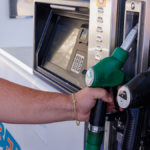
The 20-cent fuel tax cut stays in place for November. Credit: Edugrafo / Shutterstock

Drivers who were bracing for a jump at the pumps from Sunday can relax, because the 20-cent fuel tax cut isn’t shrinking after all. September’s soaring fuel inflation has triggered the government’s own safety net, though what happens in December is still up in the air.

Why the discount stays where it is

Drivers in Spain will keep paying 20 cents a litre less in fuel tax throughout November, after official inflation figures showed petrol and diesel prices running far above the level that triggers extra help. The government’s anti-crisis decree had planned to shrink the cut to 13 cents in November and 6 cents in December, as EWN reported when the October discount was announced. However, it also carries a safeguard clause, which keeps the full 20 cents in place when a fuel costs more than 15 per cent above its price a year earlier. 

That test was passed with room to spare. The National Statistics Institute (INE) said on Wednesday October 14 that petrol was 27.5 per cent dearer in September than a year before, with diesel up by roughly 34 per cent, according to Infobae. Congress’s standing committee then ratified the decree on Friday October 16, so the November rate is locked in.

Behind the rises sits the conflict in the Middle East, with oil spiking in mid-September after attacks in the Strait of Hormuz. It has eased since, though not by enough to bring pump prices anywhere near normal.

What the cut is worth at the pump

On a 50-litre tank, the 20 cents is worth about €10, and a little more once VAT is added on top. Had the cut shrunk to 13 cents, the same fill-up would have cost around €4 extra, with petrol and diesel both set to rise by roughly eight cents a litre.

Petrol drivers have felt it most. Their discount jumped from five cents in September to 20 in October, which is why petrol fell by about nine cents within days while diesel stayed put.

However, the saving only reaches your wallet if petrol stations pass it on in full. That was the sticking point in early September, when transport federation Fenadismer said many stations hadn’t passed on the diesel cut. The discount doesn’t apply in the Canary Islands, Ceuta or Melilla either, according to Selectra.

Pump prices are still well above last year 

On Friday October 30, a litre of 95-octane petrol averaged €1.731 across the mainland and Balearic Islands, with diesel at €1.900. Diesel is now the dearer of the two, which comes down to the higher cost of refining it rather than tax. Petrol peaked at an average of €1.94 on Monday September 28, its highest level this year, after 11 straight weeks of rises. In early October, petrol was still almost 25 per cent dearer than a year earlier and diesel almost 36 per cent.

Spain still compares well with its neighbours though. Taxes make up 34.4 per cent of a litre of petrol here even with the discount counted in, against an EU average of 46.5 per cent, and only Poland and Sweden had cheaper petrol on October 5. 

December is still up in the air

The 20 cents isn’t guaranteed beyond this month. Unless the safeguard is triggered again, the cut will fall to 13 cents in December. That depends on October’s inflation figures, which the INE publishes in mid-November, with petrol and diesel each tested against prices from a year earlier. So the two fuels could even end up with different rates. 

Until those figures land, drivers won’t know whether December brings 20 cents or 13.

%

Spain Issues Health Alert

Published

on

spain-issues-health-alert

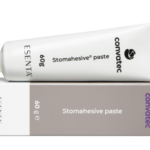
Patients should check their packaging for the specific batch numbers Credit: Convatec

Patients across Spain are being urged to check their medical supplies after health authorities announced the withdrawal of two batches of a skin protection product manufactured by a British company over potential contamination concerns.

The Spanish Agency for Medicines and Medical Devices (AEMPS), which operates under Spain’s Ministry of Health, issued the safety alert on Monday, November 23, after being notified of a potential manufacturing problem by UK-based Convatec Ltd.

The warning concerns Esenta Stomahesive paste, a specialist medical product used by people living with a stoma. The possible presence of foreign material has raised concerns about the product’s effectiveness and the risk of adverse reactions.

Anyone in possession of an affected tube is being advised to stop using it immediately and seek further guidance.

Why has the medical cream been recalled in Spain?

According to the AEMPS, the suspected contamination may have occurred at a third-party manufacturing facility used by Convatec.

Existing quality control procedures at the facility may not have been sufficient to prevent unwanted material from entering the product during manufacturing.

Health authorities have identified several potential complications associated with using the affected paste, including skin irritation, localised inflammation, mild infections, rashes, irritation of mucous membranes and allergic reactions.

However, the recall is precautionary, and the warning does not mean that every affected tube is contaminated or that everyone who has used one will experience complications.

Which batches are affected by Spain’s health alert?

The withdrawal concerns 60-gram tubes of Esenta S/Hesive Paste distributed in Spain through Convatec S.L. and Bidafarma.

Patients should check their packaging for the following batch numbers:

The warning specifically concerns these two batches in Spain, rather than the entire product range.

What is Esenta Stomahesive and who uses it?

Unlike everyday skincare creams, Esenta Stomahesive is specifically designed for patients who have undergone colostomy, ileostomy or urostomy surgery.

These procedures involve surgically creating an opening in the abdomen, known as a stoma, through which bodily waste can leave the body.

The paste helps protect the surrounding skin and fill uneven areas, creating a more suitable surface for fitting ostomy appliances.

For patients who rely on specialist products to manage their condition on a daily basis, identifying affected supplies is particularly important.

What should you do if you have the affected product?

The Spanish health authorities have issued clear instructions for patients who discover they have a tube from either of the affected batches.

They should:

  • Discontinue use immediately.

  • Speak to their pharmacist, healthcare provider, supplier or Convatec representative.

  • Keep the product and its batch details until further instructions are provided.

  • Seek medical advice if they experience any adverse symptoms after using the paste.

British residents receiving ongoing ostomy care in Spain can also contact Convatec’s Spanish customer service department on +34 936 023 737 or email customerserviceiberia@convatec.com.

Spanish pharmacies instructed to remove affected products

The safety notice extends beyond patients, with pharmacies and healthcare facilities instructed to isolate and dispose of affected stock, including tubes that have already been opened.

Distributors must also trace affected shipments and inform customers who have received the recalled products.

Convatec is contacting those involved in the supply chain, alongside healthcare professionals and patients, to communicate the necessary safety measures.

Anyone who experiences an incident involving a medical device in Spain can also report it through the AEMPS’s dedicated NotificaPS reporting portal.

Continue Reading

%

Spain Uncovered Europe’s Biggest Dinosaur

Published

on

spain-uncovered-europe’s-biggest-dinosaur

Life-size titanosaur sculpture in Argentina Credit: DFLC – Multmedia Designer / Shutterstock.com

A seven-metre-long dinosaur neck has been pulled from the ground in Catalonia, and scientists believe the prehistoric giant could be bigger than any titanosaur previously recovered in Europe.

Spain could be sitting on a prehistoric discovery of record-breaking proportions after paleontologists recovered the enormous remains of a titanosaur near Isona, in the province of Lleida.

The fossil was extracted from the Molí del Piteu archaeological site in Pallars Jussa, Catalonia, in an operation involving an extraordinary 18-tonne protective block. Inside are the remains of a dinosaur that lived approximately 70 million years ago, including a neck measuring around seven metres long.

Researchers believe the animal could have been larger than Abditosaurus, previously considered the largest titanosaur recovered in Europe. However, they are being cautious about declaring a new record until the bones have been examined properly.

Could this be Europe’s biggest dinosaur?

Titanosaurs were enormous, long-necked, plant-eating dinosaurs that lived during the Cretaceous period. Some species reached extraordinary lengths, making them among the largest land animals ever to walk the Earth.

The newly recovered specimen could surpass Abditosaurus, whose remains were discovered at nearby Orcau in 2014. That dinosaur was estimated to have measured between 15 and 18 metres from head to tail.

Palaeontological preparator Elena Nieto has pointed out that some of the newly recovered dinosaur’s ribs are longer than those of the earlier specimen, giving researchers reason to investigate whether the animal was even larger. The possibility of a new species hasn’t been ruled out.

An 18-tonne operation to bring the giant to light

Recovering the remains was a complicated engineering exercise as well as a scientific achievement. Paleontologists protected the fragile bones with acrylic resin before constructing a heavy casing from iron and polyurethane. Known informally as a ‘mummy’ among fossil specialists, this protective structure allowed the remains to be lifted and transported without exposing the bones to unnecessary damage.

A large excavator was required to turn the enormous block before it could be moved onto a trailer. The extraction operation took approximately four hours. The protective block contained around seven cubic metres of rock and weighed 18 tonnes. During loading, a fragment broke away from the front section, so the research team will need to establish whether any of the bones were affected.

More than just a dinosaur neck

One reason this discovery is particularly exciting is the variety of remains recovered. Scientists have identified parts of the chest, front limbs and skull region, in addition to the enormous neck. Some of the vertebrae may also remain connected in their original anatomical position.

Comparisons with Abditosaurus will be particularly important. Its neck took approximately six years to prepare, while researchers only confirmed its identity as a new species around a decade after its original extraction.

Visitors could follow the fossil’s restoration in Spain

The next stage will involve carefully removing the surrounding rock, cleaning the bones and examining each section.

Work will take place in Isona, initially outdoors before moving into a covered space. Researchers hope to organise public visits so that residents and visitors can follow the preparation process and learn how prehistoric fossils are recovered and studied.

The project involves specialists from the Museu de la Conca Della and the Catalan Institute of Palaeontology.

Catalonia has already attracted international attention for its prehistoric discoveries. Euro Weekly News previously reported on a Diplodocus discovery in Teruel that challenged what scientists knew about the dinosaur’s geographical distribution. 

Another remarkable find was the discovery of a near-complete Stegosaurus skull in Spain, adding to the country’s growing importance in dinosaur research.

For the people of Isona, the latest excavation brings another exciting chapter to their region’s natural history. Whether the newly recovered giant eventually claims the European record or proves to be a previously unknown species, scientists have plenty of work ahead.

Continue Reading

%

Almoradi San Andres Fiestas

Published

on

almoradi-san-andres-fiestas

Almoradi is preparing for four days of celebrations from Friday, November 27, to Monday, November 30, as the town honours its patron saint, San Andres. The programme includes a medieval market, Moors and Christians traditions, colourful parades, live music and the Christmas lights switch-on, with plenty of activities for residents and visitors.

November 27: Medieval Market and Christmas lights in Almoradi

Celebrations begin on Friday, November 27, at 6:00 PM, when the Medieval Market opens in Plaza de la Constitucion.

The market will feature craft stalls, street performers, a medieval camp, weapons displays and children’s activities, bringing a taste of medieval life to the town centre.

Almoradi’s Christmas lights will also be switched on at 6:00 PM, adding a festive atmosphere to the opening evening.

This year’s San Andres programme has been rearranged because of Spain’s general election on Sunday, November 29, with most festivities moved to Saturday.

November 28: Moors and Christians parade and live music

Saturday’s highlights begin at 11:00 AM with the traditional Embajada del Barril, a fun re-enactment of Moors and Christians disputing a barrel of wine, which is then shared with spectators.

At noon, the colourful Half-Year Parade will travel along Calle San Andres, Comunidad Valenciana and Tomas Capdepon, followed by a historical re-enactment at 1:00 PM.

The parade and re-enactments are among the main attractions of the weekend, celebrating Almoradi’s local traditions.

Live music takes over Plaza Ciudad de Servicios from 5:00 PM until 1:00 AM, featuring Blacknight, DJ Ferzone and Situacion Limite.

The entertainment gives residents and visitors the chance to continue enjoying the celebrations into Saturday night.

November 29 and 30: Medieval Market and San Andres procession

The Medieval Market continues on Sunday, November 29, from 11:00 AM to 2:00 PM and 5:00 PM to 10:00 PM.

Visitors can return to explore the craft stalls, entertainment and medieval attractions throughout the day.

Monday, November 30, is a local holiday in Almoradi, with a Mass at 11:00 AM followed by the traditional San Andres procession at noon.

Senior residents can also enjoy traditional games, hot chocolate and dancing at Centro Social San Andres.

The four-day programme combines religious celebrations, historical traditions and entertainment, bringing Almoradi’s community together to honour its patron saint.

Continue Reading

Trending

Copyright © 2017 Spanish Property & News