Connect with us

%

Train Trouble: Malaga Passengers Left Stranded

Published

on

train-trouble:-malaga-passengers-left-stranded

Stopped on its tracks. Credit: CM X

Passengers travelling on the last Cercanias commuter train from Malaga to Fuengirola were left stranded late on Sunday night, November 1, after another technical failure brought the service to a halt.

Around 20 people were affected when the C-1 commuter train stopped at Torremolinos station at approximately 11.53pm, leaving passengers wondering how they would get home. According to reports, the train developed a technical problem accompanied by an unusual noise, preventing it from continuing its journey.

Among those affected were workers returning home after their shifts, some of whom faced a lengthy wait before alternative transport was arranged. Renfe eventually organised taxis to take passengers to their destinations, but the disruption meant some did not reach Fuengirola until around 2am.

There were also claims that two young passengers had been left behind, although Renfe disputed this, insisting that nobody had been abandoned and that alternative transport had been provided for everyone.

How much longer must Cercanias passengers put up with this?

For regular users of Malaga’s C-1 line, another breakdown raises familiar questions about the reliability of a railway service that thousands depend on every day. The route connects Malaga city with the airport, Torremolinos, Benalmadena and Fuengirola, making it particularly important for commuters, airport workers and residents without access to a car. Passengers can check the official Malaga Cercanias service information for travel updates.

Yet technical problems, cancellations and unexpected delays have repeatedly caused frustration for passengers. In April, another breakdown on Malaga’s C-1 commuter line left passengers stranded, with some deciding to walk instead.

Previous incidents have included trains stopping for extended periods, services being cancelled at short notice and problems with the overhead electrical supply affecting journeys between Benalmadena and Fuengirola. Earlier this year, dozens of trains were cancelled across Malaga’s C-1 and C-2 commuter lines.

Sunday night’s incident was particularly inconvenient because it involved the last service of the evening, leaving passengers with fewer options for getting home. Renfe said services were operating normally on Monday morning, November 2, but that will offer little reassurance to those who spent hours trying to complete what should have been a straightforward journey.

The railway is also facing major planned disruption, with a six-month closure of part of the C-1 line expected in the future for infrastructure works.

Renfe has announced plans for seven new higher-capacity trains for the Malaga commuter network, due from 2028. However, passengers will have to wait to see whether this investment delivers the improvements they need.

For residents and regular commuters, the question is becoming increasingly difficult to ignore: when will Malaga’s Cercanias railway receive the attention it needs to provide a dependable service?

How many more breakdowns, cancellations and stranded passengers will it take before something changes?

%

Spain Issues Health Alert

Published

on

spain-issues-health-alert

Patients should check their packaging for the specific batch numbers Credit: Convatec

Patients across Spain are being urged to check their medical supplies after health authorities announced the withdrawal of two batches of a skin protection product manufactured by a British company over potential contamination concerns.

The Spanish Agency for Medicines and Medical Devices (AEMPS), which operates under Spain’s Ministry of Health, issued the safety alert on Monday, November 23, after being notified of a potential manufacturing problem by UK-based Convatec Ltd.

The warning concerns Esenta Stomahesive paste, a specialist medical product used by people living with a stoma. The possible presence of foreign material has raised concerns about the product’s effectiveness and the risk of adverse reactions.

Anyone in possession of an affected tube is being advised to stop using it immediately and seek further guidance.

Why has the medical cream been recalled in Spain?

According to the AEMPS, the suspected contamination may have occurred at a third-party manufacturing facility used by Convatec.

Existing quality control procedures at the facility may not have been sufficient to prevent unwanted material from entering the product during manufacturing.

Health authorities have identified several potential complications associated with using the affected paste, including skin irritation, localised inflammation, mild infections, rashes, irritation of mucous membranes and allergic reactions.

However, the recall is precautionary, and the warning does not mean that every affected tube is contaminated or that everyone who has used one will experience complications.

Which batches are affected by Spain’s health alert?

The withdrawal concerns 60-gram tubes of Esenta S/Hesive Paste distributed in Spain through Convatec S.L. and Bidafarma.

Patients should check their packaging for the following batch numbers:

The warning specifically concerns these two batches in Spain, rather than the entire product range.

What is Esenta Stomahesive and who uses it?

Unlike everyday skincare creams, Esenta Stomahesive is specifically designed for patients who have undergone colostomy, ileostomy or urostomy surgery.

These procedures involve surgically creating an opening in the abdomen, known as a stoma, through which bodily waste can leave the body.

The paste helps protect the surrounding skin and fill uneven areas, creating a more suitable surface for fitting ostomy appliances.

For patients who rely on specialist products to manage their condition on a daily basis, identifying affected supplies is particularly important.

What should you do if you have the affected product?

The Spanish health authorities have issued clear instructions for patients who discover they have a tube from either of the affected batches.

They should:

  • Discontinue use immediately.

  • Speak to their pharmacist, healthcare provider, supplier or Convatec representative.

  • Keep the product and its batch details until further instructions are provided.

  • Seek medical advice if they experience any adverse symptoms after using the paste.

British residents receiving ongoing ostomy care in Spain can also contact Convatec’s Spanish customer service department on +34 936 023 737 or email customerserviceiberia@convatec.com.

Spanish pharmacies instructed to remove affected products

The safety notice extends beyond patients, with pharmacies and healthcare facilities instructed to isolate and dispose of affected stock, including tubes that have already been opened.

Distributors must also trace affected shipments and inform customers who have received the recalled products.

Convatec is contacting those involved in the supply chain, alongside healthcare professionals and patients, to communicate the necessary safety measures.

Anyone who experiences an incident involving a medical device in Spain can also report it through the AEMPS’s dedicated NotificaPS reporting portal.

Continue Reading

%

Spain Uncovered Europe’s Biggest Dinosaur

Published

on

spain-uncovered-europe’s-biggest-dinosaur

Life-size titanosaur sculpture in Argentina Credit: DFLC – Multmedia Designer / Shutterstock.com

A seven-metre-long dinosaur neck has been pulled from the ground in Catalonia, and scientists believe the prehistoric giant could be bigger than any titanosaur previously recovered in Europe.

Spain could be sitting on a prehistoric discovery of record-breaking proportions after paleontologists recovered the enormous remains of a titanosaur near Isona, in the province of Lleida.

The fossil was extracted from the Molí del Piteu archaeological site in Pallars Jussa, Catalonia, in an operation involving an extraordinary 18-tonne protective block. Inside are the remains of a dinosaur that lived approximately 70 million years ago, including a neck measuring around seven metres long.

Researchers believe the animal could have been larger than Abditosaurus, previously considered the largest titanosaur recovered in Europe. However, they are being cautious about declaring a new record until the bones have been examined properly.

Could this be Europe’s biggest dinosaur?

Titanosaurs were enormous, long-necked, plant-eating dinosaurs that lived during the Cretaceous period. Some species reached extraordinary lengths, making them among the largest land animals ever to walk the Earth.

The newly recovered specimen could surpass Abditosaurus, whose remains were discovered at nearby Orcau in 2014. That dinosaur was estimated to have measured between 15 and 18 metres from head to tail.

Palaeontological preparator Elena Nieto has pointed out that some of the newly recovered dinosaur’s ribs are longer than those of the earlier specimen, giving researchers reason to investigate whether the animal was even larger. The possibility of a new species hasn’t been ruled out.

An 18-tonne operation to bring the giant to light

Recovering the remains was a complicated engineering exercise as well as a scientific achievement. Paleontologists protected the fragile bones with acrylic resin before constructing a heavy casing from iron and polyurethane. Known informally as a ‘mummy’ among fossil specialists, this protective structure allowed the remains to be lifted and transported without exposing the bones to unnecessary damage.

A large excavator was required to turn the enormous block before it could be moved onto a trailer. The extraction operation took approximately four hours. The protective block contained around seven cubic metres of rock and weighed 18 tonnes. During loading, a fragment broke away from the front section, so the research team will need to establish whether any of the bones were affected.

More than just a dinosaur neck

One reason this discovery is particularly exciting is the variety of remains recovered. Scientists have identified parts of the chest, front limbs and skull region, in addition to the enormous neck. Some of the vertebrae may also remain connected in their original anatomical position.

Comparisons with Abditosaurus will be particularly important. Its neck took approximately six years to prepare, while researchers only confirmed its identity as a new species around a decade after its original extraction.

Visitors could follow the fossil’s restoration in Spain

The next stage will involve carefully removing the surrounding rock, cleaning the bones and examining each section.

Work will take place in Isona, initially outdoors before moving into a covered space. Researchers hope to organise public visits so that residents and visitors can follow the preparation process and learn how prehistoric fossils are recovered and studied.

The project involves specialists from the Museu de la Conca Della and the Catalan Institute of Palaeontology.

Catalonia has already attracted international attention for its prehistoric discoveries. Euro Weekly News previously reported on a Diplodocus discovery in Teruel that challenged what scientists knew about the dinosaur’s geographical distribution. 

Another remarkable find was the discovery of a near-complete Stegosaurus skull in Spain, adding to the country’s growing importance in dinosaur research.

For the people of Isona, the latest excavation brings another exciting chapter to their region’s natural history. Whether the newly recovered giant eventually claims the European record or proves to be a previously unknown species, scientists have plenty of work ahead.

Continue Reading

%

7 Strangers Registered At Marbella Home Without Owner’s Knowledge

Published

on

7-strangers-registered-at-marbella-home-without-owner’s-knowledge

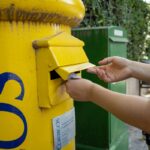
Official postbox. Credit: Guillem de Balanzo – Shutterstock

Homeowner discovers seven unknown names on property records just days before Spain’s November 29 general election.

A Marbella homeowner has discovered that seven people he says he has never met are officially registered as living at his property, after receiving electoral cards addressed to strangers just six days before Spain’s general election.

Ricardo Solanas, who has lived at his home in the Artola urbanisation for 20 years, was alerted to the situation when several voting-related letters arrived bearing unfamiliar names but his exact address. Initially believing they were delivery mistakes, he decided to investigate after receiving further correspondence.

A certificate obtained from Marbella Town Hall reportedly showed that 12 people were registered at the property, including seven who Solanas says have no connection with his family.

Seven registrations made during 2026

According to a report by Spanish news outlet Demócrata, citing information given to ABC, the seven registrations were made at different times this year. Two were recorded on March 16, another on May 11, and four more on October 29. The individuals are reportedly from Colombia, Venezuela and Mexico.

Solanas says his family has never authorised the registrations and that the property has never been rented out. He has questioned how the applications were processed and what documentation was accepted.

His family has asked Marbella Town Hall to remove the seven names from the municipal register, known as the padrón. According to Solanas, council officials have indicated that the situation will be corrected and that he will receive confirmation once the process is complete.

Could the registrations affect the election?

The timing has raised questions because Spain’s general election takes place on November 29. However, the registrations do not automatically mean that the seven individuals could vote.

Spain’s electoral census for these elections closed on August 1, 2026. Consequently, the four registrations dated October 29 came too late to be included in the census for this election under the normal rules. The Spanish electoral law sets out how the electoral register is compiled.

There is another important distinction: only Spanish nationals aged 18 or over who are registered on the electoral census can vote in general elections. Being registered on the padrón does not give foreign residents an automatic right to vote. EWN has previously explained which Spanish elections British residents can vote in.

No evidence has so far established that the registrations were connected to electoral fraud. Solanas is considering referring the matter to the local electoral authority, while his family awaits an explanation of who submitted the applications and how seven unfamiliar names came to be associated with their home.

The case also raises practical questions for property owners about how municipal registration applications are checked and what happens when someone discovers strangers registered at their address. Further information about the November 29 poll is available from the National Statistics Institute (INE).

Continue Reading

Trending

Copyright © 2017 Spanish Property & News