Connect with us

Cercanías

Train trouble: Malaga passengers left stranded after late-night breakdown

Published

on

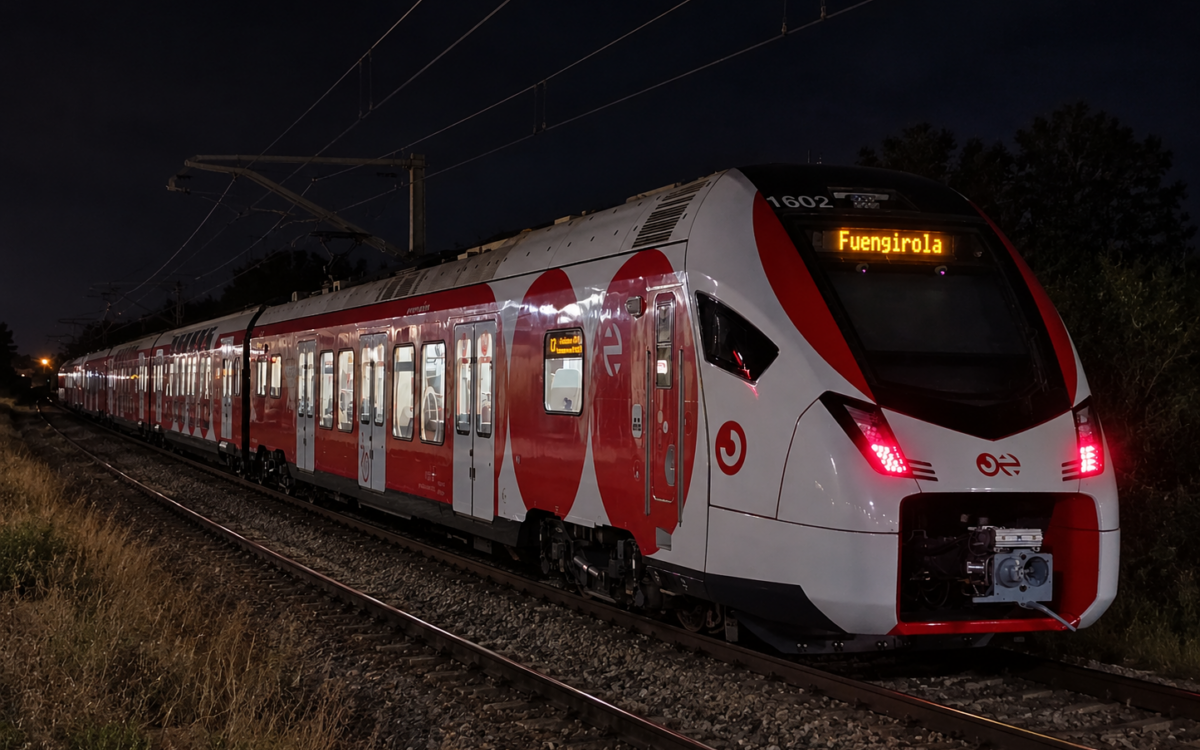
Passengers travelling on the last Cercanias commuter train from Malaga to Fuengirola were left stranded late on Sunday night, November 1, after another technical failure brought the service to a halt.

Around 20 people were affected when the C-1 commuter train stopped at Torremolinos station at approximately 11.53pm, leaving passengers wondering how they would get home. According to reports, the train developed a technical problem accompanied by an unusual noise, preventing it from continuing its journey.

Among those affected were workers returning home after their shifts, some of whom faced a lengthy wait before alternative transport was arranged. Renfe eventually organised taxis to take passengers to their destinations, but the disruption meant some did not reach Fuengirola until around 2am.

There were also claims that two young passengers had been left behind, although Renfe disputed this, insisting that nobody had been abandoned and that alternative transport had been provided for everyone.

How much longer must Cercanias passengers put up with this?

For regular users of Malaga’s C-1 line, another breakdown raises familiar questions about the reliability of a railway service that thousands depend on every day. The route connects Malaga city with the airport, Torremolinos, Benalmadena and Fuengirola, making it particularly important for commuters, airport workers and residents without access to a car. Passengers can check the official Malaga Cercanias service information for travel updates.

Yet technical problems, cancellations and unexpected delays have repeatedly caused frustration for passengers. In April, another breakdown on Malaga’s C-1 commuter line left passengers stranded, with some deciding to walk instead.

Previous incidents have included trains stopping for extended periods, services being cancelled at short notice and problems with the overhead electrical supply affecting journeys between Benalmadena and Fuengirola. Earlier this year, dozens of trains were cancelled across Malaga’s C-1 and C-2 commuter lines.

Sunday night’s incident was particularly inconvenient because it involved the last service of the evening, leaving passengers with fewer options for getting home. Renfe said services were operating normally on Monday morning, November 2, but that will offer little reassurance to those who spent hours trying to complete what should have been a straightforward journey.

The railway is also facing major planned disruption, with a six-month closure of part of the C-1 line expected in the future for infrastructure works.

Renfe has announced plans for seven new higher-capacity trains for the Malaga commuter network, due from 2028. However, passengers will have to wait to see whether this investment delivers the improvements they need.

For residents and regular commuters, the question is becoming increasingly difficult to ignore: when will Malaga’s Cercanias railway receive the attention it needs to provide a dependable service?

How many more breakdowns, cancellations and stranded passengers will it take before something changes?


%

Another Day Of Commuter Train Chaos

Published

on

another-day-of-commuter-train-chaos

Cercanias commuter train broken down again on the Fuengirola line.

Repeated breakdowns raise questions over investment (or a lack of), reliability and whether a change of government could make a difference. Costa del Sol citizens are at the end of their tether.

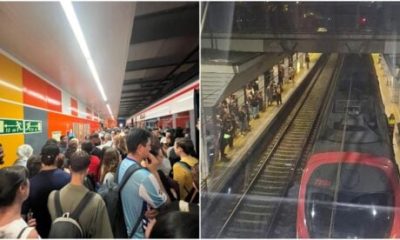
Passengers travelling between Malaga and Fuengirola faced another day of disruption and waiting on Thursday, November 5, after a technical fault on a Cercanías (commuter) train caused widespread delays, cancellations and overcrowding.

The latest problems affected the C1 line, with passengers reporting waits of up to an hour at Plaza Mayor. Some trains were running late, while passengers reported smoke and an unusual smell around the wheels of a train at La Colina in Torremolinos. Some services were cancelled and others required passengers to change trains.

According to Málaga Hoy’s report on the latest Cercanías disruption, the problems also affected the C2 service between Malaga and Alora.

A difficult week for Malaga commuters

Thursday’s disruption followed three consecutive days of problems reported across the network, with delays, cancelled services and compulsory changes of train.

On Sunday, November 1, around 20 passengers were left stranded after a technical failure stopped the last train travelling towards Fuengirola. Renfe eventually arranged taxis to take them home. EWN previously reported the late-night breakdown which left Malaga passengers stranded.

The following night, a man died after being struck by a train near Torreblanca, forcing the suspension of services between Benalmadena and Fuengirola. This was a separate and tragic incident, rather than a mechanical failure. Even more operational problems followed on Tuesday and Wednesday, before Thursday’s technical fault brought another round of passenger complaints.

Spanish newspaper El Español counted 37 service disruption notices on Thursday alone, covering delays, cancellations, partial interruptions and a compulsory passenger transfer. Renfe attributed the latest C1 problems to a technical fault affecting one train, while the C2 experienced separate difficulties.

Why the Fuengirola railway is significant

The 32-kilometre C1 connects Malaga city with the airport, Torremolinos, Benalmadena and Fuengirola. It is an essential transport link for residents commuting to work, tourists travelling between resorts and airport passengers avoiding increasingly congested roads.

Renfe’s 2025 passenger figures show that Malaga’s two Cercanías lines carried 15.54 million passengers last year, with the bulk of demand concentrated on the C1. At some points, passenger numbers reach 150 per cent of available seating capacity.

Renfe plans to invest €66.7 million in seven new high-capacity trains for the Fuengirola route, expected to enter service from 2028. A further €40 million is earmarked for a new maintenance workshop.

Meanwhile, Adif has been working on a project to add 2.8 kilometres of double track between Malaga Airport and Campamento Benitez, helping to address infrastructure limitations that restrict how frequently trains can run.

Could we do with a change?

Responsibility for Spain’s state railway network ultimately falls on the national government through the Transport Ministry, Adif and Renfe. A change of administration in Madrid could therefore bring different investment priorities, management decisions and expectations for service improvements.

However, replacing the government would not automatically solve the railway’s problems. The infrastructure limitations, maintenance requirements and growing passenger numbers would still need to be addressed. For thousands of people who depend on the C1 every day, the promised new trains and infrastructure improvements offer some hope, but they will not arrive overnight.

Whether under the present administration or a future government, the question remains the same: how can a railway serving one of Spain’s busiest coastal areas provide a service passengers can actually rely on?

Continue Reading

%

Train Trouble: Malaga Passengers Left Stranded

Published

on

train-trouble:-malaga-passengers-left-stranded

Stopped on its tracks. Credit: CM X

Passengers travelling on the last Cercanias commuter train from Malaga to Fuengirola were left stranded late on Sunday night, November 1, after another technical failure brought the service to a halt.

Around 20 people were affected when the C-1 commuter train stopped at Torremolinos station at approximately 11.53pm, leaving passengers wondering how they would get home. According to reports, the train developed a technical problem accompanied by an unusual noise, preventing it from continuing its journey.

Among those affected were workers returning home after their shifts, some of whom faced a lengthy wait before alternative transport was arranged. Renfe eventually organised taxis to take passengers to their destinations, but the disruption meant some did not reach Fuengirola until around 2am.

There were also claims that two young passengers had been left behind, although Renfe disputed this, insisting that nobody had been abandoned and that alternative transport had been provided for everyone.

How much longer must Cercanias passengers put up with this?

For regular users of Malaga’s C-1 line, another breakdown raises familiar questions about the reliability of a railway service that thousands depend on every day. The route connects Malaga city with the airport, Torremolinos, Benalmadena and Fuengirola, making it particularly important for commuters, airport workers and residents without access to a car. Passengers can check the official Malaga Cercanias service information for travel updates.

Yet technical problems, cancellations and unexpected delays have repeatedly caused frustration for passengers. In April, another breakdown on Malaga’s C-1 commuter line left passengers stranded, with some deciding to walk instead.

Previous incidents have included trains stopping for extended periods, services being cancelled at short notice and problems with the overhead electrical supply affecting journeys between Benalmadena and Fuengirola. Earlier this year, dozens of trains were cancelled across Malaga’s C-1 and C-2 commuter lines.

Sunday night’s incident was particularly inconvenient because it involved the last service of the evening, leaving passengers with fewer options for getting home. Renfe said services were operating normally on Monday morning, November 2, but that will offer little reassurance to those who spent hours trying to complete what should have been a straightforward journey.

The railway is also facing major planned disruption, with a six-month closure of part of the C-1 line expected in the future for infrastructure works.

Renfe has announced plans for seven new higher-capacity trains for the Malaga commuter network, due from 2028. However, passengers will have to wait to see whether this investment delivers the improvements they need.

For residents and regular commuters, the question is becoming increasingly difficult to ignore: when will Malaga’s Cercanias railway receive the attention it needs to provide a dependable service?

How many more breakdowns, cancellations and stranded passengers will it take before something changes?

Continue Reading

Trending

Copyright © 2017 Spanish Property & News