
animal abuse
Five years of complaints ignored? 110 dogs found beaten, starved and neglected in Spain

Reports of the dogs situations had been made for five years. Photo credit: Policía Local Buñol/Facebook
A neighbour’s complaint has uncovered 110 dogs living in appalling conditions at a property in Buñol, Valencia. The animals were found without water, exposed to high temperatures and showing signs of severe malnutrition. Some were restrained with short chains, while overcrowding left others with barely enough room to move.
An animal welfare organisation says 26 dogs were found dead at the property. Asociación Defensa Animal Torrent (ADAT) also claims complaints about the animals had been made over five years with nothing being done about it by authorities, raising questions about how long the situation had continued, how effective the animal welfare laws are in Spain and whether earlier intervention could have prevented further suffering. Police have removed the surviving dogs and opened an investigation into the property owner on suspicion of animal abuse.
A neighbour’s alert led to the rescue
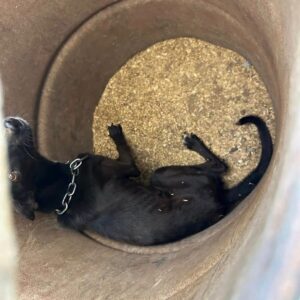
The operation began after a resident contacted Buñol Local Police about the dogs. Officers investigated and brought in the Guardia Civil’s SEPRONA unit from Requena, which deals with offences involving animal welfare and the environment. At the property, officers found 110 dogs exposed to direct sunlight and high temperatures, with no access to water or food. Some were tied up with short chains. Others were crowded into confined spaces such as barrels and tiny rusty cages leaving them little to no room to move.
Police also found signs of severe malnutrition and suspected physical abuse. The dogs were seized and taken to Ribamontes, an animal reception centre working with Buñol Town Hall. They are receiving veterinary attention, and their health will need to be assessed individually. The owner is being investigated on suspicion of animal abuse. The case has been put before the judicial authorities. No conviction has been reported as of yet, and the investigation will have to establish responsibility for the conditions in which the animals were kept.
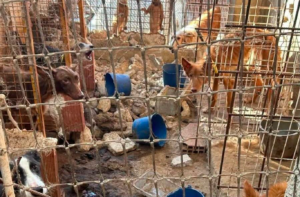
Animal group reports 26 dogs found dead
ADAT says the 110 surviving dogs were not the only animals at the property. The organisation reports that 26 dogs were found dead, bringing the total number involved to 136. The group has also described finding remains in barrels covered with concrete, as well as skeletons. Those details have been attributed to ADAT and have not been independently confirmed in the police account. The causes of the reported deaths have not been made public.
ADAT says complaints about the property had been made over five years. Police have confirmed that the operation followed an alert from a resident, but have not explained whether earlier complaints were received or what action may have followed. If reports were made over several years, investigators will need to establish when they were submitted, who received them and whether the property was inspected before the latest intervention and if not, why was nothing done about it?
The association’s account also raises questions about the number of animals that may have passed through the property during that period and how many unnecessary deaths may have been prevented if only the authorities had investigated the situation sooner.
Spain’s animal welfare law leaves hunting dogs outside its protection
The entire situation has also drawn attention to a major gap and ineffectiveness of Spain’s animal welfare legislation: dogs used for hunting are excluded from the national Animal Welfare Law, despite being just as vulnerable to neglect and cruelty as other dogs. Under Law 7/2023, which came into force in September 2023, hunting dogs, dogs kept in rehalas (packs used for hunting) and other animals used for hunting are excluded from the law’s scope. They are instead covered by other European, national and regional regulations.
Animal welfare organisations have criticised this exclusion, arguing that a dog’s need for proper care does not change according to whether it is kept as a pet or used for work. Hunting dogs still need adequate food, clean water, veterinary treatment, suitable accommodation and protection from mistreatment. Including them in the national legislation would establish consistent minimum welfare standards for all dogs. It would also provide a stronger framework for monitoring their conditions, identifying neglect and holding owners accountable when animals are deprived of basic care.
Most of the dogs rescued in Buñol are reportedly podencos, a breed widely used for hunting in Spain, A solid and functional animal welfare law would not discriminate a dog’s purpose or worth and should not determine whether it receives protection from hunger, thirst, neglect or abuse.
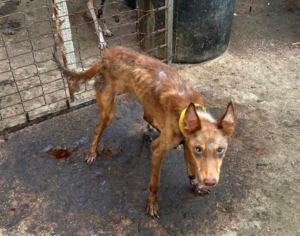
Rescued dogs need care and suitable homes
The surviving animals are now at Ribamontes, where they are receiving veterinary attention. Most are dogs are podencos, according to reports about the rescue indicating that they potentially have been used for hunting. Their health will need to be assessed, particularly if they have been left malnourished or have other medical problems. The centre has received judicial authorisation to place dogs in foster homes or arrange adoptions. Animals can leave the reception centre as suitable placements are found. Anyone taking one in will need to be prepared for possible ongoing veterinary care and time to settle into a new home.
People interested in fostering or adopting can contact Ribamontes on 625 05 74 25 for information about the process and the dogs available. Finding homes for 110 animals will take time. Each dog will need to be matched with a household able to meet its needs. Prospective adopters should ask about the animal’s condition and care requirements before making a commitment.
Authorities will examine the conditions in which the dogs were kept and the evidence gathered during the operation. ADAT’s claims about the 26 deaths and earlier complaints also remain to be clarified. The rescue has removed 110 dogs from the property, but the investigation has more to establish: how the animals came to be kept in those conditions, why were the reports ignored by authorities for five whole years, what happened to the dogs reported dead and whether the full force of the law will fall upon the man who did this.










Another Day Of Commuter Train Chaos
‘An insult to Italian culture’: Chef fired after refusing to put pineapple on pizza

‘An Insult To Italian Culture’: Chef Fired After Refusing To Put Pineapple On Pizza


-
DGT3 weeks ago
Viral video in Spain sparks fury over drivers who ‘have no idea how to drive’
-

 Arabia Saudí4 weeks ago
Un Ataque De Los Hutíes Contra El Aeropuerto De Riad Causa Al Menos 12 Muertos Y Más De 300 Heridos
-

 America4 weeks ago
Un Tirador Mata A Ocho Personas En Una Vivienda En Pensilvania
-
Costa Blanca North4 weeks ago
Jávea opens historic lighthouse to the public with a new whale-watching viewpoint
-
Automated supermarket3 weeks ago
Spain’s 24-hour shop with no tills expands to Barcelona Airport
-

 %4 weeks ago
Concrete Balcony Slabs Collapse Onto Marbella Street
-

 America4 weeks ago
Trump Llega A Un Acuerdo Con Putin Para Que Rusia Libere Miles De Barriles De Diésel En Los Mercados Mundiales
-

 Uncategorized4 weeks ago
Williams F1 driver caught up in four-car pit lane pileup