
ElPais
Milo Quifes, The Breakout Star Of ‘La Bola Negra’: ‘I’m Tired Of Having To Come Out Of The Closet Over And Over Again’


Two years ago, this actor wasn’t an actor at all. He was a twentysomething shut away in a rented room, so paralyzed by the fear that he had ruined his life that he could barely bring himself to step outside. Now, however, Milo Quifes, 25, is one of the stars of La Bola Negra, directed and written by Javier Calvo and Javier Ambrossi, known as Los Javis.
The film, which has already attracted millions of followers around the world, has become the highest-grossing Spanish movie of the year, one of the 10 highest-grossing in the country’s history, and is now setting its sights on the Oscars. The New York Times described it as “ an intimate Spanish drama with an epic historical sweep and even more majestic aspirations,” while Variety has cast it as the main challenger to Christopher Nolan’s The Odyssey in the race for Best Picture. Were it to win, it would mark the first such Oscar for Netflix, the film’s U.S. distributor.
EL PAÍS talked to Quifes just three days after the cast attended the gala at the Academy Museum in Los Angeles. It was mid-October, the film had just opened there, and Quifes was singing along to Love Story at the top of his lungs with Taylor Swift only a few feet away. “But right now I’m doing my VAT return,” he said from his Beverly Hills hotel room. “I got a little letter from the Treasury saying that I hadn’t done it right.”
The first time we spoke was in September during a photo shoot on the outskirts of Madrid. La Bola Negra had just won the Audience Award at the Toronto Festival and had only been in Spanish theaters for three days. Quifes was so tired that he almost fell asleep during the shoot. “I haven’t put the washing machine on for a month,” he said.
Quifes seems to have developed a defense mechanism: to put some distance between himself and a new reality that still feels almost alien, he tells you about the world he comes from. “I’ve had enough of doing all kinds of things,” he says. “I’ve studied biology, cleaned darkrooms, worked as a waiter, a receptionist…” and also an “altar boy, a nazareno [one of the hooded participants in Spain’s Holy Week processions], and even a camp counselor with my Rocío brotherhood.”
And that’s not all. He was also a TikToker, amassing more than a million followers, and is the author of the young-adult novel Ultravioleta (Ultraviolet). All before turning 25, a milestone he celebrated a few weeks ago with friends in a horror-nun-themed escape room and at a trampoline park.
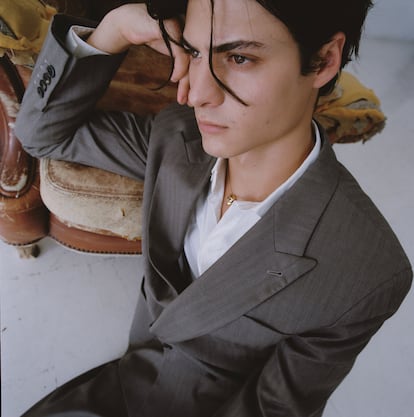
Quifes has kept a diary since childhood, and the entries from the past month must read much like this conversation: it is impossible to separate the personal from the professional, and there is probably no need to try.
It is not unusual in the world of Los Javis for actors to play characters shaped by their own lives. Quifes is one of the clearest examples of this approach to filmmaking, which earned the directing duo the Best Director prize at this year’s Cannes Film Festival.
His character is named Carlos, the name Federico García Lorca gave to the protagonist of the unfinished play that inspired the film. Carlos is a privileged young man in 1932 Granada who, under pressure from his father, seeks admission to the city’s casino. But the club’s board rejects him because he is gay, a decision which sends him into a tailspin.
Quifes is the icy-eyed martyr on whom Los Javis build the rest of their cathartic queer tale. Asked if a scene like the one in the casino has helped Quifes to come to terms with his own past, he replies: “I remember filming it. I was very angry when I had to say that I was not gay. Angry with those in front of me, with my father, my mother, with myself. I realized that I had spent my entire life denying myself. Your sexual identity is questioned long before you are clear about it. I am tired of having to come out of the closet over and over again.”
All of that, an entire lifetime’s worth of experience, is distilled in the film into a single glance and a single “no.” In the world of Los Javis, from The Calling (La llamada, first a 2013 stage play and then a 2017 film) to La Mesías (2023), such moments abound. Some are liberating, others devastating, but all are cathartic. And to pull them off, you need a gaze like Quifes’s. A gaze that hints at a path marked by judgment and condemnation.
Life and miracles
The first setting in Quifes’s story is his hometown of Palos de la Frontera, in the southern province of Huelva. There, everyone knew him as Chico, because his father was also named José Antonio Quifes (not Camilo Joaquín Villarruel, as Wikipedia claims, a mistake repeated by media outlets from China to Spain after confusing him with the Argentine rapper Milo J).
He spent his childhood in the square where much of his family lived. His father was an accountant and guitar teacher. His mother worked as a secretary, an insurance agent for Mapfre and a Mary Kay salesperson. In other words: “When I was little, my grandfather Antonio took care of me,” says Quifes.
In the afternoons, his grandfather would watch Westerns, make him a Nesquik, and Quifes would do jigsaw puzzles. They kept each other company in silence, and that was virtually the extent of his social life.
“I’ve always been like that…,” he says. “I’m bad at connecting with people. At school I was a bit weird. I tried to mix with the boys but couldn’t, and when I found my place with the girls, I felt unhappy because I wanted to be with the boys. Maybe it’s because I was socially awkward, but I’ve always felt left out. In ESO [Spain’s compulsory secondary education, roughly ages 12-16], Bachillerato [the two-year pre-university track, roughly ages 16-18], university…”

A new chapter began when he was 12, and his family moved to Seville. Things only got harder from there. His parents were still working all hours, but now he no longer had his grandfather, who had died of cancer.
“It was very drastic,” says Quifes. “I am troubled by the fact I wasn’t honest with him, but I am also grateful that he died then. I don’t know that my grandfather would have accepted me if he knew I was gay. The way it was, his image of me was untarnished.”
Then his parents separated, and along came parties, drinking, smoking and being brought home by the police. “Typical — from good boy to black sheep. I needed to find my place and decided to study away from home.”
But he didn’t find it in Granada. Nor in Valencia. But he did come away from that period with the nickname Milo (the name of his dog), and with the realization that he wanted to quit studying biology.
He returned to Seville to work as a waiter and, in the hours when he wasn’t sleeping, wrote a love story about two boys who, like him, were full of frustrations. With the money he saved, he decided to try his luck in a new setting: he moved to Madrid and published his book, Ultravioleta. Dream fulfilled, right? “It wasn’t like I thought it would be,” he says. “Two weeks later, I was working in the same chain of gyms I had worked at in Seville. The publishing world is all interested in you, then it dumps you. We become products; there are many products and they can’t keep an eye on all of them. I had been published, but I was unhappy. I had no goals, I had dropped out of my degree and I was stuck in my job.”

And there was also Madrid to cope with. “In Madrid, you try to escape it all by partying, flirting, now you have a dream, now you don’t,” he says. “I started to develop anxiety and what started as anxiety about going out with my friends turned into anxiety about going outside at all. I had to force myself to go shopping every day, even if it was just to buy some pork chops at Lidl. Things were getting worse every month; I felt pretty lonely.”
Then one day he got called to an audition for what he thought was an extra role, and he forced himself to go, just as he forced himself to buy those pork chops. He was carrying a lot by then, and it was with that baggage that he arrived at the right place at the right time.
“Milo showed us all his melancholy. He understood the pain of someone who is where they don’t want to be, of someone who isn’t seen. We saw all that in his eyes,” casting directors Eva Leira and Yolanda Serrano tell EL PAÍS.
Although the final decision was not theirs, of course. “When I saw him, I knew,” Javier Ambrossi tells EL PAÍS. “His fragility, his eyes, his classic looks. When we met him, I only remember his hand trembling. He was shaking so much… I told him to relax. But he kept shaking. But I was moved by his way of overcoming this. When he was in front of us, Milo was suddenly Carlos in front of the casino board.”
And so, almost without realizing it, Quifes found himself leaving the house to attend the first script reading. “My mind has always gone from one problem to the next. I’ve never really known how to enjoy things,” he says. “Now instead of the problem being ‘you’re not going outside’ it was ‘you’ve been hired for a film and you’re not an actor.’ But I was excited,” he recalls. “I spent the summer in the shade, reading [Lorca’s] Sonnets of Dark Love because I had to be the snow boy, I couldn’t get any sun.” He threw himself into acting, playing the piano and dancing. All for the first time.
“Milo is very intelligent and very sensitive,” says Ambrossi. “We worked really hard during rehearsals. We helped him find a balance between the character and himself, and there came a moment when it just clicked. I started giving him more freedom, and out in the snow, he pretty much figured it out on his own.”
And so, one day, high up in the Sierra Nevada, filming ended without further ado. Quifes went back to work in the gym. But he only lasted three months.

Unlike before, Quifes now had people who supported him, one of the main themes of La Bola Negra.
The film touches on many of the key themes of the queer experience. The interplay between different timelines illustrates the hostility and isolation historically faced by the LGBTQ+ community, in this case across decades in Spain. That isolation includes desire tainted by shame, linking the dark alleyways of the past with the colorful apps of the present.
“We’ve always had to hide in order to interact with one another, whether sexually or as friends,” Quifes says. “Every interaction has made us feel embarrassed, and that’s what these apps represent: our sexual connection in a very uncomfortable way.”
Equally, the fact that La Bola Negra is reaching audiences at a moment when young people who, much like the characters in the film, joke with raised-arm salutes and shout fascist slogans are making headlines says a great deal about the film’s timeliness and helps explain why it has been embraced so enthusiastically. Quifes warns: “Whenever anyone is against our rights, they’ll be lying in wait for us. That’s why we have to keep fighting, day after day, to be who we are. As long as there’s even the slightest hint [of danger], we’ll be there to defend ourselves.”
Asked how the camaraderie of a film directed by gay men and played by gay actors changed him, Quifes says: “Being able to work with all of them and know that they’re there for you while saying ‘You can do this,’ was incredible. They helped me find value in my own experiences. I have such trauma surrounding the topic of the novel [La Bola Negra] that it’s an aspect of my life I try not to address. But they’re the ones who tell me to keep talking about it.”
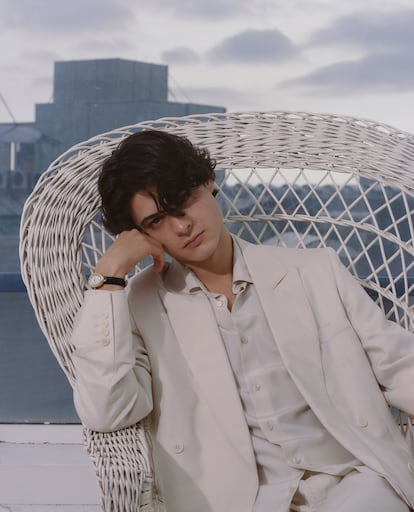
But that sense of community doesn’t end there. “My mother took all of Seville and all of Huelva to a cinema in Camas to see the film,” says Quife. “There’s a video of all the people I’ve ever known there. It’s a lot to take in. I’m taking it one step at a time, man, because there’s something in my head that immediately goes: ‘This is too much love. It feels strange. Something bad must be about to happen.’”
But for now, the momentum is only growing. La Bola Negra is already part of Spanish film history and a life-changing experience for those who made it. “It’s impossible not to come out of this movie transformed,” says Quife. “I think I’m always going to have this brain of mine, but now I have the tools to see both the good and the bad.”
Asked how he is coping with the fame, he laughs and says: “Mmm… Medication?”
“I look at the film’s success from the outside and congratulate the others, not myself,” he adds, more seriously. “I put that responsibility on them because I’m afraid of rejection. I’m lucky it’s an ensemble cast. If it were just me up there…”
CREDITS
Production: Fátima Monjas Hair and makeup: Ricardo Calero (Uno Artists) Photography assistant: Ayub El Kadmiri Styling assistant: Lidia Lara
Sign up for our weekly newsletter to get more English-language news coverage from EL PAÍS USA Edition







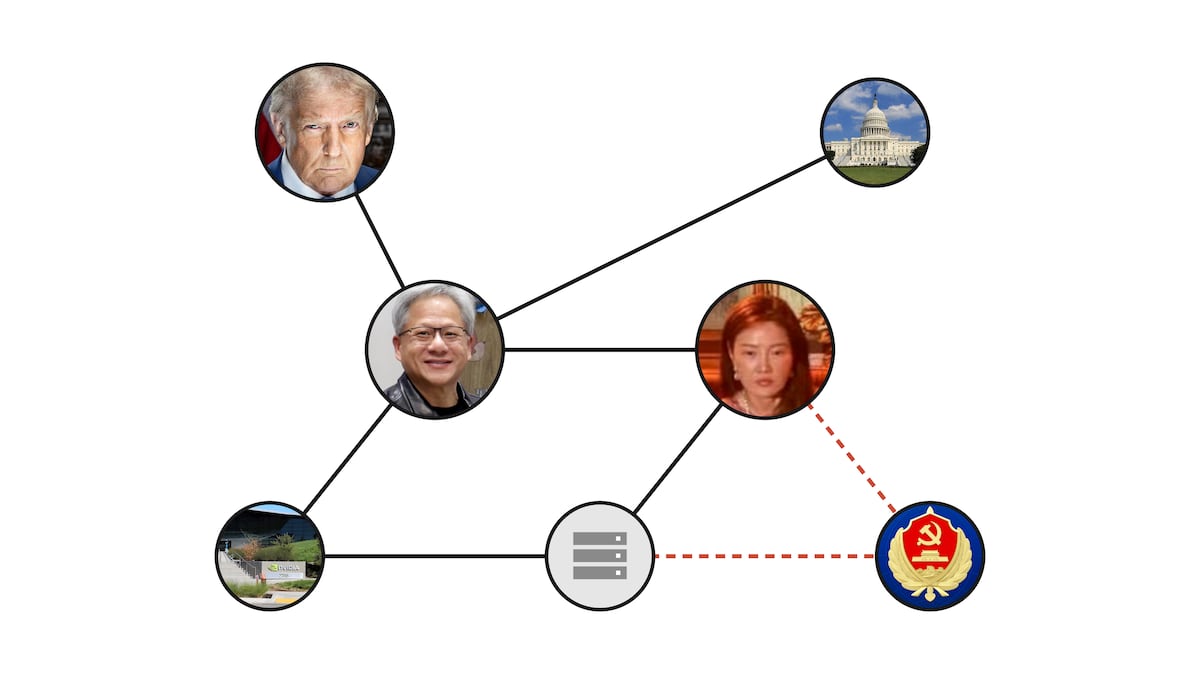
The chipmaker’s CEO has admitted to having a relationship with a woman suspected of spying for China. Here’s a guide to the key players and how they fit into the story


Archived In
ElPais
The Rise And Fall Of Reese Witherspoon’s Media Empire: Bought For $900 Million, Now Worth Less Than $50 Million

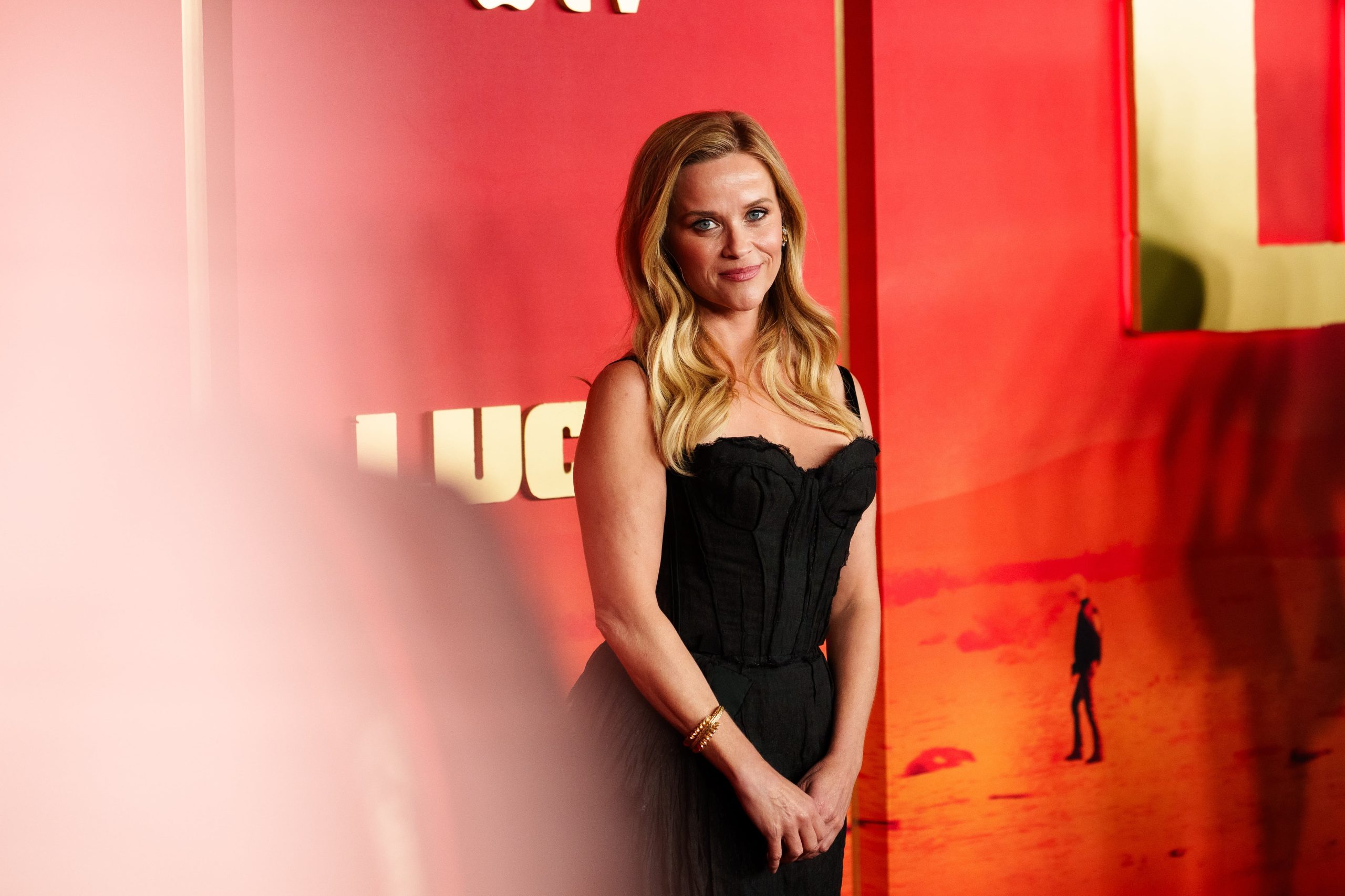
It was August 2021, and the headlines said it all: “Reese Witherspoon becomes the world’s richest actress.” The payoff was hard to overstate. The actress had landed her biggest coup yet, selling a large stake in her production company, Hello Sunshine, for around $900 million. She was rich, richer than ever, and more powerful, too. Hollywood’s boom years were smiling on her.
But, as always, the good times didn’t last. The lean years arrived. And Witherspoon’s fortune, along with her clout, has waned. Her story is also a sign of a broader shift, both in Hollywood and beyond.
Hello Sunshine is not what it once was. Or rather, it is: The company is still hugely influential in book sales through its book club and continues to produce popular screen adaptations such as Big Little Lies and Daisy Jones & The Six, as well as more recent series including The Last Thing He Told Me, Lucky and Elle, the prequel to Legally Blonde, the film that launched Witherspoon to stardom.
What it never became, however, was what its buyers had hoped for: the next Oprah Winfrey, the next Martha Stewart, the next celebrity-turned-lifestyle mogul selling everything from magazines and table linens to cookies and skincare products through a personal brand. That has come at a heavy cost for everyone involved.
In financial terms, the deal was not a bad one for Witherspoon herself. The same cannot be said for her company, whose reputation has taken a significant hit.
In mid-October, it emerged that Witherspoon, alongside French media group Mediawan, had decided to buy back the stake in Hello Sunshine that the actress sold five years ago to two investors, through a company that was unnamed at the time and is now known as Candle. Back then, the deal valued Hello Sunshine at between $800 million and $900 million (Witherspoon personally pocketed around $120 million). This time, she bought it back at a valuation that trade publications estimate at no more than $50 million. In other words, the company is now worth roughly 6% of its former value.
If there was any doubt that Hello Sunshine was in decline, confirmation arrived over the weekend with news that the company had laid off half of its workforce. Thirty employees lost their jobs, including the entire consumer products and sales division. Staff working in film and television production, as well as those involved with the book club, social media and marketing, have been retained, according to entertainment-industry outlet The Wrap, which said the company declined to comment.

The firm that paid out those $900 million in 2021 was Candle Media, a company founded by Kevin Mayer and Tom Staggs, former Disney and TikTok executives, and backed by private-equity giant Blackstone.
Buying Hello Sunshine was the icing on the cake for them. As Mayer said on a panel hosted by Deadline at a forum in Zurich in late September, they had invested a total of up to $4 billion in acquisitions — no small sum for a relatively unknown company.
“We moved aggressively,” the executive acknowledged just over a month ago. “There is a certain minimum scale you probably need to make an impact.”
Just a month later, the mood could hardly be more different. “We were just wrong,” an anonymous source close to Candle recently told The Wrap. “This isn’t a great deal in comparison to what we paid. It’s not a great outcome for Blackstone.”
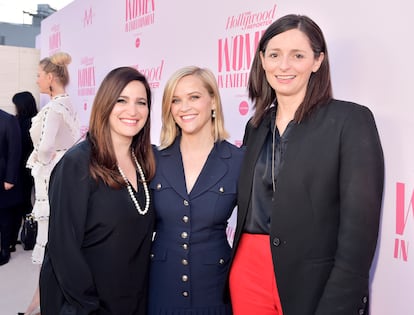
Candle’s and Witherspoon’s ideas about what Hello Sunshine could and should become turned out to be very different. After Candle acquired its stake in the production company (the exact size of that stake was never disclosed), Sarah Harden, Witherspoon’s right-hand woman, took the reins. Among other initiatives, Harden launched a music division, created an internal agency called Solar and opened an office in the U.K.
But in early September last year, it emerged that she was leaving the company. She was succeeded by Maureen Polo, who had previously led its direct-to-consumer, or DTC, products division.
Candle always wanted to expand the DTC side of the business, believing it could generate huge returns. Much of that confidence rested on the idea that Witherspoon was already an extraordinarily effective tastemaker, at least when it came to one product: books.
Through Reese’s Book Club, in which the actress has selected and discussed a book with her followers every month since May 2017, a total that now stands at 128 titles, Witherspoon has forged partnerships with brands such as Target and Apple and helped propel dozens of books onto bestseller lists.
But the Oscar winner’s ability to persuade people to pick up the books she recommended stemmed from two things: passion and necessity.
On the one hand, Witherspoon has admitted she is an avid reader who loves both reading and recommending books. On the other, as she grew older, she discovered, to no one’s surprise, that there were few good roles available for her or many of her peers. She began finding them in books instead, as happened with Wild, Gone Girl and the first season of Big Little Lies, which she also began producing through her first production company, Pacific Standard. Then came Hello Sunshine, followed by fame and fortune.
But after selling part of the company to Candle, both sides gradually realized that their visions were at odds. Witherspoon had a knack for choosing roles and projects, and for identifying books that could be adapted for the small or big screen. But Candle, backed by Blackstone, wanted something more. It wanted to turn the company into a DTC powerhouse, creating its own products and selling them directly to consumers rather than through intermediaries.
The model never fully took off, and trade publications estimate that by 2023 the company was carrying around $1 billion in debt, a burden also driven by shifts in the entertainment industry, including fewer productions, lower spending by studios and the new collective bargaining agreements reached after the actors’ and writers’ strikes.
With that partnership now over, Witherspoon will have Mediawan as her new partner. In her statement, the actress suggested that what appealed to her was precisely the way the French company and its three partners were navigating the “new media landscape.” “Mediawan has built an independent, global studio that puts creators first,” Witherspoon said, in a clear declaration of intent. “The best is yet to come.”
The French company also holds stakes in Plan B, Brad Pitt’s production company, and LuckyChap, Margot Robbie’s company, which was behind the huge success of Barbie. In recent years, it has made numerous investments with a clear focus on film and television.
That points to another issue: many private-equity firms have paid millions for stakes in companies and production houses simply because a celebrity was attached to them, only to stumble along the way. Candle itself invested $60 million in Westbrook, the company founded by Will and Jada Smith, in 2022, just two months before the infamous Oscars slap.
The market has since become more cautious, with investments increasingly focused on proven expertise rather than celebrity appeal.
Although Witherspoon has produced some of the biggest film and television hits of recent years, contributed nearly $1 billion to the publishing industry, and helped hundreds of stories reach millions of new readers, her focus was not on selling, but on what she sold: stories. And that will be the focus for her and Hello Sunshine in this new chapter.
Sign up for our weekly newsletter to get more English-language news coverage from EL PAÍS USA Edition

Liam Lawson sends blunt Red Bull message over uncertain F1 future

Republican Lawmaker Moves To Force Vote On Pete Hegseth Impeachment

Who’s Who In The Nvidia Scandal
Viral video in Spain sparks fury over drivers who ‘have no idea how to drive’
Spain’s 24-hour shop with no tills expands to Barcelona Airport
Spain’s pet owners face fines of up to €200,000 for animal welfare offences


-
DGT3 weeks ago
Viral video in Spain sparks fury over drivers who ‘have no idea how to drive’
-
Automated supermarket4 weeks ago
Spain’s 24-hour shop with no tills expands to Barcelona Airport
-
Keeping cats and dogs outside3 weeks ago
Spain’s pet owners face fines of up to €200,000 for animal welfare offences
-
Council tax (IBI)3 weeks ago
Barcelona plans 150% property tax increase on tourist flats ahead of 2028 ban
-
Age Concern Marbella - San Pedro2 weeks ago
Halloween lunch sells out as 51 join Marbella get-together
-
airports3 weeks ago
Travelling between Spain and Italy? The extra border checks could soon end
-
Bedbug infestation on Quantas flight4 weeks ago
Bedbug infestation grounds Qantas plane in Rome after passengers report bites
-
Axarquia4 weeks ago
Torrox Oktoberfest gets a 1,500sqm beer tent for four-day festival