Connect with us

%

Spain Faces Wave Of Bomb Scares As Madrid And Guadarrama Trigger Major Security Operations

Published

on

spain-faces-wave-of-bomb-scares-as-madrid-and-guadarrama-trigger-major-security-operations

The Guardia Civil established a security cordon around Calle de los Escoriales. Photo credit: @PlinioElGuapo on X

Residents in Madrid and the surrounding region have faced sealed-off streets, emergency evacuations and major police deployments following a series of bomb alerts, with two separate operations in less than 24 hours raising concerns over the growing number of threats. Two warnings near the Guardia Civil’s national headquarters in Madrid were followed by a security operation in Guadarrama on Wednesday, November 11.

There, a suspicious backpack prompted the evacuation of nearby businesses before TEDAX specialists carried out a controlled detonation. A second suspicious object was reported later in the town. Neither of the Madrid threats resulted in explosives being found. The backpack in Guadarrama was also later confirmed by the Guardia Civil to contain no explosive material, despite conflicting early reports.

Two bomb threats near Guardia Civil headquarters

The first Madrid alerts came on Tuesday evening, near the Dirección General de la Guardia Civil on Calle Guzmán el Bueno. Police sealed off streets around the headquarters and carried out checks after receiving a bomb threat. While officers were investigating, a second warning identified a location on a nearby parallel street, prompting the operation to move towards Avenida de Reina Victoria.

Police and emergency services mounted a substantial response. Some residents were reportedly told to leave their homes, while others were temporarily unable to return as the security cordon remained in place. SAMUR-Protección Civil also activated its precautionary protocol for a possible multiple-casualty incident. The checks lasted around an hour. No explosives were found and nobody was injured. Earlier on Tuesday, police had also investigated an abandoned briefcase near Calle Félix Boix in Chamartín. That object was examined and found not to contain explosives. There is no confirmed link between the three alerts. 

Guadarrama operation forces evacuations

The following afternoon, residents in Guadarrama faced another large-scale security operation after a suspicious backpack was found at around 4pm on Calle de los Escoriales, close to a Shell petrol station and the Supercor supermarket. The Guardia Civil established a security perimeter and restricted access. The petrol station and nearby supermarkets, including Supercor and DIA, were evacuated as a precaution. Officers urged people to stay away while TEDAX specialists and detection dogs examined the backpack.

Specialists eventually carried out a controlled detonation, which caused a loud bang that could be heard nearby. The Guardia Civil later confirmed that the backpack contained no explosives. It was a precautionary detonation, not the disposal of a confirmed bomb. At around 08:00pm, a second suspicious object was reported near a business on Calle Dehesa de los Panes. Police activated the security protocol again, but checks found no risk. The Town Hall said residents should follow Guardia Civil instructions and avoid spreading information while operations were under way. 

Bomb threats spreading across Europe

The alerts come amid a rise in false bomb threats affecting European transport. At least 35 flights had received threats since the start of November by November 6, according to reporting based on a Reuters tally. The warnings affected at least 16 countries and led to diversions, evacuations and security searches, although no explosives were found on the aircraft.

The European Union Aviation Safety Agency has warned that, while the risk from an individual false threat may be low, the growing number of incidents puts additional pressure on aviation operations. Investigators have not publicly identified those responsible or established who is behind the wider wave.

Spain has also seen a far more serious incident this week. In Oviedo, Asturias, a backpack containing an explosive device detonated during a police operation on Tuesday, killing a Policía Nacional officer and seriously injuring a TEDAX specialist. There is no known connection to the Madrid or Guadarrama alerts. 

For people living near the affected locations, the consequences of a threat are immediate even when no device is found: shops and services close, streets are blocked and residents can be kept away from their homes while officers establish whether there is a genuine danger. Police must treat every credible warning seriously. But with several alerts in quick succession, the question of who is making them, and whether any are connected, is becoming increasingly important.

%

Axarquia Support Bancosol Food Drive 2026

Published

on

axarquia-support-bancosol-food-drive-2026

A small donation at the supermarket till this weekend could help ensure families across Malaga have food on the table this winter. Bancosol, the Costa del Sol Food Bank, is holding its Great Food Collection, or Gran Recogida de Alimentos, on Friday, November 13, and Saturday, November 14. Residents throughout the region are being encouraged to take part.

Andalucia’s delegate for Social Services, Families and Equality, Laura Valle, has called on people across Malaga and the Axarquia to show commitment, generosity and solidarity.

How residents can donate

It is easy to take part. Shoppers can visit a participating supermarket and ask staff to add a donation to their receipt. Contributions start from just €1, making the campaign accessible to anyone who wants to help but cannot give a large amount.

Bancosol is encouraging monetary donations rather than physical food this year. Money allows the charity to purchase exactly what its partner organisations need, while helping it manage stock, storage and distribution more efficiently.

People who prefer to give from home can use Bizum, Spain’s instant mobile-payment service, with the code 00887. Donations can also be made at the checkout in participating supermarkets across the province.

Support for vulnerable families

Bancosol hopes to raise more than €450,000 during the two-day campaign. Funds will help the organisation continue providing food support to 20,589 vulnerable people through 129 social organisations across the area.

Nearly a third of those receiving help are children or young people. Bancosol says rising living costs and ongoing hardship mean public generosity is essential to maintaining supplies for families who might otherwise go without.

A community effort in the Axarquia

Volunteers will be at collection points to explain the campaign, encourage donations and thank shoppers for their support. Around 4,000 people are expected to help across Malaga province, including students from the Santa Rosa de Lima education centre.

Local organisations in the Axarquia have long played an important role in the annual collection. Past campaigns have involved town halls, charities and volunteers from local towns including Nerja and Velez-Malaga, helping bring the province-wide effort closer to neighbourhoods across the region.

Last year’s Great Food Collection raised €450,000, and Bancosol is hoping the community will help it surpass that total in 2026. Every donation, however small, contributes to a wider network of support for households in need.

Supermarkets joining the appeal

Major supermarket chains are taking part, including Grupo MAS, Carrefour, El Corte Ingles, Alcampo, Eroski, Dia, El Jamon and Mercadona. With 285 stores involved, shoppers in Axarquia towns and villages should easily be able to find a nearby collection point.

Bancosol says there is no minimum donation and no pressure to give more than a person can afford. Every contribution helps the charity continue its work supporting vulnerable households who need it most.

Continue Reading

%

Elche Basilica Hosts Two Free Concerts

Published

on

elche-basilica-hosts-two-free-concerts

Basílica de Santa María, Palmeral de Elche. Credit: tolobalaguer.com / Shutterstock.com

Music lovers can enjoy two free organ concerts in one of Elche’s most beautiful buildings this November, with internationally acclaimed musicians performing at the Basilica of Santa Maria. The concerts form part of the 13th International Organ Festival, La Musica del Cielo (Music from Heaven), bringing leading European organists to the city for two special Friday evening performances.

International Organ Festival brings world-class musicians to Elche

The 13th International Organ Festival, La Musica del Cielo, continues this November with two concerts featuring musicians who have performed at some of Europe’s most prestigious churches and cathedrals.

Both performances take place at the Basilica of Santa Maria in central Elche, giving audiences the opportunity to hear organ music in a historic setting.

Admission is free, with both concerts beginning at 9:00 PM and no advance tickets required.

The programme offers music lovers the chance to experience the basilica’s magnificent organ, an instrument closely connected to the city’s religious and musical heritage.

November 13: Polish organist Michal Markuszewski performs

Polish musician Michal Markuszewski performs on Friday, November 13.

A professor at Warsaw’s Fryderyk Chopin University of Music, he has given around 800 concerts across Europe, America and Asia, including performances at Notre-Dame Cathedral in Paris and St Paul’s Cathedral in London.

His international experience brings an impressive musical background to the Elche festival, with audiences able to enjoy his performance without an admission charge.

The concert begins at 9:00 PM at the Basilica of Santa Maria.

November 27: Milika Radovanovic closes the festival

The final concert, on Friday, November 27, features Serbian-born organist and pianist Milika Radovanovic, who lives in Norway.

Her performances have taken her to Westminster Abbey and several major European cathedrals, with music ranging from Bach to contemporary compositions.

Radovanovic’s appearance will bring the 13th edition of the festival to a close, offering another opportunity to hear an internationally experienced musician perform in Elche.

The concert begins at 9:00 PM, with free admission.

Continue Reading

%

Decathlon Shoppers Told To Stop Using Sports Bottle That May Release Aluminium Into Drinks

Published

on

decathlon-shoppers-told-to-stop-using-sports-bottle-that-may-release-aluminium-into-drinks

Owners have been told to stop using the bottle straight away. Credit: Mo Photography Berlin / Shutterstock

Anyone who’s been filling up an 800ml Vital Sport aluminium bottle bought through Decathlon in the last 14 months should stop using it straight away. The bottle may release aluminium into whatever’s inside it, and the barcode is the quickest way to tell whether yours is one of them.

Buyers told to stop using the bottle immediately

Shoppers who picked up the Vital Sport aluminium bottle, an 800ml sports bottle with a safety cap, have been told to stop using it immediately as it’s been withdrawn from sale over a risk of the metal moving from the bottle into the drink.
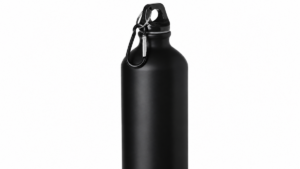
A black aluminium water bottle with a clip on it's lid.
The Vital Sport bottle in question. Credit: Decathlon.

The warning was flagged by FACUA-Consumidores en Acción, the Spanish consumer rights organisation, on Tuesday November 10, which said the aluminium released into the contents could be harmful to people’s health.

The bottles affected were sold between Friday August 1 2025 and Thursday October 1 2026. So anyone who’s bought one in the past year or so could well still be reaching for it today, whether that’s at the gym, on the bike or at their desk.

Check the barcode on yours 

The bottle to look for carries the EAN code 8437021197198 under the barcode. If the numbers match, it’s one of the bottles affected.

Vital Sport isn’t one of Decathlon’s own in-house brands, though. Its bottles have been listed on Decathlon’s online marketplace, where independent sellers trade through the retailer’s website, and the withdrawal notice names Soluciones Técnicas 2000 SL as the business that detected the safety problem.

Owners are being asked to contact the company at administracion@soltec2000.es for information on the withdrawal and how each case will be handled. The notice doesn’t mention refunds, and it doesn’t say whether any of the bottles were sold in Decathlon’s shops either. 

Why aluminium in your drink is a concern

Neither Decathlon nor the seller has explained what went wrong with the bottle or how much aluminium could end up in a drink.

Aluminium bottles are normally coated on the inside so the liquid never actually touches bare metal. A good bit of info to know is that acidic drinks pull far more metal out than plain water does, which matters for anyone filling up with fruit juice, lemon water or many sports drinks.

The body holds on to aluminium, which is why the European Food Safety Authority (EFSA) sets its safe limit as a weekly one: 1mg for every kilo of body weight. It’s also said many Europeans may already go over that through their normal diet, with children and young people the most exposed, before a drinks bottle adds anything at all.

Animal studies have linked high exposure to effects on the nervous system, although EFSA said it didn’t consider aluminium in food to be a risk for Alzheimer’s disease.

Now, researchers at Germany’s Hessian State Laboratory found in their worst-case scenarios that tea kept in an aluminium bottle could be enough to take a small child weighing 15kg past that weekly limit. Those tests weren’t carried out on this bottle, but they show why a faulty one isn’t something to shrug off.

What to do if you’ve got one at home

First of all stop filling it, even with plain water, until you’ve heard back from the seller. The notice also asks people to pass the warning on to family and friends, particularly if the bottle was given as a present, lent out or sold on second-hand. Sports bottles are an easy thing to hand down, so it’s worth a quick message to anyone who might have ended up with yours.

Those who bought online should dig out their order confirmation before emailing, as it’ll show exactly when the bottle was bought and who sold it. It’s the latest in a run of product withdrawals in Spain this autumn, after an urgent recall of a children’s mouthwash in September and teeth whitening products found to be far over the legal peroxide limit in October.

Anyone with one of these bottles at home should put it aside today and email the seller to find out how the withdrawal will be handled for them.

Continue Reading

Trending

Copyright © 2017 Spanish Property & News