Connect with us

%

Pets Pay The Price As Rising Veterinary Costs Push Spanish Owners To Breaking Point.

Published

on

pets-pay-the-price-as-rising-veterinary-costs-push-spanish-owners-to-breaking-point.

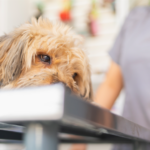
There are ways to make veterinary treatment more manageable. Photo credit: Guillermo Spelucin R/Shutterstock

Owning a dog or cat is becoming an increasingly expensive commitment in Spain, and for some families the question is no longer whether they can afford the best food or a new toy, but whether they can afford to take their animal to the vet when something goes wrong. Rising veterinary bills are putting pressure on household budgets, with some owners already delaying appointments, reducing insurance cover or cutting back on other aspects of their animals’ care.

The danger is that saving money in the short term can lead to much bigger bills later, particularly when a minor health problem develops into something requiring emergency treatment. Spain’s National Statistics Institute (INE) recorded annual inflation of 4.8 per cent for veterinary services and other domestic animal services in September 2026. Although slightly below August’s 5 per cent, prices are continuing to rise, adding to the pressure on owners already dealing with higher household expenses. 

Veterinary bills put pressure on family budgets

Spain’s first national pet census, published in 2026, recorded more than 15.17 million identified animals, including 7.56 million dogs and 5.62 million cats. That represents millions of households paying for food, vaccinations, parasite prevention, routine check-ups and treatment when their animals become ill.  Veterinary treatment has also been subject to Spain’s standard 21 per cent VAT rate since September 2012, when it increased from the reduced rate of 8 per cent.

For owners already struggling with the cost of living, even an ordinary consultation can become difficult to afford. A UK study involving 770 households offers an indication of how financial difficulties can affect animal welfare. Researchers found that 36 per cent of participants said the cost-of-living crisis had negatively affected their household income. More than one in ten had already made negative changes to their dogs’ care because of financial difficulties, while another 10.8 per cent expected to do so. 

What happens when owners start cutting corners?

Among the changes reported were delaying or cancelling veterinary appointments, using home remedies instead of seeking professional advice, reducing insurance cover and cutting spending on grooming and training. Although the research involved UK households rather than Spanish pet owners, the consequences are relevant wherever veterinary treatment becomes unaffordable.

A dental problem, skin infection or ear complaint that could have been treated relatively easily may become considerably more serious if left unattended. Skipping vaccinations and parasite prevention can also expose animals to illnesses that might otherwise have been avoided. There is another concern: owners who cannot afford ongoing treatment may eventually feel they have no option but to surrender their animals. The 2026 Affinity Foundation report recorded 285,720 dogs and cats entering Spanish shelters during 2025. Financial difficulties cannot be assumed to explain those cases, but the figures demonstrate the pressure already facing animal welfare organisations. 

How owners can reduce veterinary costs

There are ways to make veterinary treatment more manageable without compromising an animal’s health. Ask about payment plans. Some veterinary clinics and hospitals work with finance providers, allowing owners to spread the cost of operations, diagnostic tests and expensive treatments over several months. Many clinics throughout Spain, offer financing options for eligible treatments, including instalment arrangements of up to 12 months. Owners should always check interest rates, administration charges and the total repayment amount before agreeing. 

Request an itemised estimate. Before non-emergency treatment, ask the vet for a breakdown of the costs and whether procedures can safely be carried out in stages. It is also worth asking about suitable generic medicines or alternative treatments. Never change medication or dosage without veterinary advice. Compare insurance policies. Insurance can help with unexpected illnesses and accidents, but policies differ considerably. Check exclusions, excess payments, annual limits and pre-existing condition restrictions. Taking out insurance after an animal becomes ill may not cover the condition.

Keep up with preventative care. Regular vaccinations, dental checks and parasite prevention can help avoid more expensive problems. Checking an animal’s teeth, skin, ears and weight at home can also help identify changes before they become serious. Review everyday spending. Buying food in larger quantities, comparing reputable suppliers and asking about nutritionally appropriate alternatives can help reduce monthly expenses. However, switching to an unsuitable cheaper diet can create additional health problems.

Where to find financial assistance

Owners experiencing genuine financial hardship should contact local animal welfare organisations and their town hall’s social services department. The Spanish organisation FAADA runs its Mejores Amigos programme, which provides free veterinary assistance to animals belonging to people in vulnerable circumstances. Applications normally require involvement from municipal social services.

However, FAADA has temporarily suspended new applications because of the volume of outstanding cases and urgent requests. Its website also directs owners towards other options, including clinics offering payment instalments. Its Soy Responsable campaign offers reduced prices for certain preventative procedures, including

Some municipalities and regional authorities also have assistance schemes for owners on low incomes. Availability varies, so it is worth asking social services what support exists locally. Shelters and rescue associations may also know of reduced-cost veterinary campaigns or sympathetic clinics.

Waiting can cost more in the long run

Owners worried about an upcoming treatment should explain their financial situation to their vet rather than simply cancelling the appointment. Some practices may be willing to agree on instalments or discuss alternative arrangements. The same applies when an animal starts showing signs of illness.

Waiting until a condition becomes severe can mean more suffering for the pet and a considerably larger bill. Being unable to afford every treatment does not mean someone does not care about their animal. But as veterinary costs continue to rise, finding ways to make essential treatment accessible is becoming an increasingly important part of animal welfare in Spain.

%

Spain Faces Wave Of Bomb Scares As Madrid And Guadarrama Trigger Major Security Operations

Published

on

spain-faces-wave-of-bomb-scares-as-madrid-and-guadarrama-trigger-major-security-operations

The Guardia Civil established a security cordon around Calle de los Escoriales. Photo credit: @PlinioElGuapo on X

Residents in Madrid and the surrounding region have faced sealed-off streets, emergency evacuations and major police deployments following a series of bomb alerts, with two separate operations in less than 24 hours raising concerns over the growing number of threats. Two warnings near the Guardia Civil’s national headquarters in Madrid were followed by a security operation in Guadarrama on Wednesday, November 11.

There, a suspicious backpack prompted the evacuation of nearby businesses before TEDAX specialists carried out a controlled detonation. A second suspicious object was reported later in the town. Neither of the Madrid threats resulted in explosives being found. The backpack in Guadarrama was also later confirmed by the Guardia Civil to contain no explosive material, despite conflicting early reports.

Two bomb threats near Guardia Civil headquarters

The first Madrid alerts came on Tuesday evening, near the Dirección General de la Guardia Civil on Calle Guzmán el Bueno. Police sealed off streets around the headquarters and carried out checks after receiving a bomb threat. While officers were investigating, a second warning identified a location on a nearby parallel street, prompting the operation to move towards Avenida de Reina Victoria.

Police and emergency services mounted a substantial response. Some residents were reportedly told to leave their homes, while others were temporarily unable to return as the security cordon remained in place. SAMUR-Protección Civil also activated its precautionary protocol for a possible multiple-casualty incident. The checks lasted around an hour. No explosives were found and nobody was injured. Earlier on Tuesday, police had also investigated an abandoned briefcase near Calle Félix Boix in Chamartín. That object was examined and found not to contain explosives. There is no confirmed link between the three alerts. 

Guadarrama operation forces evacuations

The following afternoon, residents in Guadarrama faced another large-scale security operation after a suspicious backpack was found at around 4pm on Calle de los Escoriales, close to a Shell petrol station and the Supercor supermarket. The Guardia Civil established a security perimeter and restricted access. The petrol station and nearby supermarkets, including Supercor and DIA, were evacuated as a precaution. Officers urged people to stay away while TEDAX specialists and detection dogs examined the backpack.

Specialists eventually carried out a controlled detonation, which caused a loud bang that could be heard nearby. The Guardia Civil later confirmed that the backpack contained no explosives. It was a precautionary detonation, not the disposal of a confirmed bomb. At around 08:00pm, a second suspicious object was reported near a business on Calle Dehesa de los Panes. Police activated the security protocol again, but checks found no risk. The Town Hall said residents should follow Guardia Civil instructions and avoid spreading information while operations were under way. 

Bomb threats spreading across Europe

The alerts come amid a rise in false bomb threats affecting European transport. At least 35 flights had received threats since the start of November by November 6, according to reporting based on a Reuters tally. The warnings affected at least 16 countries and led to diversions, evacuations and security searches, although no explosives were found on the aircraft.

The European Union Aviation Safety Agency has warned that, while the risk from an individual false threat may be low, the growing number of incidents puts additional pressure on aviation operations. Investigators have not publicly identified those responsible or established who is behind the wider wave.

Spain has also seen a far more serious incident this week. In Oviedo, Asturias, a backpack containing an explosive device detonated during a police operation on Tuesday, killing a Policía Nacional officer and seriously injuring a TEDAX specialist. There is no known connection to the Madrid or Guadarrama alerts. 

For people living near the affected locations, the consequences of a threat are immediate even when no device is found: shops and services close, streets are blocked and residents can be kept away from their homes while officers establish whether there is a genuine danger. Police must treat every credible warning seriously. But with several alerts in quick succession, the question of who is making them, and whether any are connected, is becoming increasingly important.

Continue Reading

%

Spain Rocked By Strike Violence As Police Clash With Protesters And Businesses Are Targeted

Published

on

spain-rocked-by-strike-violence-as-police-clash-with-protesters-and-businesses-are-targeted

The worst street violence was reported in central Barcelona. Photo credit: @AlvarezdePereaA on X

People trying to get to work, keep their businesses open or go about their daily lives faced disruption and violence across Spain today Wednesday, November 11, as a general strike over housing costs escalated into confrontations between protesters and police. In Barcelona, groups of hooded youths clashed with officers and smashed shop windows after a housing demonstration.

In Madrid, strike pickets faced police intervention at Mercamadrid and Gran Vía, while in Mallorca, shopkeepers arrived to find their shutters and locks glued shut. The incidents left businesses damaged, workers injured and dozens of people arrested, with the disruption extending well beyond the demonstrations themselves.

Barcelona violence erupts after peaceful march

The worst street violence was reported in central Barcelona after the main housing demonstration had finished. Groups of hooded youths began smashing shop windows around the junction of Passeig de Gràcia and Gran Via de les Corts Catalanes, in some cases removing protective boards fitted ahead of the protests. Several rubbish containers were set alight and fires were started in the street. The groups also threw objects and set off fireworks and other pyrotechnics towards Mossos d’Esquadra officers, who had deployed riot units and police vans to the area.

The disturbances spread towards Plaça Catalunya, where some of those involved tried to force their way into the Apple store. Officers formed a cordon to protect businesses and moved in to disperse the groups. Further confrontations were reported around Urquinaona and Via Laietana, while firefighters were called to extinguish the fires. By 21:55, the number of people arrested over the disturbances in central Barcelona had risen to 18. The arrests followed the destruction of shop windows, fires and clashes with police. Catalan president Salvador Illa condemned the violence, stressing that it did not represent the peaceful demonstrators who had taken part in the march.

#HuelgaGeneral #madrid #11novembre Gran vía, Madrid 11-11-26 https://t.co/V80OrJwDmL

— . (@luisrojaspi) November 11, 2026

Madrid sees arrests and police charges

Madrid had already experienced confrontations from the early hours, particularly at Mercamadrid. Strike pickets attempting to disrupt activity at the wholesale market clashed with police, who used pepper spray during the intervention. Unions said up to 15 protesters received medical attention, while one person was arrested after allegedly throwing a barrier at officers. There were also confrontations at the municipal transport company’s bus depot in Carabanchel, where a police operation left eight people with minor injuries, according to reports. Other disruption was reported at transport depots in the capital.

Later, hundreds of demonstrators blocked Gran Vía for around two hours, chanting slogans including ‘Today we don’t consume, today we don’t work’. When officers from the National Police’s riot unit attempted to clear the road, pushing developed into police charges. Officers used batons against some demonstrators, and two people were arrested on suspicion of assaulting police. One protester suffered a head injury and was taken to hospital.

Further arrests were made in Puente de Vallecas, where police intervened over alleged damage and attempts to organise a blockade of the M-30. Two people were arrested over alleged damage and sabotage after sharp metal objects were thrown onto the road and a police vehicle tyre was punctured. Two others were detained on suspicion of assaulting officers while preparing the blockade. Another person was arrested in Arganzuela for alleged resistance and disobedience. By late afternoon, the total number of arrests across the Community of Madrid had reached 20, according to police sources. This figure covers incidents across the region during the strike, rather than only the confrontations in central Madrid.

Gases lacrimógenos y disparos en la salida de Gran Vía a plaza de España en Madrid. Sin informar, la policía nacional ha impedido el acceso a la plaza, reteniendo al flujo enorme de gente que llegaba. Parece, insisto, un conflicto provocado artificialmente #HuelgaGeneral11N https://t.co/xfzxClaRIs

— Luis Alcázar 🇪🇦🏳️‍🌈🇪🇺 (@luisalcazarluis) November 11, 2026

Mallorca shopkeepers find shutters glued shut

In Palma, some business owners faced a different form of disruption when they arrived to open their shops on Wednesday morning. Several found glue and silicone applied to the bottom of their metal shutters and inside their locks, leaving them unable to open their premises normally. Some businesses also found signs declaring ‘General strike, shop closed’. Workers attempting to go about their jobs were reportedly confronted and heckled by pickets.

The incidents were reported in several shops in central Palma. The Mallorca small-business association PIMECO condemned the deliberate obstruction, saying shopkeepers had the right to open if they chose to work during the strike. It urged affected businesses to photograph the damage and report it to police. For independent retailers, being forced to remain closed meant losing trading hours as well as potentially facing repair bills to remove the glue and silicone. No confirmed arrest figure was reported in connection with the incidents in Palma.

A strike over housing and wages

The nationwide walkout was called by unions and housing campaigners demanding action on rising rents, evictions, wages and public services. Demonstrations took place in cities across Spain, with most marches passing peacefully.

But the 18 arrests in Barcelona, 20 across the Community of Madrid and deliberate obstruction faced by businesses in Palma showed how far the disruption reached beyond the marches. Workers were left dealing with injuries and police action, while shopkeepers faced broken windows, damaged locks and lost trading hours.

Continue Reading

%

Axarquia Support Bancosol Food Drive 2026

Published

on

axarquia-support-bancosol-food-drive-2026

A small donation at the supermarket till this weekend could help ensure families across Malaga have food on the table this winter. Bancosol, the Costa del Sol Food Bank, is holding its Great Food Collection, or Gran Recogida de Alimentos, on Friday, November 13, and Saturday, November 14. Residents throughout the region are being encouraged to take part.

Andalucia’s delegate for Social Services, Families and Equality, Laura Valle, has called on people across Malaga and the Axarquia to show commitment, generosity and solidarity.

How residents can donate

It is easy to take part. Shoppers can visit a participating supermarket and ask staff to add a donation to their receipt. Contributions start from just €1, making the campaign accessible to anyone who wants to help but cannot give a large amount.

Bancosol is encouraging monetary donations rather than physical food this year. Money allows the charity to purchase exactly what its partner organisations need, while helping it manage stock, storage and distribution more efficiently.

People who prefer to give from home can use Bizum, Spain’s instant mobile-payment service, with the code 00887. Donations can also be made at the checkout in participating supermarkets across the province.

Support for vulnerable families

Bancosol hopes to raise more than €450,000 during the two-day campaign. Funds will help the organisation continue providing food support to 20,589 vulnerable people through 129 social organisations across the area.

Nearly a third of those receiving help are children or young people. Bancosol says rising living costs and ongoing hardship mean public generosity is essential to maintaining supplies for families who might otherwise go without.

A community effort in the Axarquia

Volunteers will be at collection points to explain the campaign, encourage donations and thank shoppers for their support. Around 4,000 people are expected to help across Malaga province, including students from the Santa Rosa de Lima education centre.

Local organisations in the Axarquia have long played an important role in the annual collection. Past campaigns have involved town halls, charities and volunteers from local towns including Nerja and Velez-Malaga, helping bring the province-wide effort closer to neighbourhoods across the region.

Last year’s Great Food Collection raised €450,000, and Bancosol is hoping the community will help it surpass that total in 2026. Every donation, however small, contributes to a wider network of support for households in need.

Supermarkets joining the appeal

Major supermarket chains are taking part, including Grupo MAS, Carrefour, El Corte Ingles, Alcampo, Eroski, Dia, El Jamon and Mercadona. With 285 stores involved, shoppers in Axarquia towns and villages should easily be able to find a nearby collection point.

Bancosol says there is no minimum donation and no pressure to give more than a person can afford. Every contribution helps the charity continue its work supporting vulnerable households who need it most.

Continue Reading

Trending

Copyright © 2017 Spanish Property & News