Connect with us

%

Mijas Pueblo Tourist Coach Chaos

Published

on

mijas-pueblo-tourist-coach-chaos

Mijas Pueblo coach chaos highlights Andalucia’s mass-tourism problem

By Adam Woodward • Updated: 23 Nov 2026 • 9:40 • 4 minutes read
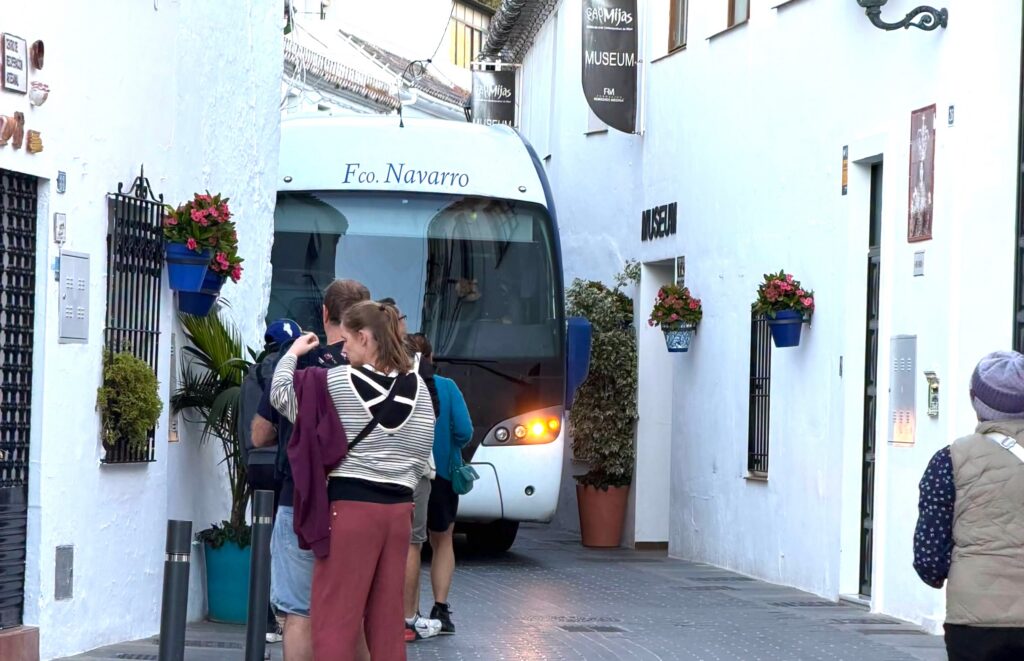
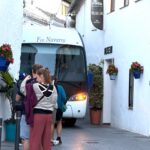
Coach stuck where it really shouldn't be in Mijas Pueblo

Coach stuck where it really shouldn’t be. Credit: FsQ

An oversized tourist bus became trapped in a narrow street of Mijas, as calls grow for better controls on organised tours.

A tourist coach became trapped in the narrow streets of Mijas Pueblo on Sunday, November 22, after attempting to negotiate Calle Malaga with a vehicle far too large for the road.

The incident is an example of a growing problem across Andalucia, especially in its pueblos blancos, where popular destinations are being included on organised coach tours despite having streets, facilities and infrastructure that were never designed for such large-scale tourism.

The coach became stuck in the historic village’s narrow streets, with little room to manoeuvre. It is understood that the vehicle may eventually have had to reverse out, although the full circumstances and any damage to nearby buildings or businesses have yet to be confirmed.

The situation could have been considerably worse had the driver continued along the route, which becomes even narrower and more difficult to navigate.

Mijas Pueblo is a major tourist destination, with its whitewashed houses, traditional streets and mountain views attracting visitors from across the World. Tourism is also the most important part of the local economy. However, the incident raises questions about how many visitors the village can accommodate at one time, particularly when large groups arrive together.

Barranco Blanco offers another warning

The problem is not just confined to Mijas Pueblo. A few kilometres down the road is Barranco Blanco, in the area of Coin, which is another example of a natural attraction that is included in tourism itineraries without visitors necessarily understanding the limitations of the location. It is even listed on Google as a “tourist attraction”. The area is famous for its natural pools and waterfalls, but it is not equipped like a conventional tourist attraction. But, this is no Disneyland.

During the summer, the forest track leading to Barranco Blanco is closed to vehicles between June 15 and October 15 for non-residents as a fire-prevention measure. Visitors must leave their vehicles at the roadside and continue on foot. Coin Town Hall’s official information about Barranco Blanco explains the seasonal restriction and recommends visiting during the week, when the area is less busy.

Facilities are also zero, with no public toilets or conventional visitor services at the site. There is not even a waste paper basket. The combination of large visitor numbers, difficult access and limited facilities raises questions about whether the location is suitable for unrestricted organised tourism.

Barranco Blanco is a beautiful natural area, but its popularity does not automatically make it suitable for everyone, certainly not at the same time.

When tourism overwhelms the places people come to see

Similar problems can be found elsewhere in Andalucia. Setenil de las Bodegas, in near Ronda, is famous for its houses built beneath enormous rock overhangs. Its narrow historic streets are popular with visitors, but large groups can create congestion and difficulties for residents and local businesses.

The official Setenil tourism website lists the village’s designated parking areas, illustrating why visitors and tour companies need to consider where they leave their vehicles before exploring the historic centre. In Mijas Pueblo, the problem is particularly noticeable when coachloads of visitors arrive together.

Local businesses depend on tourism, but a group of 30 or 40 people entering a small bar without warning can place considerable pressure on staff and other customers. For a business such as Bar Porras i Mijas Pueblo, a sudden influx of 40 tourists, just off a tour bus, can turn an ordinary working day into panic stations.

The issue is not that tourists should be discouraged from visiting. It is that organised tours need to consider whether the places they include can safely accommodate their groups. A village can be a tourist destination without being suitable for unrestricted coach access.

What can be done to control mass tourism?

The coach incident raises questions about whether tour operators should be required to check vehicle restrictions and access arrangements before bringing large groups into historic villages. Possible measures include designated coach drop-off and collection points outside narrow historic centres, restrictions on oversized vehicles, and limits on the number of organised groups entering particularly busy areas at one time.

Tour companies could also be encouraged to arrange visits with local businesses rather than bringing large groups into small establishments without warning. For natural attractions such as Barranco Blanco, clearer information about access restrictions, walking distances, facilities and seasonal conditions could help prevent visitors arriving with unrealistic expectations.

Local authorities may also need to consider whether certain destinations require visitor limits during the busiest periods. The challenge is to protect the places that make Andalucia attractive while allowing local businesses to benefit from tourism.

Mijas Pueblo’s economy depends heavily on visitors, but the village’s narrow streets and historic buildings cannot simply be adapted to accommodate unlimited numbers of coaches. The incident on Calle Málaga is a reminder that tourism needs to work for the people who live and work in these places, as well as for those who visit them.

The question is not whether Andalucia should welcome tourists, but whether it can continue to do so without allowing mass tourism to overwhelm the communities and landscapes that attract visitors in the first place.

Google News

Follow Euro Weekly News on Google News

Get breaking news from Spain, travel updates, and expat stories directly on your Google News feed.

Follow on Google News

Sign up for personalised news

Subscribe to our Euro Weekly News alerts to get the latest stories into your inbox!

By signing up, you will create a Euro Weekly News account if you don’t already have one. Review our Privacy Policy for more information about our privacy practices.


%

Nightmare As Barcelona Bus Goes Up In Flames And Fire Reaches Flats And Shopfronts

Published

on

nightmare-as-barcelona-bus-goes-up-in-flames-and-fire-reaches-flats-and-shopfronts

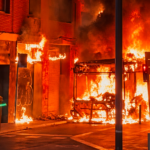
All got out safely as the fire took hold of the vehicle.Photo credit: @Javier519841452 on X

Barcelona residents are facing an anxious wait to find out whether they can safely return to their homes tonight after a bus burst into flames in the Gràcia neighbourhood, sending fire across nearby balconies and shopfronts. The driver and all 12 passengers escaped unharmed, but the blaze spread to surrounding buildings, leaving firefighters to check properties for damage and smoke contamination.

The 12-metre vehicle, which was operating on TMB route 39, caught fire at around 08:00pm on Carrer de Biada, close to the junction with Carrer de Torrent de l’Olla. The blaze destroyed the bus and spread to the façade of a building opposite, with flames reaching balconies and parts of the ground-floor premises.

Passengers escaped before the bus was engulfed

The bus was powered by compressed natural gas and the fire is believed to have started at the front of the vehicle, according to information provided by Transports Metropolitans de Barcelona (TMB). The driver managed to get everyone off the bus before the flames took hold.

There were 12 passengers on board. All got out safely, avoiding injuries as the fire took hold of the vehicle. The cause has not yet been established. The incident happened shortly before 08:00pm. Barcelona Fire Brigade received the emergency call at 8.01pm and sent ten fire crews to Carrer de Biada. Firefighters brought the blaze under control at 8.49pm.

Incendio autobús en Gracia https://t.co/5PZDlw7e0c

— Javier (@Javier519841452) November 22, 2026

Flames reached nearby balconies and businesses

Although nobody was hurt on the bus, the fire spread beyond the vehicle. The heat and flames damaged the façade of a neighbouring building, including balconies and parts of commercial premises at street level. Reports from the scene described flames rising to the level of a fourth-floor flat, illustrating how far the fire reached beyond the bus itself.

Firefighters then began checking and ventilating four buildings and two commercial premises in Carrer de Biada and Carrer de Torrent de l’Olla. The inspections were needed because the properties had been affected by flames or smoke.

Barcelona’s Urgent and Emergency Social Services were also activated in case residents needed support because of smoke inhalation. The initial information did not confirm how many people had been affected or whether anyone required medical treatment. Residents were waiting to hear when they could return to their homes, while firefighters checked for smoke damage and assessed the affected buildings.

Cause of the fire is under investigation

The bus was left completely burnt out. TMB engineers were due to inspect the vehicle on Monday to help establish what caused the fire. The use of gas-powered buses does not, on its own, establish why this particular vehicle caught fire. The exact cause remains unknown, and no explanation had been given for how the blaze began at the front of the bus.

The fire service operation ended shortly before 9pm, but checks on the affected properties continued afterwards. The inspections and ventilation work were intended to establish whether smoke had entered homes and businesses and whether the buildings were safe to use. The driver and passengers had all escaped, but some neighbours were still waiting for the all-clear. One family with a baby was advised not to return home immediately, and emergency social services were arranging alternative accommodation.

Continue Reading

%

Your Car Could Be Spying On You, And Spain’s Military Has Sounded The Alarm

Published

on

your-car-could-be-spying-on-you,-and-spain’s-military-has-sounded-the-alarm

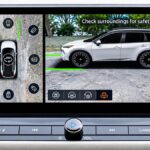
Modern vehicles use sophisticated cameras and sensors to monitor their surroundings, raising questions about what information they collect and store. Credit: Tessa Bury, CC BY 4.0

From where you sleep to where you travel, modern cars can collect a surprising amount of personal information. Now Spain’s military has raised concerns about where that information could end up.

Your car may know where you live, where you work, which shops you visit and how often you travel to certain addresses. Depending on the model, it may also collect information about your driving habits, telephone contacts and even conversations inside the vehicle.

Most motorists give little thought to this. After all, cameras, satellite navigation and voice assistants are sold as conveniences, not surveillance equipment. But a warning issued to Spain’s Armed Forces has exposed an uncomfortable truth about modern motoring.

The same technology that helps you park, navigate and make telephone calls can also collect information about your private life.

According to a report published by Moncloa.com, Spain’s Ministry of Defence has warned military personnel about the security risks posed by connected vehicles entering military installations.

The warning, reportedly circulated on November 16 by the Joint Cyberspace Command, concerns the ability of modern vehicles to collect information through cameras, microphones, GPS systems and other sensors.

The concern is that sensitive information could potentially reach outside organisations without the driver fully understanding what is being shared.

No specific manufacturer has been accused of wrongdoing, and the warning does not establish that information has been stolen. Nevertheless, it raises a question for millions of ordinary motorists.

If this technology is considered a potential security risk on military bases, what might it be revealing about the rest of us?

What exactly is your car recording about you?

Modern connected vehicles can gather considerably more information than most owners might imagine.

Depending on the manufacturer, model and activated services, this can include:

  1. Where you go. GPS and navigation systems can record journeys, destinations, parking locations and frequently visited addresses.

  2. How you drive. Some vehicles collect information about speed, braking, acceleration and driving behaviour.

  3. Who you communicate with. Connecting your smartphone may give the vehicle access to contacts, call histories and other information, depending on permissions.

  4. What happens around your car. Exterior cameras can capture pedestrians, buildings, number plates and surrounding activities.

  5. What happens inside. Vehicles equipped with microphones, interior cameras or voice assistants may process audio and information about occupants.

Not every vehicle records or stores all these details, and collecting information does not automatically mean transmitting it elsewhere.

However, some information can be shared with manufacturers and external service providers.

The European Data Protection Board’s official guidelines on connected vehicles recognise that modern cars can process location information, driving behaviour and biometric data.

The European privacy authority warns that this information can be particularly sensitive and recommends that manufacturers process data inside vehicles wherever possible, rather than routinely transferring it to external servers.

Your car could know things you would rather keep private

Imagine an ordinary week, you drive to a medical appointment on Monday, visit a particular address on Wednesday evening and spend the weekend somewhere other than your usual home. Individually, those journeys mean very little. Together, they could reveal personal routines, relationships and aspects of your private life, it is not simply a question of where you go.

Information about how you drive can also be commercially valuable. Some insurance policies already assess driving behaviour, including acceleration, braking and mileage.

The European Data Protection Board has raised concerns about how insurance companies use vehicle data, recommending safeguards to prevent unnecessary access to personal information.

This does not mean every insurer is monitoring motorists or that car manufacturers routinely sell their customers’ private information. However, modern vehicles can build remarkably detailed profiles of their owners, making it increasingly important to know who has access to that data and what they are doing with it.

Why Spain’s military is taking the threat seriously

The military warning goes considerably further than concerns about navigation history. As reported by Moncloa.com, the Joint Cyberspace Command is concerned that connected vehicles entering military installations could expose sensitive information about personnel, facilities and daily activities. A more detailed account published by El Confidencial Digital describes the practical precautions reportedly recommended to military personnel. These include disabling exterior recording functions, switching off unnecessary voice activation, avoiding the synchronisation of official telephone contacts and protecting vehicle applications with strong passwords and additional authentication.

Personnel were also reportedly advised to avoid discussing classified information inside connected vehicles. Perhaps the most striking implication is that an older vehicle without sophisticated connected technology could present fewer security risks than a modern car equipped with cameras, microphones and permanent internet connectivity.

It is a curious reversal of the modern motoring sales pitch. Manufacturers spend billions developing vehicles that can communicate with everything around them, yet in sensitive environments, a car that communicates with almost nothing may be the safer option. The distinction is important. Spain’s military has not been independently confirmed as having officially recommended older vehicles. However, the security concerns explain why such vehicles might be preferable in certain circumstances and the issue is not confined to Spain.

Reports from Germany indicate that connected vehicles have faced restrictions at sensitive military installations, while British military facilities have also examined the potential risks associated with connected vehicle technology. The concern is not necessarily that a particular car is spying on its owner. It is that a vehicle capable of collecting and transmitting information could expose details that should remain private.

Spain’s connected V16 beacons have already raised privacy questions

Concerns about vehicles sharing information are not entirely new to drivers in Spain. When connected V16 emergency warning beacons became mandatory in January 2026, questions quickly emerged about whether the devices could allow authorities to monitor motorists. As previously explained in Euro Weekly News’ report on Spain’s V16 beacon privacy rules, the government clarified how information collected through connected transport systems should be handled. Spain’s Directorate General of Traffic, the DGT, states that V16 beacons only transmit a vehicle’s location when activated during a breakdown or roadside incident. They do not continuously track drivers, record their speed or transmit personal information.

Modern connected cars, however, are considerably more sophisticated. They can process a much wider range of information through numerous onboard systems. The distinction matters, but so does the underlying principle. Motorists should know what information their vehicles collect, why it is needed and who can access it.

What can you do to stop your car sharing personal information?

European privacy legislation gives motorists rights over their personal information, although some data processing remains necessary for safety, security or essential vehicle functions.

The European Data Protection Board recommends that manufacturers provide meaningful privacy controls and allow drivers to delete personal information stored in their vehicles.

There are several practical precautions worth taking.

  1. Review the privacy settings in your vehicle’s dashboard and connected mobile application.

  2. Disable optional location tracking, data sharing and recording functions you do not use.

  3. Check what permissions you have granted when connecting your smartphone.

  4. Avoid storing sensitive addresses or unnecessary personal information in the navigation system.

  5. Delete saved journeys, contacts and personal profiles before selling, exchanging or returning a vehicle.

  6. Keep vehicle software updated and protect connected accounts with strong passwords and additional authentication where available.

Drivers can also ask manufacturers what personal information they hold and how it is being used.

Some data collection cannot be disabled because it supports essential safety features or legal requirements. However, motorists should be able to distinguish between necessary functions and optional services.

Electric cars are not the only ones collecting information

Although electric vehicles are often associated with advanced software, these privacy concerns extend to modern petrol, diesel and hybrid cars equipped with connected technology. What matters is not the engine but the vehicle’s ability to collect, store and communicate information. A modern car is increasingly a computer on wheels, complete with cameras, microphones, navigation systems and an internet connection.

For drivers, these features can make journeys safer and more convenient. But convenience comes with questions that deserve proper answers. Spain’s military has reportedly decided those questions are serious enough to warn its own personnel. Perhaps ordinary motorists should start asking them too. After all, most of us would hesitate before giving a stranger a detailed record of our movements, conversations and daily routines. Yet we may be carrying some of that information around every time we turn the ignition key and the most unsettling part is that many drivers have little idea how much their cars actually know about them.

Continue Reading

%

Terrifying Scenes In Mallorca As Fire Rips Through Formentor After Dark

Published

on

terrifying-scenes-in-mallorca-as-fire-rips-through-formentor-after-dark

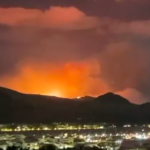
The warning covered the north and northeast of the island. Photo credit:@ibmeteo/Shutterstock

A forest fire in Formentor has prompted an emergency response in northern Mallorca, with strong winds making conditions difficult for firefighters tackling the blaze. The flames have been visible from Port de Pollença and other parts of the Bay of Pollença, raising concern among residents and people in the area.

The incident has raised concern over the potential impact on the surrounding natural area, particularly as strong winds had affected northern Mallorca earlier in the day. The first reports did not confirm any evacuations, injuries or damage to buildings, leaving the scale of the emergency unclear.

Fire crews sent to the Formentor area

Emergency service sources confirmed the outbreak that the fire had been declared in the Formentor area of Pollença. Several units from the Mallorca Fire Service and IBANAT have been dispatched to fight it. The response brought together the island’s firefighters and the regional nature institute, which is responsible for managing and protecting the Balearic Islands’ natural environment. IBANAT also plays a role in forest-fire prevention and response.

The initial information did not give the number of firefighters or vehicles involved. It did not say whether specialist aircraft were being used, or identify the precise location of the flames within the Formentor area.

🔥🌲 L’INCENDI DE FORMENTOR CONTINUA ACTIU!

🎥 Aquest vídeo a càmera ràpida mostra l’evolució de les flames, que continuen il·luminant la foscor de la nit. https://t.co/6U9gVwHbW5

— IBMeteo (@ibmeteo) November 22, 2026

Strong winds had been forecast for northern Mallorca

The outbreak came on a day when Spain’s weather agency, AEMET, had issued a yellow warning for strong winds across parts of Mallorca. The warning covered the north and northeast of the island, including Pollença, with gusts of up to 70 kilometres per hour forecast. In the Serra de Tramuntana, gusts could reach 90 kilometres per hour at higher elevations. The warning was due to remain in force until 08:00pm on Sunday. The fire was reported around half an hour later.

Wind can complicate firefighting by pushing flames towards unburned vegetation and making it harder for crews to contain a blaze. However, emergency services had not said whether the weather contributed to the outbreak or affected the operation in Formentor. AEMET had also issued a yellow warning for rough seas along parts of Mallorca’s northern and northeastern coastline, with waves of between two and three metres forecast. Those coastal warnings were also due to end at 08:00pm. 

Cause and extent of the fire still unknown

The first report, at 9.45pm, said emergency services did not yet know how extensive the fire was or which area had been affected. No cause had been established, and the fire had not been declared under control in the initial report.

For residents and visitors, the next information from the emergency services will be important in establishing whether the flames have spread, how much land has been affected and whether any further response is needed overnight. There was no confirmed information in the first reports about threats to nearby homes, road closures or restrictions on access to Formentor. Those details, along with any assessment of damage to the natural environment, remain outstanding.

Continue Reading

Trending

Copyright © 2017 Spanish Property & News