Connect with us

Cercanías

Spain’s railway chaos deepens as minimum services ignored and fresh strike threatens

Published

on

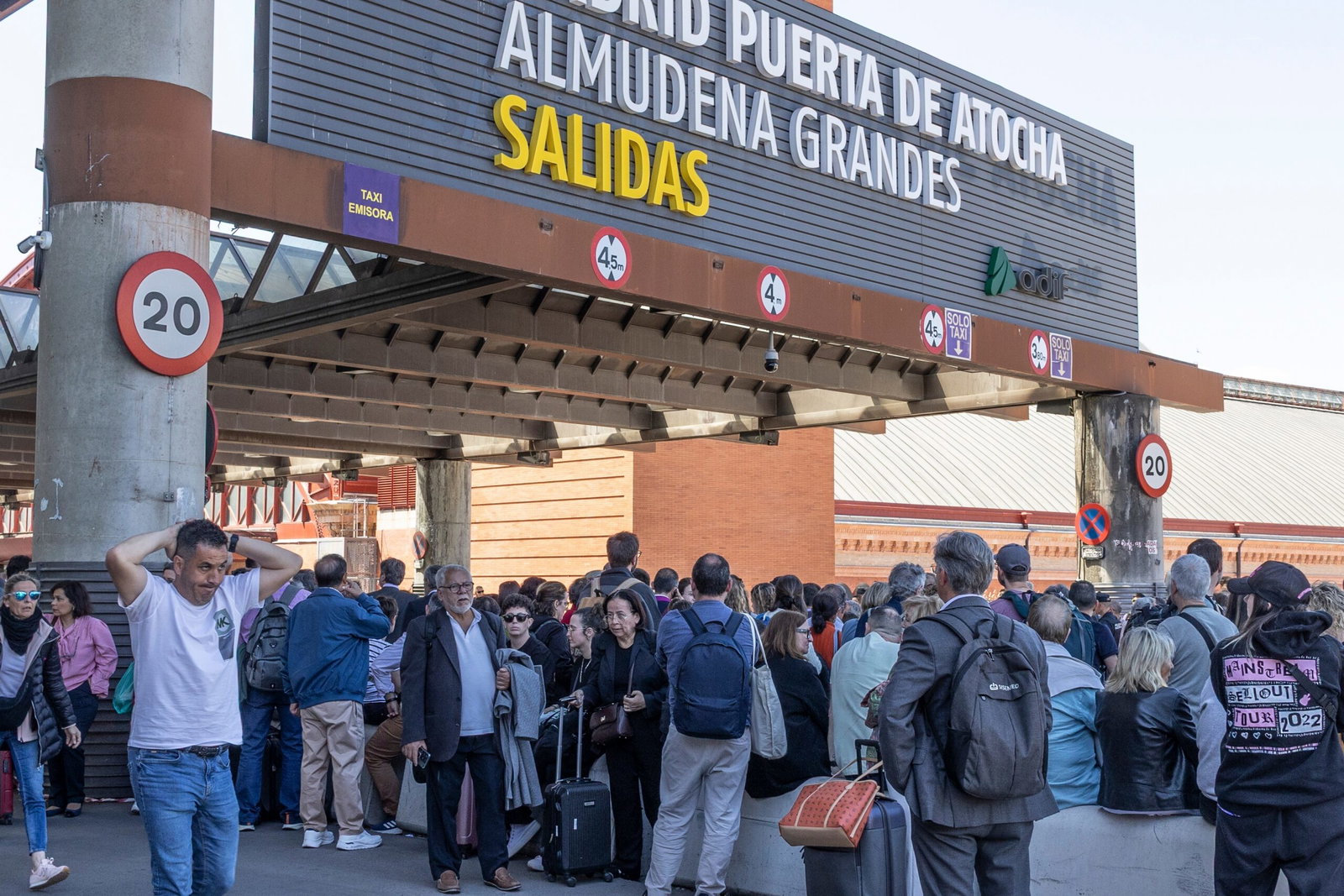
Workers are demanding stronger safety measures. Photo credit:Ekaterina Chuyko/Shutterstock

Spain’s railway passengers have spent Tuesday, November 17, facing cancelled trains, lengthy delays and packed stations, with some commuters finding that the services they were legally supposed to have simply never arrived. Madrid’s Cercanías network was almost brought to a standstill during the morning rush hour, while disruption spread to Barcelona and long-distance routes across the country.

The 24-hour strike, called by railway unions demanding stronger safety measures, has caused serious problems despite compulsory minimum services being ordered. Although some services began recovering during the afternoon, the disruption has already affected hundreds of thousands of journeys.

Madrid Cercanías almost brought to a halt

The worst disruption was in Madrid, where Renfe reported that 97.64 per cent of scheduled minimum services had been cancelled by 10.30am. The Ministry of Transport had ordered 75 per cent of normal Cercanías services to operate during peak hours, making the scale of the cancellations particularly serious for people relying on trains to get to work. By late afternoon, the situation had improved, but the network was still struggling. Renfe reported that 44 per cent of minimum services had been cancelled in Madrid after 05:00pm.

Barcelona’s Rodalies network was also badly affected, with around 41 per cent of scheduled minimum services cancelled by 6pm. The impact extended beyond the two biggest commuter networks. Renfe reported that 22.27 per cent of scheduled services across Cercanías, Rodalies, Avant and Media Distancia had been cancelled, affecting an estimated 666,275 passengers. High-speed and long-distance passengers were not spared either. Cancellations affected services operated by Renfe, Iryo and Ouigo, leaving travellers facing changes to their journeys and limited opportunities to find alternative trains.

Renfe and unions disagree over minimum services

One of the biggest disputes of the day has been over why so many trains failed to operate despite the minimum-service requirements. Renfe accused workers of failing to comply with the compulsory services ordered by the ministry. The company put overall strike participation among its eligible workforce at 16.75 per cent across the night, morning and afternoon shifts. SEMAF, the train drivers’ union, disputed Renfe’s explanation. It argued that the disruption was caused by poor management of minimum-service notifications, claiming that drivers had not been properly informed of their assigned duties.

The disagreement has left passengers caught between the two sides, with little reassurance about when their journeys would return to normal. Renfe advised customers to avoid unnecessary travel where possible and look for alternative transport. It also offered free changes and cancellations for affected tickets.

Safety concerns behind the walkout

The strike was called by several railway unions, including SEMAF, CCOO, UGT and CGT, following the fatal railway accidents at Adamuz in Córdoba and Urda in Toledo, which together claimed 115 lives. Workers are demanding stronger safety measures, better maintenance and additional staffing across the railway network. They also want commitments made during previous discussions to be fully implemented. SEMAF confirmed before the strike that industrial action would continue because important safety issues had not been definitively agreed or resolved, despite technical progress in talks with the Transport Ministry, Renfe and Adif.

That means Tuesday’s disruption may not be the end of the problem. With the safety dispute still unresolved, passengers could face further industrial action while railway workers continue pressing for changes. For the hundreds of thousands affected today, the immediate result has been a miserable day of disrupted travel. For the railway industry, the argument over how to make Spain’s trains safer is still very much on the tracks.


%

Concrete Falls From Los Boliches Railway Bridge

Published

on

concrete-falls-from-los-boliches-railway-bridge

Falling to rack and ruin in Fuengirola. Credit: EWN

Fuengirola residents demand action as railway bridge deteriorates despite repeated warnings.

Residents in Fuengirola are increasingly concerned about the condition of railway infrastructure after another incident involving falling concrete from the elevated railway structure near Los Boliches station on Tuesday, November 10.

An elderly local woman was walking close to the station when pieces of concrete reportedly began falling from the structure above her. Concerned that somebody could be seriously injured, she immediately contacted the emergency services.

Police vehicles and two fire engines arrived within minutes. Firefighters subsequently removed fallen concrete and other loose material from the structure in an attempt to reduce the danger to pedestrians and passing traffic.

Photographs taken at the scene show a substantial area of damaged concrete, with sections of reinforcing metal exposed and visible deterioration around the affected area. A hole approximately one metre long was also reported in the concrete structure supporting the railway.

The incident has once again raised questions about the maintenance of the coastal railway, particularly as the central government, who is legally responsible in this case, have reportedly been warned about the problem previously. Today, nothing but a strip of police tape warns of the danger of falling concrete.

Adif warned but concerns continue

According to information provided by another concerned resident, both Fuengirola Local Police and the town hall have notified Adif, the state-owned company responsible for Spain’s railway infrastructure, about the deterioration. However, the local Malaga government says that despite these notifications, the situation has not been properly addressed.

The latest emergency response involved firefighters removing loose material, but residents want to know whether a comprehensive structural inspection has been carried out and when permanent repairs will take place.

There were also initial concerns about whether trains should continue running while firefighters dealt with the situation. Services were reportedly allowed to continue, with Renfe ordering trains to reduce their speed when passing the affected section.

In a previous incident, a pedestrian narrowly avoided being struck when a piece of concrete fell from the elevated railway structure at Los Boliches station. Firefighters attended and Local Police recorded a formal statement.

Read the earlier report: Crumbling railway: Fuengirola pedestrian narrowly avoids falling concrete at Los Boliches Station.

The recurrence of falling concrete in the same station area, following the earlier incident, raises fresh questions about what action was taken after the first warning.

Costa del Sol infrastructure under scrutiny

Concerns about deteriorating infrastructure are not limited to Fuengirola. Several Costa del Sol mayors have been publicly demanding improvements to transport links and greater investment in infrastructure.

Mijas mayor Ana Mata recently criticised the lack of progress, saying that the area had effectively been left with infrastructure dating back to the 1980s.

Speaking at a mobility forum in Malaga on November 12, she said: “En materia de infraestructuras, nos hemos quedado en los años 80.” (In terms of infrastructure, we’re stuck in the 80s). Her comments reflected growing frustration about the pressure on roads and public transport as the population of the Costa del Sol has increased.

Estepona mayor José María García Urbano has also repeatedly called for improvements to the A-7, including better access arrangements and investment in the busy coastal road.

For residents, the concern is increasingly about whether essential infrastructure is being maintained sufficiently, rather than simply whether new projects are being delivered. Many locals now complain how it looks like it is all going to “rack and ruin.”

Railway disasters increase public concern

The latest Fuengirola incident comes at a particularly sensitive time for Spain’s railway network. The January Adamuz disaster, which claimed 46 lives, and the October 28 collision near Urda, which killed 69 people, have shaken public confidence in railway safety.

The consequences have extended to the highest levels of the Transport Ministry. Óscar Puente resigned as Transport Minister on November 3, accepting political responsibility for the Urda disaster. Adif president Luis Pedro Marco de la Peña subsequently resigned. The tragedies have also prompted renewed demands from railway workers for greater investment in maintenance and improved safety procedures.

Although there is no suggestion that the damage at Los Boliches is connected to either railway disaster, the latest incident has added to public anxiety about the condition of the country’s transport infrastructure.

For the resident who raised the alarm in Fuengirola, the concern is straightforward: people should not have to walk beneath a railway structure fearing that pieces of concrete could fall on them.

With previous warnings reportedly already passed to Adif, residents now want answers about inspections, repairs and who is ultimately responsible for ensuring that the structure is safe.

How many more warnings will it take before something is done?

Continue Reading

%

Another Day Of Commuter Train Chaos

Published

on

another-day-of-commuter-train-chaos

Cercanias commuter train broken down again on the Fuengirola line.

Repeated breakdowns raise questions over investment (or a lack of), reliability and whether a change of government could make a difference. Costa del Sol citizens are at the end of their tether.

Passengers travelling between Malaga and Fuengirola faced another day of disruption and waiting on Thursday, November 5, after a technical fault on a Cercanías (commuter) train caused widespread delays, cancellations and overcrowding.

The latest problems affected the C1 line, with passengers reporting waits of up to an hour at Plaza Mayor. Some trains were running late, while passengers reported smoke and an unusual smell around the wheels of a train at La Colina in Torremolinos. Some services were cancelled and others required passengers to change trains.

According to Málaga Hoy’s report on the latest Cercanías disruption, the problems also affected the C2 service between Malaga and Alora.

A difficult week for Malaga commuters

Thursday’s disruption followed three consecutive days of problems reported across the network, with delays, cancelled services and compulsory changes of train.

On Sunday, November 1, around 20 passengers were left stranded after a technical failure stopped the last train travelling towards Fuengirola. Renfe eventually arranged taxis to take them home. EWN previously reported the late-night breakdown which left Malaga passengers stranded.

The following night, a man died after being struck by a train near Torreblanca, forcing the suspension of services between Benalmadena and Fuengirola. This was a separate and tragic incident, rather than a mechanical failure. Even more operational problems followed on Tuesday and Wednesday, before Thursday’s technical fault brought another round of passenger complaints.

Spanish newspaper El Español counted 37 service disruption notices on Thursday alone, covering delays, cancellations, partial interruptions and a compulsory passenger transfer. Renfe attributed the latest C1 problems to a technical fault affecting one train, while the C2 experienced separate difficulties.

Why the Fuengirola railway is significant

The 32-kilometre C1 connects Malaga city with the airport, Torremolinos, Benalmadena and Fuengirola. It is an essential transport link for residents commuting to work, tourists travelling between resorts and airport passengers avoiding increasingly congested roads.

Renfe’s 2025 passenger figures show that Malaga’s two Cercanías lines carried 15.54 million passengers last year, with the bulk of demand concentrated on the C1. At some points, passenger numbers reach 150 per cent of available seating capacity.

Renfe plans to invest €66.7 million in seven new high-capacity trains for the Fuengirola route, expected to enter service from 2028. A further €40 million is earmarked for a new maintenance workshop.

Meanwhile, Adif has been working on a project to add 2.8 kilometres of double track between Malaga Airport and Campamento Benitez, helping to address infrastructure limitations that restrict how frequently trains can run.

Could we do with a change?

Responsibility for Spain’s state railway network ultimately falls on the national government through the Transport Ministry, Adif and Renfe. A change of administration in Madrid could therefore bring different investment priorities, management decisions and expectations for service improvements.

However, replacing the government would not automatically solve the railway’s problems. The infrastructure limitations, maintenance requirements and growing passenger numbers would still need to be addressed. For thousands of people who depend on the C1 every day, the promised new trains and infrastructure improvements offer some hope, but they will not arrive overnight.

Whether under the present administration or a future government, the question remains the same: how can a railway serving one of Spain’s busiest coastal areas provide a service passengers can actually rely on?

Continue Reading

Cercanías

Train trouble: Malaga passengers left stranded after late-night breakdown

Published

on

By

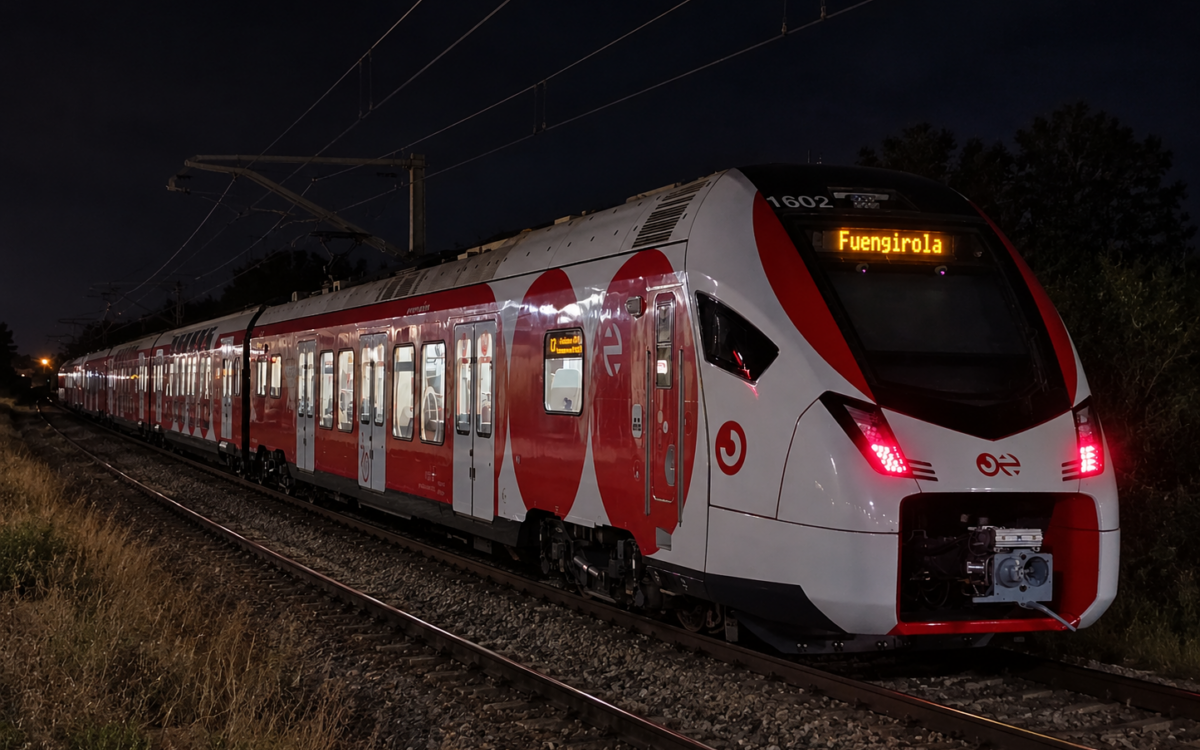
Passengers travelling on the last Cercanias commuter train from Malaga to Fuengirola were left stranded late on Sunday night, November 1, after another technical failure brought the service to a halt.

Around 20 people were affected when the C-1 commuter train stopped at Torremolinos station at approximately 11.53pm, leaving passengers wondering how they would get home. According to reports, the train developed a technical problem accompanied by an unusual noise, preventing it from continuing its journey.

Among those affected were workers returning home after their shifts, some of whom faced a lengthy wait before alternative transport was arranged. Renfe eventually organised taxis to take passengers to their destinations, but the disruption meant some did not reach Fuengirola until around 2am.

There were also claims that two young passengers had been left behind, although Renfe disputed this, insisting that nobody had been abandoned and that alternative transport had been provided for everyone.

How much longer must Cercanias passengers put up with this?

For regular users of Malaga’s C-1 line, another breakdown raises familiar questions about the reliability of a railway service that thousands depend on every day. The route connects Malaga city with the airport, Torremolinos, Benalmadena and Fuengirola, making it particularly important for commuters, airport workers and residents without access to a car. Passengers can check the official Malaga Cercanias service information for travel updates.

Yet technical problems, cancellations and unexpected delays have repeatedly caused frustration for passengers. In April, another breakdown on Malaga’s C-1 commuter line left passengers stranded, with some deciding to walk instead.

Previous incidents have included trains stopping for extended periods, services being cancelled at short notice and problems with the overhead electrical supply affecting journeys between Benalmadena and Fuengirola. Earlier this year, dozens of trains were cancelled across Malaga’s C-1 and C-2 commuter lines.

Sunday night’s incident was particularly inconvenient because it involved the last service of the evening, leaving passengers with fewer options for getting home. Renfe said services were operating normally on Monday morning, November 2, but that will offer little reassurance to those who spent hours trying to complete what should have been a straightforward journey.

The railway is also facing major planned disruption, with a six-month closure of part of the C-1 line expected in the future for infrastructure works.

Renfe has announced plans for seven new higher-capacity trains for the Malaga commuter network, due from 2028. However, passengers will have to wait to see whether this investment delivers the improvements they need.

For residents and regular commuters, the question is becoming increasingly difficult to ignore: when will Malaga’s Cercanias railway receive the attention it needs to provide a dependable service?

How many more breakdowns, cancellations and stranded passengers will it take before something changes?

Continue Reading

Trending

Copyright © 2017 Spanish Property & News