
China
US Preparing To Raise Tariffs On China, EU And A Dozen Other Countries











Asia
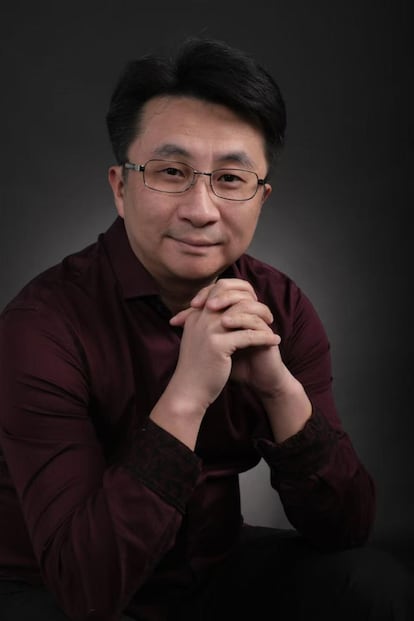
Jian Tang, Robot Maker: ‘The First Things They Will Do Will Be To Pick Up Objects And Run Washing Machines’

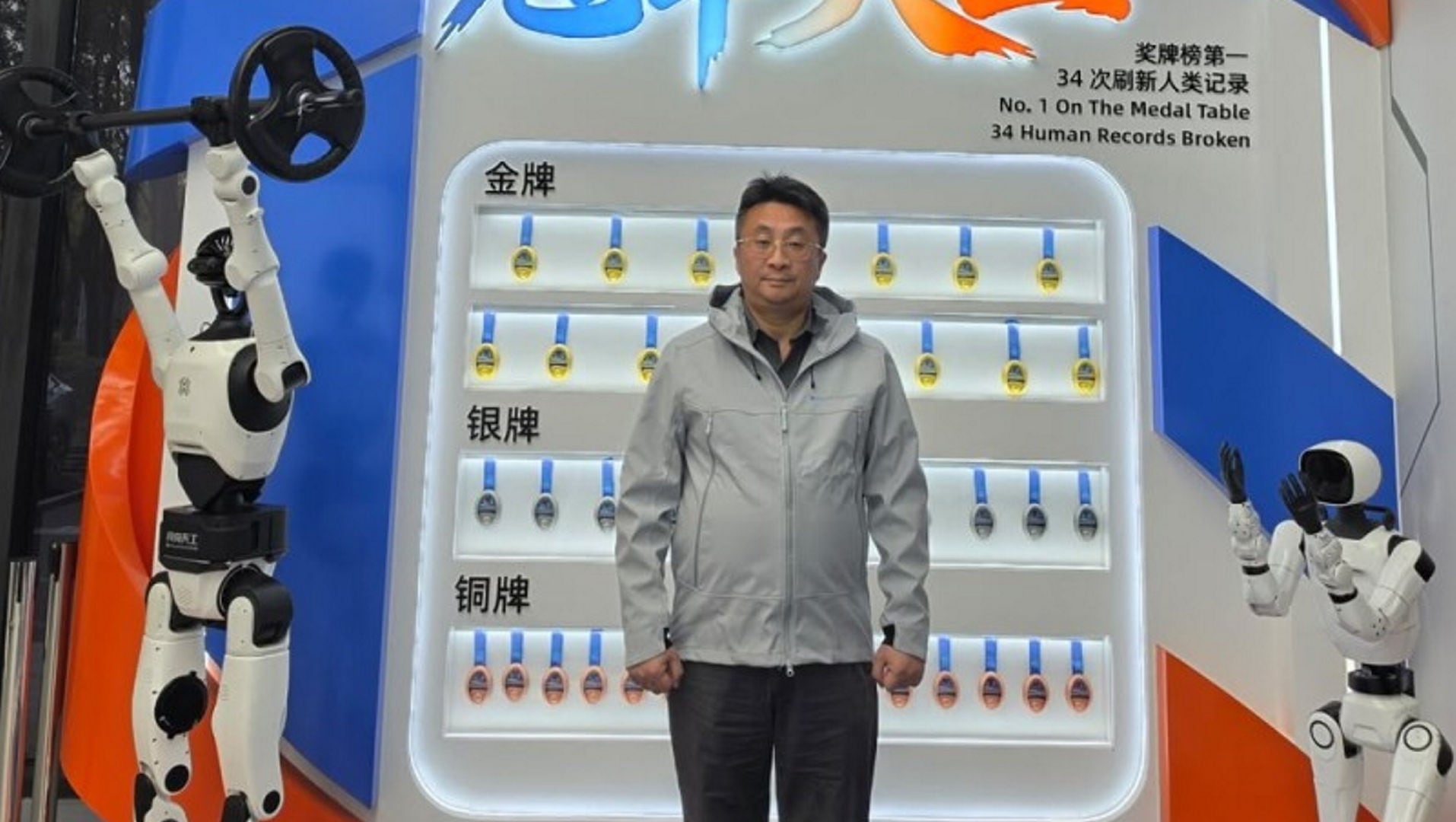
Humanoid robots are already running half marathons: “It was a test to check the robot’s stability, reliability and endurance, as well as the embodied intelligence algorithms it runs,” says Jian Tang, chief technology officer (CTO) of the Chinese company X-Humanoid, one of the businesses behind that event in 2025. Robots also perform spectacular dances that go viral: “They are a real business. You can earn some money from commercial shows, but that should not be the main focus of the whole industry,” Jian Tang adds.
The first deployments are likely to be in ‘dangerous, dirty or dull’ environments, such as a hazardous materials lab, a logistics warehouse or at an earthquake. But the big step for these robots will be to win over homes and household chores. There’s still some way to go, Jian Tang says by videoconference from his office in Beijing. This Monday he is participating in the China-Spain Green Energy Forum in Madrid.
Question. What is the biggest misconception about humanoid robots?
Answer. People see a demonstration of a robot cooking a very complicated dish and start to believe: ‘This is very close, we’re almost there. Maybe next year I can buy one for my home.’ But that’s not the case. Doing a demo is easy because you collect data from the specific environment where the robot is going to do the demonstration. You collect a huge amount of data. But if you put it in thousands of homes, it would most likely not be able to repeat that performance. That’s the hardest part. When it encounters an object it has never seen before or a new environment, it can get stuck or fail.
Q. But is it already capable of, for example, finding a clove of garlic in the refrigerator and chopping it into pieces?
A. A small object shouldn’t be a problem. They can do precision tasks. If you collect thousands of trajectories, we should be able to do it. But if you take it to a new home, then no.
Q. In how many years?
A. In nine years it may be able to do perhaps not everything, but 90% of tasks.
Q. And that 10%?
A. In other words, it will do almost everything, but its success rate will not always be 100%.
Q. Could you ask it to empty an entire closet to find a lost sock?
A. Of course, exactly.
Q. That’s crazy.
A. A robot can devote more time than anyone and find that sock. It can use a search algorithm to scan the whole room.
Q. Will there be anything before those nine years?
A. Within four years products should start to appear that will already be true domestic service robots. Their functions may be limited: they will likely be able to pick up a glass of water and bring it, or perform some simple task. Later they will gain more and more functions. In the end, within nine years, it will be a true home service robot.
Q. What will the first tasks be?
A. We’re fairly sure the first thing will be picking up and placing objects.
Q. Also a glass or bottle, which can break?
A. I don’t think that will be a problem. Then, with the help of a washing machine, it should be able to put clothes in, start it, take the clothes out and fold them.
Q. Will that be in five years?
A. Yes. And also housecleaning tasks.
Q. And will they cost the same as a car?
A. About the same as a car. When the scale becomes larger, the price will fall. The idea is around $20,000 [€18,200].
Q. What is slowing progress down?
A. The AI model. We are waiting for a leap—when the whole industry reaches its ‘ChatGPT moment’, then we’ll be ready to mass-produce domestic service robots.
Q. Is it a software issue?
A. It’s purely a software issue. Right now everyone is working on what is called embodied general intelligence. We are trying to create a general model that can do almost everything. The main bottleneck is that the generalization capability of the AI model is not good enough.
Q. That’s why remote control of robots is a common resource today.
A. If they have remote control, they can do almost anything. The problem is generalization capacity, because the data you train your AI model on is limited. When the robot enters a new home, it often sees objects it has never seen before—a mug, a pen it doesn’t recognize—and it may not be able to manipulate them. But in the future, if the AI model of the physical world has a generalization ability equivalent to ChatGPT or Claude in the digital world, then it will be able to manipulate anything, even if it has not seen it before.
Q. Haven’t you considered making robots that are not humanoid?
A. The logic is that it should do what a human does. That’s the basic logic behind making a bipedal humanoid robot. But in some scenarios a wheeled robot is enough. For example, in a factory a wheeled robot is better: it’s faster and more precise.
Q. Why is China so far ahead in these robots?
A. China is ahead in hardware and in everything related to locomotion. As for the embodied general intelligence model, I think China and the United States are at the same level. No one has yet achieved that major breakthrough. China leads in hardware because the whole country has a practically complete and very wide supply chain.
Q. What will the relationship between a robot and its owners be like?
A. It will become a member of your family. That’s why we want it to look human, because you’ll feel more comfortable. You’ll have in front of you something that is at least partly human, instead of an appliance or a machine.
Q. Does that make things easier?
A. I used to work in appliances. We developed an AI model for the air conditioner so you could talk to it and ask it to lower or raise the temperature. But normally people only want to give the air conditioner a couple of commands. They don’t want to be talking to the air conditioner for ten minutes. It’s because of its appearance, which makes you think it’s just an appliance. But if a robot works for you for a long time, you may start to treat it as another family member.
Q. And will they last like a car?
A. Yes, their useful life will get longer, like a car. At least five years should not be a problem.
Q. Won’t it be like having someone living in your home watching you in your private life?
A. I understand the concern. One of the efforts we’re making is to have the robot do most of its computing on board rather than in the cloud. Especially vision-related tasks we want to process in the robot’s body. This is called edge computing. Or on a device in your home, a small server you can install, so not all data goes to the cloud. We try to transmit fewer data to the cloud rather than virtually everything.
Q. How fragile are they?
A. They are much more resilient than last year. When they fall, they get up most of the time: we tested them, we threw them to the ground 100 times and they kept getting up. Of course it depends on how they fall, just like a person.
Q. Are the robots we’ll have at home like the ones we see now?
A. No. They will evolve a lot. Companies are working on electronic skins.
Q. Robots with skin would be terrible.
A. No, it’s not like human skin. It’s a kind of soft material placed over the robot’s body. With a very light, very gentle touch the robot stops for safety. Also, it makes the robot look more human.
Q. But will it have a head, five fingers?
A. Yes. For the home, it should look exactly like a human, or increasingly like a human, so our customers feel comfortable.
Sign up for our weekly newsletter to get more English-language news coverage from EL PAÍS USA Edition
China
The Chinese Women Writing Gay Love Stories: How ‘danmei’ Became A Global Phenomenon Despite Censorship


In China, stories about romantic relationships between two men are written and consumed primarily by women. Their popularity has grown steadily, extending well beyond China to Europe and the United States. The literary genre known as danmei (roughly, “addicted to beauty”) has flourished over the past decade on the country’s digital platforms and has fueled a thriving industry of screen adaptations.
It has also attracted the attention of censors. Authorities have detained and fined authors, most of whom publish under pseudonyms. Even so, these novels have found readers abroad, first through fan translations circulated online and later through commercial editions.
“To explain it, I usually say they are very diverse novels whose common denominator is a romance between two men,” says Ona Pujol, who heads the dedicated danmei imprint launched by Spanish publisher Norma in 2024. The publisher now releases two new titles a month.
The roots of danmei can be traced to manga about romantic relationships between male characters that Japanese women began publishing for teenage girls in the 1970s. Those stories helped give rise to what is now known as the Boys’ Love (BL) genre. Its spread to China in the 1990s, following the country’s period of economic opening, and the subsequent expansion of the internet enabled local fans to begin writing and sharing stories of their own.
Xu Ren, a 25-year-old author who prefers to use a pseudonym, began as a reader of fan fiction centered on South Korean K-pop idols. When she reached university, she decided to try her hand at writing her own novel, “one of those fairly clichéd toxic-love stories,” she admits. But it was enough to secure a contract with an online platform and start earning some money, which in turn gave her the freedom to experiment with more original plots.

In China, danmei has absorbed the worlds and conventions of popular domestic literature: martial-arts adventures, intrigues set in imperial courts, and Taoist-inspired fantasy, where characters seek immortality through practices of spiritual cultivation. But the genre also encompasses crime fiction and stories set in schools.
“It spans every genre,” says Pujol. “And many formats. They often start as long novel sagas, but have begun to be adapted into manhua, the Chinese manga, into animated or live-action series, and even into audio dramas, with CDs that offer extra chapters.”
Norma’s own catalogue illustrates that diversity: contemporary adult thrillers such as Silent Reading by Priest; slice-of-life stories such as Antidote by Wu Zhe; or the historical fantasy drama Grandmaster of Demonic Cultivation by Mo Xiang Tong Xiu, the bestselling author whose work, according to Pujol, helped put the phenomenon on the global map.
Readers, most of them women between 18 and 40 years old, can find everything from explicit sex scenes to more understated romances, stories driven by humor or melancholy, and books that are often produced with great care, in keeping with the idea of “indulgence in beauty.”
Pujol, however, points to one important difference: “It’s not like the romance fiction we’re used to. There’s a lot of yearning — that is, a long build-up. The two end up together, but first they go through a whole journey to get there.”

The serialized nature of publication has fostered a close relationship between authors and readers. Yu, a 26-year-old fan, participates in a community on Weibo (similar to X, which is censored in China) dedicated to one particular writer: members discuss plotlines, share illustrations and fan fiction based on the original work, and celebrate when a story performs well in the platform’s rankings. “We think [the author] is very capable and we’d like to be like her,” she says.
Yu has watched danmei evolve over the 13 years she has been reading it. She recalls that the stories she consumed as a teenager “were very melodramatic,” marked by forbidden love and the suffering of their protagonists. Although same-sex marriage is not legal in China and the authorities have tightened restrictions on LGBTQ+ activism and support networks, Yu believes homosexuality is becoming more accepted among younger generations. In her view, that shift has also influenced these novels: “Many works have become stories in which the two protagonists simply happen to be men. Their relationship develops in a healthy way, and the most important thing is that the plot is compelling.”
Qi Zhang, an academic specializing in danmei and its reader communities, argues that the genre “is necessarily rooted in female imagination and female reading practices,” although it also includes male authors and readers. At the same time, anonymity makes it impossible to know with certainty who is really behind most of the names that appear on book covers. The situation is even less transparent given that publishers such as Norma have no direct relationship with the authors themselves, managing their releases through a Taiwanese rights agency. The partnership began when another editor at the Spanish publishing house, Óscar Valiente, got in touch years ago, acting on a hunch: “This is going to be huge.”
Qi also challenges the common assumption that danmei readers are predominantly heterosexual women. “Queer people make up a fairly significant sector of the danmei reading community,” she notes.
The researcher also disputes the idea that the genre exists solely as a realm of fantasy and escapism. Instead, she sees “a very strong desire to engage with real-life issues.” “Given that China does not have a solid tradition of queer writing, many danmei works have deliberately taken on the task of realistically portraying the difficulties faced by this community,” she adds.

For novelist Xu Ren, writing danmei over the years has raised questions about the place of women in her stories. “I wondered whether I was somehow giving up my right to write about women,” she says.
She recalls an episode in which readers criticized her for giving an unusually prominent role to a female character, one who competed with the protagonists and faced prejudice against women athletes. Looking back, Xu believes that conflict interrupted the sense of escapism her readers were seeking. She understands their reaction, though she is uncomfortable with the idea that authors must justify their creative choices.
“If we turn everything into an ideological issue and start labeling and condemning authors, I think we could end up harming women’s literary creativity even more,” she argues.
Censorship has also shaped the evolution of the genre. Qi Zhang points to the government’s 2014 anti-pornography campaign as a turning point. The platform Jinjiang renamed its danmei section chun’ai (“pure love”) and restricted sexual content. According to the researcher, these revised versions and new labels have made the works easier to circulate.
Yet the pressure has not disappeared. In 2024, more than 50 people publishing on Haitang, an erotic-fiction platform hosted in Taiwan, were detained or fined by police, according to reports from their lawyers at the time. The most high-profile case was that of Yun Jian, who was sentenced to four and a half years in prison for publishing works deemed obscene. She had earned about 1.85 million yuan ($274,700) from 37 novels.
In 2025, Reuters documented another wave of arrests of dozens of writers who used the same platform. The operations were carried out under regulations prohibiting the production and distribution of material deemed obscene; some of those investigated had earned only a few thousand yuan.
The reports have led Xu to avoid printing and selling her work through unofficial channels and to reconsider where she publishes. She hopes to pursue a career in education and fears that if her identity as an author were exposed (the pseudonym she uses for this interview is not the one she publishes under), her professional future could be jeopardized. She currently lives outside China and has even considered not returning if that connection were ever established.
“I’m very worried that my activity as a writer could destabilize and bring down the order I’ve built in my personal life,” she admits.
That mistrust extends even to her relationships with other creators: “We all have some fear that someone could betray us.”
Sign up for our weekly newsletter to get more English-language news coverage from EL PAÍS USA Edition

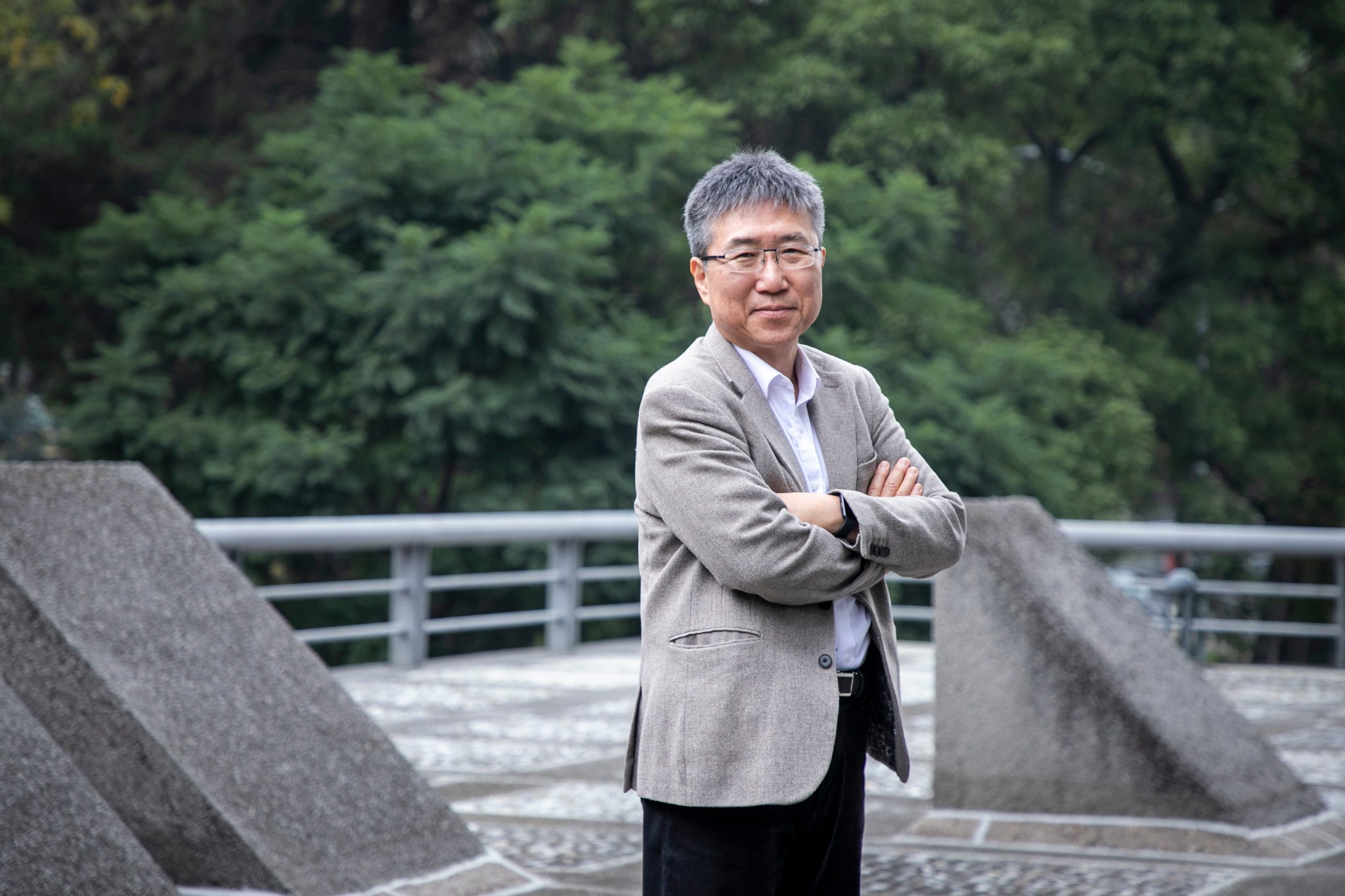
The interest in hearing the ideas of Ha-Joon Chang, 63, was evident as the auditorium of the School of Economics at the National Autonomous University of Mexico (UNAM) filled up. The Korean economist, who has a long career in British academia and is a professor at the School of Oriental and African Studies at the University of London, traveled to Mexico to speak about the global economic crossroads and the need to tighten industrial policy in developing countries. Students knew his reputation as a heterodox thinker and were eager for less conventional ideas.
Chang’s bibliography includes the bestseller 23 Things They Don’t Tell You About Capitalism, a book that challenged classical schools of economics more than a decade ago and sought to demystify neoliberalism. In his latest book, Edible Economics: A Hungry Economist Explains the World, he declares himself a fan of Mexican chocolate and says that whenever he visits the country he always eats at least one plate of chicken in mole poblano, one of his favorite dishes of Mexican cuisine. Chang has visited Mexico more than a dozen times, he tells EL PAÍS in an interview, and has studied its evolution since it entered free trade more than 30 years ago.
Question. Your talks in Mexico focus on the role of the state in countries’ growth. What is your position on this?
Answer. I have been a longtime advocate for a more active role of the state in economic development. When I began my research as a graduate student in the late 1980s, that was a very unpopular view. But if you look at the economic history of capitalism, there’s really no country that has become rich on the basis of free trade and free market policy alone. We were told that the reason Britain became the first global empire and the United States became so prosperous was their free-trade and free-market policies. But I have shown in many of my works, especially in my book titled Kicking Away the Ladder, that rich countries used all kinds of interventionist policies: trade protection subsidies, regulation of foreign investment that included things like local content requirements, obligations that foreign companies hiring in their country employ local workers or invest in research and development. They developed their economies on the basis of these policies and, after getting rich, said ‘let’s all have free trade and free markets.’ Which, at that point, benefits them, because it means others will open their markets to their exports while they put restrictions on what other countries can do. It’s like someone who uses a ladder to climb to the top and then kicks it away so others can’t follow.Q. That seems to be the case between Mexico and the United States.
A. Yes, absolutely.
Q. What can Mexico do, immersed in a free trade agreement that it keeps renegotiating with the United States?
A. Free trade between countries with similar development levels is good because they stimulate each other, but when it’s between rich and poor countries, trade benefits the rich countries much more than the poor countries. If you have free trade between two countries with very different technological levels, it means the poorer country cannot develop its own enterprises. When Mexico signed NAFTA in 1995, it was basically signing a promise that its level of technology and businesses would remain frozen. There could be some incremental development, but it wasn’t going to develop an entire domestic computing or automotive industry. Everything became work for foreign companies, mainly U.S. ones, that came to set up factories here. The wisdom of that agreement was highly questionable. Not everything was bad. Despite China’s rise as a manufacturing superpower, Mexico has been able to maintain the level of industrialization it had in the 1980s. The underlying problem is that Mexico integrated its economy with the United States on the assumption that it would be the most powerful economy in the world forever, but now the United States is declining rapidly. The treaty will remain, but there are other sectors where Mexico should work with Koreans, Japanese or even Chinese, instead of just the Americans. Build possible collaborative relationships with Brazil, Indonesia, Turkey and other powerful developing countries, rather than trying to find its space within this trade agreement (USMCA). Mexico has to restructure its relationship with the United States, otherwise it will sink with it.
Q. Is now a good time to approach China?
A. The short answer is yes, but I think that’s the wrong way to look at it. You need a more pragmatic approach. The country is not growing well, it is struggling to create jobs, it is having difficulty upgrading the economy—partly due to its own inability to invest and innovate, but also because of USMCA’s constraints. So my suggestion is it has to think in practical terms, forget about whether it should ally with Asia, the United States or Europe, just focus on your own problems and see what allies are best to help solve each one.
Q. That’s what Canada is doing.
A. At least in some sectors. The goal is clear: you don’t want to be too dependent on anyone. Want to modernize your industries? Choose strategic industries. And then, for those strategic industries, think about who you should work with—I bet that seven times out of ten it won’t be the Americans.
Q. What can Mexico learn from Korea’s case and the transformation of its automotive industry?
A. Like Mexicans, we depended on foreign technologies. But the difference was that in Korea, once the automotive industry was established, the government did everything possible to ensure companies developed and ultimately controlled their technologies. Otherwise, they would only be doing screwdriver work. Mexico took a very different route by saying it would never aspire to create its own Toyota, but would become the most efficient producer of the foreign models brought in. In fact, Mexico has some of the most productive auto assembly plants in the world. So now Mexico is stuck and must seriously consider whether, given all the capabilities it has accumulated in the automotive industry, there is any way to, for example, create its own automobiles. Maybe the conclusion is that it cannot.
Q. You argue that the public and private sectors must work together for economic development. How can this be implemented in Latin America when both sides distrust one another?
A. There are many successful cases of industrial development in Latin America where there was cooperation between the private and public sectors. The argument that the state cannot be trusted is basically invented by businessmen who do not want state interference. But it also means that, in exchange for no interference, they are not receiving any support. So a new bargain must be forged, so to speak, between the government and the private sector. The government should approach the private sector and say, ‘please invest in these industries. These are strategic sectors. We will give you all the support you need in financing, training, research, etc. But you must deliver results.’ That needs to be recreated, because if the government continues to see the private sector as thieves, and the private sector continues to see the government as robbers, everyone loses.
Q. What do you suggest for Latin American economies with stagnating growth?
A. Latin American countries achieved a lot in the past. I don’t know why they have become so unambitious. In 1970, Brazil produced more manufactured goods than China, Korea, Thailand and Malaysia combined. It was a major industrial success. Mexico’s income was three to five times higher than South Korea’s until the 1970s. It is their elites who lack ambition. They only want an easy life; they prefer an overvalued currency, which makes exports difficult because it cheapens the annual shopping trip to Miami. There is also the free-market ideology that has become so dominant in Latin America in recent decades. Latin Americans are the most pro–free-market people in the world, more so than Americans and the British.
Q. Any reflections on this visit to Mexico?
A. I was invited to give a lecture in a room full of government officials. I think in Mexico there is recognition that things cannot continue as they have for the past four decades. Alternatives are still being sought and there is at least recognition that they need to redirect their economy and society. Hopefully they will find a good strategy. It will be a long-term process, probably not something elected politicians with four- or six-year terms want to hear, but ultimately the most important thing is not which party or which president is in power, but whether a new social consensus can be built. Some still want to cling to the United States, others want to work with China, and others want to do something else—if they don’t reach an agreement, energy will dissipate.
Sign up for our weekly newsletter to get more English-language news coverage from EL PAÍS USA Edition

US Preparing To Raise Tariffs On China, EU And A Dozen Other Countries

Anthropic Se Desploma Más Del 11% Y Pierde El Precio De La Salida A Bolsa Cuatro Días Después De Debutar

Estados Unidos Ultima Nuevos Aranceles A China, La UE Y Otra Docena De Países


-

 New Developments3 weeks ago
Luxury Villas For Sale, Estepona – ProjectL1
-

 New Developments3 weeks ago
The San Roque Club – Townhouses For Sale
-

 New Developments4 weeks ago
How To Get A Tourist Rental Licence In Andalusia (Spain) – Step-By-Step Guide 2025
-
Age Concern Marbella - San Pedro4 weeks ago
Halloween lunch sells out as 51 join Marbella get-together
-

 %4 weeks ago
Spain Orders Replacement Of Eight Million Gas Meters: New Rules, Costs And Deadlines
-
costa blanca live music3 weeks ago
Beatles tribute: The Liverpool Band returns to Orihuela Costa
-
countryside3 weeks ago
Rural revival: Five Almeria villages make moving inland easier and more enticing
-

 New Developments3 weeks ago
Stylish 3-Bedroom Apartment With Panoramic Sea Views – Benalmádena