
Donald Trump
Trump’s ICE Is Reviving Decades-Old Cases To Deport Green Card Holders

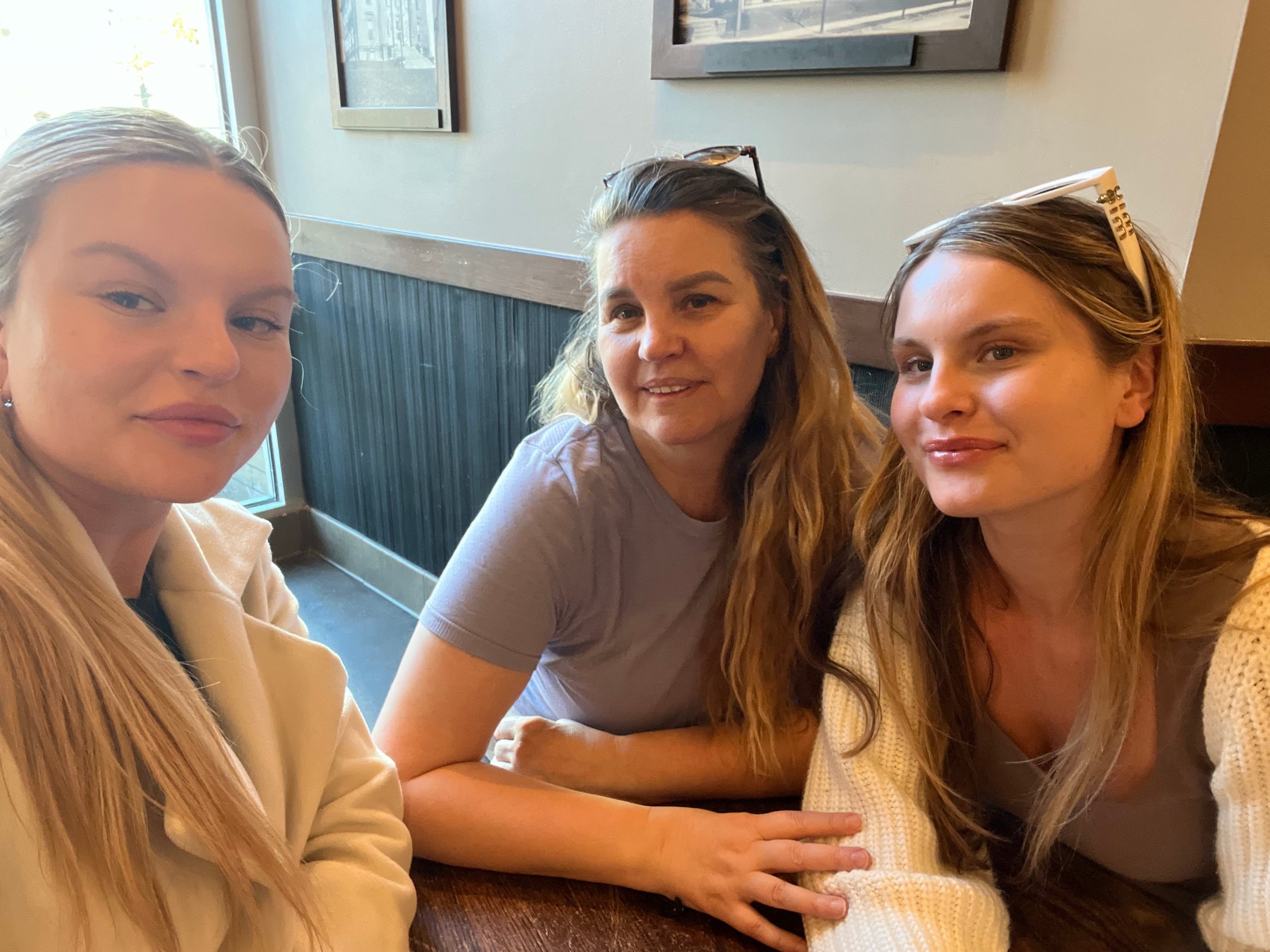
Beata Siemionkowicz, a 57-year-old Polish citizen, was released on bail on November 10 from the Campbell County Detention Center in Kentucky, one of the facilities used by U.S. Immigration and Customs Enforcement (ICE) to hold detainees. She had spent 15 months in custody over two minor offenses committed more than a decade ago. Siemionkowicz does not fit the profile of the migrants ICE claims to target: she is neither undocumented nor a dangerous criminal. Yet she faces deportation.
She arrived in the United States from Poland in the mid-1990s and obtained her green card more than 20 years ago. In August 2025, while working in the garden of her daughter’s home in Illinois, several masked men appeared and took her into custody. They were ICE agents.
The immigration agency targeted her over two petty theft convictions dating back to 2005 and 2011, according to her attorney, Hirsh Joshi, of the American Civil Liberties Union (ACLU) in Illinois. “We are not talking about someone who is among the worst of the worst. We are talking about an individual who has maintained an impeccable record since 2011 and has made significant contributions to our society,” Joshi says by phone.
Siemionkowicz’s case is not unique. Since Donald Trump began his second term in January 2025, the number of lawful permanent residents detained by ICE has grown. Many have lived in the United States for decades, worked, raised U.S.-born children and felt secure in the legal status granted by their green cards, which they have routinely renewed every 10 years with little reason for concern.
The green card is the strongest protection available to noncitizen immigrants against deportation. Now, however, ICE has begun dusting off minor offenses from years or even decades ago, often without any new criminal charges, to arrest lawful permanent residents and place them in deportation proceedings.
“The government has been aware of these issues for many years, and in the past it decided not to take action against them. Now it has changed its mind, even though nothing has changed except for the administration,” says John Gihon, an immigration attorney from Florida. At his law firm, the number of detained clients holding green cards has increased by 50% this year. The infractions involved can be minor, such as possessing cannabis 20 years ago or mistakenly voting without being eligible to do so.
Before Trump’s return to office, immigration detention was generally reserved for people considered a danger to the community or a flight risk. “When it comes to someone who has been a lawful permanent resident for a long time, who has never been convicted of any crime, and who is scheduled to appear in court, there seems to be no reason to keep them in custody, since they pose no danger and there is no risk of them fleeing. Nevertheless, the government’s standard practice now is to detain them,” says Gihon.

Siemionkowicz had no intention of fleeing. Her family, including her two daughters, are U.S. citizens. Nevertheless, she spent 15 months confined in a detention center where, according to accounts from former detainees, conditions are inhumane. She herself criticized the facility’s unsanitary conditions and said it was plagued by rodent infestations.
In both of the cases that led to her arrest, Siemionkowicz pleaded guilty. The first incident occurred in 2005, shortly after she had given birth to her younger daughter. She was in a supermarket when her husband, following a public altercation, left the store with the child. Siemionkowicz hurried after him carrying a bag of groceries she had not paid for. The second incident took place in 2011. According to her attorney, she was being financially controlled by her husband, who denied her access to money despite the fact that she worked. She went to a local store and took clothing for her young daughters. Both cases were resolved with the payment of a fine.
In the years that followed, she put the incidents behind her, complied with her immigration obligations, raised her two daughters, now 22 and 26, and worked caring for people in hospice. She hopes to return to that work once she has recovered from the trauma of spending more than a year in detention.
“The federal government punished her for those two cases much more severely than she would have been punished had the state of Illinois decided to imprison her at the time,” says Joshi. “When we add to this the context of domestic violence we’re discussing, it’s really hard to understand why the government would act this way.”
In response to questions from EL PAÍS about the detentions, the Department of Homeland Security offered only a brief statement: “The primary mission of USCIS [U.S. Citizenship and Immigration Services] is to safeguard the United States. Verifying the identity and background of all foreign nationals applying for immigration benefits requires a rigorous process, which prioritizes the safety of American communities through a thorough evaluation and scrutiny of all foreign nationals.”
Dying in detention
Sanjuanita Guerra never expected that, at age 74, she would end up in an ICE detention center over an incident that had occurred more than three decades earlier. But that is exactly what happened when she returned to Texas from a trip to Mexico last March.
“My mom didn’t understand because she has memory problems. She couldn’t remember what happened more than 30 years ago,” explains her daughter, Carla Fuentes.
On her trip, Guerra had forgotten her green card, so while she was at the border with immigration agents, her daughter came to pick her up. It made little difference. They were given five minutes to say goodbye before agents took her to the El Valle ICE Processing Center in Texas.
The reason, they were told, was a weapons charge filed against her in 1994. Fuentes, who was 11 at the time, was struggling with depression and suicidal thoughts and had obtained a handgun. Guerra found the weapon and placed it in her purse to keep it away from her daughter. Some time later, she went to pick up her sister at the airport, carrying the same purse and forgetting that the gun was inside. Police discovered it. The case was resolved through a plea agreement, and she believed it had long since been put behind her. In the years that followed, she entered and left the United States several times without incident. Until this year.
“This isn’t the first time permanent residents have been detained; it also happened during Trump’s first administration, although there is now more scrutiny at the border. But what’s striking is that they show no consideration for people of such advanced age and with medical conditions,” says her attorney, Wendoli Rodríguez. The previous December, Guerra had undergone back surgery and was given metal implants that caused her severe pain.
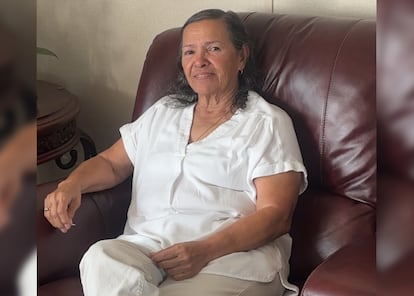
During the month she spent in detention, her health deteriorated rapidly. “We were terrified because we couldn’t believe this was happening to my mother,” Fuentes says. “We were worried about her health because they kept her without her medication for two weeks, and without it she could die.”
Other detainees requested an extra mattress to help ease the back pain that kept Guerra awake at night, but an officer ordered it removed. On one occasion, when the facility ran out of drinking water and she needed to take her medication, staff told her to use water from the toilet. She was also unable to eat because the food was spoiled, sometimes even containing worms, and survived largely on fruit given to her by fellow detainees.
Rodríguez says she received calls from other women in detention warning that if Guerra was not released soon, she would not survive. The attorney applied for humanitarian release, but the request was denied. She even sought help from Congresswoman Mónica de la Cruz, who lost her seat in the most recent midterm elections, but says she was turned away from the lawmaker’s office. Guerra was ultimately released on bond.
Although the experience left Guerra deeply traumatized, she was more fortunate than Emiliano Andrade-Covarrubias, a 56-year-old Mexican lawful permanent resident who died last month at the Rio Grande Processing Center in Laredo, Texas. Andrade-Covarrubias had lived in Dallas for decades, raising three U.S.-born children and regularly traveling to Mexico. He was detained in June at the Juárez-Lincoln International Bridge, a port of entry in Laredo, while returning from the neighboring country.
ICE justified the arrest by claiming that Andrade-Covarrubias had failed to disclose a 2004 theft charge when he applied for his green card. His daughter, Estefani Andrade, told The Texas Tribune that her father had in fact reported the incident and that federal authorities approved his permanent residency application with full knowledge of the case. Andrade-Covarrubias became the seventh person to die in ICE custody in Texas this year, and the second at the Laredo facility. He suffered from a heart condition, diabetes and high blood pressure. According to his daughter, he was denied medication, and medical staff ignored his complaints of chest pain and difficulty breathing.
Until Trump returned to the White House, a green card offered substantial protection against deportation and was widely regarded as a stepping stone to U.S. citizenship. Under the current administration, which remains committed to carrying out what Trump has described as the largest deportation campaign in U.S. history, that assumption is no longer so certain. While the president continues to repeat the familiar refrain that his administration is removing criminals, people who have spent decades working in the United States, obeying immigration rules and avoiding any further run-ins with the law are now finding themselves detained in ICE facilities.
“Showing that you were doing everything right used to be a step toward earning citizenship,” Joshi says. “What is surprising, and deeply sad, is that this tradition has been abandoned. And it’s a real shame, because these people contribute to our society. They are by no means ‘the worst of the worst.’ However, protections that once appeared to exist no longer seem to be there.”
Sign up for our weekly newsletter to get more English-language news coverage from EL PAÍS USA Edition










America
What’s Next For Cuba’s Political Future: An Attack By Trump Before Year’s End Or A Democratic Shift?

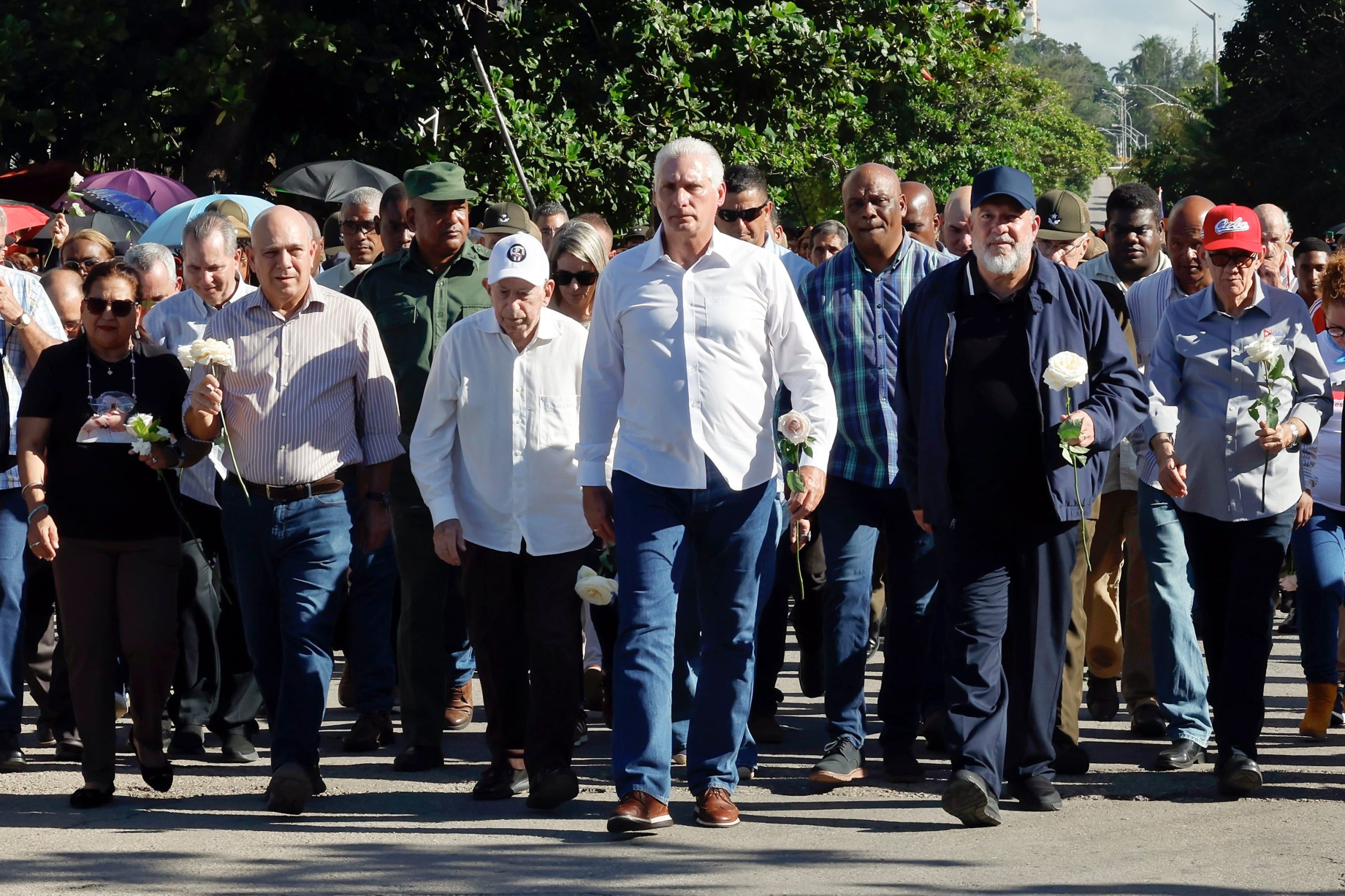
It’s been nearly 10 months since U.S. President Donald Trump first announced that Cuba would be next. It was shortly after his administration had taken out Nicolás Maduro in Venezuela, and before walking into an unpredictable war with Iran. Since then, the president has decreed an oil blockade, slapped sanctions on dozens of businesses and Cuban leaders, and practically every month he issues new reminders that Cuba is a “failed state” that’s about to fall.
Yet the Castro regime is still standing, and the questions being asked in Washington D.C. and Miami, as well as on the island itself, are: will Trump accelerate an attack on Cuba before the end of the year? Or will his rhetoric against Havana lose even more steam when the Democrats take control of Congress in January?
Analysts interviewed by this newspaper agree that neither scenario is likely.
“I never believed that a military intervention was an option. Much less now that Trump is tired [of the issue],” says Francisco O. Mora, a professor of politics and international relations at Florida International University (FIU). William M. LeoGrande, a professor and dean emeritus of the School of Public Affairs at American University, adds that “Congress does not have a lot of control over sanctions by Trump on Cuba.”
For a long time, quite a few Cubans believed in the possibility that the United States would handle Cuba the way it did Venezuela. The fear of a military intervention was mixed with people’s desire to end a life marked by blackouts, food shortages and an economic outlook made worse by growing pressure from the U.S. administration. “If you get on a bus, the first thing you hear is: ‘If only Trump would come, it doesn’t matter what happens,” said Juan Luis Bravo, a resident of Guantánamo, in the east of the island, in a conversation with EL PAÍS in May of this year.
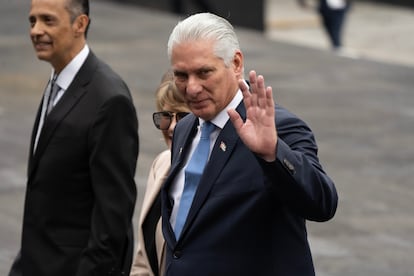
Since then, however, Cubans — who have not seen any improvements in their country through action by their own government — have lost faith in changes coming from the United States. The Trump administration has not secured concessions from the government of Miguel Díaz-Canel during negotiations, and Havana appears to be playing with time.
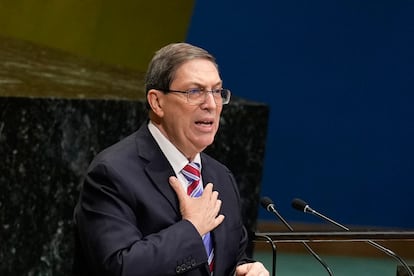
In an interview with The New York Times in late October, Foreign Minister Bruno Rodríguez Parrilla admitted that his government’s strategy was to simply endure. “For as long as it takes. U.S. policy toward Cuba will change. It has to. It’s inevitable,” he said.
Trump and State Secretary Marco Rubio have been pressuring the Cuban government like perhaps no other U.S. administration before. They have closed off all outside aid, made Cuba much more dependent on imports from the U.S., sent military ships to take up positions near the Cuban coast, sat down with members of the Castro family, and even made a public call for collaboration with the CIA to recruit spies that might help accelerate a change in the system. “Seize this opportunity to create the change you desire,” said Rubio.
But so far there has not been a “friendly takeover” of the island, the way Trump put it, and it looks like nothing is going to change before the end of the year. At a rally in Florida ahead of the midterms, this is what he said to his loyal Cuban-American voters: “Don’t worry, we’ll take care of Cuba on our way back from Iran.”
But the midterms, which changed the electoral map in the U.S., left several signs: according to surveys, Cubans in Miami are a lot more concerned about the cost of life and about immigration issues than about securing a regime change in Cuba; all three Cuban-American congressmembers from South Florida (Mario Díaz-Balart, María Elvira Salazar and Carlos Giménez) won by very small margins in territories where they had always enjoyed wide latitude; the war in Iran was without a doubt one of the reasons for voter discontent. And so the White House should think twice about walking into another conflict, this time with a small island just 90 miles from Miami.
Although the most recent survey on Cuba by Florida International University shows that 73 % of Cuban-Americans support military action to remove the government of Díaz-Canel, analysts do not believe that this is going to happen. LeoGrande doubts this is a viable option, much less after the “disaster in Iran.”
“This has proven that you cannot trigger a regime change with an aerial war,” he says. “Besides, with U.S. forces occupied with Iran and no end in sight, and a general political rejection of war, any military action would have a high political cost.”
This expert in U.S. foreign policy insists that Cuba is a very different case from Venezuela: there is no person on the island “whose kidnapping, as happened with Maduro, could provoke a 180-degree turn in the political orientation of the Cuban regime.” That is to say, there is no Cuban equivalent of Delcy Rodríguez, the interim president of Venezuela.
What is being asked now is whether Cuba, and particularly its people, will have to endure two more years of tough policies, or whether the new Democrat-led U.S. Congress might be able to relieve the agenda of sanctions and strangulation implemented by Rubio and Trump.
An uncertain political future
For now, the hangover from the midterms has not ended the battery of sanctions against Havana. Two days after the vote, the State Department sanctioned businesses and individuals with ties to the Cuban elite who, according to a statement by Rubio, were part of a maritime transportation network bringing in crude oil from China. “The Trump administration will not stand idly by while the Cuban regime channels the island’s resources to its military elite,” he said.
Historically, Democratic administrations have applied less pressure on the Cuban regime. Under Barack Obama, both countries announced a thaw in diplomatic relations in 2014. In recent months, several Democratic congressmembers have also spoken up against the White House’s policies.
Pramila Jayapal, the representative for DC’s 7th Congressional District, met in May with Díaz-Canel in Cuba and said that the oil blockade is causing incalculable suffering to the Cuban people. And Illinois congresswoman Delia Ramírez has led an initiative with 31 other members of Congress to demand that the Trump administration rule out any military action against Cuba.
Will these Democratic voices carry enough weight to scale back the sanctions and end the tough policies?
The scholar Mora thinks that Congress could hold several hearings “to try to better understand what the goals of the administration in Cuba are.” However, he does not think that Congress has a lot of influence in terms of changing policies. “The Constitution gives the president a lot of leeway to act on national security-related foreign affairs,” he notes.

Meanwhile, Professor LeoGrande insists that the International Emergency Economic Powers Act (IEEPA) grants the president a lot of authority to impose the secondary sanctions that Trump has used against Cuba.”
“Any legislation aimed at limiting sanctions that the new Congress might approve would be vetoed by Trump,” he says. “Besides, Cuba will not occupy a very prominent spot on the Democrats’ legislative agenda in the coming two years. They will focus on domestic economic issues and on corruption probes.”
There is, however, another scenario that for now remains speculative but not entirely dismissible to these analysts: the possibility that Marco Rubio, himself a Cuban-American, might run for president in 2028. In that case, says Mora, he would have to quit his role as secretary of state “more or less in the summer of next year, in order to start the campaign, which is a long and complicated process.”
Without Rubio for the remainder of the term, says this analyst, things could be different with another state secretary who might not show the same level of interest and attention that Rubio has been showing for Cuba, says Mora. “That could be a calculation by the [Cuban] regime to gain more time. They want to see how to outlive this administration. If they are waiting for January, with the change of Congress, they could be making a mistake. If they are waiting for the summer and Rubio’s potential departure, they might be onto something. Nobody is going to prioritize Cuba the way he is doing.”
Sign up for our weekly newsletter to get more English-language news coverage from EL PAÍS USA Edition


Nvidia Reinstates Jensen Huang As CEO

Trump’s ICE Is Reviving Decades-Old Cases To Deport Green Card Holders

Nvidia Recupera A Jensen Huang Como Consejero Delegado


-

 New Developments3 weeks ago
Luxury Villas For Sale, Estepona – ProjectL1
-

 New Developments2 weeks ago
The San Roque Club – Townhouses For Sale
-

 New Developments4 weeks ago
How To Get A Tourist Rental Licence In Andalusia (Spain) – Step-By-Step Guide 2025
-
Age Concern Marbella - San Pedro4 weeks ago
Halloween lunch sells out as 51 join Marbella get-together
-

 %4 weeks ago
Spain Orders Replacement Of Eight Million Gas Meters: New Rules, Costs And Deadlines
-
countryside3 weeks ago
Rural revival: Five Almeria villages make moving inland easier and more enticing
-
costa blanca live music3 weeks ago
Beatles tribute: The Liverpool Band returns to Orihuela Costa
-

 New Developments3 weeks ago
Stylish 3-Bedroom Apartment With Panoramic Sea Views – Benalmádena