Connect with us

Anthropic

Elon Musk To Give Two Shares Of SpaceX To Every Child In The US In A Deal Worth $18 Billion

Published

on

elon-musk-to-give-two-shares-of-spacex-to-every-child-in-the-us-in-a-deal-worth-$18-billion

SpaceX and Elon Musk are once again making waves in the markets. First, the company confirmed its promise to give every child in the United States two shares — one from SpaceX itself and another from Musk personally — at a current market value of around $18.35 billion. Almost simultaneously, SpaceX announced that it has received permission from U.S. authorities to launch one million satellites as part of its plans to establish data centers in space.

SpaceX, which is currently in the process of evaluating a merger with Tesla and made its stock market debut on June 12 as the largest IPO in history (a title that was taken from it by Anthropic last week), reaffirmed its commitment to donate one newly issued Class A share for each active “Trump Account.” “As part of his pledge to donate one SpaceX share to every child in the United States, SpaceX CEO Elon Musk will personally match the number of shares donated by SpaceX,” the company said.

With approximately 72 million children in the United States, according to Census estimates, and based on SpaceX’s closing price on Wednesday, the donation would be worth $18.35 billion. The initial plan called for a donation of nearly $9 billion. The company also reported that its president and chief operating officer, Gwynne Shotwell, had separately announced a personal donation of more than two million shares.

Trump Accounts are tax-advantaged investment accounts for children, created under President Donald Trump’s own 2025 tax law. The program was officially launched in July, with a one-time government contribution of $1,000 for eligible children born between 2025 and 2028. Last month, the White House reported that nearly 70 million Trump Accounts had been created, including more than 60 million through automatic enrollment. Since its launch on July 4, more than $4.5 billion has been deposited.

In principle, Musk owns billions of SpaceX shares, and the company has billions of shares outstanding, so the donation would likely have little impact on him or investors. However, SpaceX has been hit hard in recent weeks by the crisis of confidence in the tech sector. Its stock has fallen about 13% since the initial pledge was made, amid a widespread sell-off of stocks related to artificial intelligence (AI).

One million satellites

In any case, the company continues its operations and expansion projects. The U.S. Federal Communications Commission (FCC) has authorized SpaceX to deploy a constellation of up to one million satellites designed to function as data centers in space. The decision marks the first authorization of its kind in the agency’s history and aims to facilitate the development of orbital computing infrastructure to meet the growing demand for AI.

FCC Chairman Brendan Carr called the decision historic and stated that it will enable the United States to lead the new era of supercomputing. The agency argued that the project will help drive the superintelligence economy and bring humanity closer to a Type II civilization on the Kardashev scale — one capable of harnessing all the energy of its star. Musk expressed his gratitude for the authorization and stated that the initiative will be a significant asset for the United States and the rest of the world.

SpaceX’s proposal involves installing computing modules in orbit that will directly harness solar energy and communicate with each other and with the company’s other infrastructure, including the Starlink network. The company maintains that space-based data centers will reduce energy and operating costs compared to ground-based facilities, which require large amounts of electricity and water to power and cool their equipment. The initiative takes on particular significance at a time when the expansion of artificial intelligence is driving a surge in investment in data centers and creating strain on energy consumption and water resources in the United States.

However, the project faces significant technological and economic challenges. A report by the U.S. Government Accountability Office (GAO), published in July, acknowledged that orbital data centers could reduce the need for land, electricity, and water on Earth, but warned of the engineering barriers posed by their development. Among these is the cooling of computer equipment, as dissipating the heat generated by processors in space poses a considerable technical challenge. The report also warned of the risk of collisions and the difficulties of managing such a sharp increase in the number of satellites in orbit.

The authorization sets out a phased timeline: SpaceX must begin deployment by November 2033, place at least 100,000 units into orbit by November 2035, and reach 50% of the authorized constellation by November 2038. However, it remains to be seen whether the company will actually deploy one million satellites. There are currently about 17,000 satellites in orbit, while Starlink, SpaceX’s communications network, has slightly more than 11,000. The project also depends on Musk’s ability to substantially reduce launch costs using Starship, the next-generation reusable rocket that is still under development. Amazon’s Leo satellite division and other competitors have questioned the feasibility of deploying infrastructure on such a massive scale.

Sign up for our weekly newsletter to get more English-language news coverage from EL PAÍS USA Edition

$1 million prize money

AI helps crack 167-year-old maths mystery carrying a $1 million prize

Published

on

By

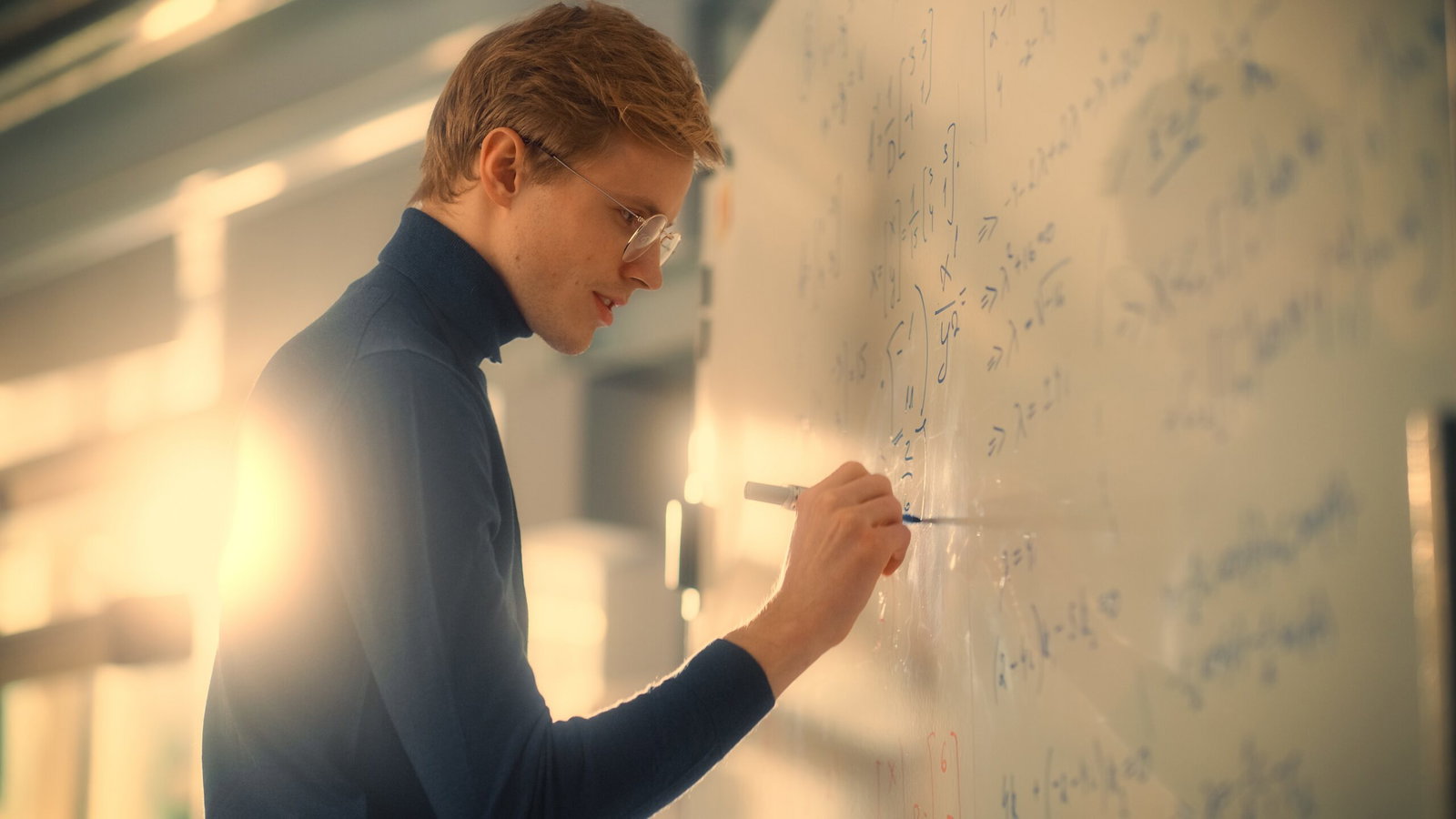
The Riemann Hypothesis is one of seven Millennium Prize Problems selected by the Clay Mathematics Institute in 2000. Photo credit:Gorodenkoff
/Shutterstock

A mathematician at artificial intelligence company Anthropic says he has solved one of the most famous problems in mathematics with help from Claude, its AI chatbot. The claim concerns the Riemann Hypothesis, first proposed by German mathematician Bernhard Riemann in 1859, the problem has remained one of mathematics’ greatest unsolved puzzles and solving it carries a $1 million prize.

Levent Alpöge, a member of Anthropic’s technical staff, announced the result on November 20. He released a four-page explanation and a formal proof written in Lean, a programming language that checks mathematical arguments. The proof contains around 17 million lines of code. Alpöge says Claude did much of the technical work towards the end.

What is the hypothesis?

The hypothesis concerns prime numbers: numbers such as 2, 3, 5 and 7 that can only be divided exactly by themselves and one. Their distribution becomes harder to predict as numbers grow. Riemann’s proposal describes a precise pattern linked to that distribution.

At its centre is the zeta function, connected to prime numbers. The hypothesis says all its non-trivial zeros lie on a vertical line in the complex plane. That may sound abstract, but proving it would give mathematicians control over the distribution of prime numbers with greater precision. 

A proof checked by computers

Could a proof produced with AI and running to 17 million lines be trusted? The Lean FRO and Mathlib Initiative, which develop and check the proof software and its mathematical library, examined the code and issued a joint statement on November 21. They said the library compiled correctly, proved the accepted formal statement of the Riemann Hypothesis and passed checks by Lean’s official kernel and several independent proof-checking systems.

Dozens of people had successfully reproduced the compilation. The groups said they had full confidence that the proof was correct. The formal argument has therefore passed machine checks designed to catch logical errors. That does not mean mathematicians have worked through the reasoning in a form they can readily understand. 

The mathematician has not yet mastered the proof

Alpöge has acknowledged that he does not yet fully understand the argument. His work generated more than 250,000 pages of material, and he now faces the task of explaining it in a form other mathematicians can follow.

Rutgers University mathematician Alex Kontorovich said a conventional proof would normally be read line by line so experts could understand why the result was true. He said the computer checks were encouraging, but that he had not yet independently understood the proof. Lean and Mathlib certify the formal proof under the system’s rules; mathematicians still need to understand how the result was reached. 

A million-dollar problem

The Riemann Hypothesis is one of seven Millennium Prize Problems selected by the Clay Mathematics Institute in 2000. Each carries a $1 million award. The institute’s rules require a proposed solution to appear in a qualifying publication, remain available for at least two years and gain general acceptance among mathematicians before it can be considered for the prize.

The institute’s problem page still lists the hypothesis as open. Even if the new proof withstands further scrutiny, the prize cannot be awarded immediately.  The claim also raises a question about AI’s role in research: can systems such as Claude help produce discoveries, rather than simply analyse existing work? The answer may depend on whether mathematicians can understand and build on Alpöge’s proof.

Continue Reading

%

AI Helps Crack 167-Year-Old Maths Mystery Carrying A $1 Million Prize

Published

on

ai-helps-crack-167-year-old-maths-mystery-carrying-a-$1-million-prize

The Riemann Hypothesis is one of seven Millennium Prize Problems selected by the Clay Mathematics Institute in 2000. Photo credit:Gorodenkoff /Shutterstock

A mathematician at artificial intelligence company Anthropic says he has solved one of the most famous problems in mathematics with help from Claude, its AI chatbot. The claim concerns the Riemann Hypothesis, first proposed by German mathematician Bernhard Riemann in 1859, the problem has remained one of mathematics’ greatest unsolved puzzles and solving it carries a $1 million prize.

Levent Alpöge, a member of Anthropic’s technical staff, announced the result on November 20. He released a four-page explanation and a formal proof written in Lean, a programming language that checks mathematical arguments. The proof contains around 17 million lines of code. Alpöge says Claude did much of the technical work towards the end.

What is the hypothesis?

The hypothesis concerns prime numbers: numbers such as 2, 3, 5 and 7 that can only be divided exactly by themselves and one. Their distribution becomes harder to predict as numbers grow. Riemann’s proposal describes a precise pattern linked to that distribution.

At its centre is the zeta function, connected to prime numbers. The hypothesis says all its non-trivial zeros lie on a vertical line in the complex plane. That may sound abstract, but proving it would give mathematicians control over the distribution of prime numbers with greater precision. 

A proof checked by computers

Could a proof produced with AI and running to 17 million lines be trusted? The Lean FRO and Mathlib Initiative, which develop and check the proof software and its mathematical library, examined the code and issued a joint statement on November 21. They said the library compiled correctly, proved the accepted formal statement of the Riemann Hypothesis and passed checks by Lean’s official kernel and several independent proof-checking systems.

Dozens of people had successfully reproduced the compilation. The groups said they had full confidence that the proof was correct. The formal argument has therefore passed machine checks designed to catch logical errors. That does not mean mathematicians have worked through the reasoning in a form they can readily understand. 

The mathematician has not yet mastered the proof

Alpöge has acknowledged that he does not yet fully understand the argument. His work generated more than 250,000 pages of material, and he now faces the task of explaining it in a form other mathematicians can follow.

Rutgers University mathematician Alex Kontorovich said a conventional proof would normally be read line by line so experts could understand why the result was true. He said the computer checks were encouraging, but that he had not yet independently understood the proof. Lean and Mathlib certify the formal proof under the system’s rules; mathematicians still need to understand how the result was reached. 

A million-dollar problem

The Riemann Hypothesis is one of seven Millennium Prize Problems selected by the Clay Mathematics Institute in 2000. Each carries a $1 million award. The institute’s rules require a proposed solution to appear in a qualifying publication, remain available for at least two years and gain general acceptance among mathematicians before it can be considered for the prize.

The institute’s problem page still lists the hypothesis as open. Even if the new proof withstands further scrutiny, the prize cannot be awarded immediately.  The claim also raises a question about AI’s role in research: can systems such as Claude help produce discoveries, rather than simply analyse existing work? The answer may depend on whether mathematicians can understand and build on Alpöge’s proof.

Continue Reading

America

La Magnitud De La Salida A Bolsa De Anthropic, En Cifras

Published

on

Anthropic está a punto de salir a Bolsa. El mercado anticipa que la compañía de inteligencia artificial alcance una valoración de unos 1,4 billones de dólares.

Seguir leyendo

Continue Reading

Trending

Copyright © 2017 Spanish Property & News