Connect with us

China

Trump Says He ‘would Not Mind’ If Jensen Huang Returns To Nvidia

Published

on

trump-says-he-‘would-not-mind’-if-jensen-huang-returns-to-nvidia

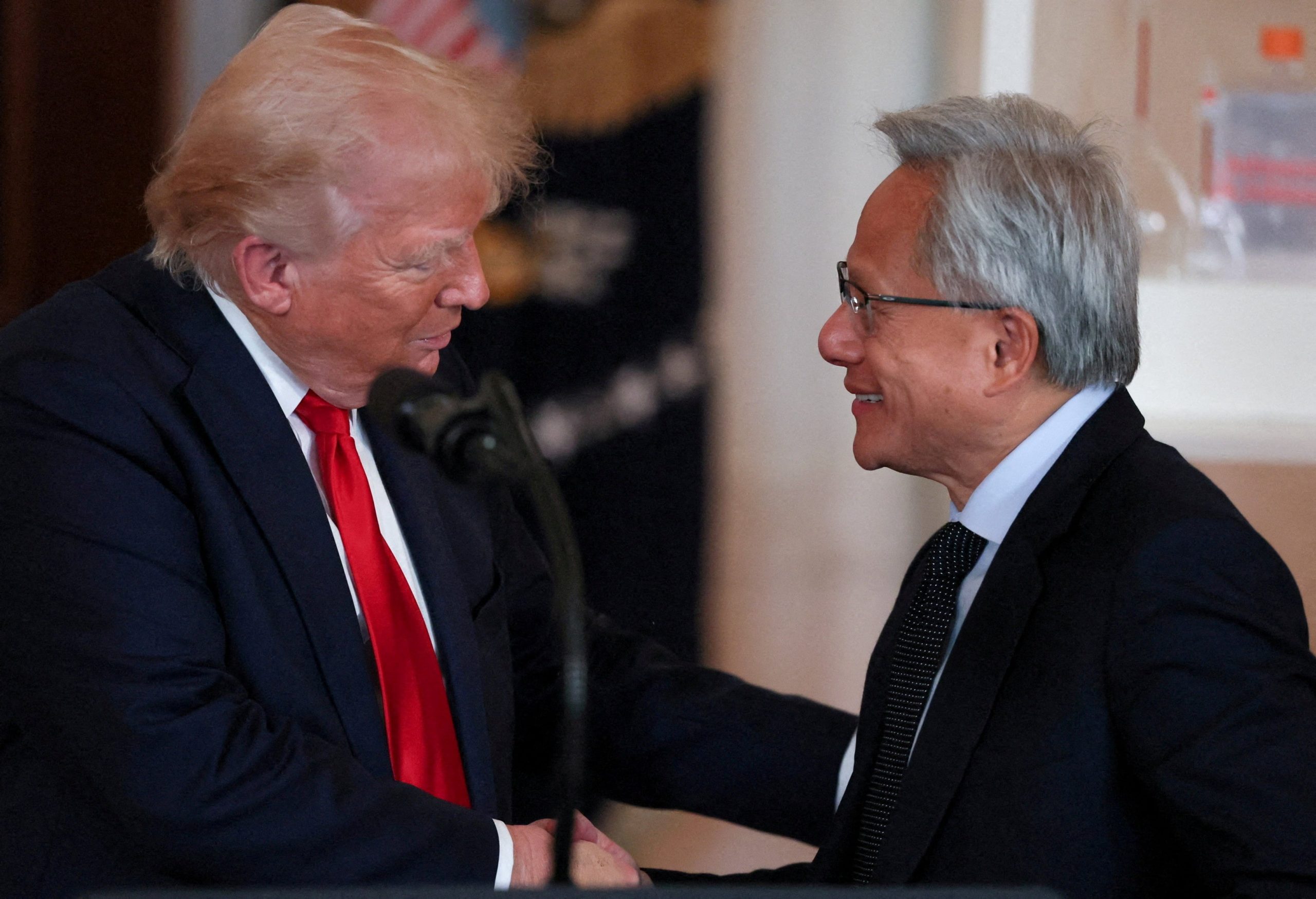
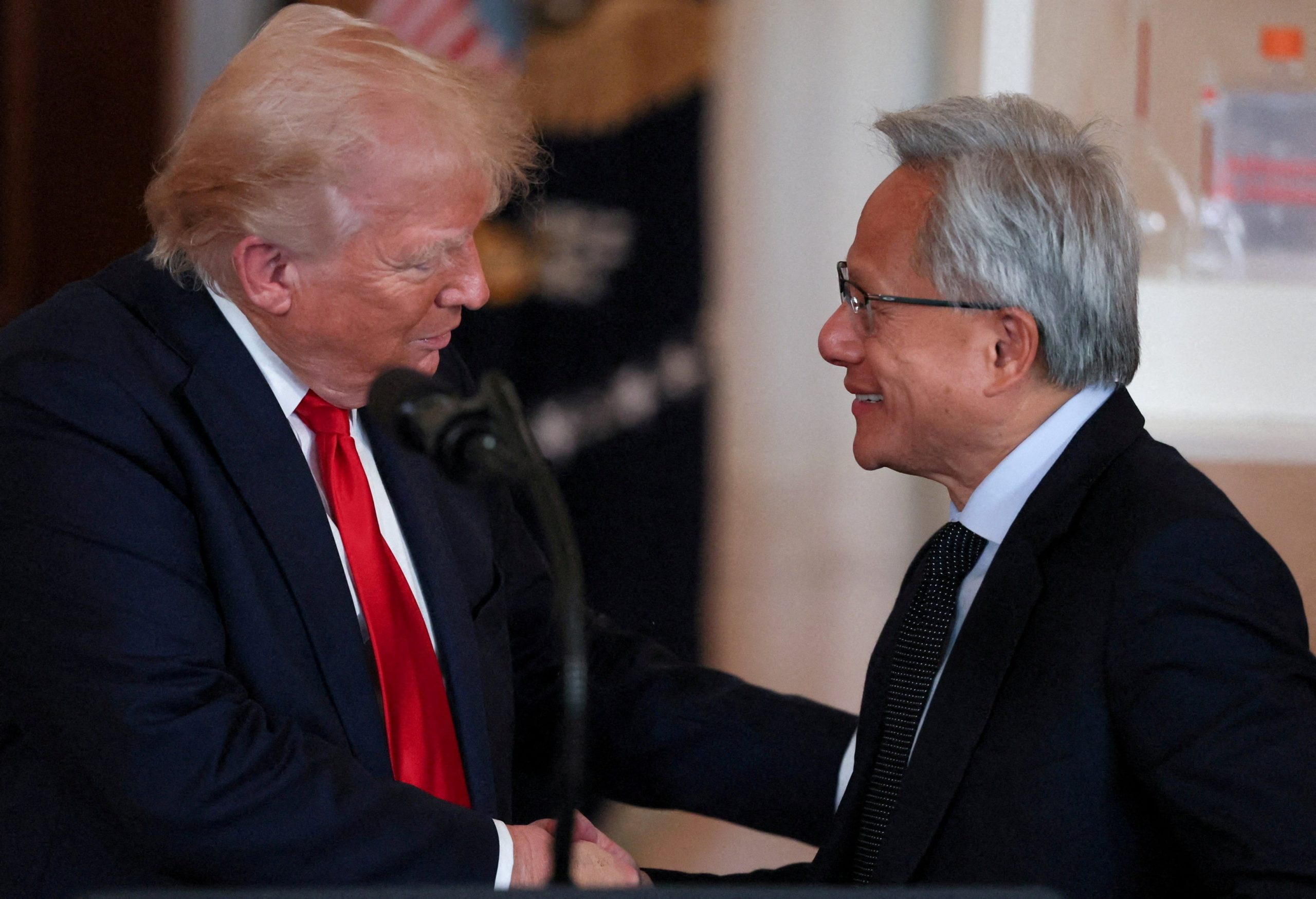
President Donald Trump said on Monday that he “would not mind” if Jensen Huang returned to lead Nvidia, after the executive’s turbulent exit last week amid a scandal involving extramarital relationships, an alleged Chinese spy, and an investigation into whether Beijing obtained sensitive U.S. technology.

The president told reporters he believes the founder of the world’s largest chipmaker, with whom he has maintained a close relationship during the AI race, “learned a big lesson,” that national security “was not put at risk,” and that he does not know whether the executive from Singapore-based Megaspeed at the center of the controversy, Alice Huang, was a spy.

Trump’s remarks add to a growing chorus backing Huang’s return to Nvidia. An online petition urging him to come back has garnered more than 175,000 signatures, including those of Elon Musk, chief executive of SpaceX and Tesla, and Silicon Valley entrepreneurs such as Amjad Masad of Replit and Tim Sweeney of Epic Games.

The website for the “Stand With Jensen” campaign includes a letter endorsed by employees of the world’s largest chipmaker, allies, shareholders, and supporters. “We write with gratitude for Jensen Huang and with a clear demand to the Board: bring Jensen back while an independent investigation establishes the facts, unless and until you can provide compelling evidence that his removal is in Nvidia’s best interests,” it says.

“For thirty-three years, Jensen poured his heart and soul into building NVIDIA. He bet it on ideas that most of the industry dismissed, carried it through years when the bets looked foolish […] Many of us joined because of him. Many of us stayed because of how he treated the work,” the document says.

Huang resigned last week while the board weighed his departure amid a scandal over multiple extramarital relationships: one involved Alice Huang, an executive at Megaspeed, to whom Nvidia sold billions of dollars’ worth of advanced chips that U.S. intelligence officials believe may have been part of a Chinese espionage effort.

U.S. officials say Megaspeed’s actions could have endangered national security. The Trump administration was briefed on the matter but, according to an investigation by The New York Times, downplayed the issue amid the administration’s close ties to Huang. The scandal has hit Nvidia’s shares — until recently the company had the largest market capitalization — and cast doubt on future sales deals for a firm crucial to the artificial intelligence race.

The Financial Times reported on Sunday that Huang had told associates he was considering a possible return to Nvidia. Huang has not spoken publicly about that possibility.

Friction inside the Trump cabinet

According to the Financial Times, a group of Silicon Valley executives is seeking White House support for Huang to resume control of Nvidia. But his possible return could create tensions within the Trump administration. Treasury Secretary Scott Bessent publicly aired his differences last week over how Commerce Department colleague Howard Lutnick handled exports of U.S.-sensitive technology such as Nvidia chips.

Meanwhile, U.S. lawmakers have also demanded explanations and called for Lutnick to testify. Washington Democrat Maria Cantwell, a member of the Senate Banking Committee, criticized the commerce secretary for not taking sufficient steps to prevent China from obtaining advanced chips.

“America cannot maintain its leadership in AI if the agency responsible for protecting that advantage fails to enforce its own controls,” she wrote in a letter dated November 15.

A little more than a year ago, The New York Times reported that U.S. authorities were investigating whether Megaspeed helped Chinese customers obtain Nvidia chips subject to Washington’s export controls. Beijing has denied the allegations. It has not been formally revealed that Megaspeed violated the rules.

Bloomberg reported that, amid the U.S. probe, Nvidia was asked to review the destination of its shipments to Megaspeed. Bloomberg said Megaspeed had imported about 50,000 more Nvidia chips than the company had found in its data centers.

After the market close on Tuesday, Nvidia is scheduled to release its quarterly results, the first without Huang at the helm and with Chief Financial Officer Colette Kress serving as interim chief.

Reuters explains that, until this crisis, investors had been focused on Nvidia’s drop in market capitalization and on its high debt‑funded spending. Now, Reuters adds, they will want to know whether the company can maintain its chip-making dominance and support for cloud providers and AI labs without Huang.

Sign up for our weekly newsletter to get more English-language news coverage from EL PAÍS USA Edition

America

Trump Afirma Que “no Tendría Problema” En Que Jensen Huang Regrese A Nvidia

Published

on

trump-afirma-que-“no-tendria-problema”-en-que-jensen-huang-regrese-a-nvidia

El presidente Donald Trump dijo este lunes que “no tendría problema” si Jensen Huang regresa a la jefatura de Nvidia, tras su turbulenta salida la semana pasada en medio de un escándalo que involucró amantes, una supuesta espía de China y una investigación por la sospecha de que Pekín pueda haberse hecho con tecnología sensible para Estados Unidos.

El presidente dijo en declaraciones a la prensa que cree que el fundador del mayor fabricante de chips del mundo, con quien tiene una relación cercana, “aprendió una gran lección”, que la seguridad nacional “no estuvo en riesgo” y que desconoce si Alice Huang, la ejecutiva de la empresa Megaspeed en el ojo de la tormenta, era una espía. En sus primeras declaraciones públicas sobre el rol de Alice Huang en la compañía, Megaspeed dijo el domingo que ella había dejado la empresa en agosto de 2025.

Pese a que las palabras de Trump se suman a un creciente coro de voces que apoyan el regreso de Jensen Huang como CEO de Nvidia, una información del diario británico Financial Times señaló que la junta directiva de la gigante tecnológica no está considerando por el momento reincorporarlo como su consejero delegado. En la víspera, ese medio precisó que Huang había hablado con allegados un posible regreso a Nvidia. Huang no se ha expresado públicamente sobre esa posibilidad.

Los directivos de Nvidia encaran una creciente presión por su retorno. Una petición online pidiéndole que vuelva suma más de 175.000 firmas, incluyendo las de Elon ⁠Musk, consejero delegado de SpaceX y Tesla, y empresarios de Silicon Valley como Amjad Masad, de Replit, y Tim Sweeney, de Epic Games.

La web para que “regrese Jensen” tiene una carta respaldada por empleados, aliados y accionistas. “Escribimos en gratitud a Jensen Huang y con una demanda clara a la junta: que Jensen regrese mientras se realiza una investigación independiente que determine los hechos, salvo y hasta que pueda proveer evidencia convincente de que su remoción tiene como base los mejores intereses de Nvidia”, se lee en ella.

“Durante 33 años, Jensen puso su corazón y alma para construir a Nvidia. Apostó por ideas que habían sido desestimadas por la mayoría en la industria y permaneció firme cuando parecían ser ingenuas. […] Muchos de nosotros nos unimos por él”, dice el documento.

Huang dimitió la semana pasada mientras la junta directiva sopesaba su salida en medio de un escándalo por varias relaciones extramaritales: una de ellas con Alice Huang, la ejecutiva de Megaspeed a la que Nvidia vendió miles de millones de dólares en chips avanzados que funcionarios de inteligencia de Estados Unidos creen era una espía de Pekín.

Funcionarios del gobierno consideran que la maniobra de Megaspeed pudo poner en riesgo la seguridad nacional. El presidente Trump fue informado de la presunta maniobra pero, según una investigación de The New York Times, no tomó alguna acción concreta en medio de su relación cercana con Jensen Huang.

El escándalo ha golpeado las acciones de Nvidia, que hasta hace poco era la empresa con mayor capitalización de mercado, y ha puesto en cuestión futuros acuerdos de ventas de una empresa crucial en la carrera por la inteligencia artificial. En palabras de Musk, por ejemplo, muchos de los acuerdos de Nvidia se reducían a “un apretón de manos con Jensen, no [constituían] un contrato por escrito”. “Sin Jensen, se perderán al menos algunos de sus pactos cruciales”, escribió Musk en la red X.

El escándalo de Nvidia crea fricciones en el Gabinete de Trump

Según el reporte del Financial Times este domingo, un grupo de ejecutivos de Silicon Valley quiere conseguir el apoyo de la Casa Blanca para que Huang tome las riendas de Nvidia. Pero un posible regreso del ejecutivo podría crear fricciones dentro del gobierno de Trump. El secretario del Tesoro, Scott Bessent, hizo públicas la semana pasada sus diferencias por cómo su colega del Departamento de Comercio, Howard Lutnick, había manejado las exportaciones de tecnología sensible para Estados Unidos, como los chips de Nvidia.

Mientras, el Congreso de Estados Unidos también ha pedido explicaciones y la comparecencia de Lutnick. La demócrata del Estado de Washington Maria Cantwell, miembro del comité de Banca del Senado, criticó al secretario de Comercio por no adoptar medidas suficientes para evitar que China obtenga chips avanzados.

“Estados Unidos no puede mantener su liderazgo en la IA si la agencia responsable de proteger esa ventaja falla en hacer cumplir sus propios controles”, escribió en una carta fechada el 15 de noviembre.

Hace poco más de un año, The New York Times reportó que autoridades de Estados Unidos investigaban si Megaspeed ayudaba a clientes chinos a hacerse con chips de Nvidia sujetos a controles de exportación de Washington. Pekín lo ha negado. Tampoco se ha revelado formalmente que Megaspeed haya quebrantado las normas.

Bloomberg reportó que, en medio de la investigación de las autoridades estadounidenses, el Gobierno le pidió a Nvidia que revisara el paradero de sus envíos a Megaspeed. Según Bloomberg, Megaspeed había importado unos 50.000 chips más de los que Nvidia encontró en los centros de datos de la compañía con sede en Singapur.

Este martes tras el cierre del mercado, Nvidia tiene previsto hacer público sus resultados trimestrales, los primeros sin Huang al mando y con la directora financiera, Colette Kress, como su jefa interina.

La agencia Reuters explica que, hasta esta crisis, los inversores enfocaban su mirada en la caída en la capitalización de mercado de Nvidia y en el alto nivel de gasto financiado con deuda. Ahora, agrega, querrán saber si la compañía podrá mantener sin Huang su dominio en la fabricación de chips y su respaldo a los proveedores de servicios en la nube y laboratorios de IA.

Continue Reading

Bank of America

Narco Brokers In Mexico, A Booming Business Thriving Alongside Chinese Money-Laundering Networks

Published

on

narco-brokers-in-mexico,-a-booming-business-thriving-alongside-chinese-money-laundering-networks

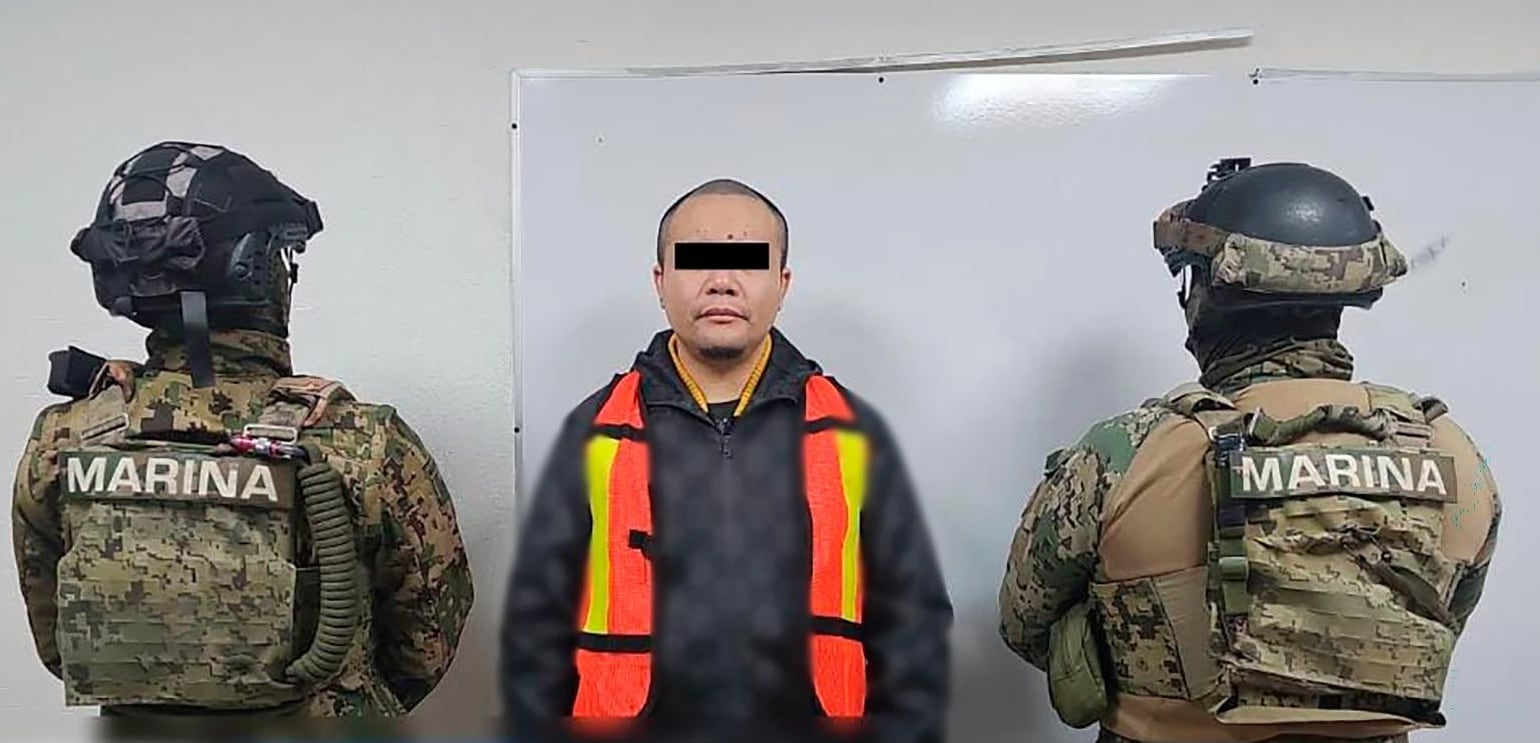
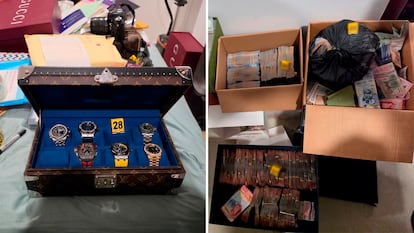
Bojun He, known as “El Chino,” was arrested on November 4 in the Miguel Hidalgo borough of Mexico City with $2 million and 43 million pesos, in both local and foreign currency. The detainee was identified as the alleged leader of a money-laundering network for organized crime, including the Mexico City-based Unión Tepito cartel, and linked to arms and human trafficking with operations in central Mexico City, Tijuana (Baja California) and Cancún (Quintana Roo). His capture has highlighted the role played by brokers — or financial intermediaries — in Chinese laundering networks that act as the cartels’ economic arm.

The arrest of El Chino recalls others such as that of Tomoiyi Yu in 2007 at his home in Lomas de Chapultepec, Mexico City, where the Attorney General’s Office seized more than $200 million. The wife of Zhen Li Ye Gon, a Mexican pharmaceutical businessman of Chinese origin accused by Mexico and the United States of illegally trading chemical precursors for methamphetamine production, was sentenced to 15 years in prison for organized crime, money laundering and possession of military-grade weapons and ammunition. More recent cases include Zhi Dong Zhang, alias “Brother Wang,” the Chinese fentanyl kingpin, and Marco Ebben, who was considered Ismael “El Mayo” Zambada’s Dutch broker and was killed in Atizapán in 2025. What did all these financial intermediaries have in common? They connected organized crime across continents and made it possible for dirty money to be legalized.

According to Víctor Sánchez, an academic at the Autonomous University of Coahuila (UAdeC), people of Chinese origin or networks from the Asian country — some linked to triad organized crime groups, others operating independently — have been inserting themselves into the dynamics of Mexican criminal organizations. The security expert says that, perhaps alongside Albanian mafias, they may be the second-largest source country assisting drug traffickers with money laundering, primarily because of the significant advantages this offers them.

First, with China — unlike almost any other country (except the U.S. in the case of Mexico) — there is significant and intense international trade. “That means the opportunities to disguise illegal operations as legal ones are quite significant. Every shipment of Chinese goods arriving at Mexico’s various ports can consistently become an opportunity for money laundering, and since so many arrive so frequently, keeping track of them all is impossible; it’s the old adage of finding a needle in a haystack,” Sánchez explains over the phone.

The second major advantage Chinese laundering networks offer is the market’s lowest rates. The UAdeC academic says that while other providers of these services charge around 10% to 15% on average, the Chinese charge between 3% and 5%. “Thus it becomes more profitable for Mexican organizations to turn precisely to the Chinese,” he notes.
According to Pablo Pérez, an international expert on money laundering and asset recovery, one of the main methods these Chinese networks use to launder funds is triangulation among China, Mexico, and the United States, because China has an annual legal limit of $50,000 for citizens withdrawing foreign currency. There are businesspeople and citizens who seek to move capital in renminbi (RMB) — the official name of the national currency, which means “the people’s currency” — to invest it abroad. An example of this is real estate in the United States.

He also explains, as CEO of RiskFlow — a company specialized in preventing money laundering — that Mexican cartels sell narcotics in the U.S. and obtain cash dollars, but need to return those funds to Mexico converted into pesos. To connect both needs, they resort to the Chinese informal banking system known as Fei Qian, equivalent to the historical Hawala, an informal funds-transfer system.

“The Chinese investor hands over RMB in China to an informal agent and the network provides the equivalent in cash dollars in the U.S., money coming directly from the cartel’s profits. To reconcile funds between China and Mexico, importing companies are used, for example, in appliances or telecommunications in Mexico. The Mexican importer receives products valued at a higher figure, say $10 million, but only pays a lower amount, $8 million, settling the difference through the network. Crypto assets such as Bitcoin are also used to transfer value without leaving a trace,” Pérez adds.

In the United States, the asset-recovery expert continues, illicit cash is moved into the banking system by recruiting Chinese university students who deposit fractional sums at ATMs in exchange for living-cost payments. It also involves injecting funds into the accounting of Chinese-community businesses such as restaurants, bazaars, currency-exchange houses, and remittance agencies, where commissions of between 5% and 10% are charged. Another method is fake invoicing for purported consulting services or suppliers to legally justify purchases of luxury real estate, such as apartments in Miami.

A recent example is the $500 million fine imposed by the U.S. Department of the Treasury’s Financial Crimes Enforcement Network on Bank of America, due to internal control failures that allowed transactions linked to Chinese networks. “It is estimated that more than $5 billion passed through Bank of America without adequate controls. This issue is a priority for the governments of Mexico and the United States, and is part of the risk assessments of the Financial Action Task Force,” Pérez adds.

Until a few years ago, the Jalisco New Generation Cartel or the Sinaloa Cartel were the organizations that worked with these brokers. They facilitate purchases for obtaining chemical precursors to manufacture fentanyl or money laundering with the Albanian mafia to buy luxury properties in Europe. However, Sánchez says this type of service is not only for the major players in organized crime, so it is not surprising that El Chino allegedly tried to do the same for a smaller criminal group like the Unión Tepito.

“Many turn to national channels because that’s what they’re familiar with or because of the contacts they have in their social circles, but in a city that’s a bit more cosmopolitan and internationally connected, like Mexico City, it’s not unusual for them to come into contact with foreign businesspeople,” the expert explains.

Sánchez agrees that the presence and importance of narco brokers is not an isolated phenomenon, but rather a trend that makes “perfect sense.” Organized crime, the scholar asserts, is a “booming business” that generates a great deal of money, and part of that money needs to be injected into the legal economy. “Furthermore, when it comes to money laundering, the basic principle applies that it is harder to detect the process in places where there is more money: a million dollars in a mountain town in Durango stands out a lot, but in Mexico City, San Pedro Garza García, Zapopan, Cancún, Hong Kong, Shanghai, London, or New York, it is practically nothing, and the chances of detection are slim,” he concludes.

Sign up for our weekly newsletter to get more English-language news coverage from EL PAÍS USA Edition

Continue Reading

China

Congress Demands Answers Over Nvidia Espionage Allegations And Jensen Huang Scandal

Published

on

The removal of Jensen Huang as CEO of Nvidia, the company he led for 33 years, taking it to the top of Wall Street, has sent shockwaves through the global tech industry. Nvidia is the company that supplies 90% of the chips used in data centre servers, where the most sophisticated AI models are trained. The scandal has emerged amid a race between the world’s major powers to gain supremacy in a technology set to transform the world as we know it.

Huang’s affair with a businesswoman who reportedly worked for the Chinese government, together with his close ties to both Beijing and U.S. President Donald Trump, has set off alarm bells in Washington and raised questions about the company’s role in activities sensitive to national security. In an effort to get answers, lawmakers from both parties are rushing to demand explanations from the U.S. president and from Huang over the espionage allegations hanging over Nvidia. As Huang’s image takes a hit, he is coming under growing political scrutiny.

Republican Senator John Thune of South Dakota, who leads the Republican majority in the Senate, acknowledged that Congress would have to investigate Jensen Huang’s relationship with an alleged Chinese spy. “It would make sense because of the nature of the association,” he said.

Several Republican members of the House of Representatives said on Thursday that they were in talks to have Jensen Huang testify before Congress in the coming days, in a hearing that is likely to be held behind closed doors. Republican Congressman Brian Mast of Florida, who chairs the House Foreign Affairs Committee, and his Republican colleague John Moolenaar of Michigan, who chairs another House committee focused on China, acknowledged that they were working to set a date for Huang’s appearance.

Mast, who has called for tighter controls on the sale of chips to other countries, said that he was preparing a subpoena to compel the former Nvidia executive to testify before his committee. “Jensen and I have been very at odds, as some of you already know, but Nvidia is a very important company to the United States of America,” he said on Capitol Hill. “I don’t want to see anything hurt Nvidia, but he has some very serious questions to answer.”

Meanwhile, two Democratic senators, Elizabeth Warren from Massachusetts and Chris Coons from Delaware, called on the White House to preserve all documents relating to Nvidia. Trump’s close relationship with Jensen Huang has raised considerable suspicion.

The Republican president made Nvidia’s founder his chief adviser on artificial intelligence. He frequently invited him to the White House for briefings and state dinners. He also invited Huang to accompany him to the summit held in South Korea last autumn, where Trump met Chinese leader Xi Jinping. Last May, Huang accompanied the president on an official visit to China, and a couple of months ago he was among the guests of honor at a White House reception hosted by Trump in honor of Xi Jinping.

Throughout this period, Huang used his close ties to Trump to pressure him to ease restrictions on exports of U.S. technology to China and allow Nvidia to sell more advanced microprocessors to Chinese companies. His argument was that otherwise Beijing would develop its own national champions and no longer depend on the United States for its technology, as it does now.

During this same period, Trump was briefed at least twice about a Chinese spy’s relationship with the senior Nvidia executive. But when asked about it during an impromptu press appearance last Monday, he said he didn’t remember and hadn’t paid attention, while arguing that Jensen Huang “is an honorable guy.”

Despite Jensen Huang’s resignation, Congress must demand answers from Mr. Huang and others at Nvidia about how they may have put U.S. national security at risk.
 
The Trump administration must also answer for what it did once it learned about Mr. Huang’s relationship with a…

— Chuck Schumer (@SenSchumer) November 12, 2026

Senate Minority Leader Chuck Schumer said in a social media post that Congress must “demand answers” from Huang and Nvidia officials about “how they may have put U.S. national security at risk.” He added that the Trump administration “must answer for what it did once it learned about Mr. Huang’s relationship with a suspected Chinese intelligence asset.” In a post on X, he wrote: “Were government officials told not to investigate because of Trump’s relationship with Mr. Huang? What did Trump know when he personally invited Mr. Huang aboard Air Force One?”

Meanwhile, House Minority Leader Hakeem Jeffries said Huang’s resignation was not enough to allay concerns about the potential threat. “Now we have to get to the bottom of whether America’s national security has been compromised,” he said.

Senator Elizabeth Warren, the top Democrat on the Senate Banking Committee, said that Jensen Huang’s resignation “does not absolve him, other executives or the company as a whole of responsibility for putting our national security at risk or for any possible violations of our laws.”

Jensen Huang’s decision to resign from NVIDIA does not absolve him, other executives, or the company as a whole of responsibility for putting our national security at risk or for any potential violations of our laws.

They still owe Congress answers.

— Elizabeth Warren (@SenWarren) November 12, 2026

In a statement, she said that both the Trump administration and Huang “still owe Congress answers.” She called on Commerce Secretary Howard Lutnick and his deputy, Jeffrey Kessler, to provide further explanations. “[They] must explain why they have not closed export control loopholes and act today to ensure our advanced technology is not fueling China’s military,” she stressed.

Calls are growing for Lutnick, one of Trump’s closest allies, to resign over his stance on the U.S. trade blacklist. Lutnick had refused to add a dozen Chinese companies to the list of firms barred from doing business in the United States.

On Thursday, Republican Senator Tim Scott from South Carolina sent letters to both Huang and Lutnick urging them to testify before the Senate. “Recent reports raise serious concerns about our national security and the protection of sensitive U.S. technology,” Scott wrote in a social media post, adding: “The American people deserve answers.”

Recent reports raise serious concerns about our national security and the protection of sensitive U.S. technology.

I am requesting that NVIDIA CEO Jensen Huang and Commerce Secretary Howard Lutnick testify before the Senate Banking Committee.

The American people deserve… pic.twitter.com/Xu1kiNzkhW

— Senator Tim Scott (@SenatorTimScott) November 13, 2026

Democratic Senator Ron Wyden of Oregon and fellow party member Richard Neal, a congressman from Massachusetts, sent Lutnick a letter on Thursday informing him that they were investigating the approval of sales of Nvidia’s advanced AI chips to Chinese companies “with concerning links to the Chinese government, military and sanctioned entities.”

Huang’s ouster has enormous significance for the global corporate world. The scandal is set to go down as one of the biggest corporate debacles in history, triggered by revelations that an executive had multiple affairs. Huang turned Nvidia into the company around which the entire AI universe revolves. It holds a near-monopoly on the manufacture and distribution of the most advanced semiconductors used to develop the new autonomous technology. But he also promoted cross-financing deals with customers and suppliers, weaving a complex and dangerous web of shared interests. This strategy helped fuel the dizzying boom in AI.

Moolenaar, Mast and another Republican, Rick Crawford, chairman of the House Intelligence Committee, had already requested a meeting with Huang after the alleged plot linking him to a suspected Chinese spy named Alice Huang came to light. Revelations about Huang’s reckless behavior have increased pressure on lawmakers on Capitol Hill to tighten controls on chip exports to China through an amendment to a defense bill that Republicans are advancing in Congress.

Alice Huang, also known as Huang Le, is a Chinese-born businesswoman who runs a company called Megaspeed, based in Singapore. Although married, she used her close relationship with Huang to turn her company, which grew out of a Chinese video game business, into one of Nvidia’s biggest customers in Asia. U.S. officials have been monitoring the company for more than a year amid suspicions that it may be a key part of a network smuggling Nvidia’s most advanced semiconductors into China.

Beyond Moolenaar and Mast’s requests, the espionage scandal involving Huang and his close relationship with Trump have prompted several bipartisan demands for information on Capitol Hill. Republican Senator Kevin Cramer of North Dakota was among the most forceful. On Tuesday, before it emerged that Huang had had two other mistresses, Cramer, a member of the Senate Banking Committee, which oversees U.S. export control programs, called for Huang’s resignation.

Meanwhile, the FBI is investigating the espionage case involving Huang, according to Trump, who revealed the probe this week. And the Justice Department is looking into whether other companies linked to Alice Huang were involved in attempts to smuggle products made by chipmaker Super Micro Computer (SMC) into China.

Sign up for our weekly newsletter to get more English-language news coverage from EL PAÍS USA Edition

Continue Reading

Trending

Copyright © 2017 Spanish Property & News