Connect with us

Latest

Spain’s MotoGP Legend Márquez Announces Surprise Retirement

Published

on

One of Spain’s most successful sports figures said Friday that he is retiring from MotoGP on his terms after deciding to bring down the curtain on his career following a historic season in which he won his record-equalling eighth world crown.

Spaniard Márquez will leave the premier class of motorcycling after 13 years following his triumph last weekend at the Portuguese Grand Prix, his second in as many seasons for Italian team Ducati.

Márquez’s latest success pulled him level with Italian great Giacomo Agostini who won his titles between 1966 and 1975.

He also overtakes his great rival Valentino Rossi, who won seven MotoGP titles, although the swashbuckling Italian has 89 individual race wins in the top category to Márquez’s 80.

Speaking to reporters at the Ricardo Tormo circuit in his home nation, Márquez said: “I arrived in MotoGP in my way and I will go in my way.”

NO NOS LO PODEMOS CREER🤯💔 MARC MÁRQUEZ SE RETIRA DE MOTOGP 👑🇪🇸 #ValenciaGP #MotoGP https://t.co/Mmvh9qmqpt

— DAZN España (@DAZN_ES) November 27, 2026

Márquez said that he had made his decision to retire after last month’s Japanese GP, and that the only person he told was his brother Alex Márquez, also a MotoGP rider, only telling his father about his decision on Wednesday and his mother on Friday morning.

“I said to him, it doesn’t matter if I win, or if I’m second, or third. And at that time, the championship was very close. But I said, the correct thing, my instincts say, this is the way,” said Márquez.

Don’t miss our journalists’ daily news roundup from Spain

“And most of the time in my career, when I follow my instincts, the instincts say that was the good way, so I follow the statistics. But this time, I’m more than convinced that this is the correct thing for my personal and professional life.”

Márquez’s success has come at a cost to his physical well-being, with multiple surgeries on his right arm and shoulder, including one in May which caused him to miss the Le Mans and Catalonia GPs.

The 33-year-old said that his injuries were continuing to bother him this season, saying that he periodically suffered from double vision.

Comeback king

“I enjoyed it a lot until now. I want to continue enjoying this incredible world and this incredible passion that is motorbikes, MotoGP. I think that right now is the time,” said Márquez.

This season was an injury and crash-blighted campaign in which he had to wait until the eighth race in Hungary on June 7 before claiming his first win.

Márquez suffered a flat tyre in the season-opener in Thailand in March, fell at the Spanish GP in Jerez and again at the French GP where he picked up a foot fracture.

Making his comeback at the Italian GP in Mugello he trailed Bezzecchi by a massive 102 points in early June, just weeks after undergoing foot surgery on top of a previous operation on his injured shoulder.

But once he got rolling he roared into a regular winning run with seven Grand Prix and 10 sprint race victories in all this season.

Márquez became the youngest‑ever MotoGP champion, at 20 years and 266 days old, in his debut season in 2013 and then went on to win the title in five of the next six seasons.

He looked set to dominate the sport for years to come but a horror crash at the start of the 2020 season left him with a broken arm which would hamper his return to the top for several years.

Márquez didn’t win another race until the Aragon GP in 2024, when his impressive third place in the riders’ championship was rewarded with promotion from satellite team Gresini to Ducati’s factory outfit.

From there Márquez went from strength to strength, winning two consecutive world titles and assuring his place in motorcycling’s history books.

Continue Reading
Click to comment

Leave a Reply

Your email address will not be published.

ElPais

When An American Influencer Recommends A Bar In Spain: Why Spaniards Are Fascinated By How Foreigners See Them

Published

on

when-an-american-influencer-recommends-a-bar-in-spain:-why-spaniards-are-fascinated-by-how-foreigners-see-them

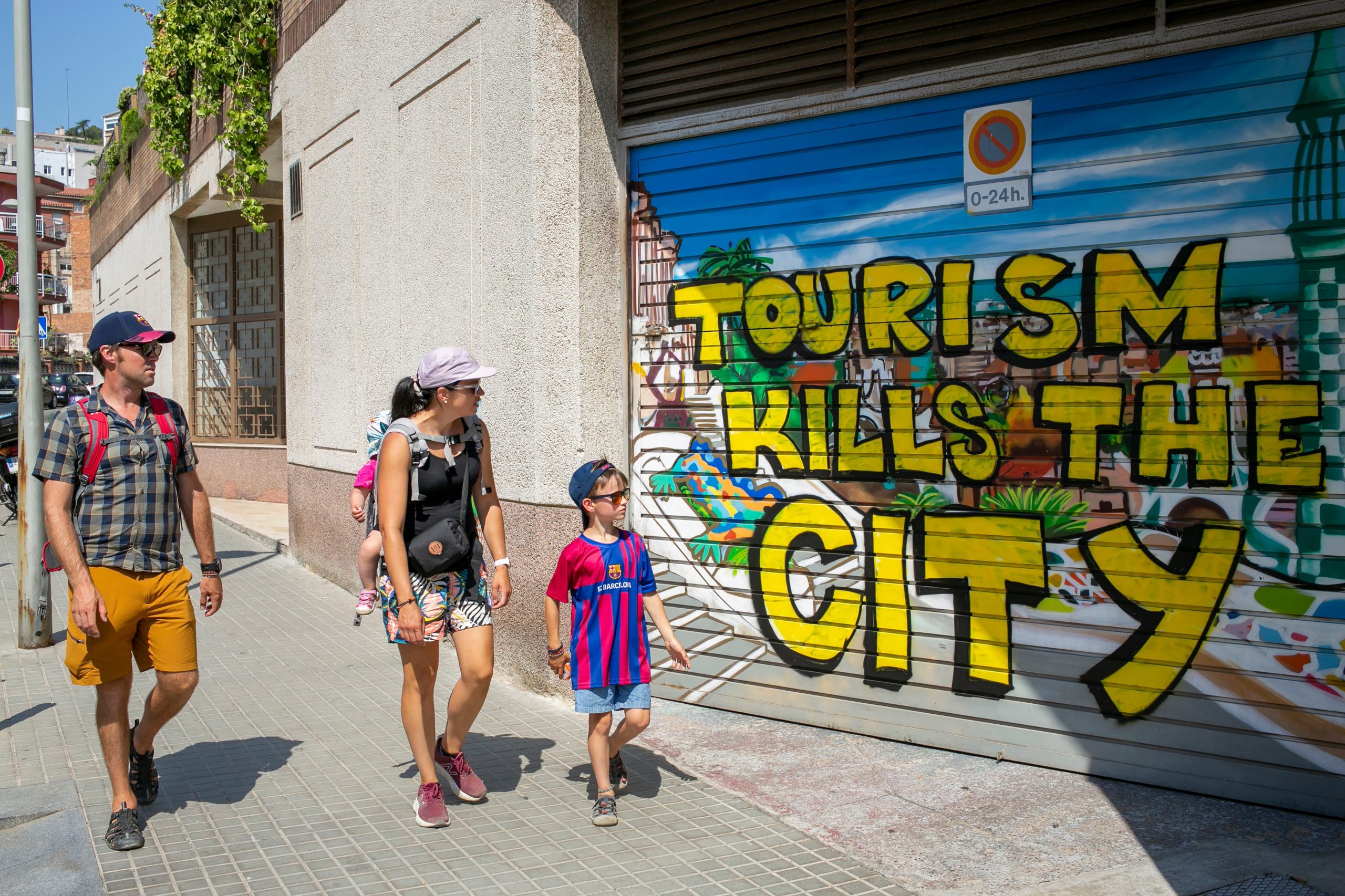
“What struck me most when I arrived is that Barcelona is crowded,” says Katie Boggs, a 26-year-old American content creator who uses her social media to record cultural differences with a humorous twist or to share her favorite corners of the Catalan capital. “I know it sounds funny to say this as an immigrant, but there’s a lot of tourism and that creates an artificial and low-quality vibe,” she adds. “Everything is so overproduced and so saturated with tourists that people don’t connect with Catalan culture.”

Boggs is clear that her videos have “completely changed” after four years in Spain: “I arrived with that mindset of a foreigner who finds everything incredibly cheap. Now I think it’s quite the opposite, and I never make those clips where you simply recommend moving here or advertise a café as the best in town.”

Like Boggs, thousands of Instagram and TikTok accounts record the daily lives of foreigners living in Spain on incomes higher than locals might expect. Some of these accounts are focused on humor, others on cultural outreach, and many are dedicated to promoting “authentic” spots — something which hospitality companies may pay for and tourists, travelers, expats, and immigrants may appreciate.

Something similar was going on during the first half of the 19th century when travel books on Spain became bestsellers in France. At that time, travelogues such as those by Alexandre Dumas (From Paris to Cádiz) and Théophile Gautier (Journey to Spain) became popular; then there was A Winter in Mallorca in which the French writer George Sand, who published under a pseudonym, recounted the months of 1839 that she spent on the island with her lover, the pianist Frédéric Chopin.

Today, social media is brimming with British and German recommendations of “the best Mallorcan spots”, unknowingly reproducing some of the clichés that were coined almost two centuries ago. If Sand flagged up the “slowness of the natives,” content creators refer to this laidback approach using adjectives such as “calm” and phrases such as a “Mediterranean lifestyle,” which amount to the same thing.

I consider myself an immigrant. I moved to Spain in 2019 with the intention of staying, and I think those terms [expat and immigrant] refer to both class and the intention – or lack thereof – to integrate

Maggie Dickmann

So, to avoid reviving old clichés or a scenario such as happens in the fifth season of Emily in Paris, when the town of Solitano loses its charm because the protagonist — a prototype of American influencers in Europe — attracts thousands of disrespectful visitors with viral posts, many foreign influencers are beginning to wonder what to say about Spanish cities. After all, phenomena like mass tourism and gentrification have impacted them as well.

From tourist to traveler and migrant to expat

“For me, the difference between tourist and traveler is tricky and has a lot to do with elitism and our need for distinction,” says anthropologist Amarna Miller, author of Beyond the Map, in which she argues that travel can continue to have positive impacts. “We associate the tourist with derogatory and somewhat caricatured categories, while the traveler is perceived as more refined,” she says. “It’s an absurd distinction, because whenever we’re using certain infrastructures – flights, buses, restaurants, hotels – we form part of the tourism industry whether we like it or not.”

Meanwhile, the boundary between immigrant and expat is actually a matter of class; many foreigners from highly developed countries like Maggie Dickmann, creator of @MurciaSecreto, want nothing to do with the expat label. “I consider myself an immigrant. I moved to Spain in 2019 with the intention of staying, and I think those terms refer to both class and the intention — or lack thereof — to integrate,” she says. “I always thought an expat was someone less willing to become a member of the local community. I suppose that translates to classism or privilege.”

Now that protests against mass tourism or gentrification are targeting foreigners on high incomes settling in Spain, Professor Paula Simó, from the University of Valencia, points out that the phenomenon is not necessarily negative but rather “becomes regressive when the housing supply is rigid and regulation weak because then profits are made on land prices with the cost of that passed on to tenants, and a risk of social segregation emerges,” she says. “It is important that the debate should be framed in terms of income, not passport. A high-income local produces similar effects on a housing-stressed district.”

Internet-optimized communication impoverishes the understanding of places, reduces their cultural complexity to a few visual codes, and turns residents into backdrops

Paula Simó, University of Valencia

People like Boggs or Dickmann are perfectly aware of this impact on housing; they themselves struggled to find an affordable place to live in Barcelona and Murcia. They are also aware of the inconveniences caused by mass tourism, but they believe careful communication is possible. “I fully understand the fear and the desire to protect your favorite local spots. I get comments like ‘Guiri, go home’ and worse [guiri being the word for a white, north European or American tourist].”

“But those nasty comments make me roll my eyes because those people don’t understand the purpose of my account and my content. Yes, it’s in English, but that’s only so it’s more accessible. In fact, the first two years of @MurciaSecreto were in Spanish because I started the account as a way to integrate. I only switched to English about a year ago because I realized there was a need for a bilingual gastronomic account in Murcia, and that’s when it started to grow. I think that’s evidence that many foreign visitors and residents want to participate more in Spanish life, but don’t have the tools to do so,” Dickmann explains.

That city doesn’t need another reel

At the Gates of Heaven, the name given to the Pura Lempuyang Luhur complex in east Bali, there is a well-known Instagram image of a lake that turns out to be an illusion created by a photographer who sits under an umbrella and holds a mirror underneath an iPhone to create the reflection. In reality, there is only a stone pavement. As journalist Kyle Chayka says in FilterWorld: How Algorithms Flattened Culture, the most popular destinations have been the subject of tricks designed to satisfy engagement metrics and achieve algorithm reward. “Internet-optimized communication impoverishes the understanding of places, reduces their cultural complexity to a few visual codes, and turns residents into backdrops,” says Paula Simó.

However, for people as active on social media as Amarna Miller, it’s possible to reach a compromise, and treat algorithms in the same way as any other mass media outlet might: “I don’t feel like a slave to the algorithm, because for me the message is more important than going viral,” she says. “That said, any piece of entertainment always respects certain parameters in order to reach the maximum number of viewers. And I don’t think that’s bad; the problem arises when clichés are used or when complex cultural issues are simplified.”

Although one might think that Spain, seen through the eyes of romantic travelers or given its own self-image as exotic — “Spain is different” — is now safe from simplification, what has happened is that the focus has merely been tweaked: “Now it is less about the primitive or picturesque and more about lifestyle. The recurring themes are siesta, partying, midnight dinners, street life, and above all, the low cost of living. Much of the appeal rests on economic asymmetry, because what is presented as quality of life is, in part, due to relative purchasing power versus lower local wages. The content is also designed for the audience of the country of origin, as a means of comparison,” explains Simó. That said, Simó perceives two important differences between now and the era of Dumas or Gerald Brenan: the first is that locals can correct or parody that content on social media, and the second is that some local content creators adopt those clichés because they have detected their algorithmic reward.

The popularity of these platforms both among Spaniards and foreigners is confirmed by how often traditional media cite the opinion of a foreign traveler to achieve viral headlines such as, “An American influencer reveals Spain’s best-kept secret” or “The American influencer stunned by the Málaga Fair.” That foreigners are the best Hispanists is almost another cliché – an idea that was promoted by a scene starring Glenn Close in the award-winning movie La Bola Negra, directed by Javier Calvo and Javier Ambrossi. Besides apparently being able to capture Spanish culture and customs in an easily digestible format, they are also capable of generating business.

David Díaz, head of social media at Minor Hotels, which has more than 84 establishments in Spain, explains that right now more than 60% of guests are inspired by social media to make the trip. He also says that his company has managed to access a different market thanks to influencers. Moreover, specialized creators, whether foreign or Spanish, “generate greater audience retention” and a real impact on the number of bookings, while more traditional national figures such as journalists affect brand image more. Dickmann points out that much of the feedback she receives comes from Murcia residents who have learned to see the restaurants in their city in a new light.

Although the most numerous accounts are those focused on spectacular views or affordable leisure in Spain, many content creators who have been established in the country for a while are exploring other types of content. Boggs’s advice: “Above all, research, learn the language, and don’t come thinking you’re super rich because everything is very cheap: that’s a terrible mentality.”

With this approach, there’s room for even the most traditional entertainment. Because sometimes it’s fun to see what surprises an American the most. For example, in Murcia, Dickmann talks about how genuinely warm and welcoming people are, while also mentioning “The Sidewalk Phalanx” — the lack of spatial awareness with groups of three occupying the entire sidewalk and people walking or stopping near you even when there’s space to give you a wider berth, treating “the street as an extension of the living room,” “the unfiltered gaze,” especially from the elderly, and “sheer devotion to [department store] El Corte Inglés,” and “the frenzy around Cortylandia.” She has our number.

Sign up for our weekly newsletter to get more English-language news coverage from EL PAÍS USA Edition

Continue Reading

Housing politics

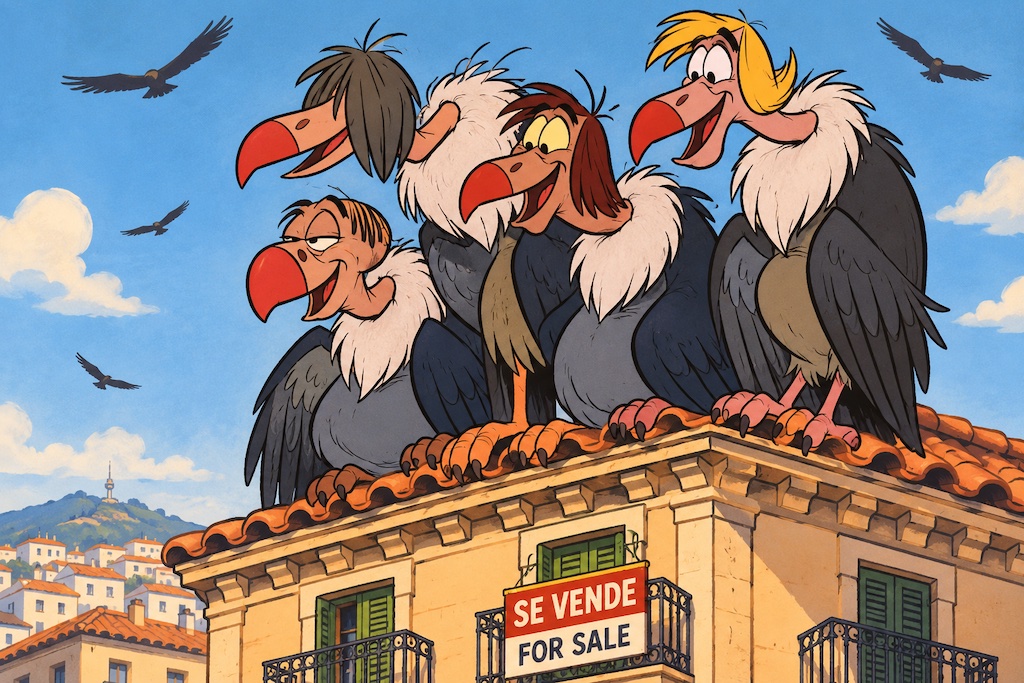
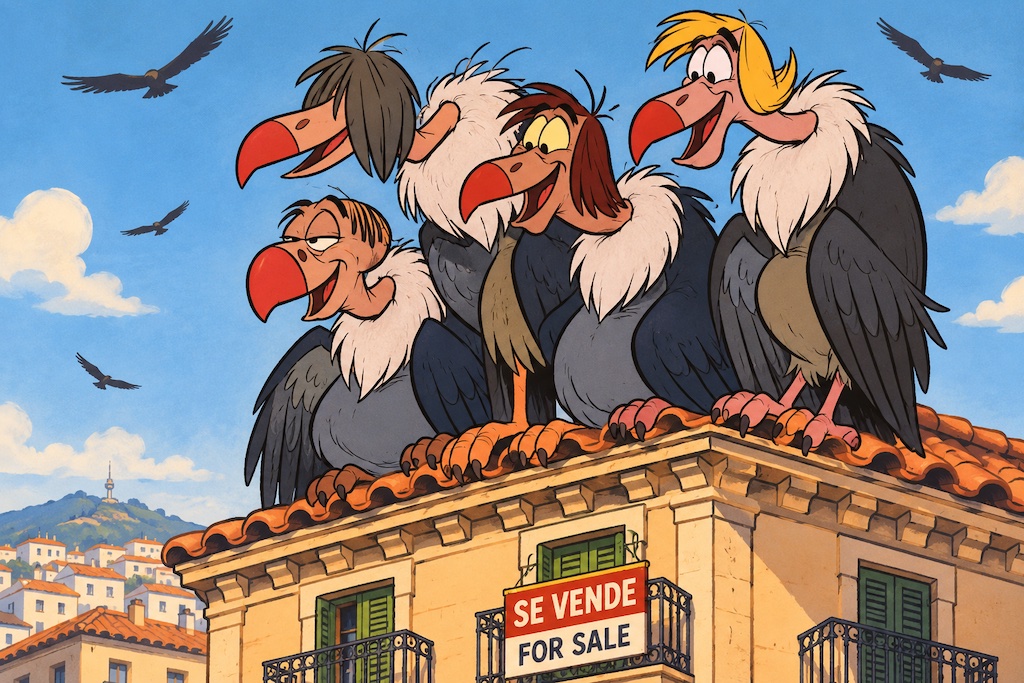
The ‘vulture-Fund’ Bogeyman Blamed For Spain’s Soaring Rents And Housing Crisis

Published

on

the-‘vulture-fund’-bogeyman-blamed-for-spain’s-soaring-rents-and-housing-crisis
“What we gonna do?”

After years of politicians blaming so-called ‘vulture funds’ for Spain’s housing crisis, the idea that they dominate the rental market has become part of the public consciousness. But how much of the market do they actually control?

Asked what the next Spanish government should do about housing, readers of 20minutos called for more public housing and a crackdown on vulture funds.

It’s a revealing example of how the term ‘vulture fund’ (fondo buitre) has become embedded in Spain’s housing debate. Politicians on the left have spent years blaming these investors for soaring housing costs, and calls to clamp down on them now extend beyond the left. Their dominant role in the Spanish housing market is now taken for granted.

For example, Social Rights Minister Pablo Bustinduy recently accused foreign investment funds and wealthy landlords of investing in housing to speculate and push up rents. Podemos housing spokesperson Lucía Muñoz argued that Spain’s problem isn’t insufficient housing, but properties being used for speculation. These supposedly all-powerful ‘vulture funds’ are buying up homes, hoarding properties, driving up rents and extracting wealth from ordinary Spaniards.

But what do the figures tell us?

Where did all the vultures come from?

In its original financial sense, a ‘vulture fund’ is an investment fund that specialises in buying distressed assets or debt at substantial discounts, typically in the aftermath of a financial crisis or when businesses are facing insolvency. The objective is to make a profit by restructuring, recovering or reselling those assets. This is quite different from a pension fund or property investment trust that invests in residential housing to generate long-term rental income. The distinction seems to have been largely lost in Spain’s housing debate, where the term ‘vulture fund’ has become a catch-all pejorative for institutional investment in housing.

There was a time when distressed-asset investors were active in the Spanish property market. In the aftermath of the 2008 crash, international funds acquired repossessed properties, distressed loans and unfinished developments at substantial discounts.

Some completed abandoned developments or restructured assets before selling them on. This was opportunistic investment in a market devastated by the crash.

Spain also introduced and subsequently reformed its SOCIMI regime, the Spanish equivalent of real estate investment trusts (REITs), to encourage property investment, including investment in rental housing.

Spanish banks (those that survived the crash), meanwhile, became reluctant property owners in the aftermath of the crash, obliged to repossess homes and unfinished developments when borrowers defaulted on their loans. Some of those assets remain on their books to this day, yet these institutions are also lumped into the ‘vulture fund’ category, when the last thing they wanted was to own the properties in the first place.

Yet the expression ‘vulture fund’ is now routinely applied to institutional property investors generally, regardless of their investment strategy, and the terms ‘vulture funds’ and ‘speculators’ have become almost interchangeable in Spain’s housing debate.

Buying distressed assets at the bottom of a market crash and investing in housing to generate long-term rental income are two quite different businesses.

Who actually receives Spain’s rental income?

An interesting investigation by elDiario.es, based on official statistics, estimates that Spanish tenants paid almost €28 billion in rent in 2025.

Approximately 88% went to individual landlords, with around 45% going to those renting out just one property.

The remaining 12% includes companies, undeclared rentals and other recipients. Investment funds account for only part of that figure.

Who receives Spain’s rental income?

Source: elDiario.es · INE and Spanish Tax Agency · 2025 · Share of total rental income

Who receives Spain’s rental income?Individuals letting one home: 45%; Individuals letting two or more homes: 43%; Companies and other recipients: 12%0%10%20%30%40%50%Individuals letting one homeIndividuals letting one home: 45%45%Individuals letting two or more homesIndividuals letting two or more homes: 43%43%Companies and other recipientsCompanies and other recipients: 12%12%

Rounded estimates. Other recipients include public entities and undeclared rentals. Investment funds represent only a subset of this category.

View chart data
Who receives Spain’s rental income?
Category Value
Individuals letting one home 45%
Individuals letting two or more homes 43%
Companies and other recipients 12%

The Bank of Spain’s own research paints a similar picture: individuals own an estimated 92% of privately owned market-rental housing, whilst companies and other private legal entities own just 8%.

That minority includes all sorts of corporate owners, not just investment funds, let alone distressed-asset specialists.

A bogeyman with remarkable staying power

In one of his final interviews before Sunday’s general election, Socialist Prime Minister Pedro Sánchez told 20minutos how he intends to tackle the housing crisis if returned to power: “By building more and regulating to combat those who speculate.”

The promise to build more homes is familiar enough after eight years in power, during which construction has consistently fallen short of demand. But the determination to clamp down on speculators remains undiminished.

Sánchez did, however, make one potentially encouraging observation: “We need to build more housing, especially protected housing, and regulate, defining what vulture funds, investment funds and large property owners actually are.” A proper definition of a vulture fund would be a welcome development, given how indiscriminately the term is used in Spain.

The distressed-asset opportunities that originally attracted opportunistic funds to Spain between 2010 and 2015 bear little resemblance to today’s market, characterised by high acquisition costs, rising prices and extensive regulation.

Yet the ‘vulture fund’ remains a central character in Spain’s housing debate, long after the circumstances that gave rise to it have changed. More than a decade later, combating speculators remains a stated priority for Sánchez, despite the scant evidence that such investors even exist in the Spanish housing market today.

Spain has a very real housing crisis, but much of the political debate still revolves around fighting a largely imaginary enemy. No good solutions will come of that.

Continue Reading

Asesinato pareja

Muere La Mujer Apuñalada Por Su Expareja En Bilbao

Published

on

By

muere-la-mujer-apunalada-por-su-expareja-en-bilbao

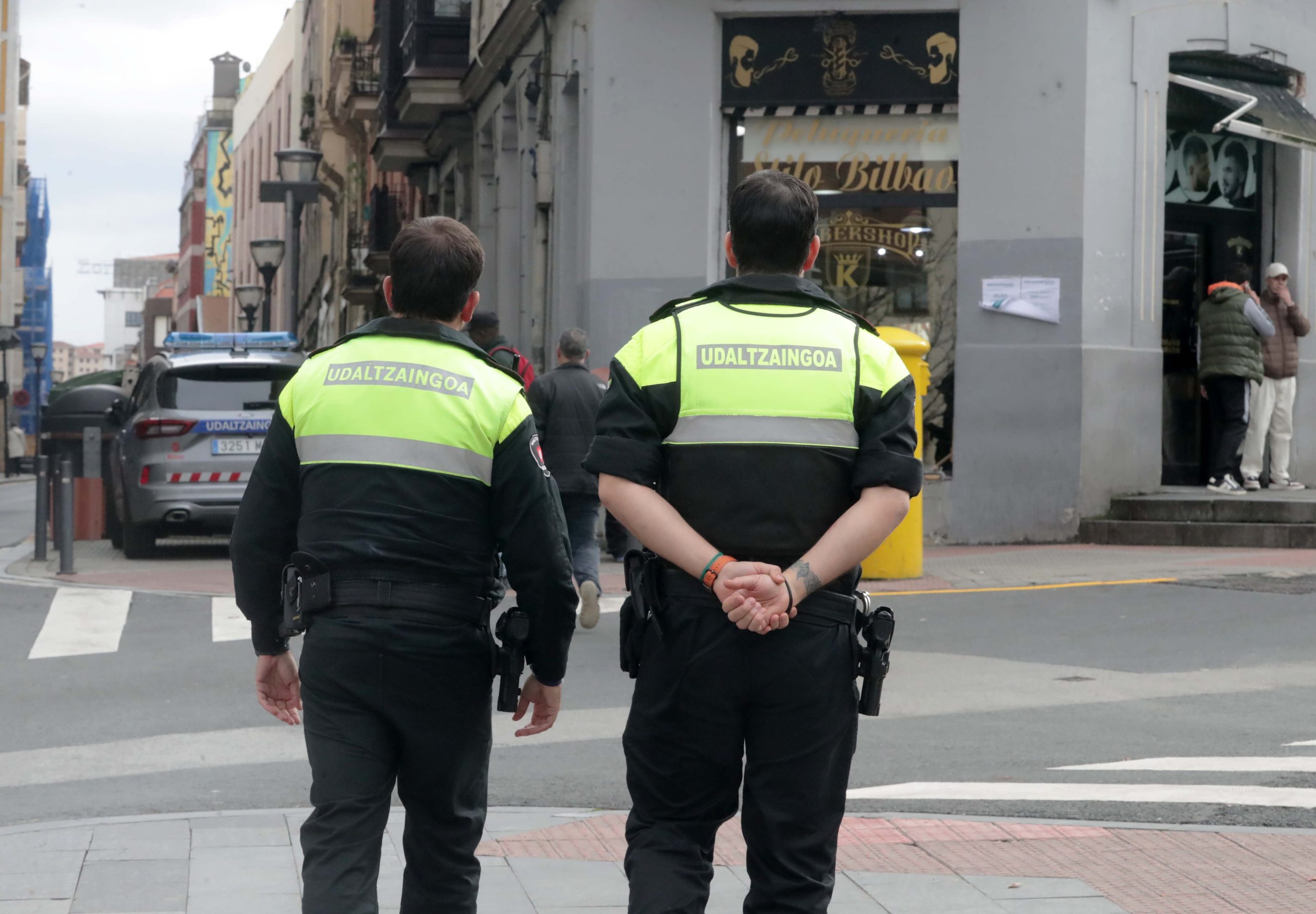
Una patrulla de la Ertzaintza en Bilbao, en una imagen de archivo.

La mujer apuñalada el jueves por su expareja en Bilbao ha fallecido este viernes. La Ertzaintza detuvo ayer a un hombre de 47 años por herir a la mujer con un cuchillo en una vivienda de la ciudad.

Seguir leyendo

Continue Reading

Trending

Copyright © 2017 Spanish Property & News