Connect with us

%

San Miguel De Salinas Charity Curry Lunch

Published

on

san-miguel-de-salinas-charity-curry-lunch

A tasty lunch supports abandoned animals. Credit: Lakshitha5991 / Shutterstock.com.

Curry lovers can enjoy a Friday lunch while helping hundreds of abandoned animals at a charity fundraiser in San Miguel de Salinas on December 4. Golden Curry Indian Restaurant is hosting a special meal in aid of Finca La Castellana Animal Welfare Centre, with part of every lunch payment going directly towards feeding rescued animals.

December 4: Golden Curry hosts charity lunch for Finca La Castellana

Golden Curry Indian Restaurant will welcome diners at 1:30 PM on Friday, December 4, for a fundraising lunch supporting Finca La Castellana Animal Welfare Centre.

The rescue centre cares for around 300 abandoned animals, providing food, shelter and ongoing care.

With so many animals depending on the centre, feeding them represents a substantial monthly expense, making community fundraising events an important source of support.

The charity lunch costs €14.95 per person, with €5 from every meal going directly towards feeding the rescued animals.

Friends and groups are welcome to attend, offering an opportunity to enjoy a meal together while supporting a local animal welfare cause.

Indian curry lunch includes food and a drink for €14.95

Diners will receive a poppadom and pickle tray, followed by a choice of chicken curry served with rice or naan bread.

The price also includes a small beer, glass of wine or soft drink.

Of the €14.95 paid by each diner, €5 will be donated to Finca La Castellana, helping the centre meet its ongoing food costs.

There will also be a raffle during the lunch to raise additional funds for the rescue centre.

The event combines a Friday afternoon meal with practical support for animals that have been abandoned and are now receiving care at the centre.

For Finca La Castellana, contributions from events such as this help provide food for the many dogs and other rescued animals relying on its services.

How to book the San Miguel de Salinas charity lunch

The fundraiser takes place at Golden Curry Indian Restaurant, Calle Antonio Machado, San Miguel de Salinas, on Friday, December 4, at 1:30 PM.

Tables should be reserved in advance, particularly for friends or groups planning to attend together.

To book, contact Jen by WhatsApp on (+34) 744 640 011.

%

EasyJet Flight Emergency Return To Edinburgh

Published

on

easyjet-flight-emergency-return-to-edinburgh

Overflying EasyJet flight appears to have blackened right engine. Credit: @jenzzo X

An easyJet flight bound for London Gatwick was forced to return to Edinburgh Airport after a loud bang was heard shortly after take-off on Thursday, November 26.

Flight U2816, operated by an Airbus A321neo, declared an emergency after reportedly experiencing an engine problem, with emergency crews waiting on the ground for its return.

The aircraft had departed Edinburgh at around 8.46pm, according to flight-tracking data. Reports say the bang was heard shortly after take-off, with residents in the Scottish capital describing a loud explosion-like noise overhead. Passengers and people living beneath the flight path were left concerned as the aircraft turned back towards the airport.https://x.com/flightdrama/status/2126065820446916726?a=J53eRHoMVIlJqnlTkak&s=20

What happened to the EasyJet flight?

The aircraft, registered as G-UZMC, was travelling from Edinburgh to London Gatwick when the incident occurred. According to aviation reports, the pilots declared a general emergency, transmitting the international emergency code 7700 to air traffic control.

The aircraft was reportedly flying at around 5,000 feet while the crew dealt with the problem. Reports also suggest the left engine was shut down after an engine warning. An engine stall or compressor surge has been suggested as a possible explanation for the bang, although the exact cause has not been confirmed.

Footage shows the easyJet Airbus A321neo on its final approach to Edinburgh Airport this evening following a suspected engine failure shortly after takeoff.

The aircraft successfully landed 53 minutes after departure.

🎥 Credit: @jenzzo on X https://t.co/KiDh9EWSiH

— Flightdrama (@flightdrama) November 26, 2026

A compressor surge can occur when airflow through a jet engine becomes disrupted, sometimes producing a loud bang. However, there has been no official confirmation that this was the cause of Thursday’s incident.

Emergency crews wait at Edinburgh Airport

Emergency services were placed on standby as the aircraft made its way back to Edinburgh. Police and firefighters attended the airport, with several roads reportedly closed as a precaution while the aircraft prepared to land. According to The Scottish Sun’s report, the aircraft landed safely back at Edinburgh Airport after circling the area.

There have been no confirmed reports of injuries among passengers or crew, but plenty of shocked travellers.

🚨Ahora un Airbus A321 de EasyJet declarado en emergencia apenas despegar

El vuelo operaba la ruta Edimburgo a Londres y se encuentra realizando maniobras para volver a aterrizar https://t.co/M3kkEyE5DM

— SOLO DE IDA✈️ (@solodeida) November 26, 2026

What happens after an aircraft engine failure?

Commercial passenger aircraft are designed to continue flying and land safely following the loss of one engine. Pilots receive extensive training for engine-related emergencies, including shutting down a faulty engine and returning to an airport when required.

The aircraft is expected to undergo technical inspections before returning to service. The cause of the incident and the full details of the emergency response have not yet been confirmed.

Passengers travelling from Edinburgh Airport are advised to check directly with their airline for any disruption to their onward travel. The incident comes as another reminder of the importance of aircraft safety procedures, with the crew bringing the plane back to the airport without any confirmed injuries.

Continue Reading

%

Expensive Pet Travel Certificates Could Be Scrapped As New UK-EU Rules Take Shape

Published

on

expensive-pet-travel-certificates-could-be-scrapped-as-new-uk-eu-rules-take-shape

Eligible owners will be able to obtain a multi-use pet passport instead. Photo credit: yar-andy/Shutterstock

Anyone planning to move to Spain with a dog or cat, or regularly travelling between Britain and the continent with a pet, could soon face a smaller bill at the vet. From 1 March 2028, British residents will be able to use a multi-use pet passport for trips to Spain and other EU countries, ending the need to buy a new Animal Health Certificate for every journey.

The change is part of a new UK-EU agreement on animal and plant health rules. It will help people who split their time between Britain and Spain, or regularly holiday in other European countries. 

What will change for pet owners?

Since Brexit, people living in Great Britain have generally needed an Animal Health Certificate (AHC) each time they take a dog, cat or ferret into the EU. The document must be issued by an official vet within 10 days of the animal entering the EU.

The current certificate has a short window for entering the EU: it must be issued no more than 10 days before arrival. Once the pet has entered, it can be used for further travel within the EU and for returning to Great Britain for up to six months, provided the rabies vaccination remains valid. But it is still a single-use document for a new trip from Britain.  Depending on the veterinary practice and location, an AHC currently costs between £90 and £250. Several trips a year can therefore mean hundreds of pounds in certificate fees alone.

Under the new arrangements, eligible owners will be able to obtain a multi-use pet passport instead. It will cover repeated travel to EU countries, removing the need to arrange and pay for a fresh AHC before every separate trip. It will cover dogs, cats, ferrets and assistance dogs, reducing repeated veterinary appointments as well as paperwork. 

Spain, France and Portugal trips

For people considering a move to Spain, it could simplify trips back to visit family. It may also help those who keep homes in both countries and travel between them regularly. The passport will cover travel across the EU, including France, Portugal, Germany and the Netherlands.

There is an important distinction for people relocating permanently. The new scheme is designed for pet owners resident in Great Britain travelling to the EU. People who move their main home to Spain may fall under the EU pet passport rules as residents there, rather than relying on the new British scheme. The Government has yet to publish the detailed application process. 

Horse owners will also benefit from separate changes

The agreement also includes new arrangements for horses and other equines, which could make a considerable difference to people who compete, breed or keep horses in Britain and Spain. At present, taking a horse from Great Britain to an EU country involves veterinary certification and health checks, with Export Health Certificates potentially costing up to £200 per journey.

The new arrangements are intended to replace these with Intra-Trade Animal Health Certificates (ITAHCs) for eligible movements, reducing duplicated paperwork and the costs associated with repeated journeys.  This could benefit British riders competing in Spain, Spanish-based competitors travelling to Britain, breeders and equestrian businesses transporting horses between countries.

It may also make it easier for owners who move horses between the UK and countries such as France, Portugal, Germany and the Netherlands. The changes will also bring new requirements for equine premises, including registration, identification, movement records and biosecurity. This means yards, riding schools, studs and other establishments may need to prepare for updated responsibilities. 

What happens before 2028?

Nothing changes immediately. The new passports cannot be issued yet, and the Government says further information about how to apply will be published in 2027. Until the scheme starts on 1 March 2028, people travelling from Great Britain to an EU country must continue to obtain an Animal Health Certificate. Owners will still need to meet health requirements, including microchipping and a valid rabies vaccination. A pet that needs its first rabies vaccination may also have to wait before it can travel. 

The rules follow changes introduced in April 2026, when British residents lost the right to use EU pet passports to enter the EU, even if they had a holiday home there.  For anyone weighing up a move to Spain with a four-legged family member, or already making regular journeys across the Channel, the return of multi-use passports is a welcome change. It will not remove every travel requirement, but it should mean one less expensive veterinary bill every time they set off.

Continue Reading

%

Spain Cannabis Investigation Uncovers Underground Bunker Disguised As A Children’s Playground

Published

on

spain-cannabis-investigation-uncovers-underground-bunker-disguised-as-a-children’s-playground

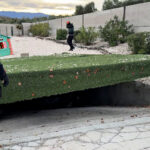
Officers lifted the artificial grass and found an access hatch. Photo credit: Guardia Civil/Ministro de Interior

A children’s playground is supposed to be somewhere parents can let their little ones run around without a second thought. But in Granada, the swings, playhouse and artificial grass were hiding something far more sinister: a concealed entrance to an underground cannabis farm containing 1,954 plants.

The underground plantation was found on a property in Las Gabias, where the Guardia Civil uncovered the entrance beneath what appeared to be a small children’s playground. The surface had been dressed with artificial grass, a swing, a playhouse and a small mat. White decorative stone covered the surrounding ground, helping disguise the structure. It was not simply a cannabis farm hidden in a basement. The play area itself concealed a hydraulic hatch and a vehicle ramp leading down into the bunker.

A hidden entrance beneath the swings

Officers lifted the artificial grass and found an access hatch used to operate a large hydraulic door. Once it was opened, a ramp led down into the underground installation, which measured around 180 square metres and stood five metres high. Inside around 2,000 cannabis plants in two large growing rooms. Both were fitted with lighting, ventilation and climate-control systems designed to support intensive cultivation.

The discovery raises an obvious question about the setting: the entrance had been disguised as a place for children to play. The Guardia Civil has not said that children were present or that the area was being used by children, but the equipment was deliberately arranged to make the concealed access look like an ordinary play space.

Electricity theft on the scale of 100 homes

Investigators also found an electricity tower which was allegedly being used to make an illegal connection to the power network. The load detected was equivalent to the electricity consumption of around 100 homes.

The bunker was described by the Guardia Civil as the largest and most sophisticated underground cannabis-growing installation discovered so far in Granada province.

A cannabis plantation in an underground bunker
almost 2,000 plants were being grown in two underground rooms. Photo credit: Guardia Civil/Ministerio de Interior

Five arrested as investigation widens

The discovery formed part of Operation Nazarí-Sabika 04, an investigation into an alleged criminal organisation involved in growing and processing cannabis and supplying specialist equipment to other drug-trafficking groups across Spain. The operation began more than a year ago and entered its main phase on November 17, when officers carried out 13 searches in Granada city and the municipalities of Albolote, Jun, Las Gabias and Maracena.

Five people were arrested and three others are being investigated on suspicion of drug cultivation and production, electricity fraud, illegal possession of a prohibited weapon and membership of a criminal group. The alleged ringleader has been remanded in custody. Across the three plantations uncovered during the searches, officers seized 2,479 cannabis plants. They also confiscated two cars, two vans, a caravan, a trailer, a stun gun and €22,970 in cash.

A cannabis business behind the operation

Officers also sealed premises specialising in cannabis-growing equipment, known as a grow shop, which was allegedly linked to the organisation. The Guardia Civil estimates its value at several million euros. Investigators believe the shop’s owner used it to obtain equipment for the underground plantation and to supply products to other locations around Spain.

The investigation was carried out by the Guardia Civil’s criminal intelligence and Policía Judicial units in Granada, together with officers from its Las Gabias investigation team.

Continue Reading

Trending

Copyright © 2017 Spanish Property & News