Connect with us

Argentina

Photographs Forgotten In A Drawer That Now Tell The Story Of Tierra Del Fuego

Published

on

photographs-forgotten-in-a-drawer-that-now-tell-the-story-of-tierra-del-fuego

The project was, like many others, born of curiosity — a message in a bottle. A message that, in the end, someone picked up on the other shore. Carolina Bozzano de la Llosa runs an enterprise that sells brooches inspired by the identity of Tierra del Fuego, Antarctica, and the South Atlantic Islands, Argentina’s youngest and southernmost province.

She decided to give some of her products to the brand’s social media followers and, in exchange, asked them to send old keepsakes from the province in Patagonia. “I thought no one would send in any material, but the exact opposite happened,” says the entrepreneur. “A huge number of photos started coming in. I repeated the call for submissions, and the same thing happened. So I thought, ‘There’s something about us Fuegians when we see our photos, our history.’”
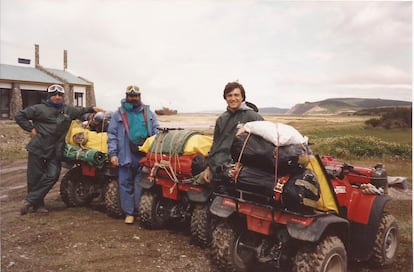
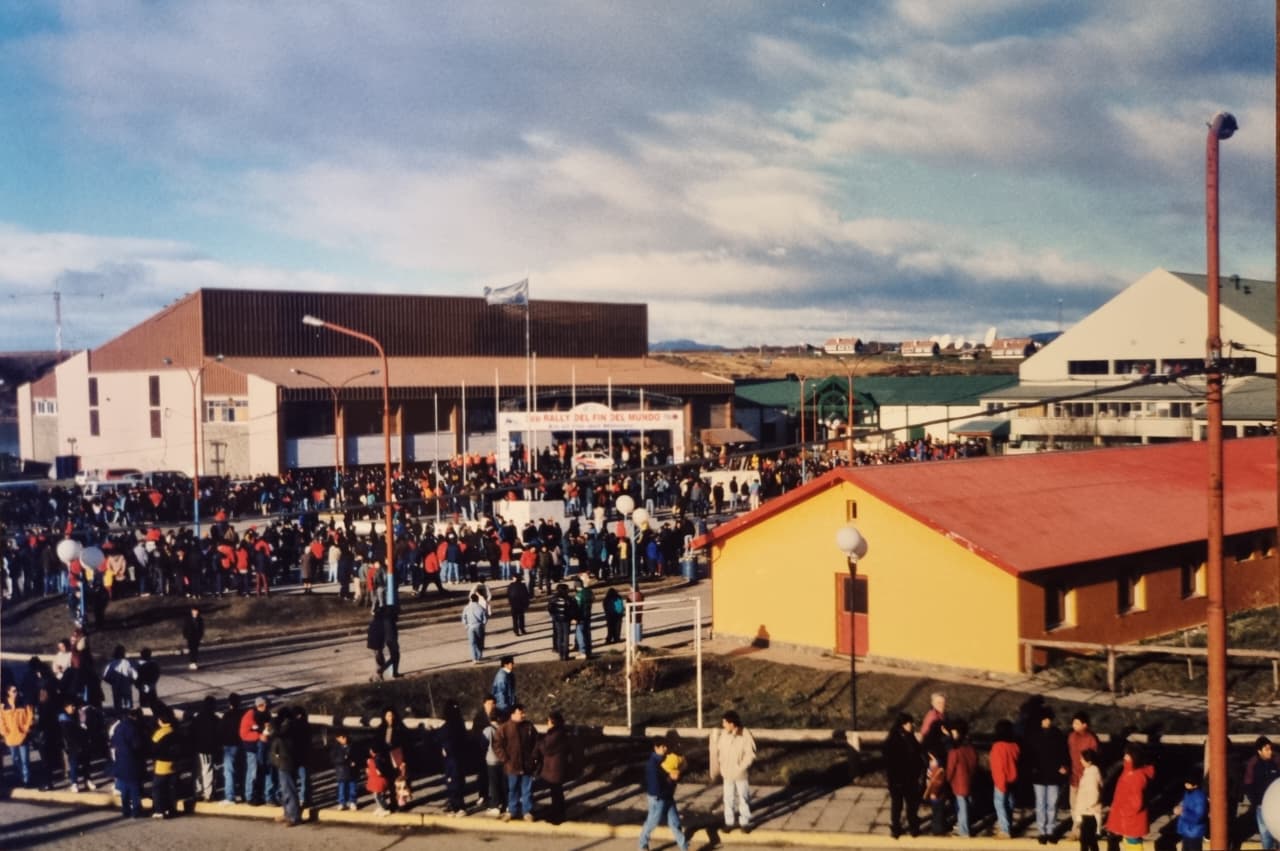
Surprised by the response, she contacted Victoria del Valle and Dina Rakhimzhanova, two artists and cultural managers from the province who run the Alpina graphic fair. The initial idea was to mount a photographic exhibition with the collected material, but they went further and created Álbum: Archivo Fotográfico Fueguino (Album: Fuegian Photo Archive), an initiative that brings together photographs and other documents about living in Tierra del Fuego between 1980 and 2000.

The initiative began in February 2026 and now includes more than 450 photographs contributed by the community. A large portion of the material was added during digitization days in Ushuaia, Río Grande, and Tolhuin, where residents brought their albums to share images and tell their stories. The activities were made possible by the Futura program run by the Centro Cultural de España in Buenos Aires, with support from Fundación Williams.

The project takes place in a province whose population was formed through successive waves of migration. One of the main turning points was the passage of the Industrial Promotion Law in 1972, which spurred a steady influx of new residents. Tierra del Fuego grew from 13,527 inhabitants in 1970 to 101,079 in 2001. Del Valle recalls: “People came from all over the country, and it created a very unique mix. In my family’s case, photographs were the only way to show my grandparents — who weren’t here — how we were growing up. There’s a lot of that loving gesture in the act of taking a photo to show those who are far away what the family was like.”

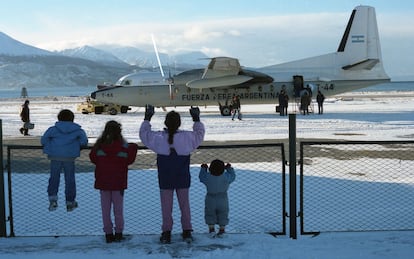
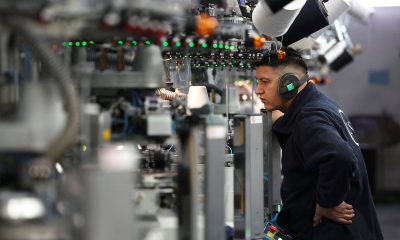
During the digitization sessions and via a virtual form, images of everyday life began to appear. You can see families playing in the snow, workers from factories that have since closed their doors, vanished trades and farewells at the airport in a harsh winter. That family microcosm also documents the province’s economic, urban, and social transformations. “We thought it was important for people to realize that something they had tucked away at the bottom of a drawer could be relevant information for others,” adds Del Valle. “They were moved to see their photos on display and to discover that people who may not be central figures in national history are, in fact, central figures in our own history.”
Tierra del Fuego, Antarctica, and the South Atlantic Islands became a province in 1991, shedding its status as a national territory. Its recent history poses the challenge of preserving a collective memory that gathers the experiences of those who arrived and helped build its identity. “Often the preservation of memory depends more on people than on institutions capable of maintaining those archives over time. Added to that is defunding, which causes part of that heritage to be lost,” says the project’s leader.

When they began working on the archive, the creators also contacted Betiana Bellofatto, a photographer who specializes in image preservation. “We talked with people about how to care for photographs, what to bear in mind and which environmental factors can affect them, such as temperature and humidity,” explains the expert who, together with Florencia Díaz, runs Notro Espacio, a platform specializing in photographic preservation.

Bellofatto also highlights the value of the project for reconstructing the territory’s history. “The women are creating a collective archive of photographs related to the habitat of Tierra del Fuego. It’s a way to begin reconstructing something very particular about the territory and a way of life that is different from other places.”

María José Burgos is a conservator, researcher and lecturer specializing in photographic archives. She currently coordinates the conservation area of Fototeca ARGRA (Association of Photojournalists of the Argentine Republic) and advises museums, collections, and documentary holdings across the country. For Burgos, the value of initiatives like the Álbum project is that they make it possible to work on a community’s memory, identity, and heritage. “Modes of life, particular moments, spaces or places that no longer exist are recorded. Photos contain a lot of information,” she says.

For the specialist, the challenge is guaranteeing the continuity of these initiatives. The tasks of collecting, digitizing, cataloging, and disseminating require technical knowledge and standards, so she considers it essential to form alliances with specialized organizations and state or municipal institutions. “Preserving memory is a political act,” she says. She also urges reflection beyond the recovered images; she invites thinking about the photographs that were never taken, the families who could not record their lives, and the place those absences occupy in a community’s memory.

Álbum: Archivo Fotográfico Fueguino will continue its work with new digitization days planned for next year and the development of a website that will allow the archive to be consulted as a complement to its work on social media. Bozzano de la Llosa dreams of Álbum continuing to grow and becoming an increasingly large public and accessible archive. “Our idea was never to collect the photos to keep them to ourselves, but to share them so everyone can see them. We would like people to keep contributing information about each image because often someone recognizes a detail, a date, or a place that helps complete the story.”

Sign up for our weekly newsletter to get more English-language news coverage from EL PAÍS USA Edition

Continue Reading
Click to comment

Leave a Reply

Your email address will not be published.

America

Argentina Slips Into Recession, Testing Milei’s Promise Of Growth

Published

on

argentina-slips-into-recession,-testing-milei’s-promise-of-growth

Argentina has formally entered a technical recession after official statistics confirmed on Tuesday that GDP has contracted for two consecutive quarters. The situation runs directly counter to the promise of President Javier Milei, who during his three years in office has focused much of his attention on economic indicators and came to power presenting himself as a “specialist in economic growth, with and without money.”

Although the Monthly Economic Activity Index (EMAE) for September showed growth of 1.1% compared with the previous month, it was not enough to offset the performance of the first two months of the third quarter, which were marked by a very poor July (-2.5%) and only a modest rebound in August (0.4%). It is already clear that the quarterly figure will be negative, although the exact number will not be known until December 16.

According to the report released by the National Institute of Statistics and Census (INDEC), only five of the 16 sectors surveyed posted positive results.

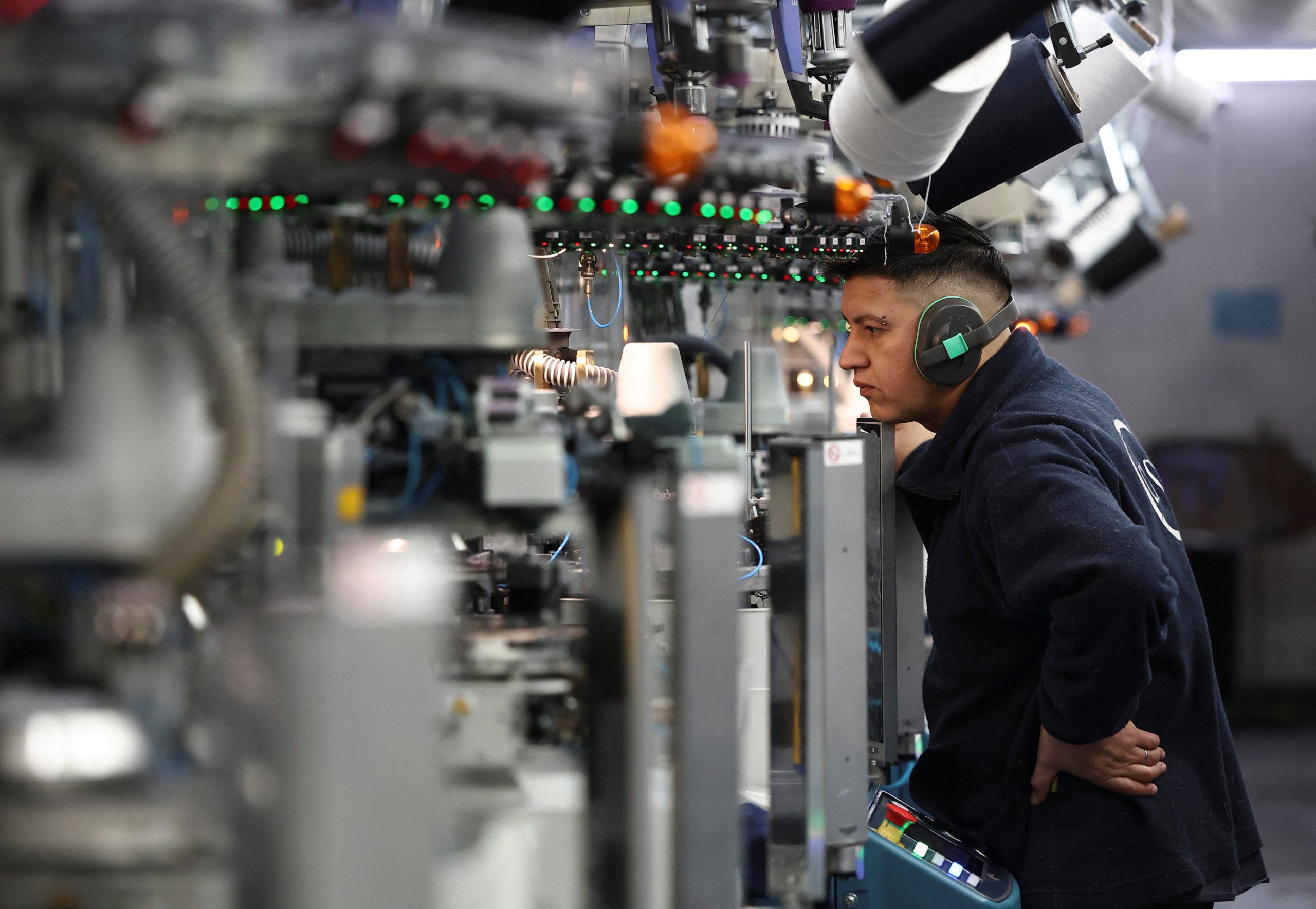
“What we’re seeing is an economy in which the major drivers of demand — wages, the number of employees, credit, and public spending — are all stagnant, with no signs of recovery,” says Matías Rajnerman, chief economist at Banco Provincia.

Rajnerman believes the biggest problem is the uncertainty regarding what could reverse this trend. Since Milei took office, a highly uneven dynamic has taken shape, with the sectors that carry the greatest weight in economic activity and employment sinking, while othes — such as mining, oil, and agriculture — that generate fewer jobs and have greater difficulty driving the rest of the economy are outperforming the rest.

“When you look at it from the supply side, it’s hard to imagine — beyond mining and quarrying — which sector could lead the recovery, because the agricultural sector isn’t expecting a bumper harvest, industry and commerce — which at one point had shown signs of stabilizing — are back in the red, and construction isn’t rebounding. Today, 85% of the economy is in the red,” Rajnerman says.

For the consulting firm Analytica, the outlook is not much more optimistic. “The key lies in the last quarter because, if there is no recovery, GDP in 2026 will fall compared to 2025. For now, our projection is for marginal growth for the year, below 0.5%,” notes Claudio Caprarulo, the director of Analytica.

Initially, the government projected 5% GDP growth for this year, a forecast it later revised downward. “For 2027, the outlook isn’t much better,” Caprarulo adds. “The factors affecting economic activity will continue to play a role, compounded by the consequences of an election season that, for now, is creating more uncertainty.”

A recession is hardly unfamiliar territory for Argentines. According to calculations by economist and university professor Francisco Eggers, this is the ninth recession the country has endured in the past 15 years. Most previous downturns were overcome through expansionary monetary or fiscal policies, something Milei has been reluctant to embrace.

The more optimistic view, echoing arguments put forward by the government, holds that Argentina is undergoing a process of productive transformation in which destruction has preceded creation. To the extent that some of the negative effects can be absorbed, economic activity could rebound, driven by the most dynamic sectors and the full implementation of measures such as the Large Investment Incentive Regime (RIGI).

Several nationwide surveys published in recent weeks have recorded growing public concern about the economy, particularly with regard to jobs and wages. Although Milei remains firmly committed to his economic policy framework, at least rhetorically he appears to have taken note: he has gone from mocking those who warned of “people who cannot make ends meet” to acknowledging that some are experiencing “hardship.” Inflation, meanwhile, is no longer the top concern among Argentines. Price increases have slowed during the far-right president’s administration, although inflation remains far from under control, much less eliminated as Milei had pledged. Inflation is expected to end the year above 30%.

The government is also facing growing market skepticism toward its economic plan, reflected in several developments. On the one hand, investors have been unwinding peso positions and moving into dollars, pushing up the currency’s value in recent weeks. On the other, Argentina’s risk premium has surged dramatically, climbing back above 1,000 basis points. This points to limited confidence that Argentina will be able to meet its debt obligations in full and on time, despite the president’s unwavering commitment to policies that initially won market approval, such as deep public spending cuts. Neither the achievement of a fiscal surplus nor stronger export performance appears sufficient at this stage, particularly when even the International Monetary Fund has warned that the benefits of economic growth need to be distributed more evenly and reach workers.

Sign up for our weekly newsletter to get more English-language news coverage from EL PAÍS USA Edition

Continue Reading

Argentina

Peter Thiel Expands Investments In Vaca Muerta’s Largest Oil Exporter

Published

on

peter-thiel-expands-investments-in-vaca-muerta’s-largest-oil-exporter

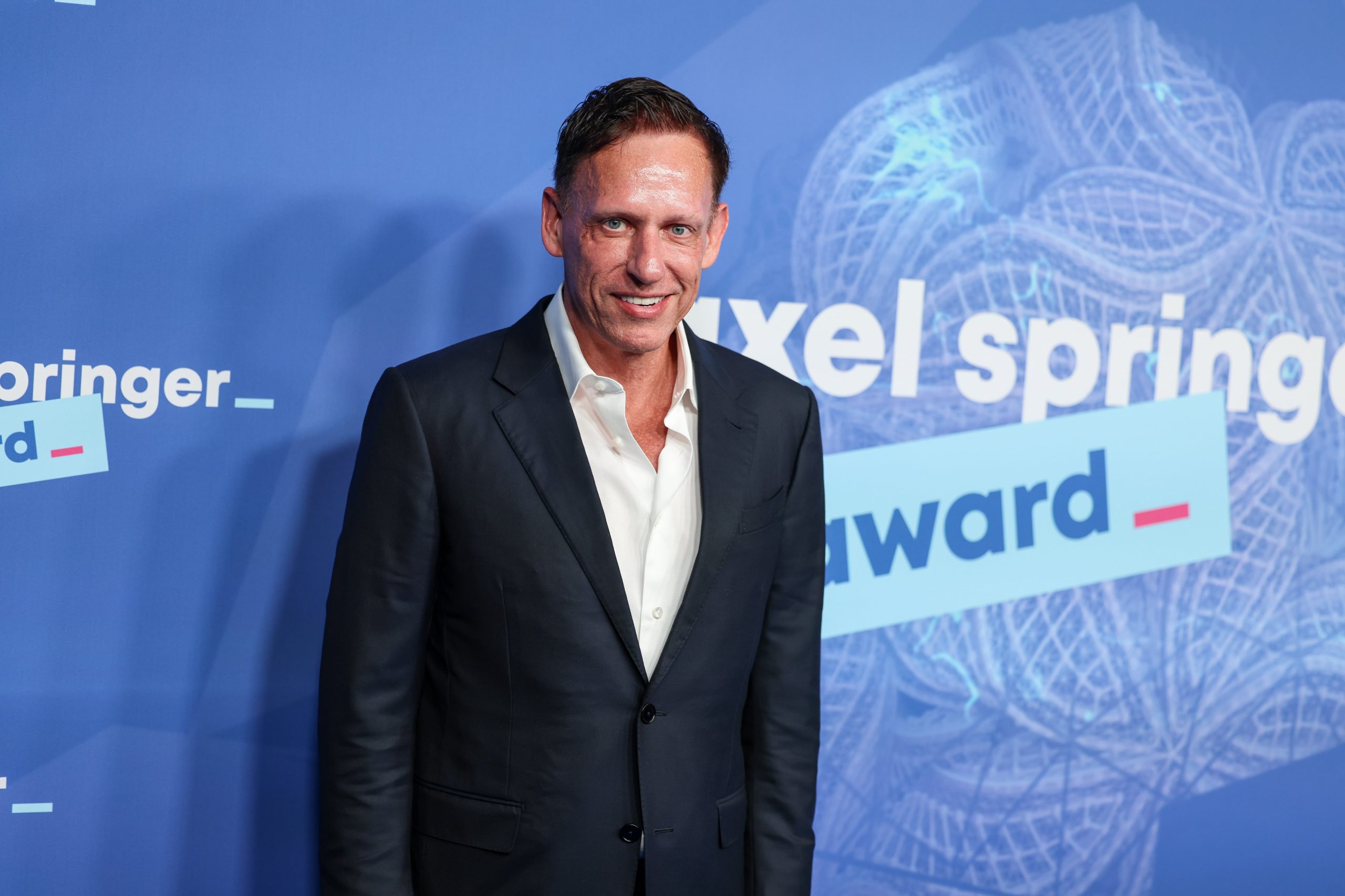
Tech billionaire Peter Thiel, founder of PayPal and Palantir, has increased his investments in Argentina. According to filings with the U.S. Securities and Exchange Commission (SEC), Thiel acquired additional shares in Vista Energy, the largest oil exporter operating in Vaca Muerta, the strategically important shale formation in Patagonia. Through his firm Thiel Macro LLC, he now owns 1,886,835 shares of Vista, valued at $123 million.

The influential German-American entrepreneur, who has openly expressed ideological affinity with the ultra-conservative government of Argentine President Javier Milei, arrived in Argentina this year and purchased a mansion in Buenos Aires.

In the second quarter of the year, Thiel Macro LLC added 1,189,792 shares of Vista Energy, equivalent to 1% of the oil company, to its investment portfolio for nearly $76 million. According to the latest SEC filing, its stake increased by 58.5% in the third quarter, reaching 1,886,835 shares.

As a result, Thiel Macro LLC’s two largest holdings are now Amazon and Vista Energy, each valued at roughly $123 million and accounting for nearly 27% of the firm’s portfolio.

Vista Energy, an Argentine company listed on the stock exchanges of Mexico and New York, was founded in 2017 by engineer Miguel Galuccio, the former chief executive of state-run oil company YPF, together with a group of partners. In less than a decade, it has become the leading exporter of crude oil from Vaca Muerta, home to the world’s second-largest reserves of unconventional natural gas and fourth-largest reserves of shale oil. The company reported net profits of $293.5 million in the third quarter of the year.

With a fortune estimated at more than $23 billion, Peter Thiel is one of the richest people in the world. If his interest in Argentina already existed, it has only grown since the South American country came under the leadership of far-right President Javier Milei. Like Milei, the tech billionaire is an anti-woke crusader and a political ally of U.S. President Donald Trump.

Thiel met with Milei in Los Angeles in 2024 and did so again this year at the Casa Rosada, the presidential palace in Buenos Aires, when he arrived in the country with his family.

Thiel is not the only U.S. billionaire increasing his holdings in Argentina’s oil sector. According to the same SEC filing, Duquesne Family Office LLC, the investment firm of billionaire Stanley Druckenmiller, acquired 403,000 shares of YPF in the last quarter, raising its holdings to 3,541,897 shares, a stake valued at about $177 million. At the same time, it sold the small position it held in Vista Energy.

Meanwhile, Discovery Capital Management, led by Rob Citrone, increased its holdings in YPF to 694,892 shares and in Pampa Energía to 77,000 shares, while also initiating a position in Vista Energy with 149,285 shares. Its combined investment in the sector now totals around $50 million.

Sign up for our weekly newsletter to get more English-language news coverage from EL PAÍS USA Edition

Continue Reading

Accidentes deportivos

Un Jugador De Fútbol Juvenil Muere En Argentina Tras Recibir Un Pelotazo Durante Un Partido

Published

on

un-jugador-de-futbol-juvenil-muere-en-argentina-tras-recibir-un-pelotazo-durante-un-partido

A dos semanas de la muerte de Jesús de Miguel Alameda por un golpe recibido en el campo de juego, el fútbol volvió a anotar un episodio trágico. Abel Núñez, un jugador argentino de las categorías juveniles, murió este domingo tras recibir un pelotazo en la cabeza durante un partido disputado tres días antes. El episodio ocurrió el jueves 12 de noviembre, cuando su equipo, FC Ezeiza, se enfrentaba a Deportivo Muñiz, en un encuentro de la Quinta División del torneo de Juveniles C de la Asociación del Fútbol Argentino (AFA). Fue asistido en el lugar y trasladado de urgencia a un hospital de la localidad de José C. Paz, donde fue operado por un traumatismo craneal y un sangrado interno. Falleció tres días después.

Seguir leyendo

Continue Reading

Trending

Copyright © 2017 Spanish Property & News