Connect with us

%

Velez-Malaga’s Carlos García-Galán To Lead NASA’s Lunar Base

Published

on

velez-malaga’s-carlos-garcia-galan-to-lead-nasa’s-lunar-base

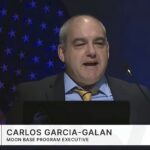
Carlos García-Galán, the talented engineer from Velez-Malaga, has stepped into a groundbreaking role at NASA. With 27 years of dedicated service, this Spanish professional now is to coordinate the development of a permanent lunar base scheduled to become operational from 2032. Experts view the initiative as a bold leap towards sustained human presence beyond Earth. At the presentation of the NASA project, he simply introduced himself as “I’m your Moon guy.”

From Malaga student to NASA visionary

García-Galán first arrived in the United States as an exchange student in New Jersey. Soon afterwards he enrolled at the Florida Institute of Technology, graduating in space sciences and electrical engineering. His NASA journey began at the Johnson Space Center in Houston, where he served as a flight controller managing electrical power systems for the International Space Station.

Over the years, achievements accumulated for the Malaga-born specialist. Internal NASA awards include the prestigious Silver Snoopy, a medal for exceptional merit, and the Director’s Commendation from Johnson Space Center. García-Galán rose through the ranks without connections, coming from a Spanish town with limited aerospace heritage, eventually becoming the public face of one of the agency’s most expensive and forward-looking programmes.

Key contributions to Artemis and Gateway programmes

Before this latest appointment, García-Galán played pivotal roles in the Gateway programme, an orbital lunar station designed to support crewed missions. He also contributed significantly to the European Service Module for NASA’s Orion spacecraft, delivering essential power, water, and life support for Artemis astronauts.

Details of the permanent lunar base project

The groundbreaking project plans to establish an advanced outpost for humanity in deep space. Planners intend the base to enable extended astronaut stays while acting as a vital platform for future Mars expeditions. Initial phases during the second half of this decade focus on enhancing lunar landing safety through advanced technologies.

Subsequent stages involve constructing basic surface infrastructure, including reliable communication systems, power generation, and life support facilities. Around 2032, sustained human operations should begin, featuring longer-duration crewed missions alongside expanded scientific and logistical capabilities. The initiative carries a substantial $20 billion budget and aligns with US national space policy. International partners contribute key elements, with Japan’s JAXA providing support, Italy supplying multi-purpose habitats, and Canada delivering utility vehicles.

A proud moment for Malaga and Spain

García-Galán’s appointment highlights exceptional talent emerging from Malaga and underscores Spain’s growing influence in global space exploration. His leadership promises to shape humanity’s next giant leap on the Moon and beyond.

%

UK Approves Lifetime Tobacco Ban For Everyone Born After 2008

Published

on

uk-approves-lifetime-tobacco-ban-for-everyone-born-after-2008

The policy is intended to reduce the number of people who start smoking at a young age. Photo credit: Richard Bradford/Shutterstock

The United Kingdom is set to introduce a permanent ban on the sale of tobacco to everyone born on or after  January 1 2009, after Parliament approved one of the most significant anti-smoking measures in recent decades. The proposal is contained in the Tobacco and Vapes Bill, which has passed both the House of Commons and the House of Lords. The legislation is now awaiting Royal Assent, the final formal stage before becoming law.

If enacted, the measure will not ban smoking itself. Instead, it will make it unlawful for retailers to sell tobacco products to anyone in the affected age group at any point in their lives.

How the system will work

Rather than setting a single new minimum age, the law creates a rolling age limit that increases each year. At present, the legal age for buying tobacco in the UK is 18. Under the new system, that threshold will continue to rise by one year annually for those born from 2009 onwards.

This means adults who can already legally buy tobacco will keep that right. However, someone born in 2009 or later would never reach an age at which tobacco sales become lawful for them. The policy applies to cigarettes and other tobacco products covered by existing age-of-sale laws.

Parliamentary approval

The bill has been debated over several stages in both Houses of Parliament. Supporters argued that smoking remains one of the leading causes of preventable illness and death, while opponents raised questions about enforcement, personal choice and the long-term practicality of a generational sales ban.

Despite those objections, the legislation secured enough support to pass through both chambers.

Once Royal Assent is granted, ministers will be able to bring the new rules into force through secondary legislation and implementation guidance.

Why the government is introducing it

The policy is intended to reduce the number of people who start smoking at a young age and lower long-term demand for tobacco. Successive governments have sought to reduce smoking rates through taxation, advertising restrictions, standardised packaging, public health campaigns and indoor smoking bans.

The new measure goes further by attempting to prevent future generations from legally accessing tobacco products at all.Ministers have described the policy as part of a long-term public health strategy aimed at reducing smoking-related disease and pressure on health services.

What it means for retailers

Shops that sell tobacco will need to continue checking ages, but over time the system will become more complex because the legal age will no longer be fixed at 18.

Instead, eligibility will depend on a customer’s date of birth. Retailers are expected to receive updated guidance on age verification and enforcement once the law is formally enacted. Existing penalties for unlawful tobacco sales may also apply to businesses that breach the new rules.

Wider measures in the bill

The legislation also includes powers to regulate vaping and nicotine products. These provisions allow ministers to introduce future rules covering areas such as flavours, packaging, product displays and restrictions in certain public places. Specific measures would require further regulations before taking effect.

The inclusion of vaping controls reflects concern among policymakers about youth uptake of nicotine products, even as vaping is also used by some adults as an alternative to smoking.

Public debate

The proposal has attracted support from many health organisations, which argue that preventing young people from starting to smoke is more effective than trying to help established smokers quit later in life.

Critics, however, have questioned whether the law creates different rights for adults based solely on year of birth. Others have argued that enforcement may become harder over time if legal and illegal age groups exist side by side. There has also been debate over whether restrictions on legal sales could increase the illicit tobacco market, though the long-term effect remains uncertain.

International significance

The UK is among the first major countries to legislate for a permanent generational ban on tobacco sales. Similar proposals have been discussed elsewhere, but few have advanced as far through the legislative process.

Public health campaigners are likely to watch implementation closely, particularly whether the measure leads to lower smoking uptake among younger age groups.

What happens next

The final step is Royal Assent, after which the bill will become law. The government will then set commencement dates and publish enforcement details.

If implemented as planned, people born on or after 1 January 2009 will never be able to legally buy tobacco in the United Kingdom, marking a major change in the country’s approach to smoking policy.

Continue Reading

%

Orihuela To Host 37th Regional School Theatre Showcase

Published

on

orihuela-to-host-37th-regional-school-theatre-showcase

Orihuela hosts 37th school theatre showcase with 27 performances. Photo Credit: Orihuela Town Hall

ORIHUELA is preparing to host the 37th edition of the Regional School Theatre Showcase, which this year will feature 27 special performances at the Circus Theatre. The event, which for nearly four decades has brought together students from educational centres all over the Vega Baja region, has been firmly established as a source of local pride and unites the students with a love for theatre.

A programme to celebrate theatre in Orihuela

The programme, which will take place from May 5 to May 28, includes a wide variety of styles and stage productions, from classical theatre to contemporary and innovative works. The project includes performances of famous works, including:

  • Lost in Translation, Toc-Toc, The Gods or Cinderella (IES Tháder)
  • Trash TV (IES Mare Nostrum)
  • Punch and Judy (Reverse Version) (IES Santiago Grisolía)
  • Scarlet Theorem (MUDIC Jesús Carnicer)
  • The Magic of Emotions, The Wizard of Oz, Shrek, Cantar Mio Cid or The Play That Goes Wrong (Jesús María San Agustín)
  • Cinderella Who Didn’t Expect a Prince (CEIP San Bartolomé)
  • The Pied Piper of Hamelin, Saint George and the Dragon, Beauty and the Beast or Enchantment (Oratorio Festivo)
  • Peter Pan Musical (Santo Domingo)
  • The World Upside Down or The Darlings (Virgen de Montserrate de Torremendo)

The event fosters essential values including camaraderie, teamwork, and creativity. The project allows students to enter the world of art and theatre, as well as develop important communicative skills and, above all, foster and facilitate group work among them.

Admission will be free for all audiences, though the Orihuela Department of Education recommends making a reservation in advance through the Teatro Circo to help organize attendance.

With this project, the students’ hard work onstage will reflect the talent, effort, and commitment of schools throughout the Vega Baja region, and re-affirm Orihuela’s place as a cultural and artistic hotspot on the Costa.

Continue Reading

%

Marbella National Wheelchair Tennis Open

Published

on

marbella-national-wheelchair-tennis-open

Marbella is ready and set to welcome 23 tennis players from across Spain this week as the city hosts the 18th edition of the National Wheelchair Tennis Open. The competition runs from Thursday 23 April through to Sunday 26 April at the Polideportivo Paco Cantos.

The tournament is organised by Club Deportivo Jacamar and forms part of the national wheelchair tennis circuit run by the Royal Spanish Tennis Federation (RFET). Now in its 18th consecutive year, it is one of the longest-running events of its kind in the country.

All competitors get maximum court time over the few days

The big news of this year’s edition is the return of the women’s draw. The Marbella city council announced that five women will compete in a round-robin format, meaning every player faces every other player, with matches beginning on the opening day, Thursday. The format ensures that all five competitors get maximum court time and that the final standings reflect consistency across the full draw rather than a single day’s result. The sport maintains the same rules as conventional tennis, with the only difference being that it allows a second bounce.  

The women’s competition was absent from last year’s tournament due to the complexity of assembling a competitive female field. Its return this year was confirmed in official communications from the Marbella Town Hall.  

Paco Cantos is the perfect home for the tournament with its range of accessible facilities

For the men’s draw, the remaining players will compete across all four days, with finals in both competitions scheduled for Sunday 26 April.

The Polideportivo Paco Cantos has served as the home of this tournament for multiple editions and provides the accessible facilities required to host a national-level wheelchair tennis event.  Located on Avenida Canovas del Castillo in Marbella. Its indoor hall can house a range of sports including tennis, futsal, basketball, volleyball and skating, and the site also features three outdoor tennis courts, three padel courts, a fronton court, a climbing wall, changing rooms, and a bar. The breadth of the facility makes it well suited to hosting a multi-day national tournament, with courts available for simultaneous matches and adequate space for players, officials and spectators. Entry for spectators wishing to follow the action at Paco Cantos across the four days is open to the public.  In addition, the matches on the center court will be broadcast live on Facebook. 

Continue Reading

Trending

Copyright © 2017 Spanish Property & News