A five-day ban has been threatened by authorities for drivers ahead of the 2026 F1 Monaco Grand Prix.
F1 heads to the principality in June for the sixth round of the 2026 season, with it being later in the season than the iconic event usually falls.
This is to eradicate the previous clash between the Monaco GP and Indianapolis 500, another iconic motorsport race that has been clashing on the racing calendar with Monaco for many years.
The later date of the Monaco GP is also designed to streamline the sport’s global logistics and help F1 move toward its sustainability goals, including its target of reaching Net Zero carbon emissions by 2030.
But ahead of this year’s event, which organisers are hoping will see more overtaking compared with previous years due to the smaller, more nimble F1 cars brought about by the recent regulations overhaul in F1, the Monegasque government have introduced new guidance for road car users.
They have announced that an immediate five-day vehicle immobilisation will apply to any road traffic offence that is committed during the Monaco GP weekend, as well as the Top Marques Monaco automotive show which takes place in May.
Owners caught committing a road offence at these times will have their cars seized by police and will not be able to get them back for five days.
These measures have been brought in because of unauthorised gatherings of sports cars that authorities have noticed are pretty common during these two events which spill onto public roads and can generate dangerous driving, traffic violations and noise disturbance for residents.
The five-day vehicle immobilisation period has previously been used in past years, and will act as a deterrence for organisers of these impromptu events.
Previous editions of the iconic race around the streets of Monaco have not provided fans with much excitement, as the width of modern-day F1 cars make it almost impossible to overtake.
In 2025, F1 tried to shake things up by introducing a mandatory two-stop strategy to at least bring more variation when it came to strategy.
But most teams and drivers opted to pit on exactly the same lap on both occasions, and very few actually risked doing something a little different.
This year, however, that rule has been scrapped, and we will not have the mandatory two-stop race around the principality.
However, the new regulations might just increase the excitement of the race.
So far in 2026, we have seen drastically increased amounts of overtakes at the three grands prix compared to the same events 12 months ago.
While the boost and overtake modes have at times made overtaking too easy for the drivers, in Monaco this could prove to be a God send for fans hoping to see more overtakes around the streets of Monaco.
Couple this with the fact that F1 cars are much narrower and lighter than they were in 2025, and we could actually see an exciting Monaco GP.
The track signed a contract extension last year, and will remain on the F1 calendar until at least the 2035 season.
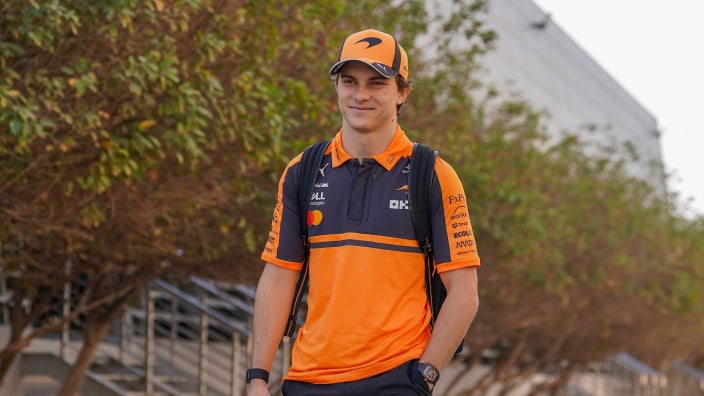
The childhood home of McLaren F1 star Oscar Piastri is available for you to buy, if you have a spare $6.5million lying around.
Piastri has become somewhat of an Australian superstar, taking over the Aussie mantle from Daniel Ricciardo, who retired in 2024 having been replaced by Piastri at McLaren in 2022.
But despite having claimed nine grand prix victories so far across his career, Piastri has not had much success at his home race in Melbourne, Australia.
And after that disastrous moment, it is understood that Piastri went back to his family home in Melbourne, Victoria to relax and unwind.
Piastri grew up in the glitzy Brighton suburb of the city in a house that, according to RealEstate.com, was sold in 2009 for $1.27million, when Piastri was just nine years old.
It is owned by one Nicole Piastri, Oscar’s mother, and has been lived in by Oscar and his sisters Hattie, Mae and Edie as they grew up.
Now, following some renovations, the Melbourne-based property is up for sale with Nick Johnstone Real Estate, for $6.5million.
The Piastri family home is a six-bedroom house with a pool outside that has been installed by the current owners.
Said pool also has a stunning water feature, making it an incredible place to unwind after a tough F1 race – or just a tough day in work if you’e a normal person.
It has a home office which is complete with a ‘waiting area’ not too dissimilar from a doctor’s waiting room, but cool nonetheless.
The house also has a home theatre, the norm these days for people with mega expensive houses, while a car garage in the basement has room for six cars and a turntable.
To make things even better, the house is close to the Brighton Public Golf Course and is a short trip away from Brighton Beach and local train stations which will take you into the centre of Melbourne.
Ex-F1 driver and fan-favourite Sky Sports pundit Martin Brundle has revealed the origin story of how his now famous grid walks began.
Before Brundle graced our screens during grands prix weekends, he was busy taking part in them as a driver, with Tyrell, Williams, Brabham, Benetton and McLaren among the teams he raced for.
Between 1984 and 1996, the Englishman picked up nine podiums and now imparts his motorsport knowledge with on-screen punditry for Sky Sports F1.
Though the 66-year-old is loved for his authoritative and authentic delivery, he also brings wit to the British broadcaster, and occasionally a touch or chaos thanks to his grid walks.
Sky Sports acquired the rights to Formula 1 in 2012 but secured the privilege of being the sport’s exclusive live broadcaster ahead of the 2019 championship. Since then, one thing that has become a mainstay of Sky’s F1 weekend coverage is Brundle’s grid walks.
The ex-F1 racer has even admitted he doesn’t enjoy orchestrating his famous grid interviews these days, and who can blame him when he’s been involved in so many awkward celebrity interactions as a result.
During an interview with his Sky Sports colleague Natalie Pinkham, Brundle revealed that the grid walk segment first took place at the 1997 British Grand Prix, but he wasn’t working for Sky at the time and instead delivered his now famous segment to the ITV cameras at Silverstone.
His former team-mate and 11-time grand prix winner Rubens Barrichello was his first interviewee.
“He was my team-mate the year before. That’s why I probably felt he’d talk to me,” Brundle explained.
“That’s when drivers used to come up to me in the next year or two and go, ‘You haven’t spoken to me on the grid. Come and find me. Why are you not talking to me on the grid?’
“Now they just look at me like I’m a double glazing salesman or something, or an insurance salesman with his foot in the door.”
Asked if he could take credit for the grid walk format, Brundle revealed: “Wasn’t my idea. I was at ITV at the time, and they said to me, the producers, ‘We’ve got an idea. Why don’t you walk down the grid and say what you see?’ Like, ‘All right, I’ll give it a go.'”
Brundle went on to explain how he began his first grid walk by delivering his piece to camera from within the cockpit, offering a rare view to ITV’s audience in the days before public onboards of what an F1 driver sees when sitting down on the grid.
“That’s when cars used to drive to the grid,” Brundle continued. “They don’t now, they stop at the back and get pushed through because Niki Lauda used to come through, cut his engine and freewheel through, which was terrifying.
“It was dangerous. So now they all come through on trolleys, and I wanted to point out to people that you sit on the floor basically. I always say it’s like laying in the bath looking over the taps, is how it looks when you’re in a Formula 1 car.
“And then Keith, my cameraman back in those days, put the camera over my shoulder, and I think people liked that because we didn’t have many onboard cameras and all the sort of toys and tools we have today to see what the drivers are really doing, and data and what have you.”
Verstappen, who was not driving when Saturday’s tragedy occurred, had stunned the GT racing world on his first two appearances at the Nurburgring, securing pole position and the win at both the NLS9 round last year and the NLS2 round in March – although his No.3 Verstappen Racing team were disqualified from the latter event.
The Dutchman returned to the ‘Green Hell’, this time alongside Lucas Auer in the Mercedes-AMG GT3, taking part in the NLS4 round on Saturday.
Now, Verstappen goes again in a jam-packed Sunday schedule, which includes qualifying for the NLS5 race, Top Qualifying for the 24 hour race in May and the four-hour NLS5 race.
Here is how you can watch and what time Verstappen is in action at the Nurburgring.
NLS5 Schedule and times at the ADAC 24h Nurburgring Qualifiers
The race proper will begin, following a minute’s silence to remember Juha Miettinen, at 13:00 local time (CEST), 12:00 UK time (BST), 07:00 (ET), 06:00 (CT) and 04:00 (PT). The race will last four hours.
Before that we have two qualifying sessions, the first conventional session for NLS5 (07:15-08:45 UK) and then a Top Qualifying session (09:40-10:40 UK).
How to watch Max Verstappen live at the Nurburgring
You can watch all of Verstappen’s GT exploits at the Nurburgring right here on GPFans on Sunday April 19. We have live streams for Qualifying, Top Qualifying and the race proper:
Nurburgring weather forecast for NLS5
A much cooler morning is expected on Sunday, with temperatures starting out at six degrees Celsius and only rising to 10 by the end of both qualifying sessions, with a five per cent chance of rain forecast.
For lights out at 13:00, temperatures remain at 11 degrees Celsius throughout the entire race distance, with the chance of rain rising to 30 per cent by the early evening.







 New Developments3 weeks ago
 New Developments2 weeks ago
 %2 weeks ago
 Uncategorized3 weeks ago
 Uncategorized4 weeks ago
 Uncategorized3 weeks ago