Connect with us

%

Spain’s €1,089 Entry Rule Explained

Published

on

spain’s-e1,089-entry-rule-explained

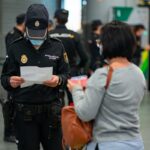
Border officers in Spain can ask non EU travellers to provide proof of sufficient funds for their stay. Credit : Raul Revuelta, Shutterstock

A four day city break doesn’t sound like the sort of trip that requires more than €1,000 sitting in your account.

Yet under the financial requirements applied by Spanish border authorities, some non EU travellers arriving in Spain can be asked to prove they have access to at least €1.089,90, even if they’re only planning to stay for a few days.

The rule has been on the books for years, but it has attracted fresh attention after reports emerged of travellers being refused entry at Málaga Airport during Easter 2026. At the same time, Europe’s new digital border system has changed how entry refusals are recorded, making border checks far more visible than they used to be.

For many holidaymakers, the surprise is not that Spain can ask for proof of funds. It’s the amount involved.

Most people assume authorities simply calculate a daily budget and move on. The reality is slightly different.

Why a short trip can still trigger a €1.089,90 requirement

Spain’s financial entry rules are based on two figures.

The first is a daily amount. In 2026, travellers may be required to show they have access to €122 per day for the duration of their stay.

The second figure is the one catching people off guard.

Spanish regulations also establish a minimum amount of €1.089,90. That minimum applies even when the daily calculation would result in a lower figure.

Imagine someone flying to Barcelona for a long weekend.

Four days at €122 per day would come to €488. However, and because that amount falls below the minimum threshold, border officers can still ask for evidence that the traveller has access to €1.089,90.

The same situation applies to many short holidays.

A five day trip comes to €610. A seven day stay comes to €854.

Both remain below the minimum threshold.

Only when the daily calculation exceeds €1.089,90 does the required amount start increasing beyond that figure.

For example, a ten day stay would require proof of at least €1,220.

The purpose of the rule is to ensure visitors have sufficient means to support themselves during their stay and will not become dependent on public resources.

What travellers can actually use as proof

One of the biggest misconceptions is that visitors must arrive carrying more than €1,000 in cash.

That is not what the rules say.

Spanish authorities accept several different ways of demonstrating financial means.

Cash remains one option, but it is far from the only one.

Travellers can also use payment cards accompanied by supporting documentation, traveller’s cheques and official bank statements showing available funds.

For business travellers, a company sponsorship or invitation letter may also be relevant, particularly when accommodation and travel expenses are being covered by an employer.

Where some visitors get caught out is documentation.

According to official Spanish guidance, online banking screenshots and simple bank letters are not among the preferred forms of proof. Border authorities generally expect official documentation capable of demonstrating available funds.

Most travellers will never be asked to show any of this. But if the question does come up, having evidence readily available can make the process much smoother.

Why 2026 feels different from previous years

The renewed focus on proof of funds is happening at the same time Europe is changing the way it manages its external borders.

On 10 April 2026, the Entry Exit System, commonly known as EES, became fully operational across the Schengen Area.

For travellers, the most visible change is the disappearance of passport stamps.

Instead, non EU visitors are now registered digitally through biometric data, including fingerprints and facial recognition information.

Every entry and exit is recorded electronically.That means border checks are no longer simply a matter of glancing at a passport and adding a stamp.

The new system creates a digital travel record that can be accessed by border authorities throughout the Schengen Area.

Another change is also approaching.

The European Travel Information and Authorisation System, known as ETIAS, is expected to launch later in 2026 before eventually becoming mandatory after a transition period.

When that happens, millions of visa exempt travellers, including British visitors, will need to obtain travel authorisation before boarding a flight to Europe.

Taken together, these changes are creating a travel environment where preparation matters more than it did a few years ago.

Most visitors will continue to enter Spain without any issues. But travellers who assume a passport is the only document they need may discover that border officers have additional questions.

And if those questions involve proof of funds, the amount expected may be considerably higher than many people realise.

Q&A section

Do I need to carry €1.089,90 in cash?

No. The rules refer to available financial resources, not cash alone. Official bank statements and other accepted documents may also be used.

Who can be asked to prove sufficient funds?

The requirement generally applies to non EU travellers entering Spain under the Schengen rules.

Does the rule affect British travellers?

Yes. Since Brexit, British citizens are treated as third country nationals for Schengen border purposes.

Can Spain refuse entry if I cannot prove sufficient funds?

Border officers have the legal authority to refuse entry if entry requirements are not met.

What is EES?

The Entry Exit System is the EU’s new digital border system that records biometric information and border crossings for non EU travellers.

What is ETIAS?

ETIAS is a forthcoming travel authorisation system for visa exempt travellers visiting Europe. It is expected to begin rolling out later in 2026.

Will every traveller be asked for proof of funds?

No. Checks are carried out at the discretion of border authorities, but travellers should be prepared to provide evidence if requested.

%

Million-Person Madrid Mass

Published

on

million-person-madrid-mass

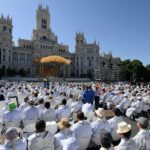
More than 1.2 million people packed the streets of Madrid on Sunday as Pope Leo XIV celebrated a huge open-air Mass in what became the biggest event of his week-long visit to Spain. Organisers said crowds filled Plaza de Cibeles and surrounding avenues from the early hours of the morning, creating one of the largest religious gatherings the country has seen in recent years.

The extraordinary turnout highlighted the continuing influence of the Catholic Church in Spain, despite the country becoming increasingly secular over recent decades. Thousands travelled from across Spain to attend, while many others queued before dawn to secure a place close to the procession route.

Crowds fill Madrid’s iconic streets

As the Pope arrived in his white popemobile, worshippers waved flags, cheered and showered the route with flower petals. The Mass took place around Madrid’s famous Plaza de Cibeles, with crowds stretching far beyond the square itself. Organisers and Vatican officials estimated attendance at around 1.2 million people.

Sunday’s celebration coincided with Corpus Christi observances, a major event in the Catholic calendar. Floral displays decorated parts of the procession route, while worshippers joined prayers and religious ceremonies under clear skies and soaring temperatures.

Pope’s message focuses on compassion

During his homily, Pope Leo urged Catholics to put their faith into action by helping those in need. He spoke about supporting the poor, vulnerable and isolated members of society, encouraging worshippers to look beyond private devotion and engage with their communities.

The pontiff also repeated calls for societies to remain welcoming and inclusive, themes that have featured heavily throughout his first official visit to Spain. His trip began with meetings involving migrants and homeless people and will continue with visits to Barcelona and the Canary Islands.

Spain welcomes first papal visit in 15 years

The visit marks the first papal tour of Spain in 15 years and has attracted huge public interest. The night before the Mass, an estimated 600,000 young people attended a vigil with the Pope in Madrid, suggesting strong enthusiasm among younger generations despite declining religious observance nationally.

For many attendees, the day was about more than religion. The gathering became a powerful display of unity, culture and tradition, with Madrid transformed into the focal point of the Catholic world for a day.

As Pope Leo continues his Spanish tour, Sunday’s million-strong turnout will likely be remembered as one of the defining images of his visit – a sea of worshippers filling the heart of Madrid in a historic show of faith.

Continue Reading

%

What Everyday Expense Worries You Most?

Published

on

what-everyday-expense-worries-you-most?

What everyday expense worries you most? Credit: Shutterstock, Hryshchyshen Serhii

With the cost of living continuing to rise across Europe, many households are feeling the pressure of everyday expenses more than ever before. Recent reports have highlighted how food prices, energy bills and taxes remain among the biggest concerns for families trying to balance their monthly budgets. While some costs vary depending on where people live, the overall feeling is clear: many essentials are becoming harder to afford.

For many people, supermarket prices are now one of the biggest worries. Montserrat Llois said: “Food shopping and heating bills, we are in the UK.” reflecting growing concerns across Britain of the rising grocery costs and higher energy prices that continue to stretch family finances. Similar concerns were raised by Marie Craig, who simply stated: “Food & IVA”. The mention of IVA, often linked to debt repayment arrangements, highlights how some people are not only worried about rising prices but also existing financial commitments.

Others pointed to the increasing cost of household bills and taxes. Ena Cummings said: “The taxes, electric, water and insurance things are getting costly”. Utility bills remain a major concern in many countries, with electricity and water prices increasing steadily over recent years. Insurance costs have also risen, adding another pressure for families already trying to manage tight budgets.

Living expenses in Spain were also mentioned by Angela Edgley, who explained: “In Spain – food and electricity, and high vat. Home items such as good curtains and furniture are also expensive in Spain. Eating out is still good with menu del dias.” Her comments show how everyday necessities and household goods can vary greatly in price depending on the country, although affordable dining options still provide some relief for residents and visitors alike.

Not everyone focused on essential bills, however. Paul Johnson summed up his biggest concern in one word: “Beer”. David Cooke added a similar view, saying: “Beer, tobacco & cafè.” While light-hearted, these comments reflect how rising prices are also affecting leisure spending and small daily comforts that many people enjoy.

Overall, the poll showed that food costs and household bills remain the biggest everyday expense worries for most people. Whether in the UK, Spain or elsewhere, rising prices continue to affect both essential living costs and the little luxuries people value in everyday life.

Continue Reading

%

Huge Grass Fire Erupts In Mijas

Published

on

huge-grass-fire-erupts-in-mijas

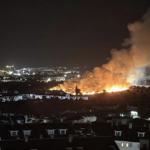
Nighttime blaze in middle of Mijas. Credit: Juan Marquez – WW

Firefighters and specialist teams were called out to tackle a dramatic grass fire that broke out in Mijas on Sunday evening. Thick plumes of smoke and visible flames drew attention across the local area near the boundary between Pueblo La Campana and La Sierrezuela. Local authorities confirmed no evacuations needed to take place after police checked the entire vicinity for safety.

Multiple teams working together

Mijas firefighters arrived promptly on scene, supported by local police and Guardia Civil officers. Infoca units joined the effort with a water tanker and forest fire specialists. Operational services also supplied additional fire engines to aid suppression activities. Crews focused their initial actions on the affected dry vegetation zone.

Low-intensity fire brought under control after midnight

Operations achieved success shortly after midnight with the incident declared contained. Responders said the fire lacked high thermal power because it involved mainly dry grass and bushes. Visible flames and dense smoke had spread across viewpoints in the surrounding districts, yet crews managed the situation effectively without major complications.

Residents voice concerns over fire near schools

Local people expressed concerns about the fire’s closeness to school areas. Authorities updated that teams had protected the Pueblo La Campana section and moved on to cooling operations around other sites. Firefighters continued targeted work in this part of the perimeter to make sure the blaze did not reignite.

Public cooperation requested during overnight efforts

Mijas Council advised residents to keep clear of the location so emergency personnel could get to work without interference. No evacuations proved necessary throughout the response. Teams stayed active throughout the night to complete full extinguishment and monitor for any potential flare-ups in the affected terrain.

This rapid action prevented the grass fire from spreading further in the Mijas area. Coordinated involvement from council, regional, and specialist forest services demonstrated effective local emergency management. Residents can expect continued presence of vehicles and personnel in the zone during final checks.

Mijas council had reminded local landowners recently about the importance of keeping their land in good order with grass and bushes cut back so as to avoid just this kind of incident.

Continue Reading
Advertisement
Advertisement

Spanish Real Estate Agents

Tags

Trending

Copyright © 2017 Spanish Property & News