
Ancient bible hiding map of Garden of Eden
A mysterious map in a 1599 Bible points towards the location of the lost Garden of Eden

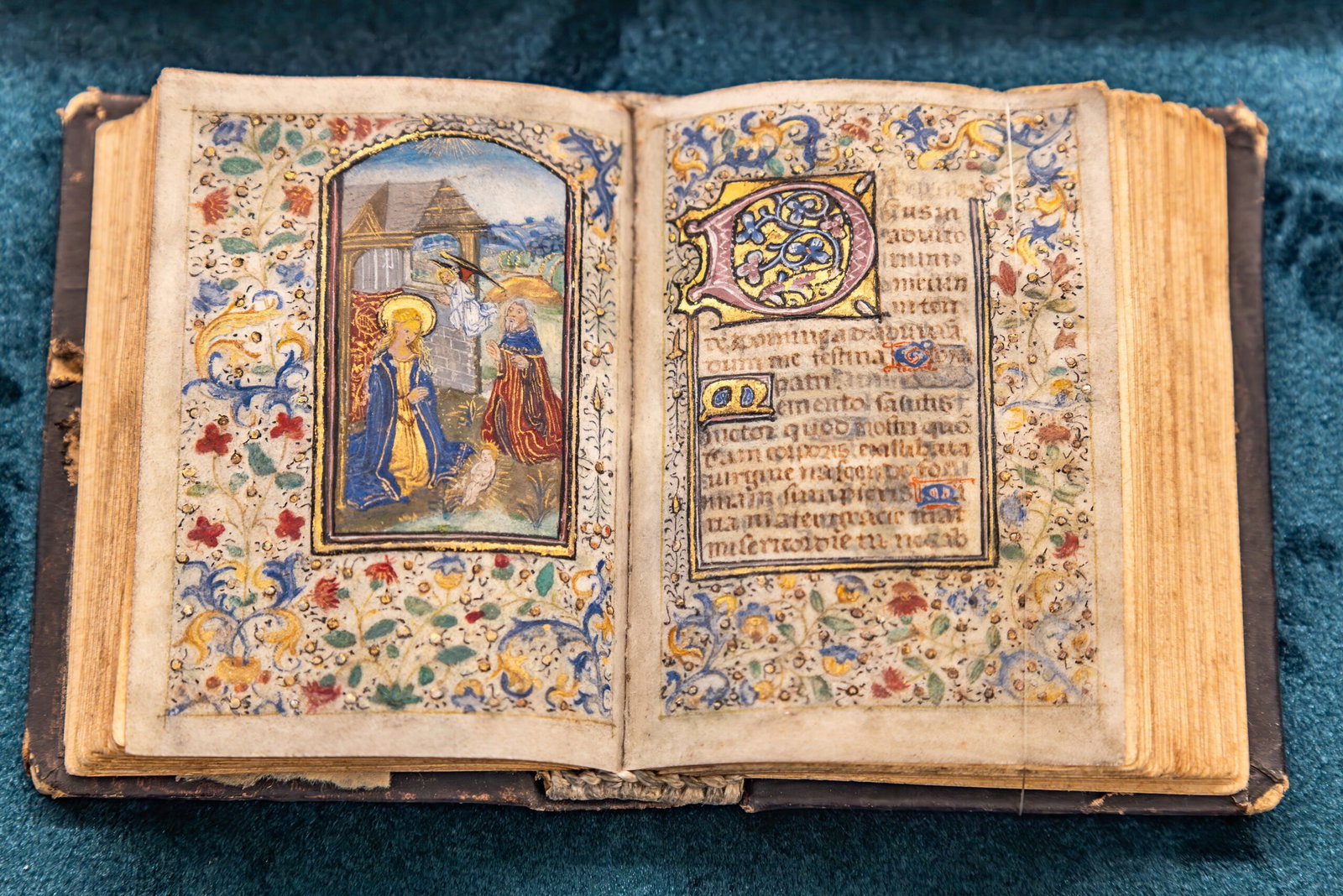
The Geneva Bible became particularly influential in England. Photo credits: agsaz/Shutterstock
If you have ever wondered where the Garden of Eden was supposed to be, you probably didn’t expect the answer to be sitting inside a Bible printed more than 400 years ago.
But that is exactly what has caught people’s attention this week. A mysterious old map found inside a 1599 Geneva Bible appears to point to a very specific part of the world as the supposed home of biblical paradise. And once you see what the map is actually pointing at, the location gets rather interesting.
The map that points to Eden
The map is titled “The Situation of the Garden of Eden” and shows the biblical lands in considerable detail. It identifies places including Mesopotamia, Babylon and Havilah, along with the Arabian Desert, the Persian Gulf and the Caspian Sea. The Euphrates can also be followed across the map, with its source shown in mountainous country.
Put those details against today’s geography and the location suggested by the map falls in the region of eastern Turkey, close to the modern borders with Armenia and Iran. That is particularly interesting because Genesis describes a river flowing out of Eden before dividing into four rivers, including the Tigris and Euphrates.
A 1599 Bible with a much older mystery
The Bible containing the map is a Geneva Bible dating from 1599. The Geneva Bible was produced by English Protestant scholars living in Switzerland and became one of the most influential English Bibles before the King James Version appeared in 1611. Unlike many modern Bibles, Geneva editions contained extensive notes, references, illustrations and maps intended to help readers understand the biblical world.
The Eden map is therefore not some random drawing discovered between the pages. It was deliberately included to help readers visualise where the biblical story was believed to have taken place. Oxford’s Museum of the History of Science records that the map itself dates back even further. It was derived from a map published in a 1553 French edition of John Calvin’s commentary on Genesis, before versions subsequently appeared in Geneva Bibles from 1560 onwards.
So was Eden really in Turkey?
This is where things get a little more complicated, the map does not prove that the Garden of Eden existed in eastern Turkey, nor does it represent archaeological evidence identifying the biblical location. It shows what people at the time believed the description in Genesis meant. The reasoning behind the location is nevertheless easy to understand. The eastern Anatolian region contains the headwaters of the Tigris and Euphrates, while the surrounding landscape is dominated by mountains.
Those geographical features made the area an obvious candidate for anyone trying to match the biblical description with the physical world. The idea of locating Eden somewhere around the upper reaches of the Tigris and Euphrates is also far from new. Various historians, theologians and researchers have proposed locations across Mesopotamia and neighbouring regions over the centuries, depending on how the biblical descriptions are interpreted.
The mystery is still unsolved
The map is fascinating precisely because it shows how seriously people once tried to put Eden on a real-world map. Rather than leaving paradise as a place that could never be located, its creators took the rivers and landmarks described in Genesis and tried to work out where they fitted into the geography they knew. More than four centuries later, that old question has resurfaced.
The 1599 Bible does not suddenly reveal the lost Garden of Eden. What it does reveal is where earlier readers believed they could find it, and their finger pointed towards the mountains of what is now eastern Turkey. Whether that was an ancient memory preserved in the biblical story, a geographical interpretation or simply an attempt to make sense of scripture is something the old map cannot answer. But for anyone hoping to find paradise on a modern map, it has certainly given them somewhere very specific to start looking.








A mysterious map in a 1599 Bible points towards the location of the lost Garden of Eden
Petrol thieves in Spain see their getaway go spectacularly wrong

Tied-Up Bull In Fuengirola Shocks Locals


-
Latest2 weeks ago
The Vocabulary You Need To Understand The Spanish Citizenship Process
-

 Alex Saab2 weeks ago
Maduro Ally Alex Saab Pleads Guilty In US Money-Laundering Case
-

 New Developments2 weeks ago
How To Get A Tourist Rental Licence In Andalusia (Spain) – Step-By-Step Guide 2025
-

 Uncategorized2 weeks ago
‘Lewis will never trust Charles again’ – F1 journalist issues shocking Ferrari statement – GPFans.com
-

 %2 weeks ago
Benahavis Wildfire Stabilised: 300 Hectares Burnt
-
 Arganzuela1 week ago
Detenido Un Hombre Por La Muerte De Una Mujer De 47 Años En El Distrito De Arganzuela De Madrid
-

 Coaching2 weeks ago
Svend Brinkmann, Psychologist: ‘If You Place Conditions On Forgiveness, Love Or Freedom, You Have Already Destroyed Them’
-
Best airlines1 week ago
Spanish airline Vueling named Europe’s best low-cost carrier for 2026