
arrested in Caceres
Petrol thieves in Spain see their getaway go spectacularly wrong

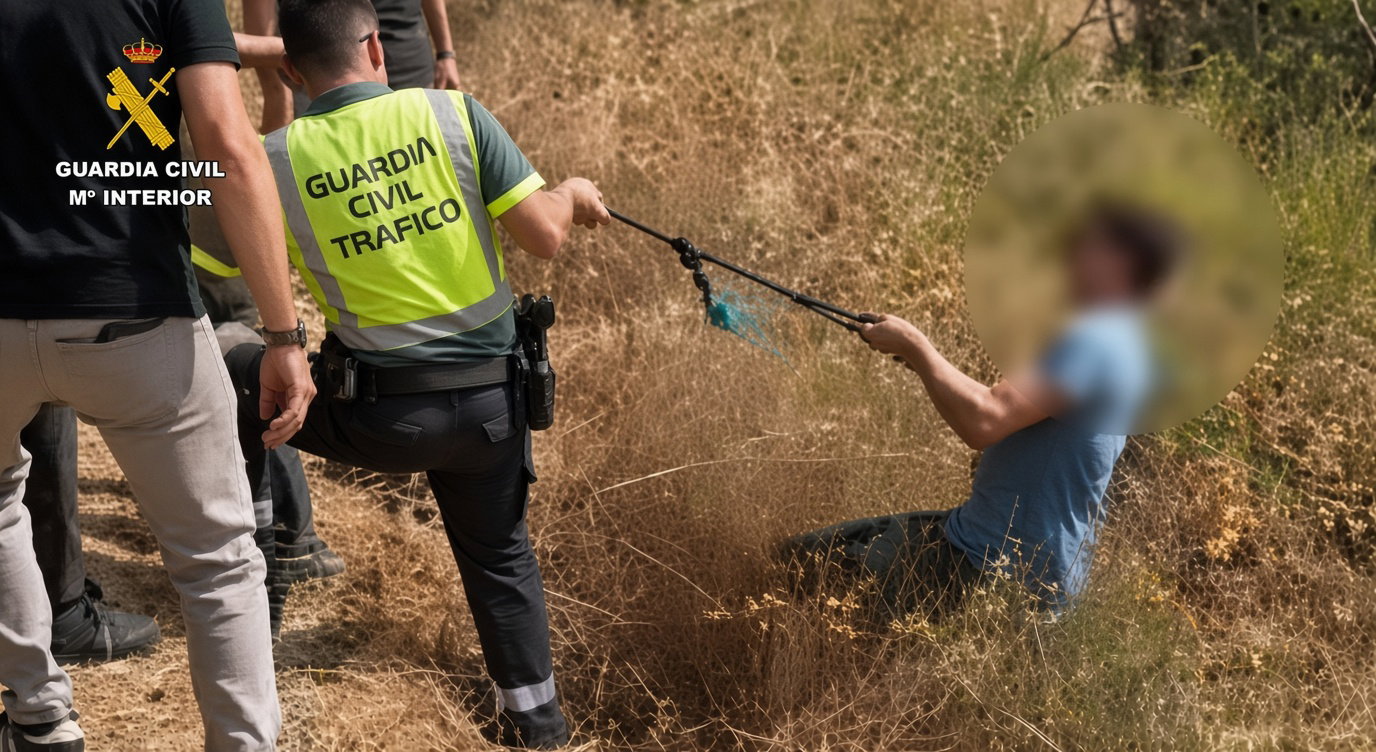
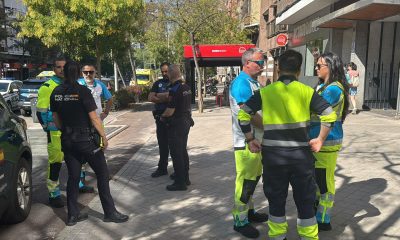
One of the occupants allegedly jumped from the moving car. Photo credit: Guardia Civil/Ministerio de Interior
Doing a runner without paying for your petrol is already a fairly questionable life choice. Doing it in a stolen car, fleeing for more than 100 kilometres and then ending up needing rescuing from a patch of brambles takes it to another level.
That is exactly what happened in Cáceres this week, when three people allegedly drove away from a petrol station without paying and turned what might normally be a relatively straightforward theft into a police chase stretching across the province. But there is another reason this latest case will strike a chord with people filling their cars in Spain right now: petrol and diesel are becoming painfully expensive again, with the cost of a full tank now well over €100.
Filling the car now costs more than €100
The average price of petrol in Spain reached €1.928 a litre this week, according to the latest figures from the European Commission’s Oil Bulletin. That represents the twelfth consecutive weekly increase and a 30 per cent rise since the end of June. Diesel has also climbed sharply, reaching €1.918 a litre. Filling an average 55-litre diesel tank now costs around €105.49, while the same petrol tank costs approximately €106.04.
That means putting a normal tank of fuel into the car is now costing around €25 to €28 more than it did a year ago. For someone on a tight household budget, that is not pocket change. Spain’s 2026 minimum wage is €1,221 a month, paid over 14 instalments. The Government says around 2.5 million workers benefit from the increase.
Once rent or a mortgage, food, electricity, water, insurance and other everyday expenses have been paid, finding another €100 simply to fill the car can be a serious hit. And for many people, not using the car is not necessarily an option. Getting to work, taking children to school, travelling to medical appointments or reaching services outside larger towns can all depend on having fuel in the tank.
One unpaid fill-up becomes a 100-kilometre chase
Against that backdrop, the Cáceres incident began with what is described as a simpa, the colloquial Spanish term for leaving without paying. The three suspects allegedly filled up at a petrol station in Sierra de Fuentes before driving away without paying. The problem for them was that the car they were travelling in had already been reported stolen in Madrid. The Guardia Civil obtained the registration number and alerted patrols in the area. When officers attempted to stop the vehicle, the driver did not pull over. Instead, the pursuit continued for more than 100 kilometres towards Guadalupe.
Things became considerably more dangerous when the driver encountered police on the A-5 and reportedly reversed before continuing in the opposite direction. Eventually, officers managed to intercept the vehicle near Guadalupe. Then came the part that sounds almost too ridiculous to be real. One of the occupants jumped from the moving car and tried to disappear into a dense area of brambles. He did not exactly choose an easy hiding place. According to the Guardia Civil, officers eventually had to rescue him from the brambles before they could arrest him.
The suspects face more than a fuel bill
The three detainees, two men and one woman aged between 19 and 26, are being investigated for a string of alleged offences. These include using a stolen vehicle, dangerous driving, driving without a licence in the case of the driver, an attack on officers, fraud and theft at the petrol station. Investigators are also looking into their possible connection with a petrol-station robbery in Toledo on the night of September 21-22. The three reportedly have previous records connected with property offences, while the investigation remains ongoing.
It would be wrong to assume that the suspects stole the fuel simply because they could not afford it. The authorities have not said that was their motive, and the stolen vehicle and other offences make this far more complicated than somebody simply being unable to pay for a tank of petrol. But the incident does illustrate just how uncomfortable the cost of getting around Spain has become.
Could more petrol thefts follow?
There is a big difference between saying rising prices caused a particular crime and recognising that rising prices can put greater pressure on households already struggling to make ends meet. Fuel is not an optional luxury for many workers. When the price of filling a car rises by around €25 in a year, while wages do not rise at anything like the same rate for everyone, the squeeze is felt every time the fuel warning light appears. And petrol is only one part of the problem. Food, housing, energy and other basic household expenses have all been putting pressure on family budgets, leaving less money available for the things people cannot easily avoid paying for.
The latest fuel figures show that Spain’s petrol and diesel prices are once again approaching the record levels seen in 2022. Petrol reached €2.141 a litre that summer, while diesel hit €2.10. If prices continue climbing while incomes fail to keep pace for people on the lowest wages, there will inevitably be concern about more people reaching the point where they simply cannot afford essential costs. That does not make stealing fuel acceptable, and it certainly does not explain a stolen car, a 100-kilometre police chase or somebody getting stuck in a hedge. But it does raise a much bigger question: how many more people can keep paying for the basics when even filling the family car now costs more than €100?









A mysterious map in a 1599 Bible points towards the location of the lost Garden of Eden
Petrol thieves in Spain see their getaway go spectacularly wrong
Tied-up bull video rattles Fuengirola as Romería day prepares to kick off


-
Latest2 weeks ago
The Vocabulary You Need To Understand The Spanish Citizenship Process
-

 Alex Saab2 weeks ago
Maduro Ally Alex Saab Pleads Guilty In US Money-Laundering Case
-

 New Developments2 weeks ago
How To Get A Tourist Rental Licence In Andalusia (Spain) – Step-By-Step Guide 2025
-
 Uncategorized2 weeks ago
‘Lewis will never trust Charles again’ – F1 journalist issues shocking Ferrari statement – GPFans.com
-
 %2 weeks ago
Benahavis Wildfire Stabilised: 300 Hectares Burnt
-
 Arganzuela1 week ago
Detenido Un Hombre Por La Muerte De Una Mujer De 47 Años En El Distrito De Arganzuela De Madrid
-

 Coaching2 weeks ago
Svend Brinkmann, Psychologist: ‘If You Place Conditions On Forgiveness, Love Or Freedom, You Have Already Destroyed Them’
-
Best airlines1 week ago
Spanish airline Vueling named Europe’s best low-cost carrier for 2026