Connect with us

%

Spain’s Bottle Return Rules Include A Surprise

Published

on

spain’s-bottle-return-rules-include-a-surprise

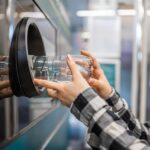
Under Spain’s upcoming deposit return scheme, shoppers will be able to return eligible bottles and cans to recover their deposit. Credit : T.Vyc, Shutterstock

Most people assume that if a shop takes something back, it’s because they sold it in the first place.

From this summer, that idea could change for millions of consumers in Spain.

Under Spain’s upcoming deposit return scheme for drinks containers, supermarkets, shops, bars and restaurants may be required to accept eligible bottles, cans and cartons even if those items were originally purchased somewhere else. In practical terms, that could mean buying a bottle of water in one supermarket and returning the empty container to a completely different business to recover your deposit.

The detail has received far less attention than the deposit itself, but it could become one of the biggest day to day changes for both consumers and businesses when the system begins operating.

The measure forms part of Spain’s implementation of the Deposit, Return and Refund System, known as SDDR, which aims to improve recycling rates and increase the recovery of single use drinks containers. Under the scheme, consumers will pay an additional 10 cents when purchasing certain packaged drinks and receive the money back when the empty container is returned.

For shoppers, it could make recovering the deposit more convenient. For businesses, it may create an entirely new responsibility.

The little known rule that could change how returns work in Spain

For decades, returning an item has generally meant going back to the place where it was purchased.

The new system takes a different approach. According to the plans outlined for the scheme, participating establishments will not simply be collecting containers they have sold themselves. They will also be expected to accept eligible containers returned by consumers regardless of where the original purchase took place.

Imagine buying a soft drink during a day trip, finishing it while travelling and then returning the empty container closer to home.

Under the proposed model, that should be possible.

Supporters of the system argue that making returns easy is essential if Spain wants to achieve the high collection rates seen in countries where similar schemes already operate.

The reasoning is straightforward. The more convenient the process, the more likely people are to participate. If consumers had to remember exactly where each bottle was purchased and return it to the same location, many would simply give up.

By allowing returns at different participating businesses, authorities hope to remove that obstacle.

Why businesses may face a new logistical challenge

For consumers, returning a bottle sounds simple. For businesses, the reality may be more complicated.

Supermarkets, convenience stores, bars and other participating establishments will need to handle a flow of returned containers that may have been purchased anywhere within the system.

That raises practical questions.

Where will containers be stored until collection? How much additional space will be required? How will businesses process refunds efficiently during busy periods?

Many retailers are expected to rely on reverse vending machines, which automatically accept containers and process refunds. These machines are already common in countries that operate deposit return systems.

Even so, businesses will need to integrate the new procedures into their daily operations.

Large supermarkets may find the transition easier because they have more space and infrastructure.

Smaller businesses could face greater challenges, particularly in locations where customer numbers rise significantly during the tourist season.

The system will affect not only supermarkets but also bars, restaurants and other establishments that sell eligible drinks. That broad scope is one reason the changes are attracting attention across the retail and hospitality sectors.

How the new deposit system is expected to work

The scheme will apply to a range of common drinks containers used every day across Spain.

According to the information released so far, plastic bottles, cans and cartons with a capacity of up to three litres will be included.

Products such as bottled water, soft drinks, juices and canned beverages are expected to fall within the system.

When consumers purchase one of these products, an additional 10 cent deposit will be added to the price. That money is not intended to function as a tax or a permanent surcharge.

Instead, it acts as a refundable deposit that can be recovered when the empty container is returned through the approved collection network.

Spain hopes the system will significantly increase recycling rates and help recover more packaging materials for reuse and processing.

The long term objective is ambitious. Authorities want to achieve a 90 per cent recovery rate for eligible containers before the beginning of 2029.

Whether consumers embrace the system quickly remains to be seen.

What is clear is that many people may soon find themselves looking at an empty bottle differently. Not as rubbish, but as something worth holding onto for a little longer.

Q&A section

Can I return a bottle to a different shop from where I bought it?

According to the planned system, participating businesses will be required to accept eligible containers even if they were originally purchased elsewhere.

How much is the deposit?

The proposed deposit is 10 cents per eligible container.

Which containers are included?

Plastic bottles, cans and cartons with a capacity of up to three litres are expected to be covered.

Is the 10 cent charge a tax?

No. It is a refundable deposit that consumers can recover when returning the empty container.

Will bars and restaurants have to accept returns?

The system is expected to affect bars, restaurants, supermarkets and other participating establishments.

Why is Spain introducing the scheme?

The aim is to increase recycling rates and recover a higher percentage of drinks containers for recycling and reuse.

When will the system start?

The changes are expected to begin from 12 August 2026 as part of Spain’s implementation of the SDDR framework.

%

Spain Has 15 Million Pets — But Hundreds Of Thousands Are Still Being Abandoned Each Year

Published

on

spain-has-15-million-pets-—-but-hundreds-of-thousands-are-still-being-abandoned-each-year

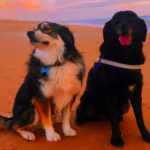
Dogs remain the most common domestic animal representing just over half of all pets. Photo credit: Molly Grace

According to new data published by the Ministry of Social Rights, Consumer Affairs and Agenda 2030, Spain has confirmed that more than 15 million domestic animals are currently living in households across the country. The figures form part of the first official national statistics on animal protection and provide the most detailed picture yet of pet ownership trends in Spain.

The data show that there are approximately 7.56 million dogs and 5.62 million cats registered nationwide. Together, they account for around 87% of all domestic animals. The remaining proportion includes rabbits, birds, reptiles and other small species, which collectively total just under two million animals.

The ministry report indicates that Spain’s pet population has increased by around 14% since 2021. It also highlights significant regional differences in distribution, with Andalucía recording the highest number of animals, followed by Cataluña, Madrid and the Valencian Community.

High pet ownership contrasts with abandonment figures

Alongside the growth in pet ownership, Spain continues to face a high level of animal abandonment. According to estimates from animal welfare organisations and the Fundación Affinity, around 292,000 dogs and cats were taken into shelters or collected by rescue services in 2024. This equates to roughly 800 animals per day, or around 33 every hour.

The figures are widely used as an indicator of abandonment and stray intake across the country. While not every animal collected has been deliberately abandoned, the data are considered one of the most consistent measures of pressure on shelters and rescue organisations.

Reports suggest that the number has remained broadly stable over recent years, but at a level that charities continue to describe as high. Seasonal peaks are also observed during the summer months, when travel and housing changes can increase the likelihood of animals being left behind or surrendered.

Spain compared with other EU countries on animal welfare

Despite the scale of pet ownership and a growing legal framework on animal protection, Spain is frequently cited by animal welfare organisations as one of the countries in the European Union facing persistent challenges in reducing abandonment rates. Animal protection groups have pointed to factors including regional variation in enforcement, limited public shelter capacity, and high reliance on private rescue organisations. However, comparative EU-wide statistics on abandonment are not standardised, making direct rankings complex.

Spain has introduced a national Animal Welfare Law, which came into force in 2023, aimed at strengthening identification requirements, improving breeding controls and increasing penalties for neglect. The legislation also introduced stricter obligations for pet owners, including mandatory identification and rules around care and supervision. Even so, welfare organisations argue that implementation varies between regions and that enforcement remains uneven, particularly in rural areas and in relation to stray animal management.

Abandonment patterns and seasonal pressure

Data from shelter organisations suggest that abandonment levels remain relatively consistent throughout the year, but increase during specific periods. Summer is traditionally the most pressured season for rescue centres, particularly in coastal and tourist-heavy regions.

Dawn, who runs a rescue shelter in Cádiz tells EWN about her first hand experience running a shelter and how the summer period places significant strain on facilities like hers.

“We dread every summer season, we have dogs pouring in at such a rate that we cannot house them all, we receive little help from the government and most of the expenses comes out of our own pockets,” she said. She adds, “I know most people get tired of hearing it, but please foster or adopt instead of buying.”

Estimates from welfare groups indicate that tens of thousands of animals may be surrendered or abandoned in the months leading up to the summer holiday period. In 2024, more than 290,000 animals were collected nationwide, and early indications from welfare bodies suggest that 2026 is expected to remain broadly in line with those figures if not more, based on historical intake levels.

Regional concentration of pets

The new government statistics also show that pet ownership is not evenly distributed across Spain. Andalucía accounts for the highest concentration of animals, with around 3.3 million registered pets. Cataluña follows with close to two million, while Madrid and the Valencian Community also record high numbers.

Dogs remain the most common domestic animal, representing just over half of all pets, while cats account for just over a third. Smaller exotic animals such as rabbits, ferrets, birds and reptiles make up the remaining share.

Officials say the data will be used to improve planning for animal welfare services and to support future policy development, including local-level coordination on shelter capacity and identification systems.

Ongoing policy debate

The publication of the figures has renewed debate over Spain’s approach to animal welfare. Supporters of recent reforms argue that legal changes represent significant progress in standardising care and reducing neglect. However, critics highlight that high abandonment levels continue to place pressure on shelters and local authorities.

Animal welfare organisations continue to call for stronger enforcement, improved public awareness campaigns and increased funding for rescue services. They also point to the importance of microchipping and owner accountability in reducing the number of animals entering the shelter system.

While Spain’s pet population continues to grow, the challenge remains how to ensure that welfare systems develop at a similar pace.

Continue Reading

%

Àngels Barceló Brings ‘Hoy Por Hoy’ To La Cala De Mijas For Its Traditional Welcome To Summer

Published

on

angels-barcelo-brings-‘hoy-por-hoy’-to-la-cala-de-mijas-for-its-traditional-welcome-to-summer

Alan Boardman, Sladana Obradovic. Àngeles Barceló and Ana Mata on Hoy por Hoy. Credit: Hoy por Hoy YouTube

Àngels Barceló, one of Spain’s most respected and popular journalists and presenter of the flagship morning radio programme Hoy por Hoy on Cadena SER, recently took the show on the road to Mijas. The special broadcast of the show which regularly pulls in 3 million listeners,  presented this time from La Cala de Mijas on Friday, June 5, was part of the programme’s traditional welcome to summer from the Costa del Sol.

In the studio, or rather, on location in the coastal heart of the municipality, Barceló was joined by Ana Mata, mayor of Mijas, and two much-loved members of the local expat community who perfectly illustrate the town’s open and multinational character: Dr Sladana Obradovic and Alan Boardman.

Ana Mata introduces Spain to the many colours of Mijas

Speaking with Barceló, mayor Ana Mata described Mijas as the perfect place to lose oneself. The municipality offers three distinct worlds in one: the mountains, the sea, and a lively centre where people live and work. While some destinations are chosen so you can be seen, according to Mata, Mijas draws those who prefer to disappear into one of its 16 beautiful beaches. “Here, we can feel foreign in our own land,” she said with evident fondness. In winter the town may look quiet, she said, but it is far from empty with its 12 golf courses that attract visitors from across Europe. Mata summed up the municipality’s greatest asset simply: “Mijas is nature — an ideal setting to reconnect with oneself.”

When asked how many nationalities call Mijas home, Mata gave the striking figure of 131. “A place where everyone feels at home,” she said. “Here, the rhythm of life is different from that of big cities.”

Dr Sladana Obradovic, earns the trust of El Pueblo

To highlight this rich diversity, Barceló introduced Dr Sladana Obradovic, originally from the former Yugoslavia. Dr Obradovic has run the night shift at the health centre in Mijas Pueblo for many years and has earned the deep trust and affection of all the local community.

Alan Boardman, responsible for shining a light on Mijas culture

Barceló then welcomed Alan Boardman, who has lived in Mijas with his wife Jenny for 21 years. A proud Mancunian and Manchester United supporter (something Barceló wanted to clarify from the outset), Alan explained how he and Jenny swapped their careers in a semi-precious stones shop for a life dedicated to charitable work. Noticing there was no English-language historical tour of the beautiful and historically rich village of Mijas Pueblo, he began offering guided tours. These are run entirely for charity, with all proceeds support local associations and causes on the Costa del Sol. Alan spoke movingly about the joy he feels when he sees the expressions on visitors’ faces as they discover the many fascinating layers of Mijas’s history and culture.

Àngels Barceló then asked Mayor Ana Mata about the deeper importance of initiatives like Alan’s tours. Mata stressed that they help prevent the formation of ghettos by encouraging newcomers to learn about their new home, its history, its present, and its future. “In the end, we’re a big family,” she said.

To close the conversation, Barceló asked each of her three guests to name their favourite place in Mijas. El Pueblo was the resounding answer from each.

Continue Reading

%

Cars & Coffee Sotogrande At Trocadero.

Published

on

cars-&-coffee-sotogrande-at-trocadero.

The stunning Sotogrande beach venue will host its first casual community meet for drivers and automotive enthusiasts.

A new meet up for car lovers on the coast

Cars & Coffee Sotogrande is revving its engines to launch its first organiser‑led motoring social on Sunday, June 14. This debut meet will take place at the gorgeous Trocadero Sotogrande, giving car enthusiasts a chilled morning surrounded by impressive vehicles and other car superfans.

The event will run from 11am to 2pm. Organisers are hoping for a wide range of supercars, sports cars and classic vehicles, with additional models all welcomed by the Cars and Coffee team. Designed and advertised to be a laid‑back community meet rather than a formal show, the morning is looking to bring together owners, drivers and fans who all share an appreciation for automotive culture and the lifestyle that surrounds it.

Event entry and venue details

There is no fee to attend or to display a vehicle. Guests are encouraged to support Trocadero Sotogrande, whose hospitality has made the launch possible, by enjoying coffee, drinks or lunch at the venue during or after the meet.

Parking and display vehicle information

Spaces for display vehicles are limited, with entry operating on a first‑come, first‑served basis. Early arrival is recommended. Visitors attending without a display vehicle are asked to use the nearby parking along the main road outside the venue.

Building a respectful motoring community

As this is the first official Cars & Coffee Sotogrande event, the team hopes to start off on the right note by creating a welcoming and respectful gathering that can hopefully grow into a regular monthly meet. Attendees are asked to respect the venue, staff, guests and nearby residents throughout the day.

If you are a super, classic or sports car owner, or just have an interested in the motoring world then head down for a coffee and surround yourself with people who share your passion.

Cars & Coffee Sotogrande is 11am to 2pm Sunday, June 14 at Trocadero Sotogrande.

Continue Reading
Advertisement
Advertisement

Spanish Real Estate Agents

Tags

Trending

Copyright © 2017 Spanish Property & News