
ElPais
AI-Era Researchers Ask Whether Math Is Obsolete








Alfonso Cuarón
The Creative Director Of Chanel Shuns The ‘Wild West’ Look: ‘We Already Have Too Many Cowboys In This World’

He has the most coveted phone book in Paris. In fact, it might even be one of the most-desired in the world. His contacts include the personal cell numbers of Martin Scorsese, Marion Cotillard, Gisele Bündchen, Luca Guadagnino, Lily-Rose Depp, Margot Robbie and Timothée Chalamet. When Thomas du Pré de Saint Maur, 57, decides to dial a number, you can tell that no one on the other end will be able to resist him. Anyone who sees his name on the screen is practically touched by Lady Luck. Who dares to say “no” to a Chanel ad?
“Almodóvar did, for example.” He reveals the Spanish director’s rejection with a laugh, relaxed on the sofa in his Parisian office. The space is almost as bright as he is. “Tarantino also turned me down. [He was] much more ambitious: he wanted to star in the film. And that was completely impossible,” he explains.
Du Pré, born in the wealthy Paris suburb Neuilly-sur-Seine, is the son of French aristocracy and Venezuelan bourgeoisie. This well-balanced mix manifests itself in his easy laugh, lightheartedness and good sense of humor. However, he claims to have a melancholic temperament and only reads “sad novels” by Stendhal (The Charterhouse of Parma being his favorite), or War and Peace by Tolstoy.
Does he read anything by Dostoevsky? “Never,” he replies emphatically. He answers this newspaper’s questions in fluent Spanish, interspersed with entire sentences in English and French.

Since 2014, he has held the position with the longest title at the house: head of Global Creative Resources for Chanel Fragrance, Beauty, Watches and Jewellery. Among his responsibilities is keeping a legend alive: Chanel N°5.
Du Pré is the person who decides the face of the fashion house’s fragrances. He sat down with EL PAÍS to discuss the latest star he has signed: Jacob Elordi, the new brand ambassador for Bleu de Chanel L’Exclusif. The Australian actor appears in The Chase, a cinematic advertisement directed by Alfonso Cuarón, the Mexican filmmaker behind masterpieces like Gravity (2013) and Roma (2018).
For the first time, a Chanel advertisement is an action film. Instead of quiet, contemplative scenes, we’re plunged into a chase. “You can’t spend your life just admiring yourself,” the creative director explains. The idea of changing direction came to him in 2024 while filming the N°5 commercial with Margot Robbie and Jacob Elordi, directed by Luca Guadagnino.
“For 15 years, we’ve made existential stories; narratives where the man always re-evaluates his entire life. This time around, I was looking for something deeper and more sensory. And, with Cuarón, we’ve achieved it by using action, without excessive testosterone. That’s why I chose Elordi; he’s like an action hero, but there’s something very gentle about him.”
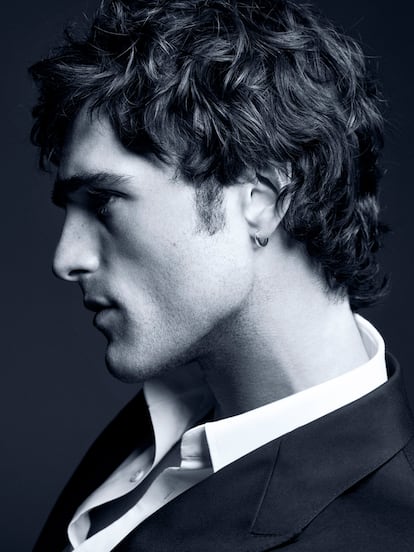
He says that it wasn’t his intention to give a face and texture to contemporary masculinity… but perhaps he’s ended up doing so. “I hate when people pressure me: ‘Express your feminine side!’ Give me a break! No, it’s not that; it’s something more sensitive and fragile that’s neither masculine nor feminine. It’s gentle,” he insists.
He’s a bit fed up: he says that, for 30 years, people have been trying to define the new masculinity. “In such a fragmented world, it’s better to accept that there isn’t just one single expression of masculinity. I’d say it should be more tender. I want to believe that there’s more tenderness than testosterone in the world. Only that will save us.”
Balance has been the great discovery of the shoot. “In the [2024 campaign] for N°5 (titled See You at 5), the characters played by Margot Robbie and Jacob Elordi weren’t at all balanced; he’s impulsive, always on edge, while she — calmer and more experienced — is in control. In the Bleu L’Exclusif story, they’re equals… and I find that to be very modern. There are no cowboys; we already have too many of them in this world. Aggressive, dominant masculinity is making a terrible comeback. I don’t like it at all, which is why this ad revolves around sensuality, not testosterone.”

When asked what it was like working with Alfonso Cuarón, Du Pré answers: “Great. I’m not a masochist by any means. Working with people who treat you like dirt and only want your money? No, that’s unacceptable. And there are many people who are like that, unpleasant and selfish.”
He recounts that Cuarón had two months free in his schedule. “That’s almost a miracle with these talented people who work so much and usually have their schedules booked for three or four years. In my mind, he wasn’t the best director to make an action movie. However, I liked how he had filmed men. So, I said to myself: ‘Let’s give it a try.’”
Du Pré notes that he goes into film shoots “lightheartedly.”
“I try not to get too anxious. If it doesn’t go well, we just do it again and it’ll work out.” He also doesn’t talk much with the actors, only with the director. “We work a lot. And, when we reach an agreement, he takes charge of giving his vision to the actors. [By that point], there’s little I can do, because the conversation is cinematic. They understand each other… and Cuarón is a huge talent.”

Du Pré has held his position as creative director since 2014. One of his predecessors was Jacques Helleu (1938-2007), “the guardian of the maison’s good taste.” The mission was entrusted to him by Pierre Wertheimer when he was just 18. In 1968, Helleu chose Catherine Deneuve as the face of N° 5 and commissioned famous photographers such as Richard Avedon and Helmut Newton to leave their mark on the house.
It was Helleu’s idea to begin collaborations with film giants. In 1978, he involved British director Ridley Scott in La Piscine — the first film featuring Chanel N° 5 — and later recruited Luc Besson and Roman Polanski for his aesthetic ventures. In the early 1990s, he directed advertising campaigns with Jean-Paule Goude, such as the one for the Égoïste perfume.
Helleu’s definitive theatrical breakthrough came when he made The Film with Nicole Kidman, then at the height of her fame for Moulin Rouge, with director Baz Luhrmann. This was the 2004 N° 5 commercial.
It is this very legacy that Du Pré has inherited; he made his debut in 2014 with a spectacular advert for No. 5 that is still remembered today: Gisele Bündchen surfing waves around the world. “For that film, we needed waves. We went to Baiona, then to Fiji, then to Hawaii and, finally, to Tahiti. Two weeks of travel to film one hour. In Tahiti, the waves were like a 40-story building. We had the Brazilian surfing champion with us… and she broke her nose on the first try. In the end, we got the 12-year-old son of the local king: we put a wig on him, he caught a wave and we were able to film. Things never happen the way you imagine them.”

Bleu de Chanel L’Exclusif, the fragrance championed by Elordi, is an eau de parfum created in 2018 by Olivier Polge. He’s the son of Jacques Polge, the former head perfumer at Chanel who, back in 2010, launched the first version — an eau de toilette — with the same name. French actor Gaspard Ulliel was its first and only ambassador until his death in 2022; he was succeeded by Timothée Chalamet in 2023 and by the Australian actor in 2026.
According to Du Pré, each of these stages has signaled changes in contemporary masculinity.
“15 years ago, men wore colognes that gave them headaches, very strong ones; that’s how power was expressed. What’s interesting is that, [over the past] 15 years, they’ve embraced complexity in the world of fragrances. Today, almost no man has a problem wearing an eau de parfum, a more refined and complex scent. What we’ve experienced in this decade is a shift toward complexity in men’s fragrances, while women are going in the opposite direction and seeking monofloral fragrances,” he explains.
The creative director enjoys talking. Non-stop. In fact, he says that he can’t stop. “You can wake me up at eight in the morning and I’ll launch into a speech,” he warns, adding: “I’m not one of those solitary creative types who get their ideas in silence. In French we call it ‘logo moteur’ — in other words, I need to talk in order to think. I can’t come up with anything on my own. In a conversation with someone, yes. If I don’t talk, I get bored.”
Is it possible to believe that Pedro Almodóvar said “no” to Du Pré?
“Well,” the Frenchman clarifies, “he set conditions. He only wanted to work with Penélope Cruz, but she was already committed to Lancôme. It wasn’t possible. It was more of a ‘not right now.’”
Sign up for our weekly newsletter to get more English-language news coverage from EL PAÍS USA Edition


Dark matter, one of the universe’s most enduring mysteries, is not exactly dark — it’s invisible. Astronomers know the cosmic component has to be there from the force of gravity it exercises, but no one has managed to see or capture it. Now, the European Space Agency has approved Arrakihs, a mission designed to study dark matter, and evaluate current theory surrounding it. There is a possibility that the project could find that our ideas as to how the universe works are incorrect, which would be a historic discovery.
The scientific father of Arrakihs is astronomist Rafael Guzmán, who has spent years perfecting the project at the University of Florida, and is now leading the charge from the University of Cantabria and the Spanish National Research Council’s Institute of Physics. “We wanted this mission to be simple, but for it to have optical quality that pushes the limits of what physics allows,” says the astrophysicist, who was born in Don Benito, Badajoz, 62 years ago.
So far, the result has been a space observatory with four small telescopes, measuring a mere 15 centimeters across. Arrakihs’s two pairs of eyes will contemplate at least 80 galaxies similar in shape and structure to the one humans inhabit, the Milky Way, in order to observe light emitted across different wavelengths from ultraviolet to infrared and including the visible spectrum. “We have broken molds,” summarizes Guzmán. “Instead of going with very complex designs, very large telescopes that would have been much more expensive, we are demonstrating that with an unbeatable optical quality, tested entirely in Spain, it is possible to compete with the most advanced missions.”
The European Space Agency has recently extended definitive approval to the scientific mission, which is classified as type F for “fast,” and is designed so that only a decade will pass between its initial selection, which took place in 2023, and its launch. The Spanish team would like to accelerate that timeline even more, and begin in 2030. This is the first time a scientific space mission has been led from Spain, which will coordinate the participation of Switzerland, Austria, Belgium, Norway, Portugal, and Sweden. Its total budget is $371 million and its primary contractor is Satlantis, a company based in Bilbao.
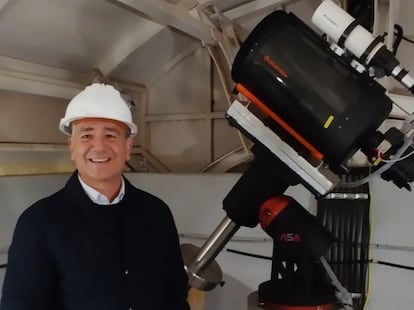
Turning space observation technology around to point it toward Earth is a part of the company’s origins, explains Guzmán. That’s how its primary service came about, which is detecting gas leaks on oil fields. “Detecting gases like methane follows the same methodology and uses the same technology that astronomers use to detect, for example, hydrogen in galaxies beyond the Local Group,” he explains. The same technology can also be applied to early fire warning. “Our mission didn’t first come up with a scientific use case and then design the camera; instead, it adapted the existing camera to the scientific objectives. This has allowed us to move forward very quickly and led us to being selected as a fast mission,” Guzmán notes.
Arrakihs is an astrophysics mission, but its angle of attack when it comes to the issue of dark matter is almost paleontological. According to current theory, galaxies form throughout millions of years by eating dwarf star systems and galaxies that orbit around them. Those dwarf galaxies are destroyed and leave behind a trail known as stellar streams. In the final stage, the system reaches equilibrium, and this stellar trail is faintly imprinted on the galactic halo — a massive, invisible sphere surrounding the galaxy and containing dark matter, whose gravitational force is essential to the galaxy’s existence. These streams “are a kind of fossil record of the galaxy’s history. Although they are very faint, they are still present. They would allow us to test the cold dark matter prediction regarding galaxy formation, according to which all galaxies like the Milky Way should be full of stellar streams,” says Guzmán.
The theory in question is called ΛCDM, and it is the most-accepted model in describing the universe, which is in its vast majority unknown. Lambda, the tenth letter in the Greek alphabet, represents dark matter, which makes up 68% of the cosmos and is one of the greatest mysteries of physics. CDM stands for cold dark matter, which makes up 27%. Lastly, the only well-known fraction, conventional matter, makes up all visible things and accounts for the remaining 5%.
Stellar streams in our own galaxy have been observed by the ESA’s Gaia mission, and other observatories have detected them in Andromeda. What Arrakihs will now provide is a much larger set of observations, spanning between 80 and 100 galaxies, yielding a statistical measure of the presence of these phenomena, which are closely linked to the mystery of dark matter.
It is possible that the observations will confirm the theory, although it would be exciting if they did not. “The current model predicts the behavior of the universe on a large scale fairly well, but it fails when it comes to the planes of galaxies like the Milky Way [that disk-shaped structure where most stars and planets are located, including our solar system],” explains Guzmán. Theories are valid until an experiment comes along that contradicts them. If that happens, it would bring about “a radical change” that would force us to revise them, the scientist concludes.
After its launch, likely from the European spaceport in French Guiana, Arrakihs will enter Earth’s orbit at a distance of about 500 miles from the surface of the planet. It will have three years of official operation and the possibility of being extended, if everything goes well.
Sign up for our weekly newsletter to get more English-language news coverage from EL PAÍS USA Edition

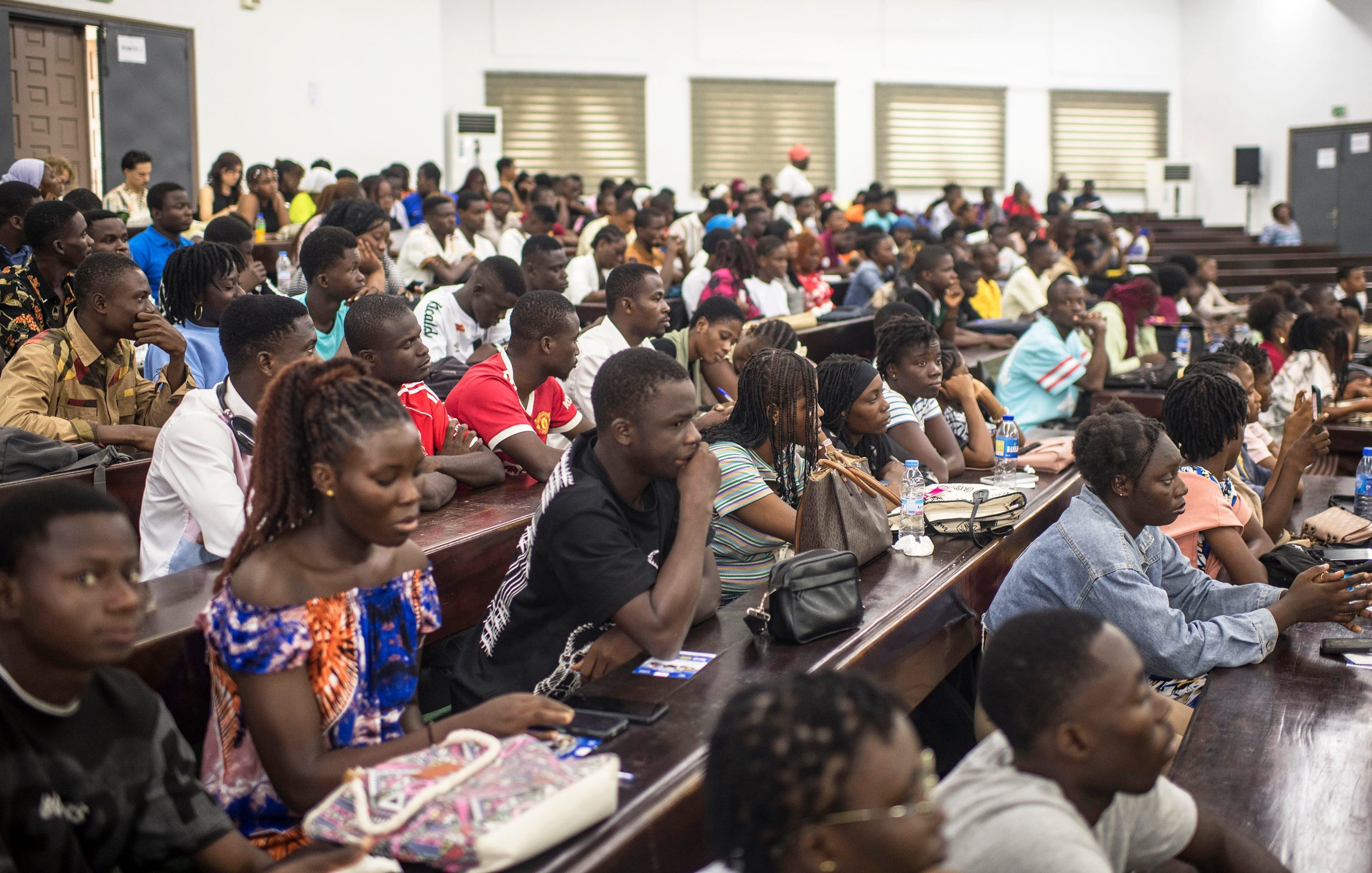
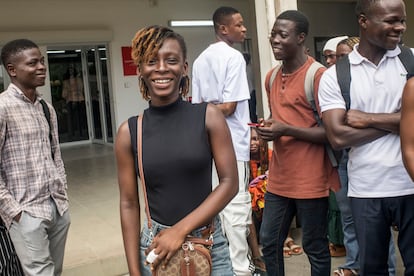
She heard her first words watching the Mexican soap opera Marimar and, from then on, knew she wanted to learn that strange language. Gloria Ane has just started a master’s degree in Hispanic philology at the Félix Houphoüet-Boigny University in Abidjan, Ivory Coast, but she is only one of the 3.5 million Spanish learners in sub-Saharan Africa — a figure that has more than doubled since 2014. Demographics, the rise of Latin music and cinema, soccer as a global phenomenon, and migration — together with the decline in French’s prestige — are allowing the Spanish language to gain ground in Africa. On June 10 the new Aula Cervantes headquarters in Abidjan was inaugurated, and another is already planned for Cameroon, which with 1.2 million learners is the fifth-ranking country in the world by number of students.
“Spanish has established itself as one of the world’s major languages and, beyond communication, it has an expanding presence in areas such as culture, science, business, and international relations,” said Luis García Montero, director of the Instituto Cervantes, at the opening of the new Abidjan headquarters, which includes a small library, two multipurpose rooms and a computer lab. “Its relevance in sub-Saharan Africa is growing. That has to do with population growth, but also with an attitude. We are not in Africa as a language of domination, but of dialogue. Increasingly more students are choosing Spanish as a second language in countries such as Benin, Ivory Coast, and Cameroon,” he added.
We are not in Africa as a language of domination, but of dialogue
Luis García Montero, director of the Instituto Cervantes
The data have just been published in the book Spanish in sub-Saharan Africa, edited by the Instituto Cervantes and Casa África and coordinated by Javier Serrano. The research updates figures gathered in an earlier 2014 study. “The growth is simply spectacular,” says Álvaro García, Instituto Cervantes’ academic director. “In 10 countries in the region there is a medium or high level of institutionalization of Spanish; it is a subject in secondary schools, which account for 95% of the students.” These include the countries already mentioned by García Montero: Cameroon, with 1.2 million students, Ivory Coast (one million) and Benin (725,000), as well as Senegal, Cape Verde, Gabon, Equatorial Guinea, Madagascar, the Central African Republic, and Togo.
These 3.5 million students represent 13.53% of all Spanish learners in the world. Countries with the largest numbers of learners are the United States, with 8.5 million, Brazil (4 million), France (3.6 million), the United Kingdom (2 million) and, in fifth place, Cameroon. Africa is the fourth region in the world in terms of contribution to learners of Spanish as a foreign language, and five African countries rank among the 15 with the most students worldwide. “But in Africa the potential is enormous, especially in lusophone and anglophone countries,” García adds.
To continue growing, the Instituto Cervantes has just created the Global Observatory of Spanish in African Contexts, where experts will scrutinize the main lines of this expansion. The Cervantes itself has gone from having a single classroom in Dakar, which opened in 2010, to an institute in the Senegalese capital that was inaugurated by Queen Letizia in 2021, and now a new classroom in Abidjan, which had been operating for five years without a physical headquarters. The next destination will be Yaoundé, the Cameroonian capital, where work is already underway to open a new space in the coming years.
“A lot of people speak Spanish in the world, which is why I like it — I think it could give me opportunities,” said Moussa Bamba, who is studying the first year of Hispanic philology in Ivory Coast. “For now my dream is to be a secondary-school teacher, but we’ll see.” Maurice Konan is already in his third year and has read El metro and El sueño y otros relatos by Equatoguinean author Donato Ndongo-Bidyogo. “Don Quixote hasn’t yet fallen into my hands, but I’d very much like to read it,” he said with a smile.
The president of the Official Chamber of Commerce of Spain in Senegal, Ramón Nicolau, recalled the quantitative supremacy of other languages, such as Chinese, because of the demographic weight of their countries of origin — about one billion Chinese speakers compared with 635 million Spanish speakers. Nevertheless, he noted that Spanish as an economic and business ecosystem has a singular importance second only to English. Nicolau highlighted the importance of Spanish as “a vehicle of trust and an accelerator of business networks, but it is also a market, a community, and a strategic bridge to the global economy.”
For her part, Korotoumou Niang, law professor at Kurukan Fuga University and at the Institut des Sciences Politiques et des Relations Internationales of Mali, recalled how her decision to study Spanish changed her life. “I received a scholarship and could have chosen other countries, but I went to Cuba. This language has given me opportunities that a Malian woman like me would never have had. I also work as a translator for the Spanish Embassy and on cooperation projects. In my country everyone expects a young woman to marry, have children, and abandon her professional life. I became a role model for my female students,” she said.
This language has given me opportunities that a Malian woman like me would never have had
Korotoumou Niang, law professor at Kurukan Fuga University
During the congress, Eladia Martín, head of the Diploma in Spanish as a Foreign Language (DELE) at the Instituto Cervantes in Dakar, stressed the importance of holding official certification to qualify for jobs. The Cervantes’ academic director said that currently these courses and exams exist in 13 sub-Saharan African countries, where there are 20 examination centers through which 500 diploma candidates sat exams in 2025. For Jean Christophe Dièmè, a teacher at the Jean Mermoz institute in Dakar, it is urgent to undertake a reform and modernization of content.
Sign up for our weekly newsletter to get more English-language news coverage from EL PAÍS USA Edition

Resultados Elecciones Colombia 2026, En Vivo | De La Espriella, Nuevo Presidente De Colombia, Según El Preconteo De Votos

Petro: “No Se Puede Proclamar Ninguno Presidente. Tranquilidad Entre La Ciudadanía”

Beiranvand Y Courtois, Triunfan Los Porteros En El Empate Entre Irán Y Bélgica

Peru’s Roberto Sánchez And Keiko Fujimori Urge Caution As Vote Count Continues In Very Tight Presidential Election
A major EU border system goes live today – What changes for travellers?
El Pentágono, Evacuado Por Una Falsa Alarma Ante La Sospecha De Un “incidente Con Materiales Peligrosos”


-
 Alberto Fujimori2 weeks ago
Peru’s Roberto Sánchez And Keiko Fujimori Urge Caution As Vote Count Continues In Very Tight Presidential Election
-
EU rules1 week ago
A major EU border system goes live today – What changes for travellers?
-
America1 week ago
El Pentágono, Evacuado Por Una Falsa Alarma Ante La Sospecha De Un “incidente Con Materiales Peligrosos”
-
Coastal erosion2 weeks ago
Mallorca launches new plan to save its beaches as coastal erosion threatens popular resorts
-
fira de ses herbes2 weeks ago
Selva herb fair returns: Mallorca’s most magical tradition blooms again
-
european airport delays1 week ago
1,225 delays at major European airports raise summer warning for Spain travellers
-

 Uncategorized2 weeks ago
WATCH: Kim Kardashian steals F1 Monaco GP winner Antonelli
-

 %1 week ago
Barcelona Tests Olive Pit Asphalt That Could Transform How Cities Build Roads