Connect with us

%

Andalucía’s Most And Least Populated Provinces Revealed As Population Gap Starts To Shift

Published

on

andalucia’s-most-and-least-populated-provinces-revealed-as-population-gap-starts-to-shift

Huelva remains Andalucía’s least populated province. Photo credit: jesper Sohof/Shutterstock

Where people choose to live can tell you a lot about how a region is changing. Some parts of Andalucía continue to attract new residents year after year, while others are finding it harder to keep hold of their population. The changes happen gradually, which is why many people barely notice them, but over time they can have a significant impact on everything from housing and healthcare to schools and local businesses.

Recent data from Spain’s National Statistics Institute (INE) offer a glimpse into how Andalucía’s population could look over the next 15 years. While the region’s largest province shows no signs of losing its position, the picture elsewhere is becoming more interesting as some provinces grow and others face decline.

Which provinces have the largest and smallest populations?

When it comes to population, Sevilla remains firmly at the top of the table. Home to almost two million residents, the province is comfortably Andalucía’s most populated and continues to benefit from its role as the region’s administrative and economic centre.

Málaga follows in second place, reflecting years of strong growth driven by tourism, international migration and a growing business sector. Cádiz, Granada and Córdoba complete the middle of the ranking, while Almería has continued to increase its population in recent years.

At the other end of the scale are Jaén and Huelva. Of Andalucía’s eight provinces, Huelva remains the least populated, a position it has held for decades. That part of the story has not changed. What is changing is the gap between some of the provinces near the bottom of the table.

Why some provinces are gaining residents while others are losing them

Population growth is rarely down to a single factor. Employment opportunities, housing costs, quality of life and migration all influence where people decide to settle. Provinces that offer jobs and attract investment tend to bring in new residents, while areas with fewer opportunities often see younger people move elsewhere.

Coastal provinces have generally benefited from international migration, both from foreign workers and from people relocating to Spain permanently. This has helped boost populations in places such as Málaga, Almería and Cádiz.

Inland provinces face different challenges. Lower birth rates and an ageing population have become increasingly important factors, particularly in areas where younger residents leave for larger cities. The result is that not every province is moving in the same direction.

Huelva is still the smallest province but it is growing

Although Huelva remains Andalucía’s least populated province, INE projections suggest its population is expected to increase over the coming years. Part of that growth is linked to migration, including foreign residents who have settled in the province for work and lifestyle reasons. Huelva’s agricultural sector continues to attract workers, while housing remains more affordable than in many larger cities.

The province also benefits from its coastline, natural parks and proximity to both Portugal and Sevilla, factors that have helped make it increasingly attractive to new residents. The projected growth is not large enough to move Huelva up the rankings, but it does mean the province is gradually reducing the gap with others around it.

Jaén faces a very different challenge

While Huelva is expected to add residents, Jaén is projected to move in the opposite direction. According to the INE forecasts, the province could lose population over the next 15 years as demographic pressures continue to take their toll. An ageing population combined with the departure of younger residents has created challenges that many inland areas across Spain are facing.

This is one reason why the difference between Jaén and Huelva is expected to become smaller in the years ahead. It is not necessarily because Huelva is growing rapidly, but because the two provinces are moving in different directions.

What these changes could mean for Andalucía

Population figures are about much more than rankings. Growing populations often mean increased demand for housing, transport links, healthcare services and schools. Areas with declining populations face different concerns, including maintaining public services and supporting older communities. The latest INE projections suggest Andalucía’s future will not be shaped by a single story. Sevilla is expected to remain the region’s population heavyweight, while Málaga, Cádiz and Almería continue to attract new residents.

At the same time, provinces such as Jaén face ongoing demographic challenges, while Huelva is quietly closing the gap despite remaining Andalucía’s smallest province. The rankings themselves may look familiar for years to come, but the figures show that the balance between Andalucía’s provinces is slowly changing. What happens over the next decade will help determine where investment goes, where new homes are built and how communities across the region continue to develop.

%

Ten Years After Brexit, Britons In Spain Are Still Counting The Cost Of Lost Freedom

Published

on

ten-years-after-brexit,-britons-in-spain-are-still-counting-the-cost-of-lost-freedom

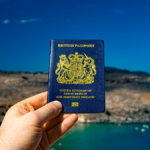
Why’d you have to go and make it feel so complicated? 10 years on from Brexit. Credit: M-Production / Shutterstock

Ten years after UK voters went to the polls on June 23, 2016, British life in Spain has not disappeared. But residency documents, 90-day limits, property shifts, trade friction and family care worries now shape a relationship that once felt far simpler.

How the Brexit vote still shapes British life in Spain

When the UK voted to leave the European Union on June 23, 2016, much of the public debate centred on trade, sovereignty, immigration and Westminster politics.

For British residents in Spain, the longer story became more practical. The vote did not instantly change daily life, and Britain did not formally leave the EU until January 2020. But over the decade that followed, the meaning of being British in Spain changed.

Living, retiring, working, staying with family or caring for elderly relatives in Spain is no longer something British citizens can assume in the same way EU citizens can.

Paul Michael, 67, a British resident in Cádiz who has lived in Spain for more than 23 years, said the first noticeable shift was the need to prove a status that had once felt settled.

“Despite living legally in Spain for many years, I suddenly had to deal with changes in my status as a British resident in Spain and residency paperwork,” he told Euro Weekly News.

How freedom of movement became forms, cards and calendar counting

Before Brexit, UK citizens could move to Spain under EU freedom of movement rules. Since the end of the transition period, British citizens arriving to live in Spain are generally treated as non-EU nationals and must meet visa, residency and documentation requirements.

For those already legally resident before the cut-off, the Withdrawal Agreement protected many existing rights. But even protected residents still had to make sure they could prove their position.

Spain’s TIE, the Tarjeta de Identidad de Extranjero, or foreigner identity card, became an important document for British residents proving post-Brexit status.

Paul said this is what many people in the UK failed to understand.

“Some people underestimate the value of freedom of movement because they never used it themselves,” he said. “The right to live and work in Spain changed overnight. Many thought Brexit was just about trade arrangements and politics.”

That distinction matters, and still shapes who can live, work, retire or stay long-term in Spain.

How 90-day limits changed second homes, family visits and care

For British citizens without residency or a long-stay visa, Spain sits inside the Schengen 90-day rule. That generally limits visa-free stays in Spain and most other Schengen countries to 90 days in any 180-day period.

Maureen Smith, a British resident who moved to Spain in 1990 and lived around Sotogrande and Pueblo Nuevo for more than three decades, said the referendum result was a shock.

“Brexit was a disaster and we couldn’t believe the result,” she said.

For Smith, one of the clearest practical changes was the loss of automatic movement between the UK, Spain and the wider EU.

“The 90-day rule for villa owners was bad,” she said. “There was no freedom of movement and more hassle at airports.”

She said Brexit also affected feelings of security among some long-term residents, even those who had worked, raised families and built stable lives in Spain.

“I felt insecure even though I had a full-time job at school and a pension,” she said.

Care has become one of the most sensitive post-Brexit issues. Recent reporting has highlighted British families struggling to care for elderly relatives in Spain because UK-based relatives cannot simply stay indefinitely without residency or a visa.

Smith, who returned to the UK for family health reasons, said Spain had been “a great place to bring up children”, but that ageing could change the calculation.

“For older people, if they lose a partner, life is very different,” she said.

How the Costas changed without losing their British base

The South and Eastern coasts of the Iberian Peninsula have long been shorthand for British life in Spain, and British buyers have not disappeared. But post-Brexit, new British arrivals face a different legal path from EU citizens buying, retiring or working in Spain.

There is evidence of change, but the figures do not show a simple British retreat.

Spain’s General Council of Notaries said foreigners accounted for 18.4 per cent of free-market home purchases in Spain in the second half of 2025. British and Moroccan buyers were the two largest foreign groups, followed by Italians and Germans.

Paul said claims that British communities have faded away can be exaggerated.

“There is still a large British community here,” he said. “There are fewer new British arrivals than before Brexit because it has made moving to and working in Spain far more complicated. But there are still many large British communities.”

How tourism stayed strong while the wider relationship grew more complex

The numbers also show a split between visiting Spain and building a life there.

Spain received a record 96.8 million international tourists in 2025, according to Spain’s National Statistics Institute. British visitors remained a central part of Spain’s tourism market, with official monthly data repeatedly showing the UK among the leading source countries.

That suggests Brexit has not broken the UK-Spain travel habit. But holidays are not the same as residency.

How British residents in Spain now need to plan differently

British residents covered by the Withdrawal Agreement should keep residency documents up to date, including the TIE where applicable. Second-home owners and regular visitors need to track Schengen days carefully. Families with elderly relatives in Spain may need legal advice before assuming a UK-based son, daughter or carer can stay long-term.

For new arrivals, the old idea of trying Spain first and sorting paperwork later is far more difficult than it used to be.

For British residents in Spain, Brexit’s anniversary marks a decade in which a familiar way of life survived, but became less automatic, less flexible and much more dependent on paperwork and ever-changing rules and regulations. 

Continue Reading

%

Jet2 Winter Flights To Mallorca From The UK

Published

on

jet2-winter-flights-to-mallorca-from-the-uk

Jet2 has added more winter flights to Mallorca from the UK as part of its 2027/28 programme. Credit : Markus Mainka, Shutterstock

Jet2 has put more winter flights to Mallorca on sale for 2027/28, with the island served from ten UK airports including Manchester, Birmingham, Bristol, Edinburgh and London Stansted. The airline’s biggest winter sun programme yet includes almost 4.5 million seats across 181 routes, as British holidaymakers continue booking sunny escapes further ahead, even for destinations once seen mainly as summer favourites.

Mallorca in winter used to be a quieter affair. The beaches were calmer, hotels closed earlier, and many British travellers still thought of the island as a place for July, August and school holiday getaways. That picture has been changing for a while, and Jet2’s latest announcement gives another sign of how far things have moved.

The UK airline and tour operator has opened its Winter 2027/28 programme early, with flights and holidays now on sale across 17 winter sun destinations. Mallorca is firmly included, with services from Birmingham, Bristol, Edinburgh, East Midlands, Glasgow, Leeds Bradford, Liverpool, Manchester, Newcastle and London Stansted.

For travellers, it means more choice from regional airports. For Mallorca, it means another push towards a longer tourism season, beyond the usual summer rush.

Mallorca gets a strong place in Jet2’s winter programme

Jet2 says the winter programme is its largest ever, with almost 4.5 million seats on sale from 14 UK bases.

The wider schedule covers Spain, the Canary Islands, the Balearics, Portugal, Turkey, Malta, Morocco, Cyprus and Egypt. It also includes Jet2’s first full winter season to Sharm El Sheikh and Hurghada.

Even with hotter winter destinations in the mix, Mallorca remains a major part of the offer. That says plenty about the island’s pull with UK travellers.

It may not promise the same winter heat as Egypt or the Canaries, but Mallorca has something else working in its favour. It is close, familiar and easy. Flights are short, Palma works well for weekend breaks, and many visitors already know the island well enough to book without much hesitation.

That familiarity matters when people are planning holidays months, or even years, ahead.

Why British travellers are looking at Mallorca outside summer

Mallorca’s appeal in winter is different from its summer image. This is not the Mallorca of packed beaches, busy beach clubs and airport queues in peak August. Winter visitors are more likely to be looking for mild weather, a few days in Palma, quieter coastal walks, cycling, hiking, food, shopping or simply a break from the British cold.

For many, that is exactly the attraction. The island is still recognisably Mallorca, but slower. Restaurants are easier to book, roads are less crowded, and Palma feels more relaxed than it does in the middle of summer.

That kind of trip fits well with the way many British holidaymakers now travel. Not every escape has to be a full week by the pool. A four-night winter break, a half-term getaway or a few days of sunshine in February can be enough.

Jet2 appears to be betting on that demand continuing.

Which UK airports will serve Mallorca?

The airline says Mallorca will be served in Winter 2027/28 from ten UK airports: Birmingham, Bristol, Edinburgh, East Midlands, Glasgow, Leeds Bradford, Liverpool, Manchester, Newcastle and London Stansted.

That list is important because it shows this is not only a London market. Jet2 has built much of its success around regional airports, and Mallorca remains one of the destinations that works well from across the UK.

Manchester, the airline’s largest base, will offer more than 700,000 winter seats across the overall winter sun programme. Birmingham will have more than 540,000, while London Stansted will offer more than 430,000.

Mallorca is part of that wider winter push, rather than a small add-on.

Jet2 chief executive Steve Heapy said the programme had been launched early to give customers and independent travel agents more choice and flexibility. Further winter announcements, including ski, city breaks and Iceland programmes, are expected in the coming weeks.

A longer season for Mallorca

For Mallorca’s tourism sector, extra winter flights are about more than airport numbers.

More seats from the UK can help hotels, restaurants and local businesses stay active outside the busiest summer months. That matters on an island where the debate around tourism often focuses on overcrowding in July and August, while other parts of the year remain much quieter.

Winter tourism will not replace summer tourism. It is not meant to. But every extra route helps spread demand a little further across the year. It also helps shift how the island is seen by British travellers.

Mallorca is still one of Europe’s classic summer destinations. That will not change. But with airlines putting more winter capacity on sale and holidaymakers booking earlier, the island is becoming something else too.

A place Brits are increasingly willing to book when the UK weather turns cold.

Continue Reading

%

Rotary Club Marbella Elviria Hosts First International Moraga

Published

on

rotary-club-marbella-elviria-hosts-first-international-moraga

Moragas and membership. Credit: LW

Rotary Club Marbella Elviria created enthusiasm recently with two key events that mixed local tradition, live music and official ceremonies. The club, previously called Rotary Club Marbella East, adopted a name reflecting its Elviria location and stronger regional focus.

Beach La Moraga brings Andalucian tradition to international members

Rotary Club Marbella Elviria organised the first international La Moraga evening on a Marbella beach, a traditional Costa del Sol beach barbecue using only wooden fishing boats filled with sand on the beach as their barbecue base.

Guests enjoyed sardine skewers and fresh fruit skewers in a relaxed seaside atmosphere. The bar featured the Congas concept from Spain, an innovation that carbonates tap water with gas to create flavoured sparkling drinks now on sale.

Singer Ana Soto performed with a Spanish guitarist, adding live music to the evening. A raffle supported fundraising while attendees enjoyed the beach setting. Local town hall approval was required for the beach event. This occasion introduced international members to a classic Andalusian tradition.

Change of Collar dinner celebrates leadership and identity

Rotary Club Marbella Elviria hosted its Change of Collar dinner last week at Marbella Golf and Country Club. Linda Eccles was installed as president for 2026 after serving in 2025. Formal proceedings during the evening included the official name change to Rotary Club Marbella Elviria.

Rotary Club Marbella Elviria builds on strong foundations

Founded in 2020, Rotary Club Marbella Elviria serves as an English-speaking international group for professionals. Meetings take place on the second and last Wednesday afternoons at Marbella Golf and Country Club. The club funds Rotary projects globally and supports local charities in Spain and Andalucia.

Invitation to get involved with Rotary in Elviria

Rotary Club Marbella Elviria welcomes like-minded people who want to join fundraising for international and regional charities. Members combine enjoyment with serious commitment to Rotary work that benefits many communities. Those interested in membership or attending a meeting can contact the club via its website for details.

Continue Reading
Advertisement
Advertisement

Spanish Real Estate Agents

Tags

Trending

Copyright © 2017 Spanish Property & News