At present, ten states have applied to join the European Union – Albania, Bosnia and Herzegovina, Kosovo, Montenegro, North Macedonia, Serbia, Turkey, Ukraine, Moldova, and Georgia.
All but Kosovo are recognised as official candidates.
Iceland already asked to join in 2009, after the collapse of its financial sector. Talks were terminated in 2015, but the application was never withdrawn. The new geopolitical reality, and especially security concerns, re-opened the question for the Nordic island, which has a population of almost 390,000.
But Icelanders are still divided about the decision. A July poll indicated support for “yes” at 53 percent and 47 percent for “no”.
How to join the EU
Countries that apply to join the EU are required to align with EU values, democratic principles and the rule of law. This usually involves carrying out reforms in political, administrative, economic and social areas. There are 33 negotiations chapters to be covered in total.
When Iceland’s accession talks were paused, 27 chapters had been opened, and 11 concluded, the government said.
Who will be the next country to join the EU?
Among aspiring EU members, Albania, Bosnia and Herzegovina, Montenegro, North Macedonia, Serbia, and Kosovo applied to join in the 2000s, after the Yugoslav Wars.
Montenegro, Albania and Serbia are the most advanced in the negotiations and may be able to access the bloc by the end of the decade, although the European Parliament and some member states have raised concerns about Serbia’s “democratic backsliding” and “serious problems with the rule of law” under the current president.
Talks with Turkey have long been frozen due to concerns about the rule of law and human rights.
Ukraine, Moldova and Georgia asked to join the EU following Russia’s aggression of Ukraine, but progress stalled because of the opposition of former Hungarian Prime Minister Viktor Orbán. With a new administration in place in Hungary, negotiations can now proceed, although no country can join the EU with an ongoing war.
Questions on the EU expansion also concern the institutional set-up, including the distribution of voting rights among EU countries and the ability to make decisions at unanimity.
“More EU members will make the decision-making progress more cumbersome, in particular countries quite different in political and geographical standing, and with different interests,” says Tobias Etzold, Senior Adviser at the European Policy Centre (EPC), a think tank in Brussels.
In 2023, Germany and France argued in a joint paper that the EU could develop by tiers, with a tier of ‘associated’ members that would include EEA countries (Norway, Iceland and Liechtenstein), Switzerland or even the UK.
The future of Iceland
In the event of a “yes” vote, Iceland would be in a different position compared to other candidate countries because it is already part of the European Economic Area (EEA), which guarantees the free movement of people, goods and services, and of the free-from-border-checks Schengen Area.
“In case of a positive vote, Iceland would resume talks, not apply for EU membership. The European Commission considers the conclusions of past negotiations chapters to be valid. But the future timeline is unclear and whether the country will join the EU is a different question,” Etzold says.
“Like Norway, there is reluctance in giving up sovereignty, as Iceland is a relatively young independent democracy. It is also a small country, which means few votes in the decision-making process and probably struggling to make an argument, especially in the key area of fisheries,” he argues.
Should the process go ahead, the government has already promised a new referendum on EU membership after the conclusion of accession talks.



 REPORTER Alessio Ghirlanda recalls how the 4.8-magnitude tremor ‘rudely’ intruded on an Olive Press editorial meeting.
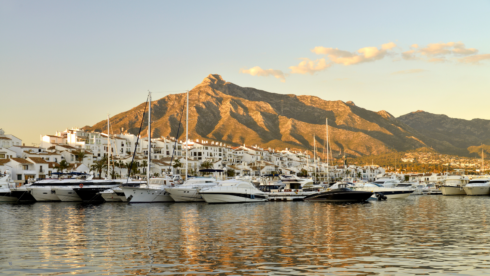
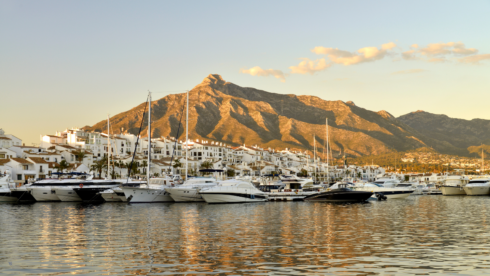 THE average house price in Marbella has broken the €800,000 mark for the first time, leaving huge swathes of the local population unable to get on the property ladder. Marbella