
ElPais
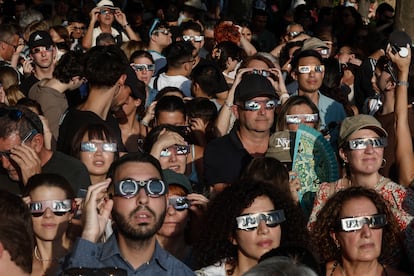
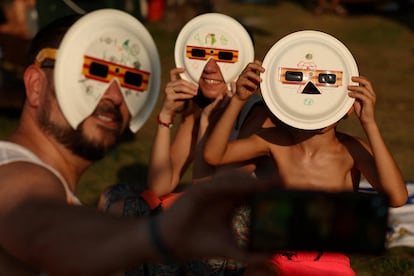
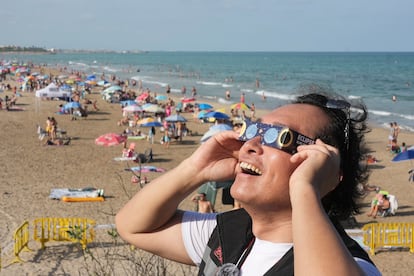
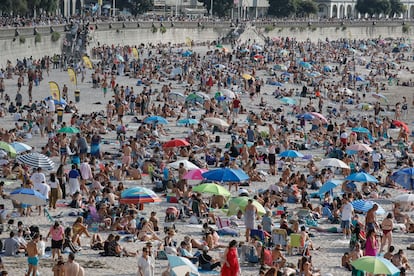
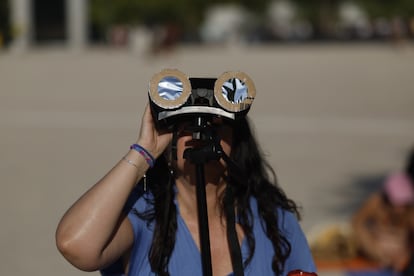
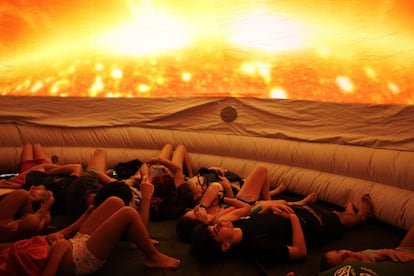
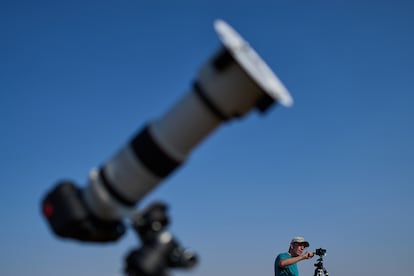
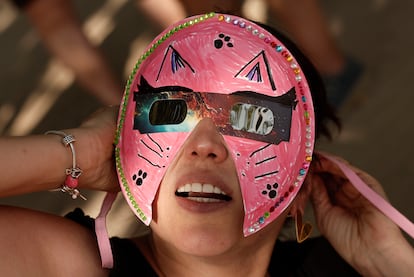
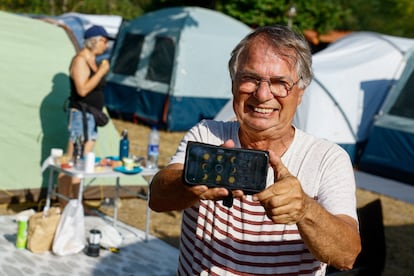
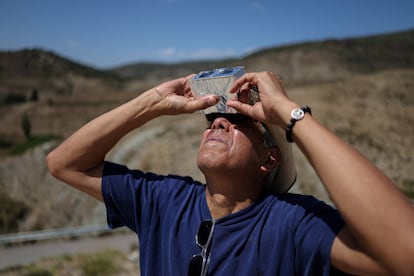
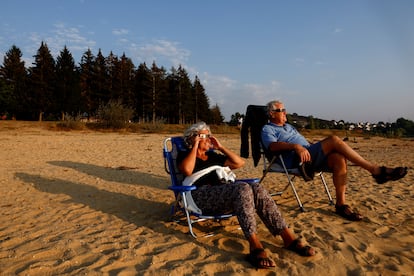
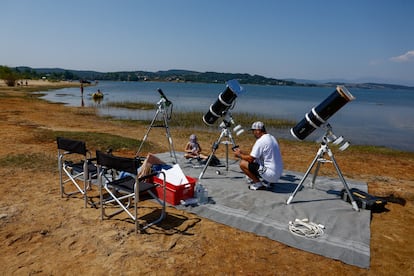
The Total Eclipse In Spain, In Pictures



23 fotos
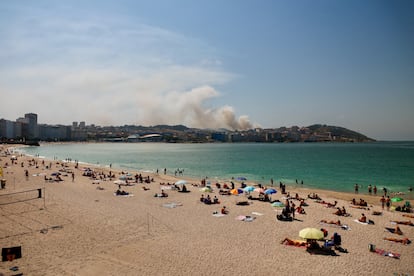
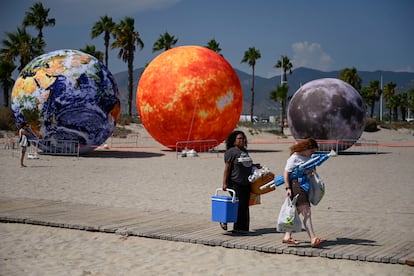
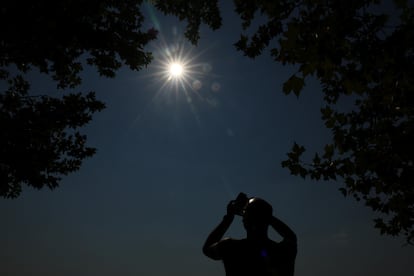
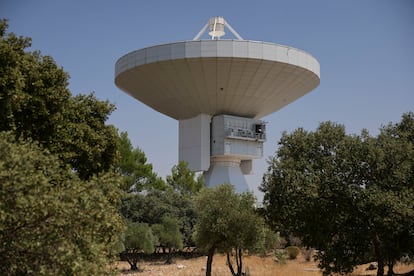
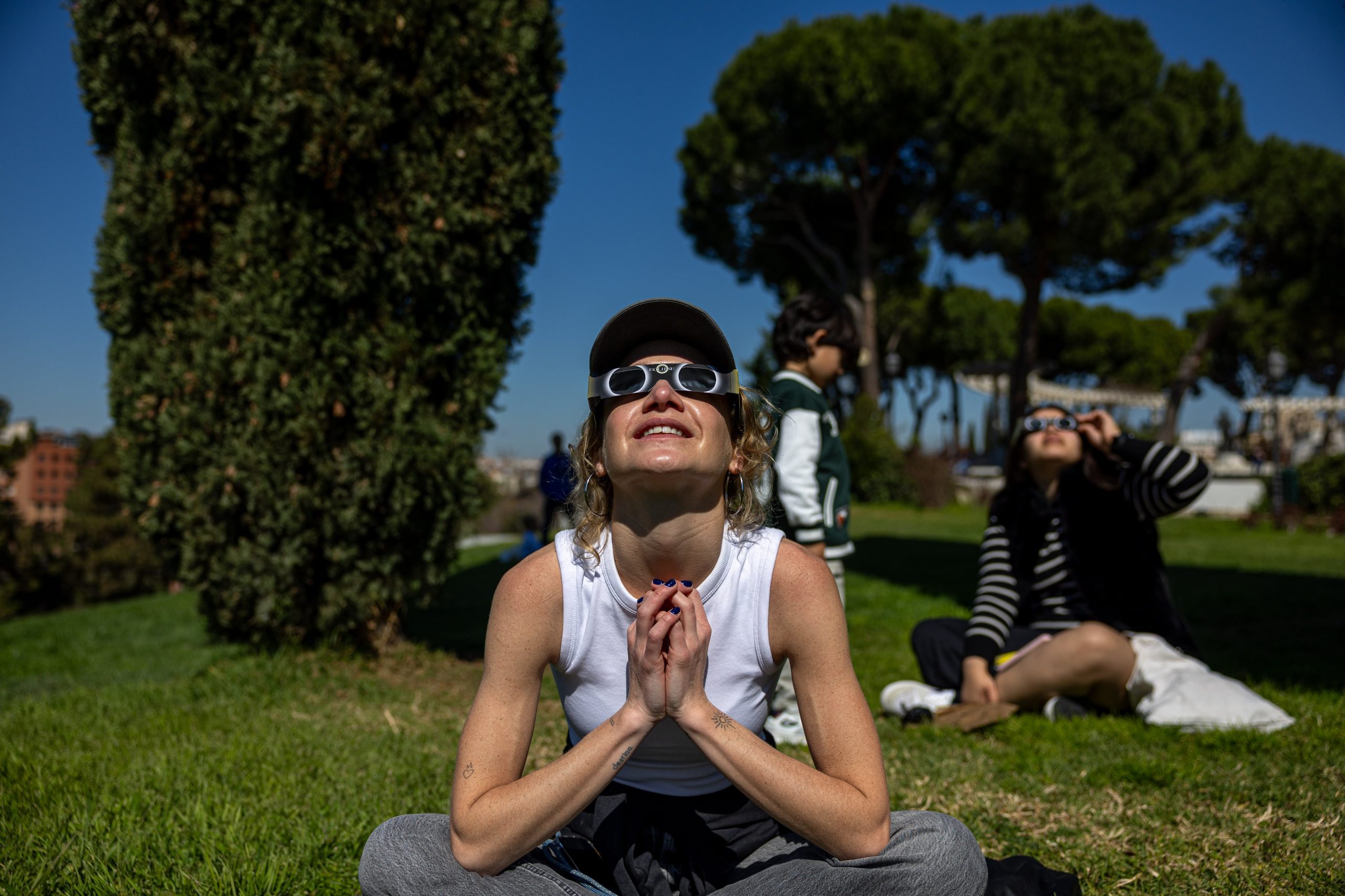
The astronomical event crossed the Iberian Peninsula on Wednesday, with totality visible only along a narrow west-to-east corridor










Alan Cumming
Russell T. Davies: “I’m Glad That ‘Heated Rivalry’ And ‘Heartstopper’ Give LGBTQ+ Stories Happy Endings. I Just Can’t Write Them”

Screenwriter Russell T. Davies, 63, has lost count of the number of times a member of the LGBTQ+ community has approached him over the past 25 years to tell him that one of his series changed their life. “I never get tired of it happening. I appreciate it every time someone says that,” the British writer tells EL PAÍS in a video interview.
Several generations of viewers have now thanked him. The first barely knew how to use the internet when they were pirating Queer as Folk (1999), before streaming platforms existed. The series occupied a groundbreaking space on television, portraying a gay community that was imperfect, vibrant, and unapologetic about its existence. Later, the dual narrative of his companion series Banana and Cucumber (2015) added new layers, including the challenges of middle age, to characters who were far from likable or angelic. Meanwhile, It’s a Sin (2021) chronicled the AIDS crisis through a group of young people in 1980s London. Other works with broader themes, such as the new Doctor Who and Years & Years, have also explored diversity.
“I don’t spend much time on social media because I’ve received death threats since I began including trans characters in my scripts. But I also get complaints from the trans community, which believes a gay man should not be the one telling their story. That’s when you think, God, everyone’s angry,” says Davies, just days after HBO Max’s international release of his latest work, Tip Toe, which is precisely about that widespread sense of hostility.
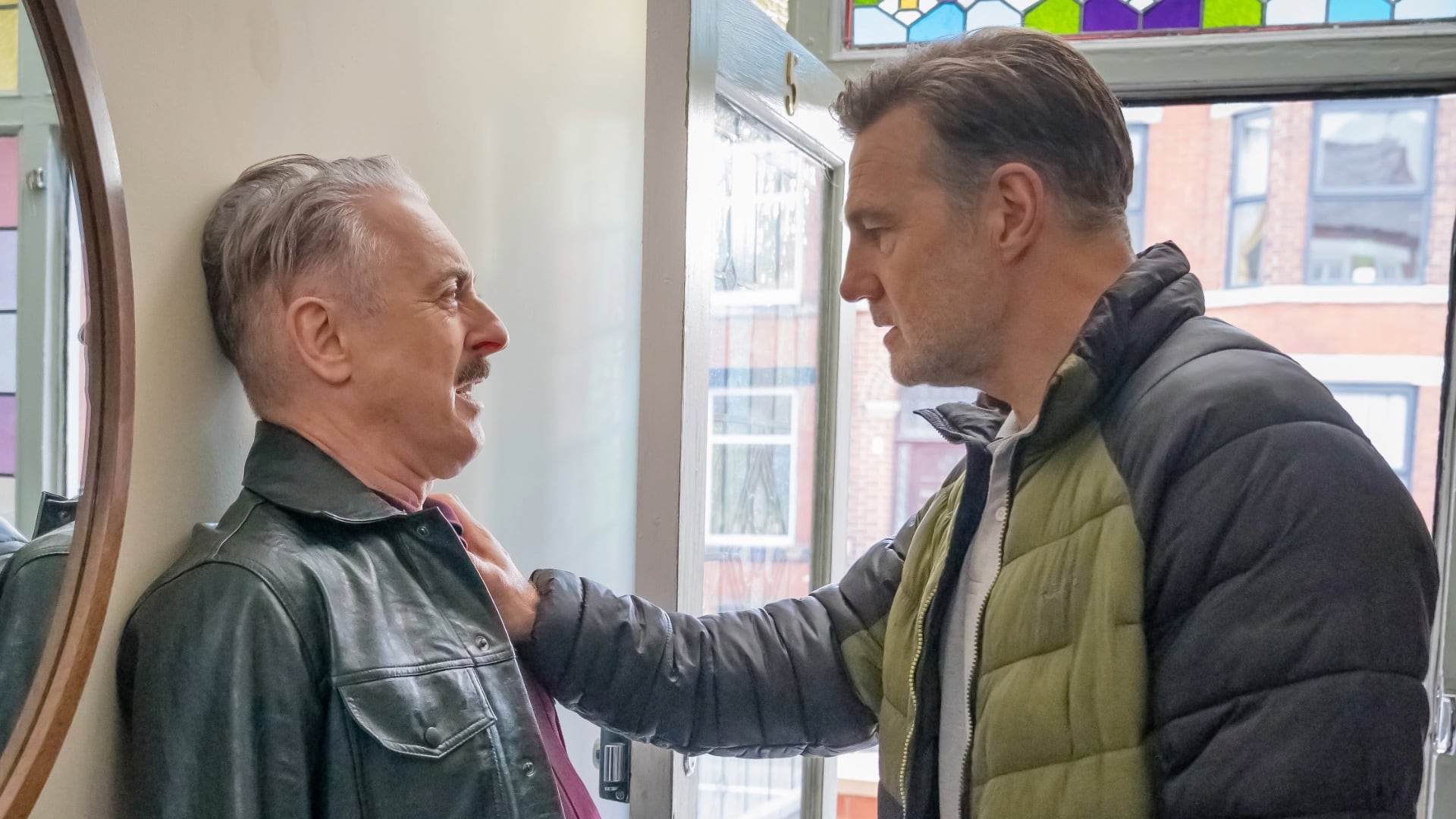
The story begins with Leo (played by Alan Cumming), a gay man who is open about his sexuality and owns the Spit & Polish bar on Canal Street, the heart of Manchester’s LGBTQ+ district. It is a safe haven for many of the city’s young people and a familiar setting in Davies’s television work.
In the opening minutes of the series, Leo finds himself in a situation straight out of a classic comedy. After a one-night stand, he ends up stranded in the street wearing only his underwear and is forced to ask his next-door neighbor for help. Clive (David Morrissey), the man who has shared a wall with him for 14 years, could not be more different: an electrician struggling financially, with two young children and trapped in an unhappy marriage. Before the first of the series’ five episodes is over, however, Davies makes it clear to viewers what lies ahead. This is not a comedy, but a tragedy.
Tip Toe originated in Davies’s mind from a similar situation, though one completely opposite to the one depicted in the show. “My neighbor Mike was a wonderful man who sadly passed away last year. He had a key to my house. He was a lovely neighbor, a big, tough man. But giving your front door key to someone suddenly makes your house a bit porous and open. And he would sometimes walk in without saying,” the screenwriter recalls.
That anecdote sparked his storyteller’s imagination, leading him to explore possibilities far removed from reality. “What if something went wrong between us? What if we fell out? What if my neighbor or his family were homophobic?” Davies found himself wondering.
At the same time, the British writer was increasingly concerned by the growing wave of anger and violence in society. “These elements have always existed in some shape or form, but now they are being driven by the digital environment, by our phones and by algorithms. As a gay man, I was getting more and more alarmed by this,” he admits.
It is a theme he had already explored in the dystopian Years & Years. The series enjoyed major success around the world, though less so in the United Kingdom. “I was wondering how to tell a story about where we’re heading, but make it more popular, more watchable,” he says.
That is how Tip Toe was born. Ultimately, the series examines how toxic masculinity permeates society regardless of gender or sexual orientation, much as it does in another of HBO Max’s major releases of the year, Richard Gadd’s Half Man. “Toxic masculinity is also awful for straight men,” Davies argues.
David Morrissey and Alan Cumming, the lead actors in Tip Toe, have been friends for more than 40 years. Paradoxically, that on-screen chemistry helped build the gradual rift between the series’ two protagonists.
“It was a huge advantage that we didn’t have to wait for them to build trust. They know each other so well that they could try things other actors would never dare,” the showrunner says enthusiastically. “I’m glad that LGBTQ+ stories like Heated Rivalry and Heartstopper have happy endings. But I can’t seem to write them… Thanks to those shows, I don’t necessarily need to.”
In many of Davies’s series, the enemies confronting his characters are invisible monsters that no one quite knows how to defeat. In Tip Toe, those forces are the algorithm and vulture funds.
“The economy feels like a ghost. TV shows don’t usually explain how their characters manage to pay for their homes. In this series, I wanted all of that to be part of the story. Prices keep going up because of a ridiculous war like the one in Iran, sparked by his tantrums and outbursts of the U.S. president. And that really drives people to despair and makes them feel trapped,” he concludes.
Sign up for our weekly newsletter to get more English-language news coverage from EL PAÍS USA Edition


Whenever he is working on a new board game, Vlaada Chvátil thinks about it constantly. “Every spare minute,” he says. Whether he is in the shower or awake at 3 a.m. That is how his creative process works.
It is, inevitably, a very personal way of working. After all, there probably are not many co-designers willing to wake up in the middle of the night to debate cards or strategies. “I couldn’t call them at those moments to share my thoughts, but I also can’t stop thinking about them and then not develop them later,” he reflects.
That is why he usually develops at least the core of his games on his own. Not that the approach has hurt his career. The Czech designer is widely regarded as one of the industry’s leading creators.
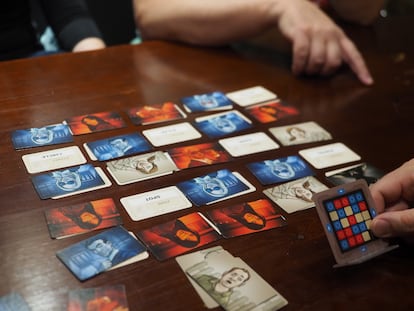
His creations include Through the Ages, a game capable of condensing the entire history of civilization into a single board, and Codenames, the family-friendly bestseller built around deciphering clues, which has now spawned a Harry Potter-themed edition. And, more broadly, Chvátil’s body of work is defined by its variety and originality: some of his games differ so radically from one another that the only thing they seem to have in common is his name.
That signature is a guarantee of a challenge for thousands of players. It is also the result of the time he usually takes and the countless rounds of testing he puts his creations through. Some critics, however, complain that his games are too long and overly complex. Indeed, a game of Through the Ages requires reading a 23-page rulebook and takes at least two hours to play.
Codenames, by contrast, represents the opposite approach: conceived in a flash during a convention, it can hook anyone without much preamble or planning. “Sometimes, before releasing a substantial game, I’ve worried that I may have gone too far: ‘This is too much, nobody is going to play it.’ But players always surprise me,” Chvátil explains.
Even his critics, in any case, acknowledge his effort and ambition. The designer has at times rejected the idea of describing himself as a “true artist,” believing that his work is closer to craftsmanship. There is, however, another label he readily accepts: “I’m a perfectionist.”
So much so that he asks for the interview to be conducted in writing. He is currently working on a “really huge” new project, and says that the workload and deadlines have left him “exhausted.” He admits that his first instinct was to reply, “Not now.” In the end, he agrees because exchanging messages allows him to answer when he feels “comfortable.”
“I remember the moment I realized this had become my job,” he says. “A journalist once asked me about my career. I thought: ‘Wait a second, is this my career?’ I never wanted to become a game designer. I just wanted to create games.”
His first creations date back to his childhood in Jihlava. Gradually, however, it became clear that this was more than just a childhood passion. Then, in 1997, Arena: Morituri te Salutant marked his market debut.
Amid gladiators and fights, one could already glimpse what was to come. Chvátil explains that at the time he played many role-playing games and wanted to create a realistic combat system. But he became so absorbed in the idea that he ended up creating a completely original game. It was so unusual that one publisher asked him: “I don¡t understand it. If there’s a die, why is it never rolled?”
He says ideas come to him whenever he spots “untapped potential.” And that he likes to experiment so as not to get bored: by putting players on a team forced to cooperate in order to survive in Space Alert; by imagining a competition among imps to run the best pet shop in Dungeon Petz; or by creating a vast fantasy war epic in Mage Knight.
Two decades ago, Chvátil also became a publisher, taking the helm of Czech Games Edition. There, he learned to rein in his creative impulses when another designer was leading the project. So he is constantly testing, designing and publishing. At the same time, he may draw inspiration from other cultural fields: he reads, watches films and television series, goes to the theater and concerts, enjoys video games, and develops them as well.
“What makes a good game? One with a large audience, strong sales, high ratings or one that stays in people’s minds? I don’t want to decide what is or isn’t a good game. There are no particular elements that it has to include, as long as there are people who enjoy it,” he says.
In Chvátil’s case, there are plenty. Devir, his publisher in Spain, boasts that he has “no fewer than 10 major titles” to his name. Codenames, released in 2015, is probably the most famous. Apparently, that project finally helped his mother understand what her son did for a living.
But the Czech designer says the milestone that transformed his career happened a decade earlier. It required hundreds upon hundreds of hours of work. He play-tested it relentlessly throughout the process. There was no other way to make it possible to play through the entire course of civilization.
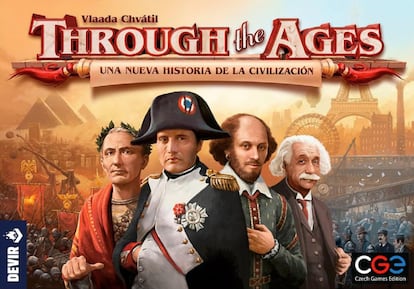
Because a game of Through the Ages takes players from the dawn of humanity to the triumph of computing. There are dozens of cards and hundreds of possible choices: figures such as Julius Caesar, Albert Einstein, Johann Sebastian Bach and Maximilien Robespierre appear alongside developments such as the printing press, nationalism, corruption and the scientific method. Universal history, essentially, packed into a box.
Two decades later, its scale is still daunting. But this contemporary perspective also reveals certain absences: women are underrepresented, aside from figures such as Joan of Arc and Angela Merkel, and the game takes a distinctly Western-centric approach.
“I realized it was something special when one of my friends, who never liked long games, spent five hours playing it and wanted to start again. It was an important turning point in my life: a few friends and I decided that designing board games would become our way of making a living,” says Chvatil.
He is still at it today, and still faithful to his method. Chvátil is now fully focused on making sure every aspect of his new game is “the best it can be.” And, he says, this time he is co-designing it: “At first there were many calls and brainstorming meetings, but it was fun, and I’m happy with the result.”
He claims the project could “easily take 30 hours a day,” if such a thing were possible. Because every spare minute counts.
Sign up for our weekly newsletter to get more English-language news coverage from EL PAÍS USA Edition

The Total Eclipse In Spain, In Pictures
Spain’s eclipse traffic nightmare begins as kilometre-long queues hit Madrid and Barcelona
Germany plans pensions for six-year-olds — could Spain do the same?


-
easyJet2 weeks ago
First EasyJet passenger from UK refused entry to Gibraltar after new treaty
-

 New Developments2 weeks ago
Inside The Most LUXURIOUS Apartment Building In Spain!
-
Latest2 weeks ago
Trump And Far Right Seize On Spanish Migration Crisis
-

 Uncategorized7 days ago
Lewis Hamilton hits gold with $10bn jackpot but British star snubs Monaco move: F1 News Recap
-
Latest2 weeks ago
Thousands Of Migrants Swim From Morocco To Spain’s Ceuta Territory
-

 Latest2 weeks ago
Suspect In Murder Of Hungarian Woman In Benahavis Attempts To Slit His Own Throat As Guardia Civil Make Arrest
-
Costa Blanca beaches2 weeks ago
Tragedy at Jávea beach as 68-year-old swimmer dies despite hour-long rescue attempt
-
Latest1 week ago
Migrant Rush To Spain’s Ceuta: 72,000 Crossed, 2,000 Remain And 77 Died